
KS3 Physics · Electricity & magnetism
Electromagnets and motors
- A current in a wire makes a magnetic field
- Building an electromagnet: a coil, a current and an iron core
- Three ways to make an electromagnet stronger, tested fairly
- Where electromagnets are used, and how a d.c. motor turns
- 1 min read
- 5 quick questions
- Free homework sheet
- Years 7 to 9
Revision notes
A current in a wire makes a magnetic field. Hans Christian Ørsted saw a compass needle move next to a wire in 1820. Round a straight wire the field lines are circles; reverse the current and the field reverses.
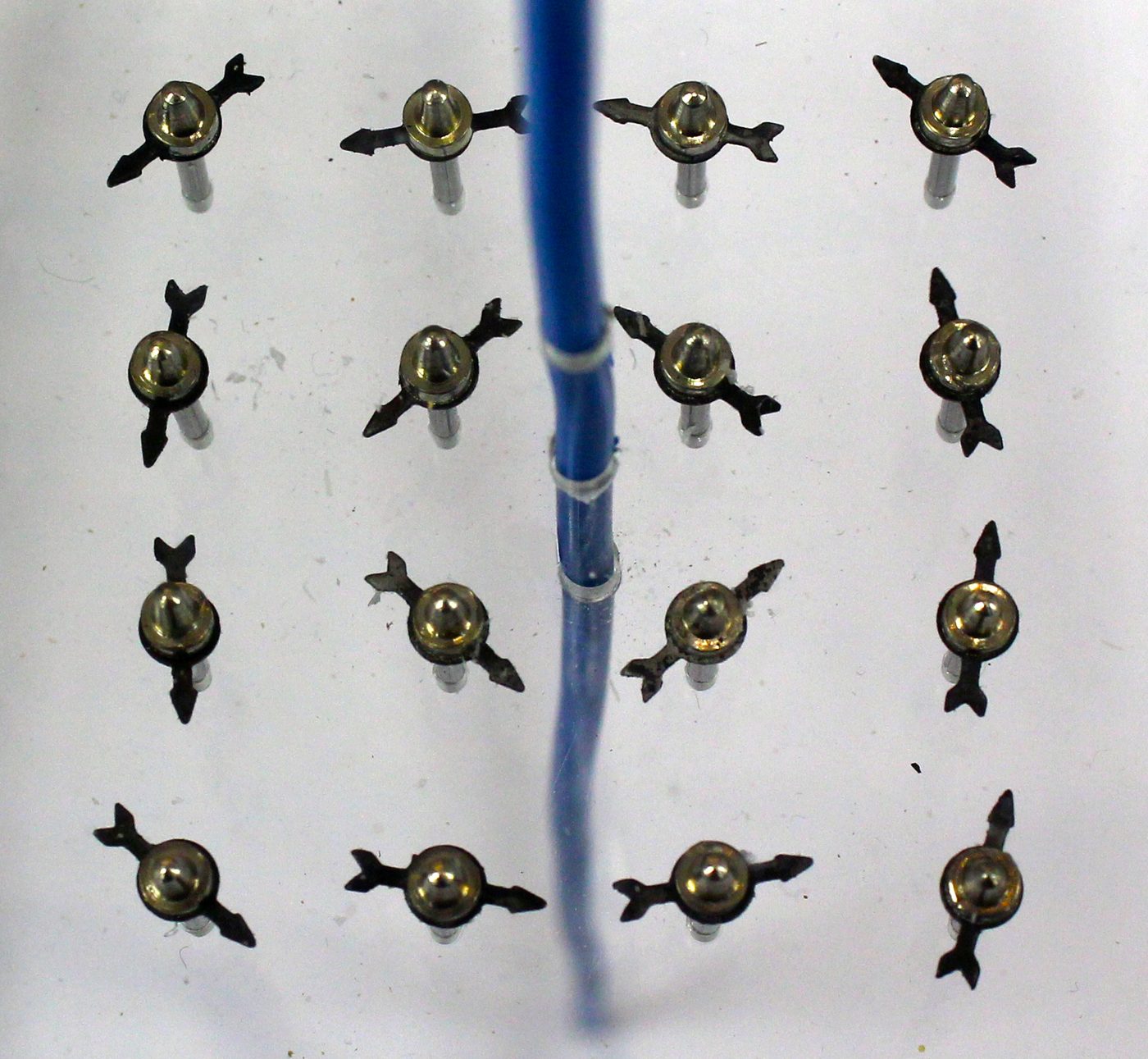
A coil of wire (a solenoid) carrying a current has a field like a bar magnet’s. Wrap it round an iron core and you have an electromagnet. Switch off the current and it stops being a magnet.
More turns on the coil · a bigger current (more cells) · an iron core. Copper is not magnetic, so a copper core does nothing.
Fair test: change one variable (the turns), measure one (paperclips lifted), keep the rest the same (cells, core, paperclips). Repeat and take a mean.
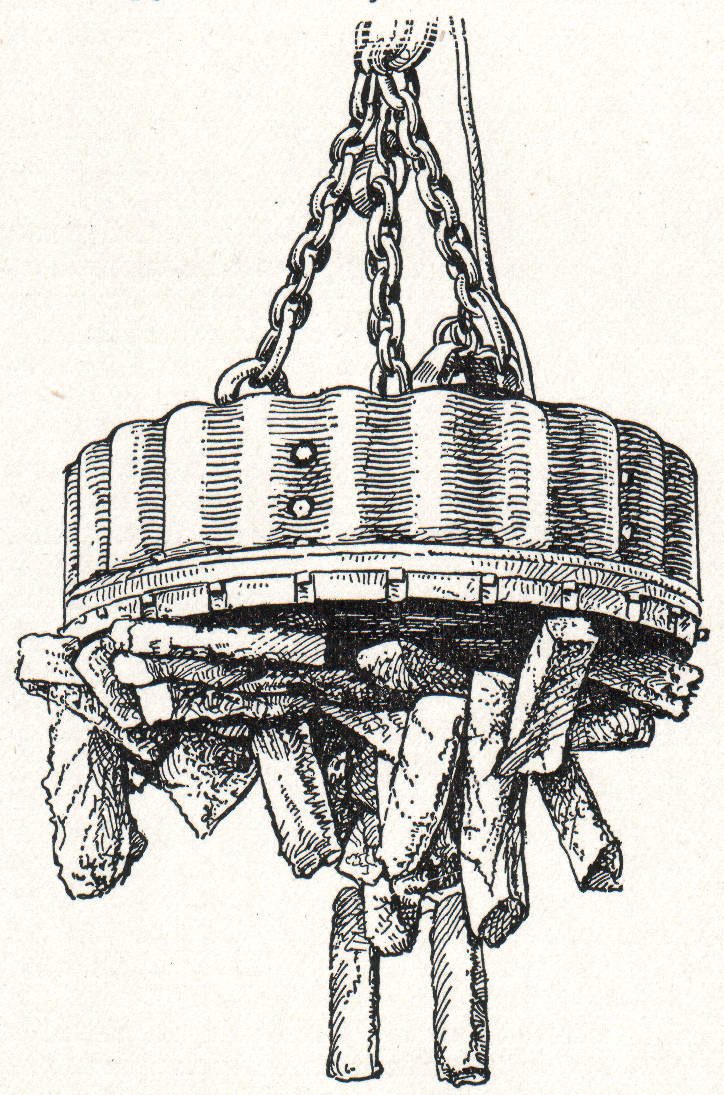
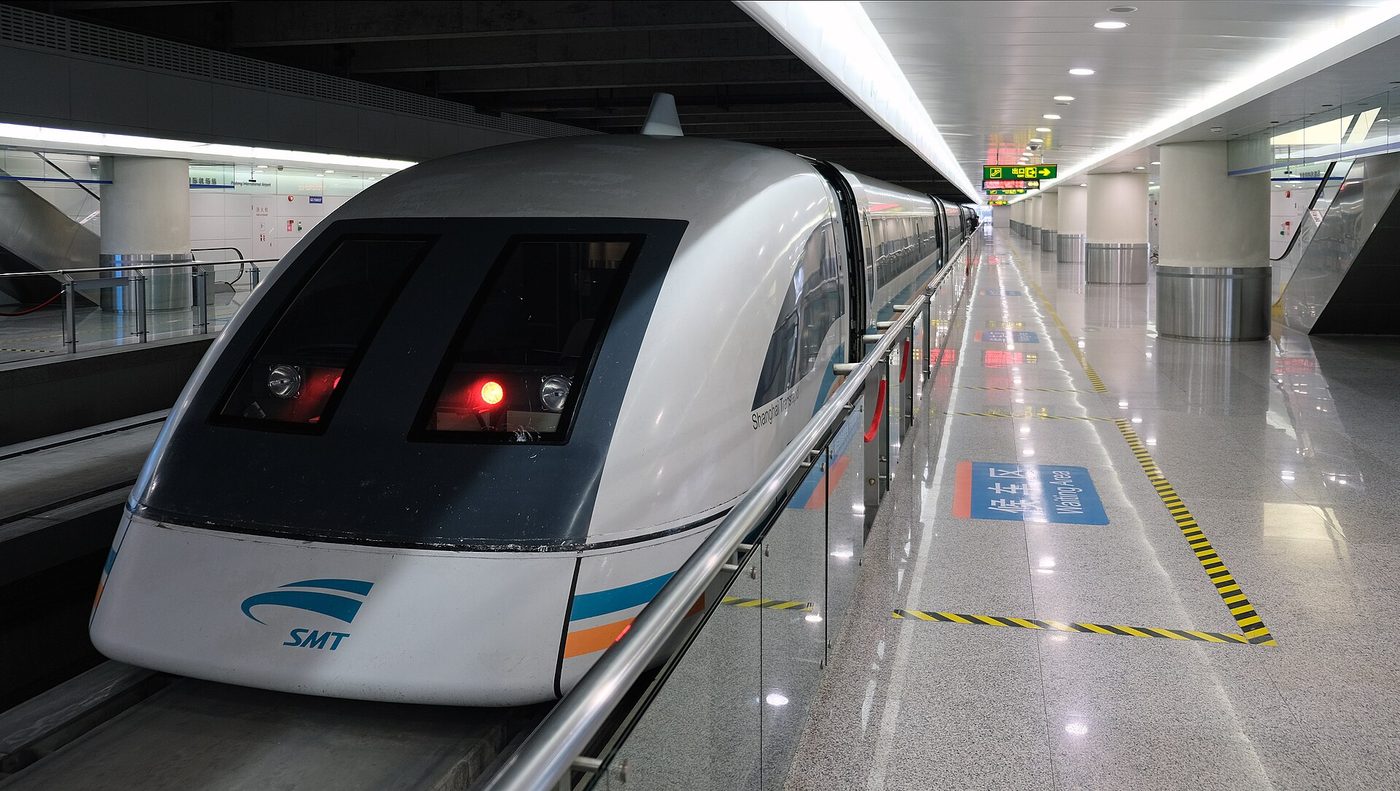
Uses: scrapyard cranes (switch off to drop the load), electric bells, relays, door locks, loudspeakers, maglev trains and MRI scanners.
The d.c. motor (principles)
- A coil carrying a current inside a magnetic field feels a force, so it turns.
- Reverse the current or swap the magnet’s poles and it spins the other way.
- More current, a stronger magnet or more turns make it spin faster.
- Energy is transferred electrically into the motor’s kinetic store, with some wasted by heating.
Written to the KS3 national curriculum. Last changed 8 November 2026.
Key words
Say them, spell them, use them in an answer.
- electromagnet
- coil
- solenoid
- iron core
- turns
- current
- magnetic field
- motor
Common misconception
Often said“An electromagnet stays magnetic when you switch it off.”
In factNo current, no field. That is why a scrapyard crane can drop a car.
Try 5 questions
Quick questions on electromagnets and motors, marked as you go. Each one explains the answer.
Question 1 of 5
The magnetic field around a current-carrying wire is strongest far from the wire.
Choose an answer. Each question explains itself.
The homework sheet
About twenty minutes. Everything on it is in the notes above; the answers are on the last page.
Free homework sheet
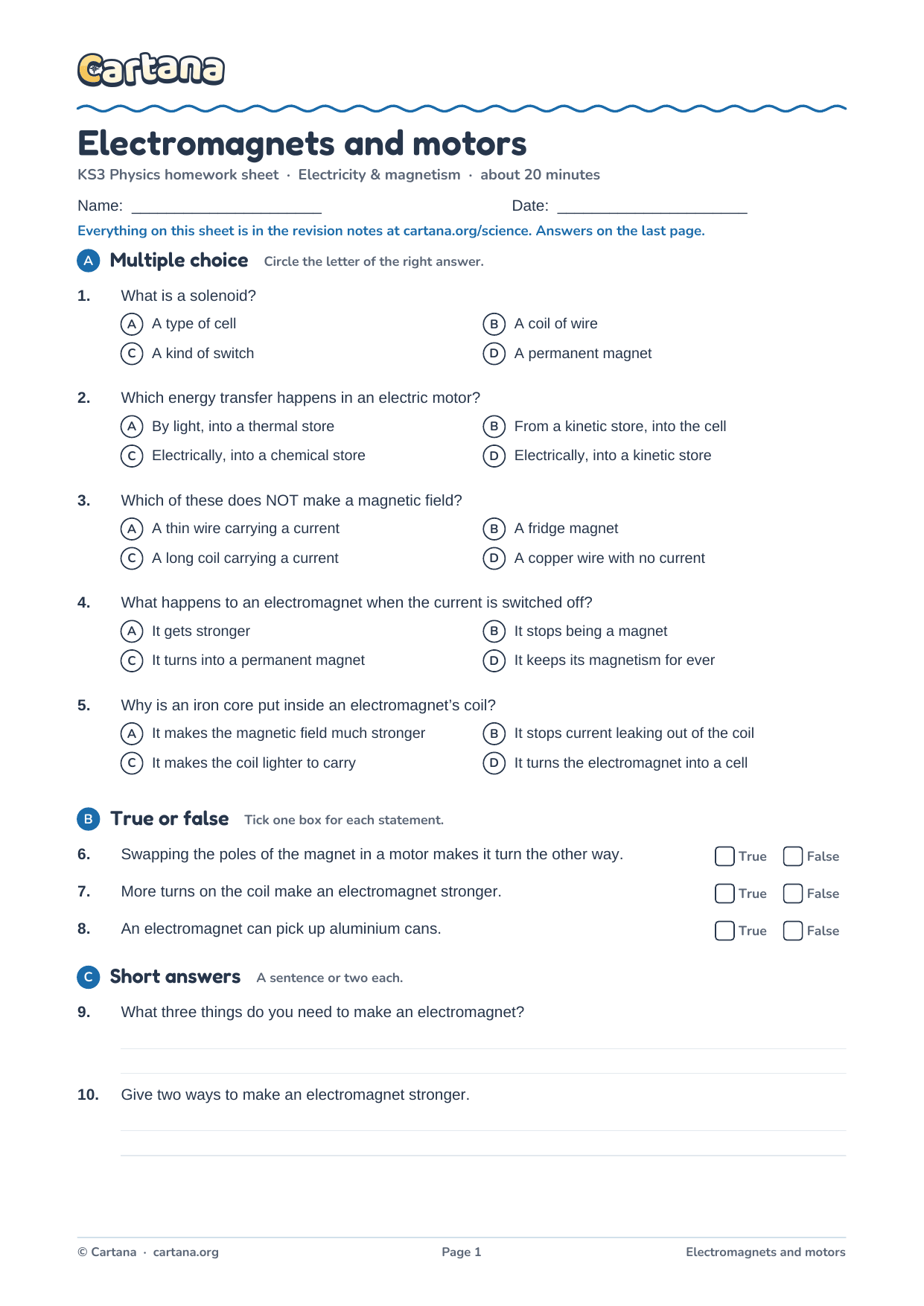
Electromagnets and motors homework sheet
17 questions, about twenty minutes, with the answers on the last page: multiple choice, true or false, short answers, key words to define and one to explain in full.
KS3 Electricity & magnetism
Revised the whole unit?
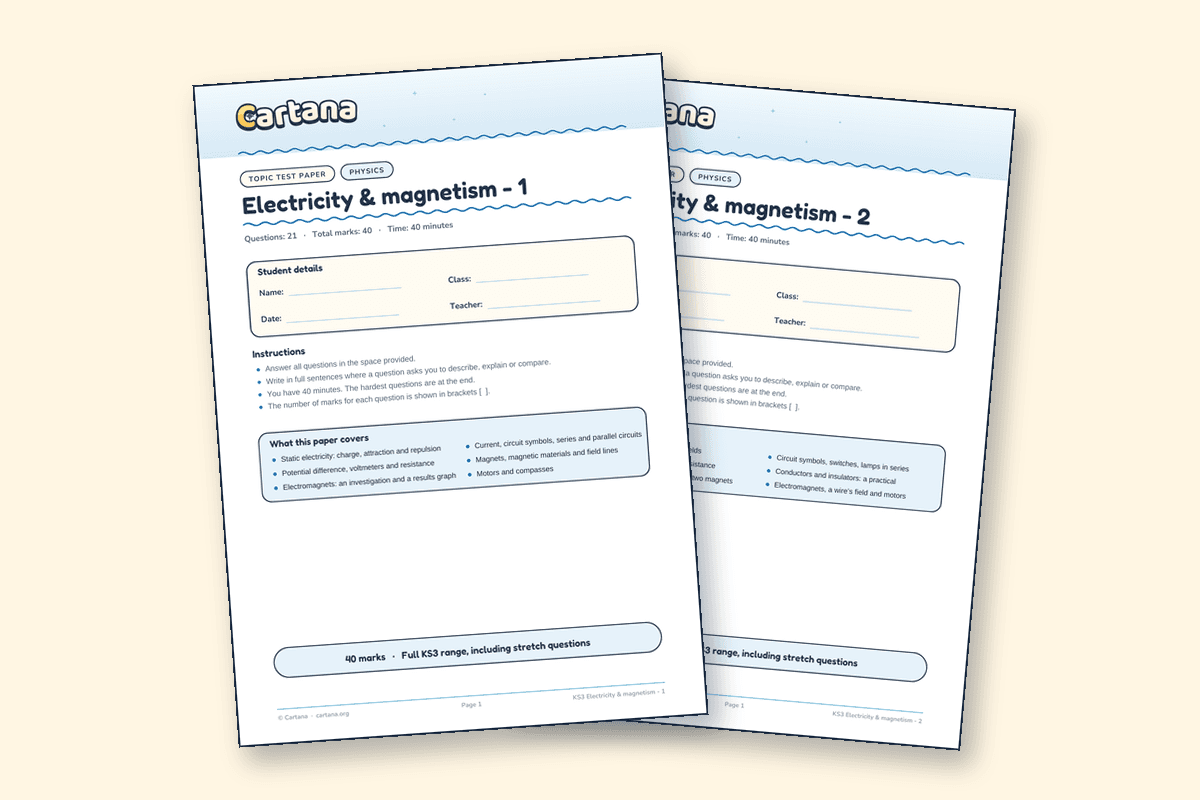
When every topic in electricity & magnetism is done, two different papers test the whole unit, each with its own mark scheme.


 Watch the trailer · 1:06
New from Cartana · Beta test 1–31 December
Revision that feels like an adventure
Cartana is our KS3 learning adventure: sail between islands, answer quick-fire questions and battle bosses. It starts with science, with maths on the way, and launches in 2027. This December a small group of testers gets to play it first.
In the Cartana adventure, electromagnets and motors is the Coil Works, a district of the Isle of Ohm.
- Play the game before its official release
- Help us build it with your feedback
- Earn exclusive in-game items in return
More in this unit