
KS3 Biology · Cells & life processes
Living, dead or never alive
- The test for living: made of cells and carrying out all seven life processes
- Living, dead or never alive, and how to tell them apart
- Tricky cases: fire, crystals, robots, seeds and viruses
- 1 min read
- 5 quick questions
- Free homework sheet
- Years 7 to 9
Revision notes
To be living, a thing must be made of cells and carry out all seven life processes at some point. To be dead, it must have been alive once. Things that were never made of cells are never alive.
| Living | Dead (alive once) | Never alive |
|---|---|---|
| Basil, moss, a spider, yeast, the bacteria in live yoghurt, seeds (dormant), a pet dog | Logs, wooden tables, paper, cotton, leather, cooked prawns, a fallen leaf | Flames, water, ice, salt crystals, metal, glass, a phone, a plastic toy |


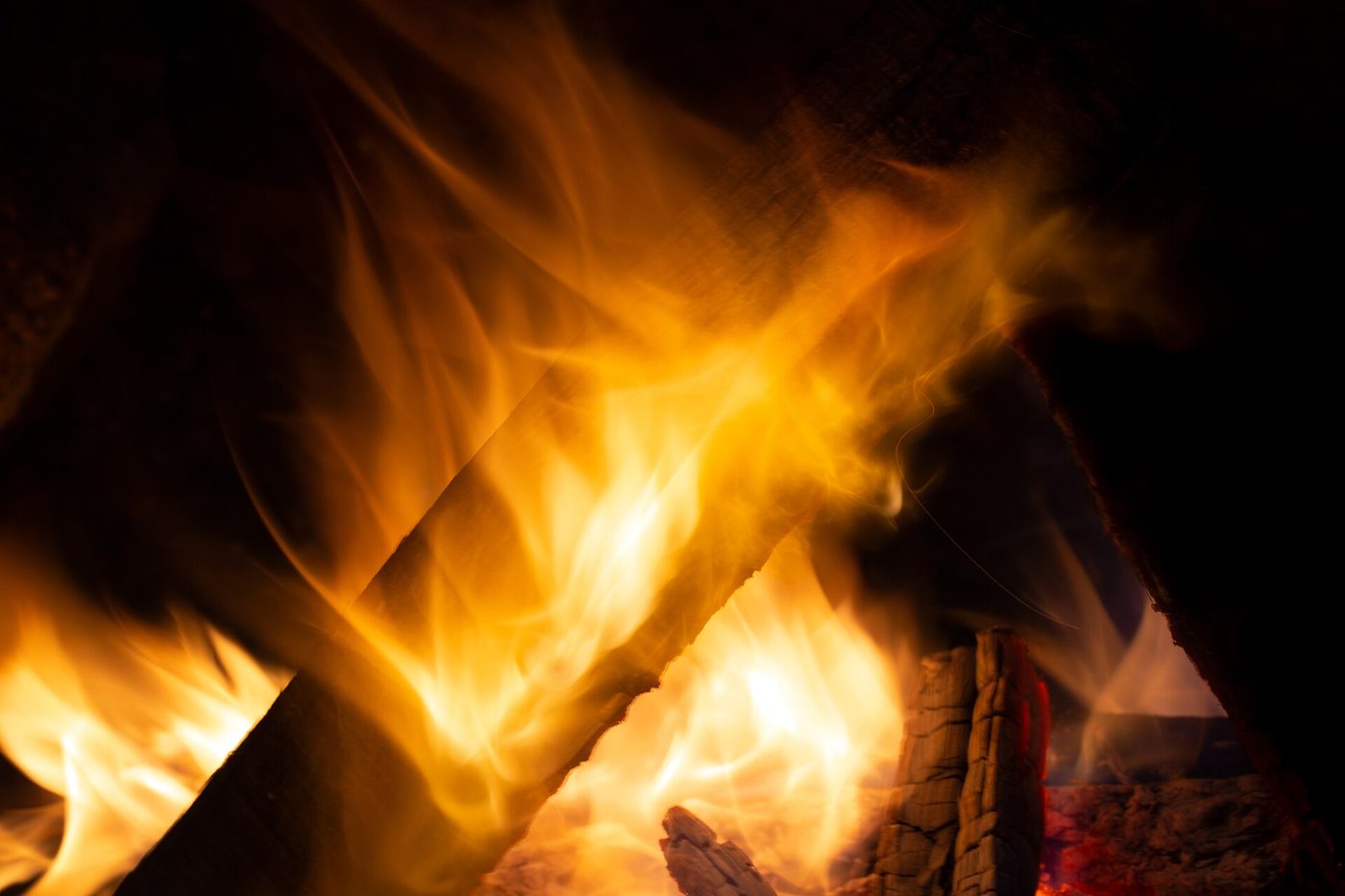
Tricky ones. Fire moves, grows, uses oxygen and can even spread, but it has no cells: never alive. Crystals grow by adding layers, not by making cells. Robots and cars move and sense things but have no cells, and do not grow or reproduce. Seeds are alive but dormant. Viruses are not cells and can only copy themselves inside a living cell, so they are usually counted as not living.

Written to the KS3 national curriculum. Last changed 2 November 2026.
Key words
Say them, spell them, use them in an answer.
- living
- cells
- dead
- Tricky ones
- Fire
- Crystals
- Robots and cars
- Seeds
- Viruses
Common misconception
Often said“Fire is alive, because it moves, grows and uses oxygen.”
In factFire has no cells. It is a chemical reaction, and doing some lifelike things is not the same as doing all seven.
Did you know?
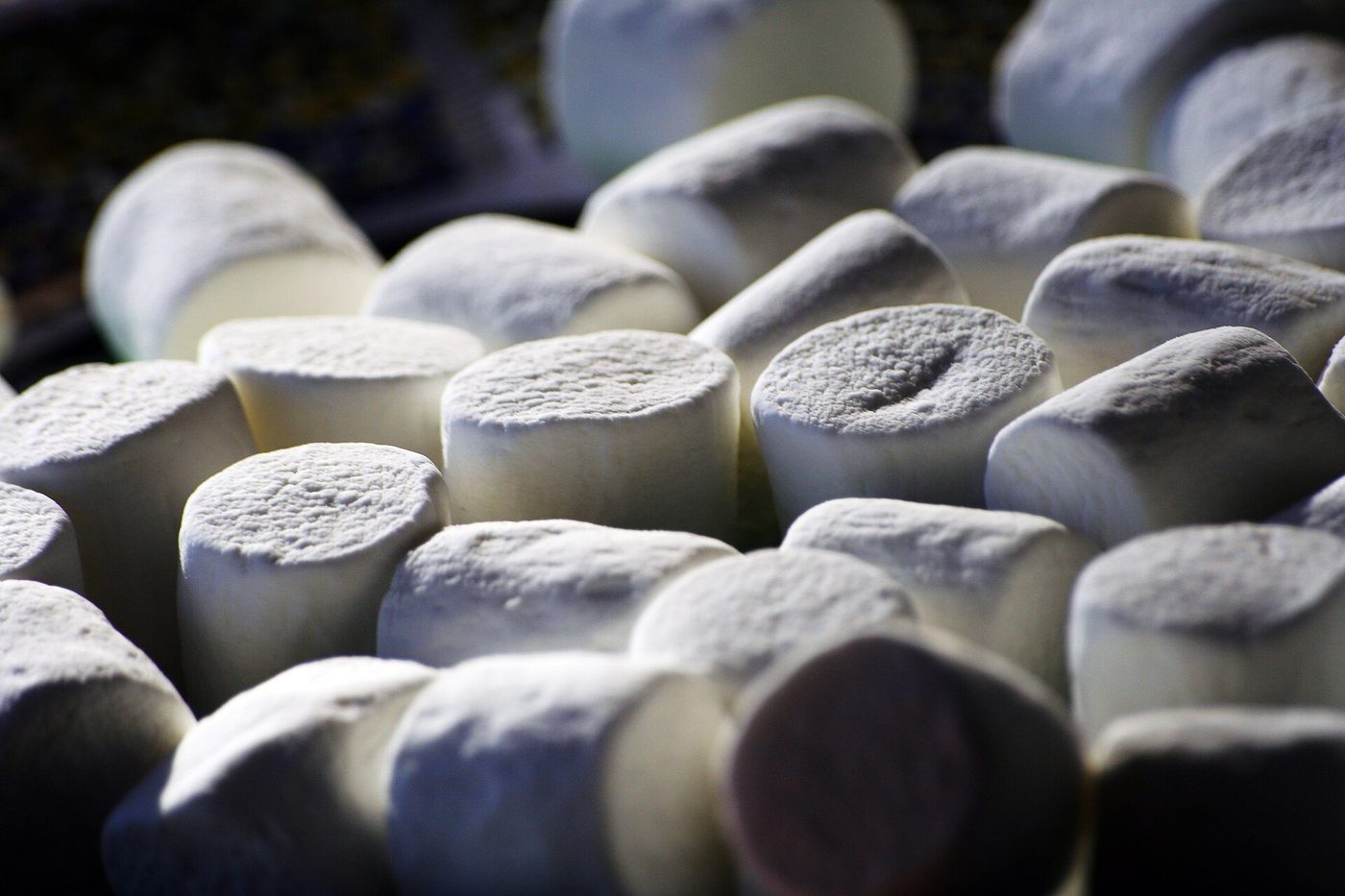
Marsh
Found warming itself by the Mitochondrion. Marshmallows are mostly sugar, and sugar is the fuel every cell uses in respiration.
Photo: John Morgan, CC BY 2.0, via Wikimedia Commons

Try 5 questions
Quick questions on living, dead or never alive, marked as you go. Each one explains the answer.
Question 1 of 5
A spider in the corner of the ceiling. Living, dead or never alive?
Choose an answer. Each question explains itself.
The homework sheet
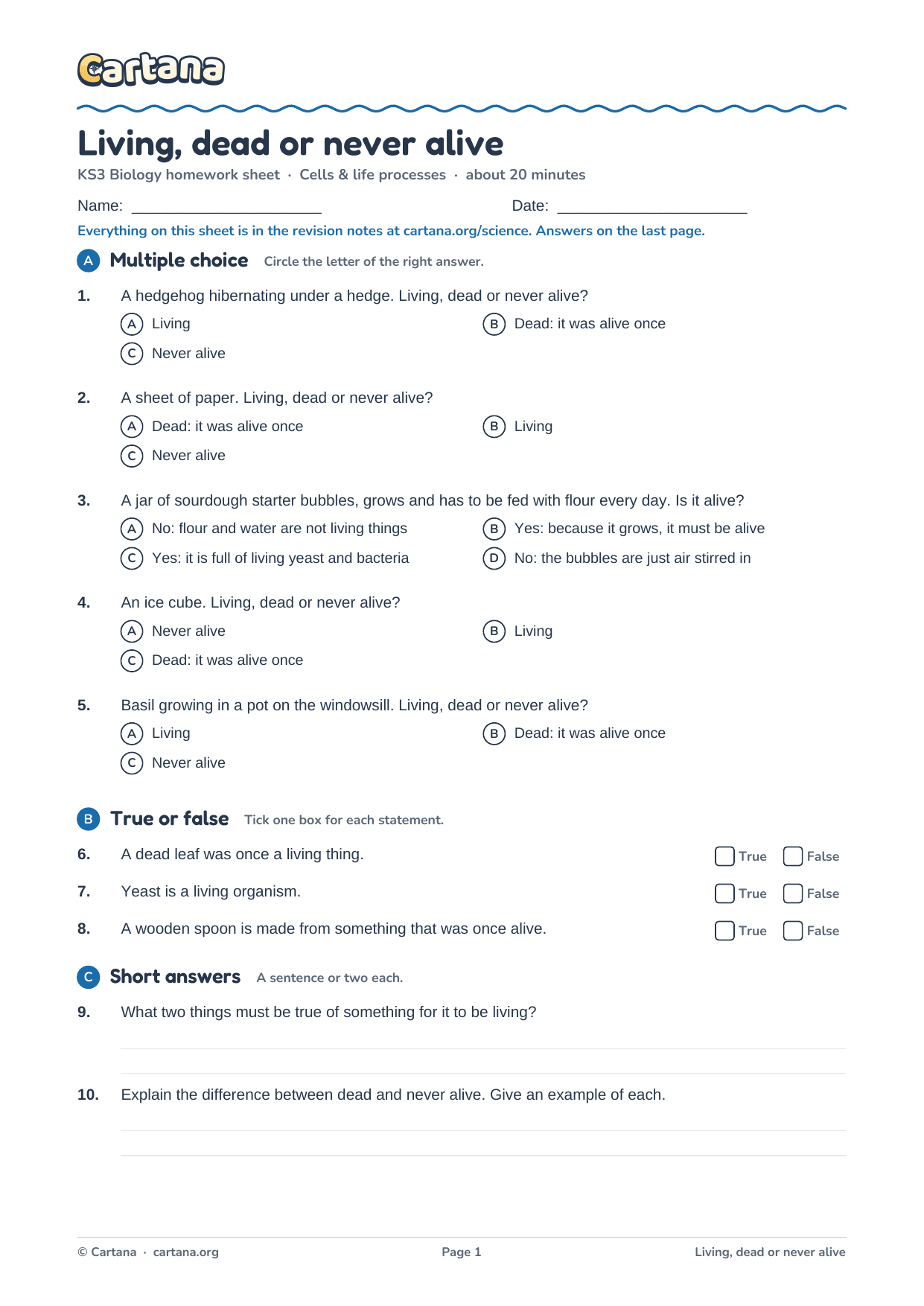
About twenty minutes. Everything on it is in the notes above; the answers are on the last page.
Free homework sheet
Living, dead or never alive homework sheet
17 questions, about twenty minutes, with the answers on the last page: multiple choice, true or false, short answers, key words to define and one to explain in full.
KS3 Cells & life processes
Revised the whole unit? There is a 40-mark Cells & life processes test paper with a mark scheme.
 Watch the trailer · 1:06
New from Cartana · Beta test 1–31 December
Revision that feels like an adventure
Cartana is our KS3 learning adventure: sail between islands, answer quick-fire questions and battle bosses. It starts with science, with maths on the way, and launches in 2027. This December a small group of testers gets to play it first.
In the Cartana adventure, living, dead or never alive is The Mitochondrion, a district of the island Cytopia.
- Play the game before its official release
- Help us build it with your feedback
- Earn exclusive in-game items in return
More in this unit