
KS3 Biology · Photosynthesis & respiration
Leaves
- The layers of a leaf and the job each one does
- How a leaf is adapted for photosynthesis
- Stomata and guard cells: when they open and close
- Why plants do not breathe: gases move by diffusion
- 2 min read
- 5 quick questions
- Free homework sheet
- Years 7 to 9
Revision notes
Leaves are where most photosynthesis happens. Every layer has a job.
| Part | Job |
|---|---|
| Waxy cuticle | A waxy, waterproof layer that cuts down water loss |
| Upper epidermis | Clear cells that protect the leaf and let light through |
| Palisade layer | Tall cells packed with chloroplasts, for photosynthesis |
| Spongy layer | Loosely packed cells with air spaces between them |
| Air space | A gap between cells where gases move round the leaf |
| Vein | Xylem brings water in and phloem carries sugars away |
| Lower epidermis | The bottom layer of cells, with most of the stomata in it |
| Guard cell | Changes shape to open and close the stoma |
| Stoma | A tiny hole that lets gases in and out of the leaf |
Adapted for photosynthesis
- Broad and flat: a large surface area absorbs more light.
- Thin: carbon dioxide only diffuses a short distance.
- Lots of chloroplasts in the palisade layer, near the top where the light is.
- Veins: xylem brings water; phloem carries sugars away.
- Air spaces in the spongy layer let gases reach every cell.
- Stomata, mostly underneath, let carbon dioxide in and oxygen out.
- A waxy cuticle and a see-through upper epidermis: less water lost, more light let in.
Each stoma is opened and closed by two guard cells. Open in the light: carbon dioxide diffuses in; oxygen and water vapour diffuse out. Closed at night, and in hot, dry, windy weather, to save water. The catch: closed stomata let no carbon dioxide in, so photosynthesis slows.
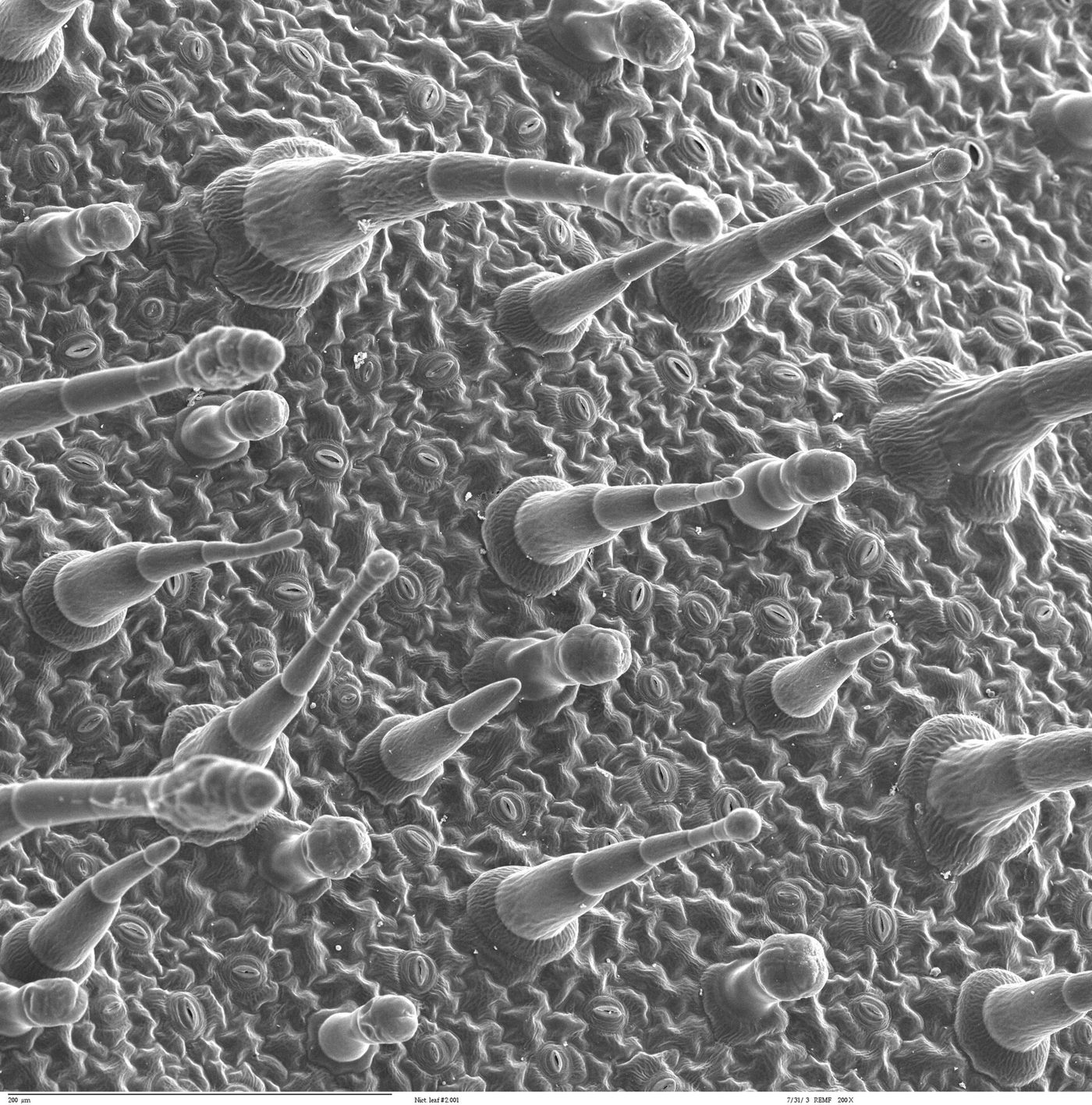
Gases move in and out of the leaf by diffusion, from where there is more of a gas to where there is less. Paint clear nail varnish on a leaf, peel it off and look under a microscope: you can see the guard cells and stomata.

Written to the KS3 national curriculum. Last changed 5 November 2026.
Key words
Say them, spell them, use them in an answer.
- waxy cuticle
- guard cells
- diffusion
Common misconception
Often said“Plants breathe in carbon dioxide.”
In factPlants do not breathe. Gases diffuse in and out of the leaf through the stomata.
Did you know?
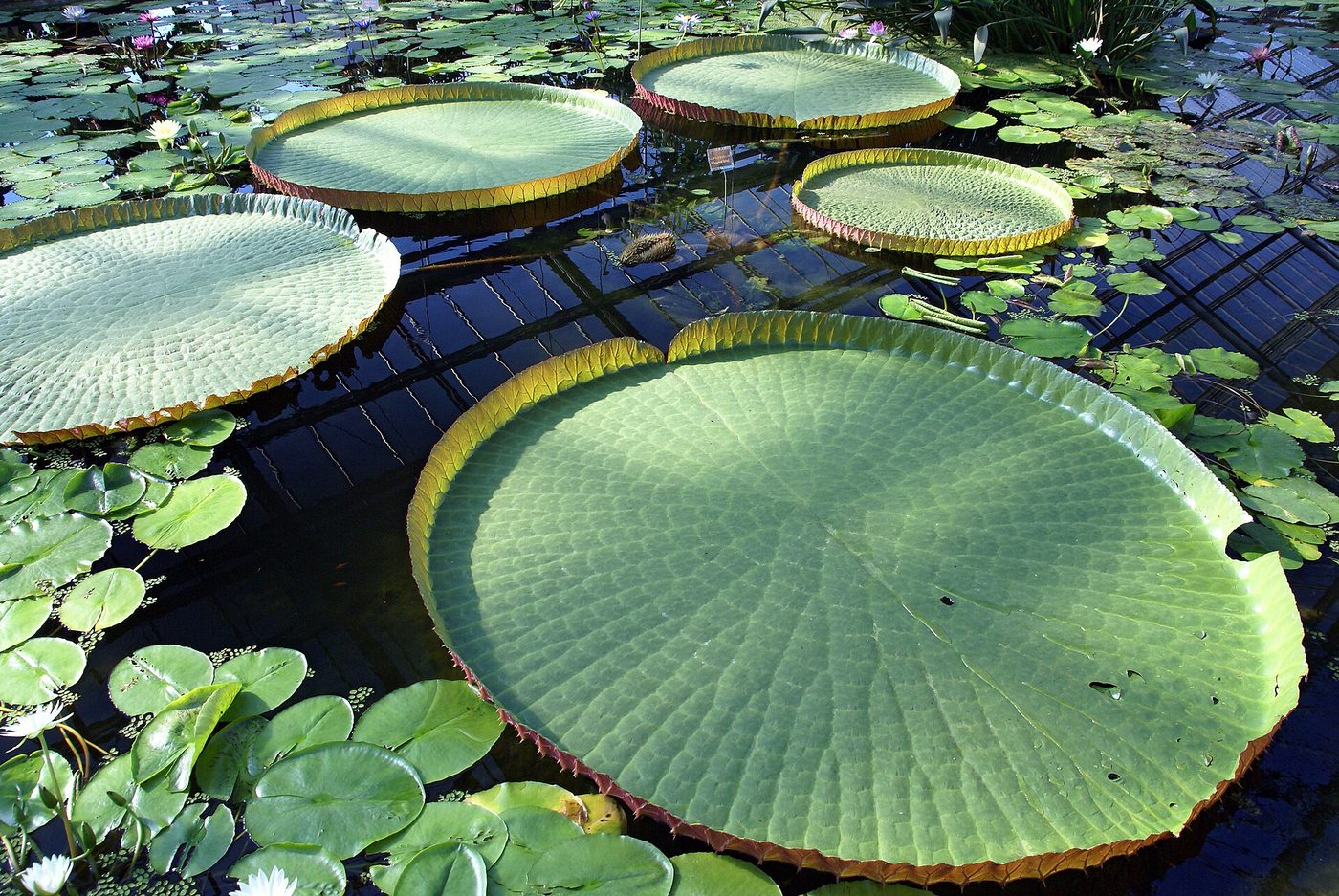
Giant water lily
Its floating leaves can be up to 3 metres across. The underside sits in the water, so its stomata are on the top surface, facing the air.
Photo: 663highland, CC BY 2.5, via Wikimedia Commons

Try 5 questions
Quick questions on leaves, marked as you go. Each one explains the answer.
Question 1 of 5
Why is the upper epidermis see-through?
Choose an answer. Each question explains itself.
The homework sheet
About twenty minutes. Everything on it is in the notes above; the answers are on the last page.
Free homework sheet
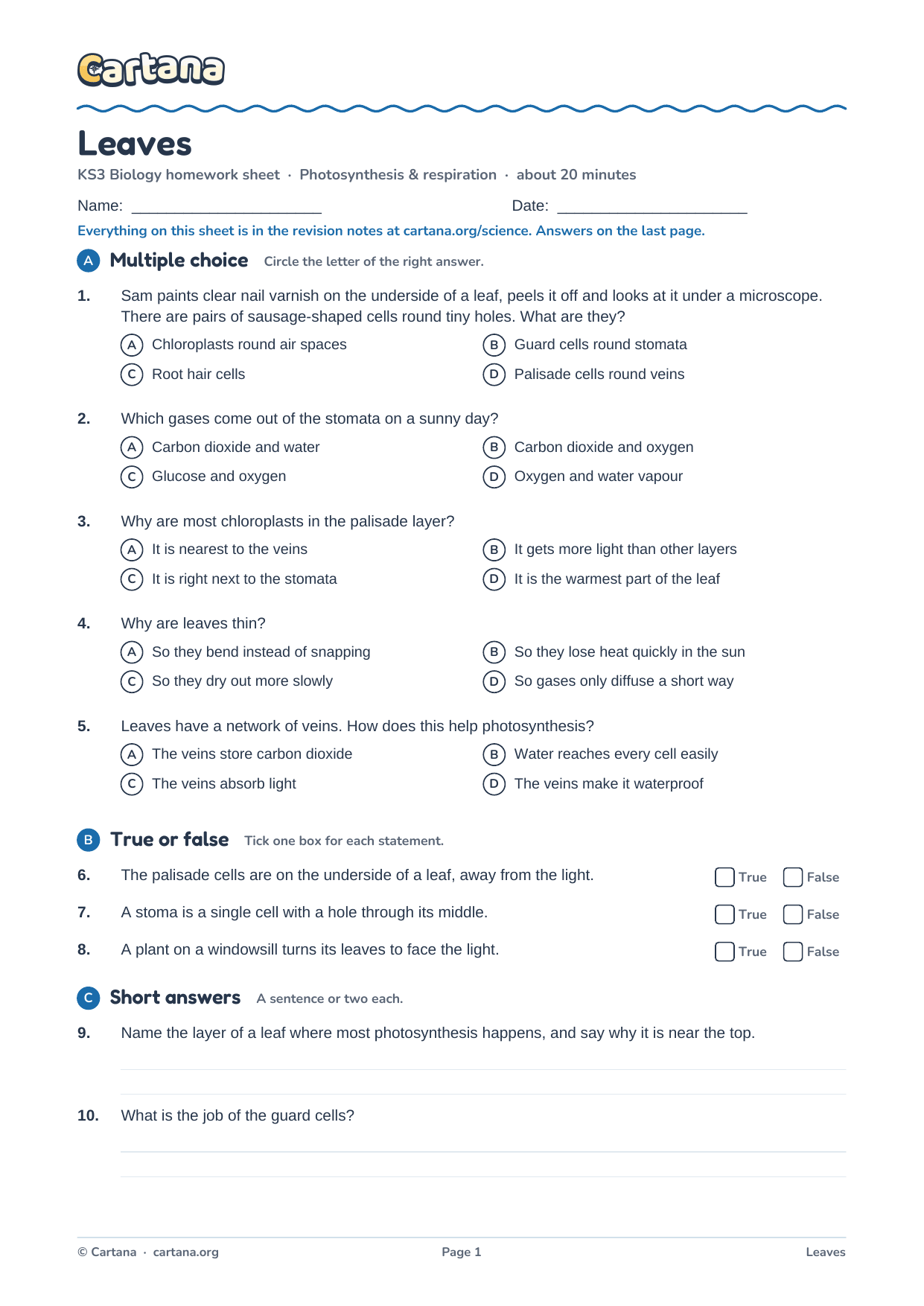
Leaves homework sheet
17 questions, about twenty minutes, with the answers on the last page: multiple choice, true or false, short answers, key words to define and one to explain in full.
KS3 Photosynthesis & respiration
Revised the whole unit? There is a 40-mark Photosynthesis & respiration test paper with a mark scheme.
 Watch the trailer · 1:06
New from Cartana · Beta test 1–31 December
Revision that feels like an adventure
Cartana is our KS3 learning adventure: sail between islands, answer quick-fire questions and battle bosses. It starts with science, with maths on the way, and launches in 2027. This December a small group of testers gets to play it first.
In the Cartana adventure, leaves is Stomata Docks, a district of the island Sugarleaf.
- Play the game before its official release
- Help us build it with your feedback
- Earn exclusive in-game items in return
More in this unit