
KS3 Biology · Reproduction
Seeds
- What is inside a seed, and what it needs to germinate
- Why plants disperse their seeds away from the parent
- Four ways seeds travel: wind, animals, water and bursting pods
- The sycamore investigation: variables, repeats, means and anomalous results
- 3 min read
- 5 quick questions
- Free homework sheet
- Years 7 to 9
Revision notes
A seed holds a tiny plant (the embryo) and a food store, inside a tough coat. Seeds need water, warmth and oxygen to germinate. Plants spread their seeds away from the parent so the seedlings do not compete with it, or with each other, for light, water and space. This is dispersal.
Inside a seed. The tough seed coat protects what is inside: the embryo (a tiny root and a tiny shoot) and its food store. Germination is a seed starting to grow. It needs water, warmth and oxygen, not light or soil: the food store keeps it going. The root grows out first, downwards; then the shoot grows up towards the light. Once its first leaves open, the seedling makes its own food by photosynthesis.
Stretch Test it with cress seeds on cotton wool in four tubes: damp and warm (they germinate), dry (they do not), damp in a fridge (very slowly, if at all), and in boiled, cooled water with a layer of oil on top, which keeps the oxygen out (they do not). Change one condition at a time, and keep the rest the same.
| Dispersal by | How | Examples |
|---|---|---|
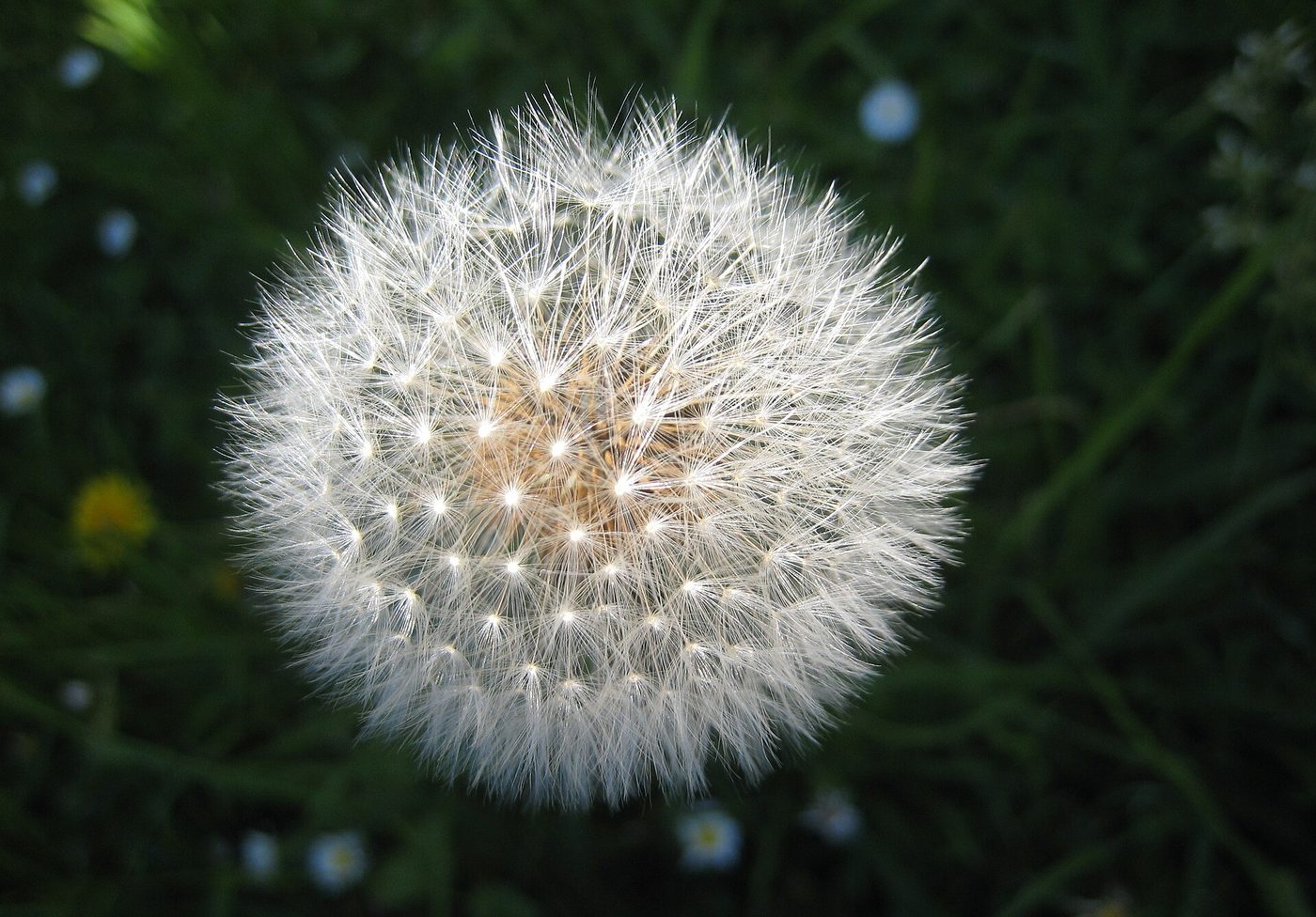
| Wind | Light seeds with wings or parachutes drift away on the breeze | Sycamore, dandelion, thistle |
| Animals | Juicy fruit is eaten and the seeds pass out in droppings; hooked burrs catch on fur | Blackberry, cherry, burdock |
| Water | Waterproof fruits and seeds with air inside float away | Coconut, water lily |
| Bursting pods | A drying pod twists and splits, flinging the seeds out | Gorse, broom, lupin, violet |

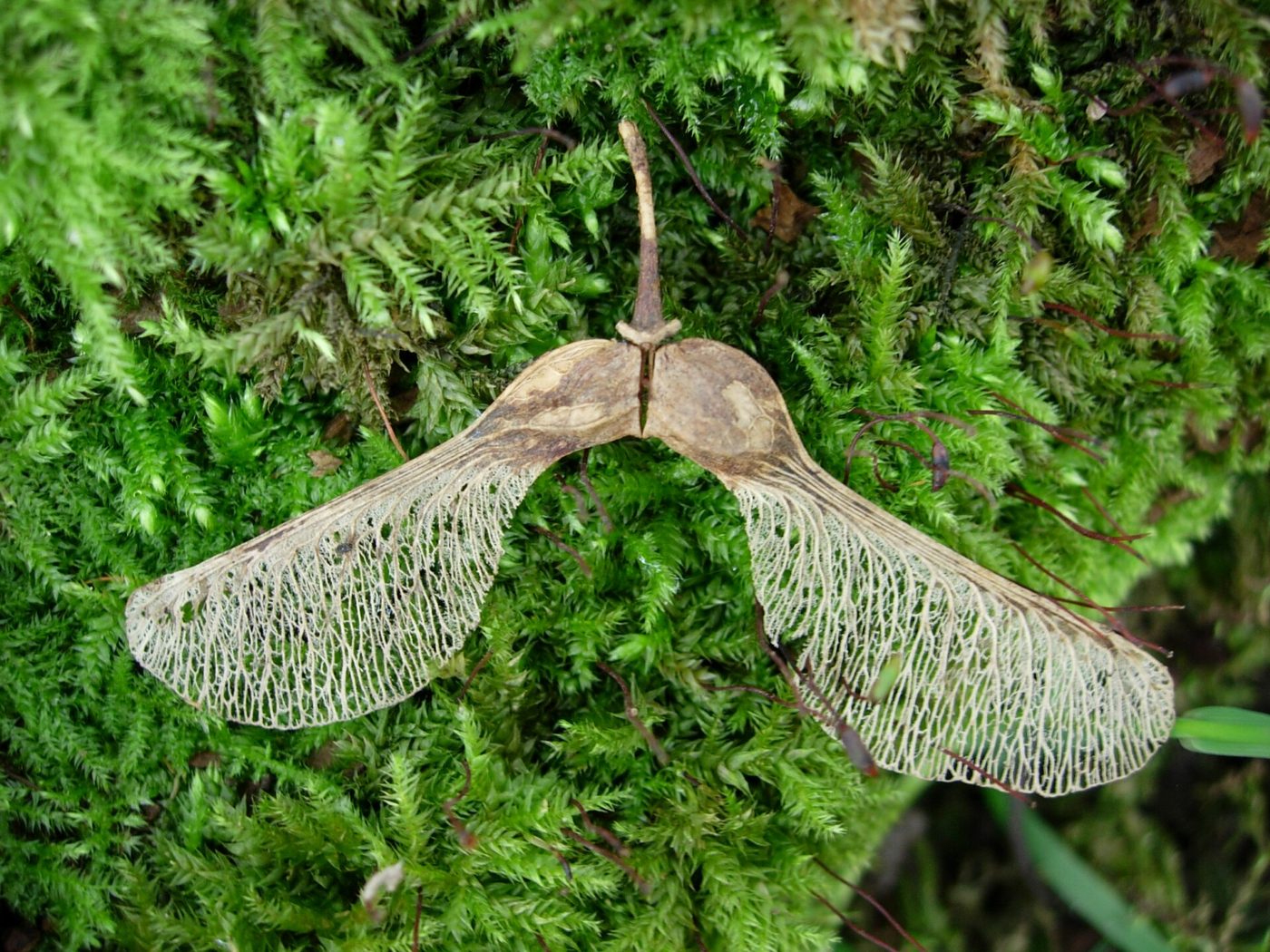
The sycamore investigation. A sycamore seed has a wing that makes it spin as it falls, like a helicopter blade; the spin slows the fall, so the wind has longer to carry it. To test how wing length affects the fall: make paper seeds with different wing lengths (the independent variable, the one you change); drop each from the same height, with the same mass and the same release (the control variables, kept the same); time each fall (the dependent variable, the one you measure); repeat each drop three times and find the mean; check for an anomalous result, one that does not fit the others, and repeat it or leave it out; draw a line graph of wing length against mean time, and write a conclusion.

* The 1.4 s drop is anomalous: far below the other two. The mean uses the other two drops.
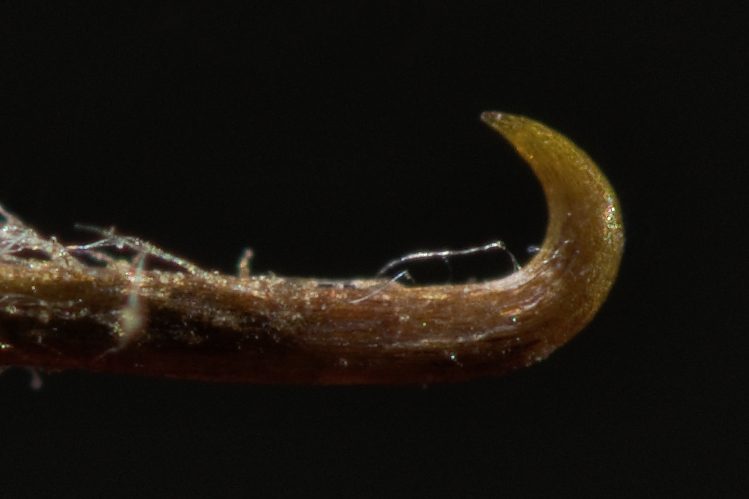
Stretch A stopwatch reads to a hundredth of a second, but your reaction time is about 0.2 s, so small differences between times may not be real: repeats, means and a bigger range of wing lengths all help. Velcro was invented by an engineer who looked at burdock burrs under a microscope after a walk with his dog.
Written to the KS3 national curriculum. Last changed 2 November 2026.
Key words
Say them, spell them, use them in an answer.
- seed
- food store
- compete
- dispersal
- Inside a seed
- seed coat
- embryo
- Germination
- independent variable
- control variables
- dependent variable
- mean
- anomalous
Common misconception
Often said“Seeds grow best right under the parent plant.”
In factUnder the parent they are shaded and compete with it for water and space. Wings, parachutes, fruit, hooks and bursting pods all exist to get seeds away.
Did you know?
Velcro’s burrs
In 1941 a Swiss engineer, George de Mestral, came home from a walk with burdock burrs stuck to his dog and his trousers. Under a microscope he saw their tiny hooks. He copied them, and Velcro was patented in 1955.
Photo: El Grafo, CC BY-SA 4.0, via Wikimedia Commons

Try 5 questions
Quick questions on seeds, marked as you go. Each one explains the answer.
Question 1 of 5
One result is much lower than the other two for the same wing. What is it?
Choose an answer. Each question explains itself.
The homework sheet
About twenty minutes. Everything on it is in the notes above; the answers are on the last page.
Free homework sheet
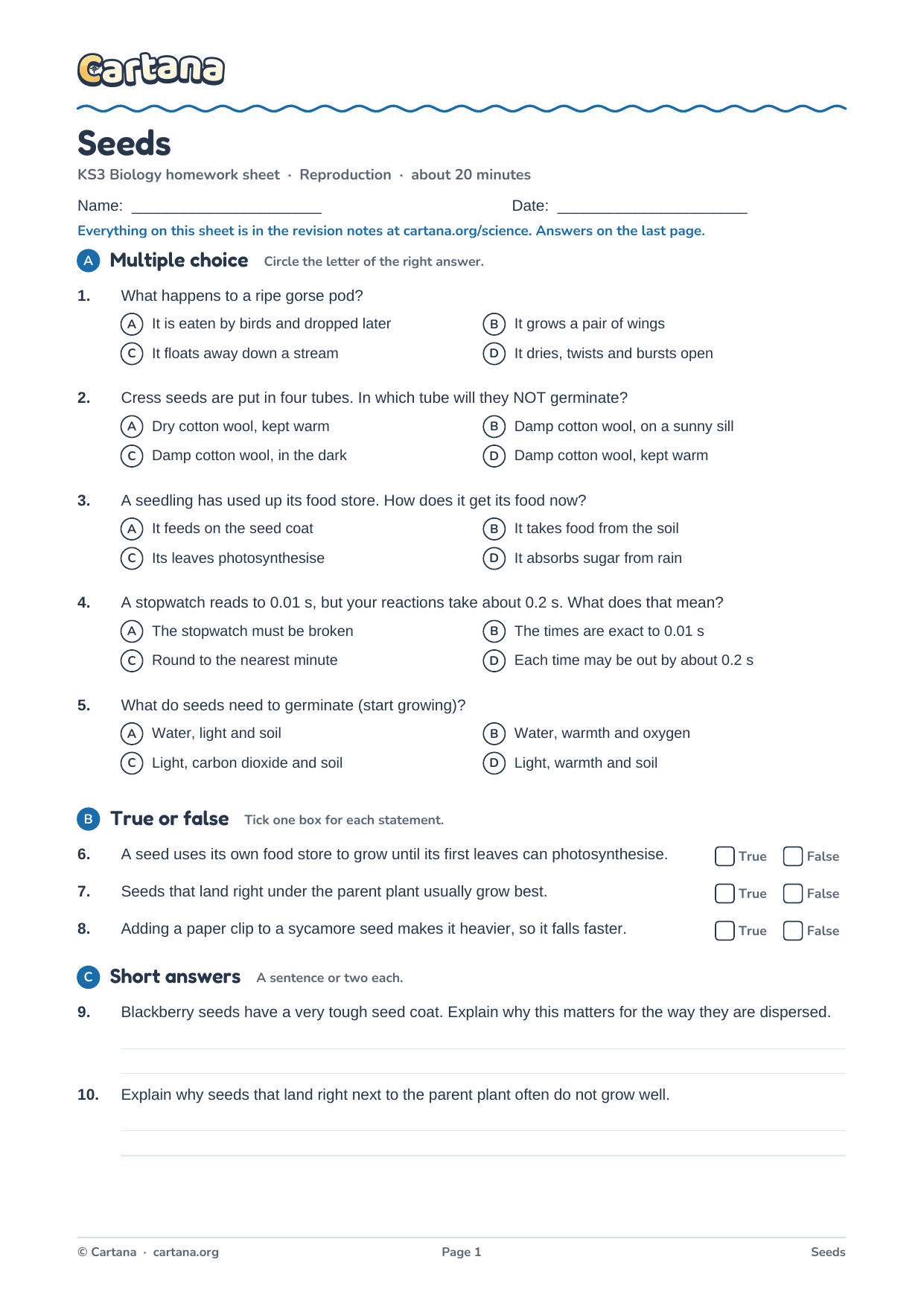
Seeds homework sheet
17 questions, about twenty minutes, with the answers on the last page: multiple choice, true or false, short answers, key words to define and one to explain in full.
KS3 Reproduction
Revised the whole unit? There is a 40-mark Reproduction test paper with a mark scheme.
 Watch the trailer · 1:06
New from Cartana · Beta test 1–31 December
Revision that feels like an adventure
Cartana is our KS3 learning adventure: sail between islands, answer quick-fire questions and battle bosses. It starts with science, with maths on the way, and launches in 2027. This December a small group of testers gets to play it first.
In the Cartana adventure, seeds is The Seed Store, a district of the island The Nursery.
- Play the game before its official release
- Help us build it with your feedback
- Earn exclusive in-game items in return
More in this unit