
KS3 Biology · Ecosystems & food webs
Food chains
- Producers, consumers and decomposers, and why the arrows in a food chain point to the eater
- Primary, secondary and tertiary consumers; herbivores, carnivores and omnivores; predators and prey
- Why energy is lost at every step, so food chains rarely have more than four or five links
- What decomposers recycle, and pyramids of numbers and biomass
- 2 min read
- 5 quick questions
- Free homework sheet
- Years 7 to 9
Revision notes
A food chain shows what eats what in a habitat, and how energy passes from one organism to the next. Almost all of that energy starts as light from the Sun, captured by plants.
The arrows point to the eater. They show which way the energy goes: from the food to the animal that eats it. “grass → grasshopper” means the grasshopper eats the grass.

| Word | Meaning | Example |
|---|---|---|
| Producer | Makes its own food by photosynthesis. Every food chain starts with one. | Grass, oak trees, algae |
| Consumer | Gets its energy by eating other organisms | Every animal |
| Primary consumer | Eats the producer | Grasshopper |
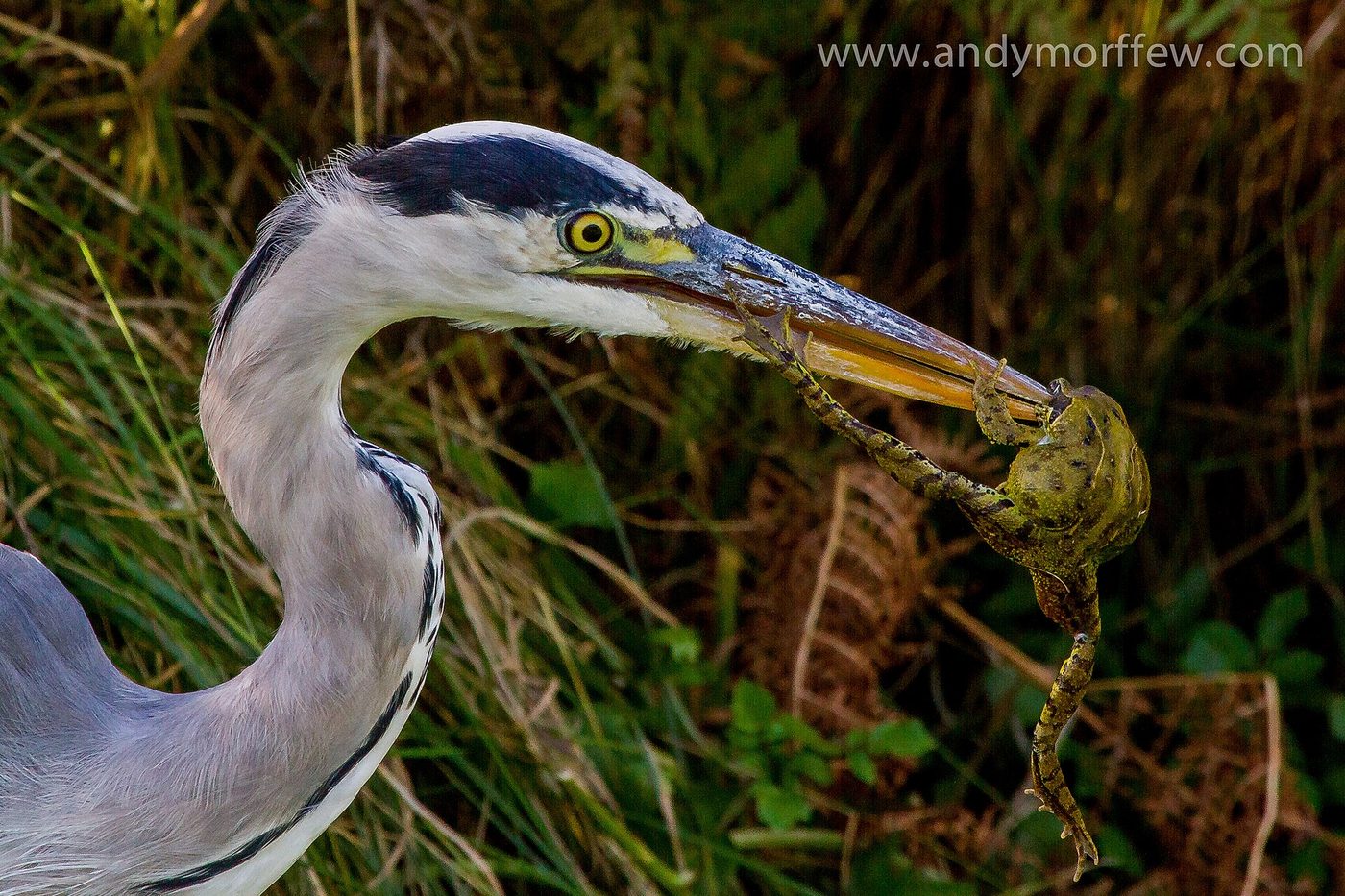
| Secondary consumer | Eats the primary consumer | Frog |
| Tertiary consumer | Eats the secondary consumer | Heron |
| Herbivore, carnivore, omnivore | Eats plants; eats animals; eats both | Rabbit; stoat; badger |
| Predator and prey | A predator hunts and kills other animals, its prey | Owl and mouse |
| Top predator | At the end of its food chain. An apex predator has no natural predators at all. | Harpy eagle |
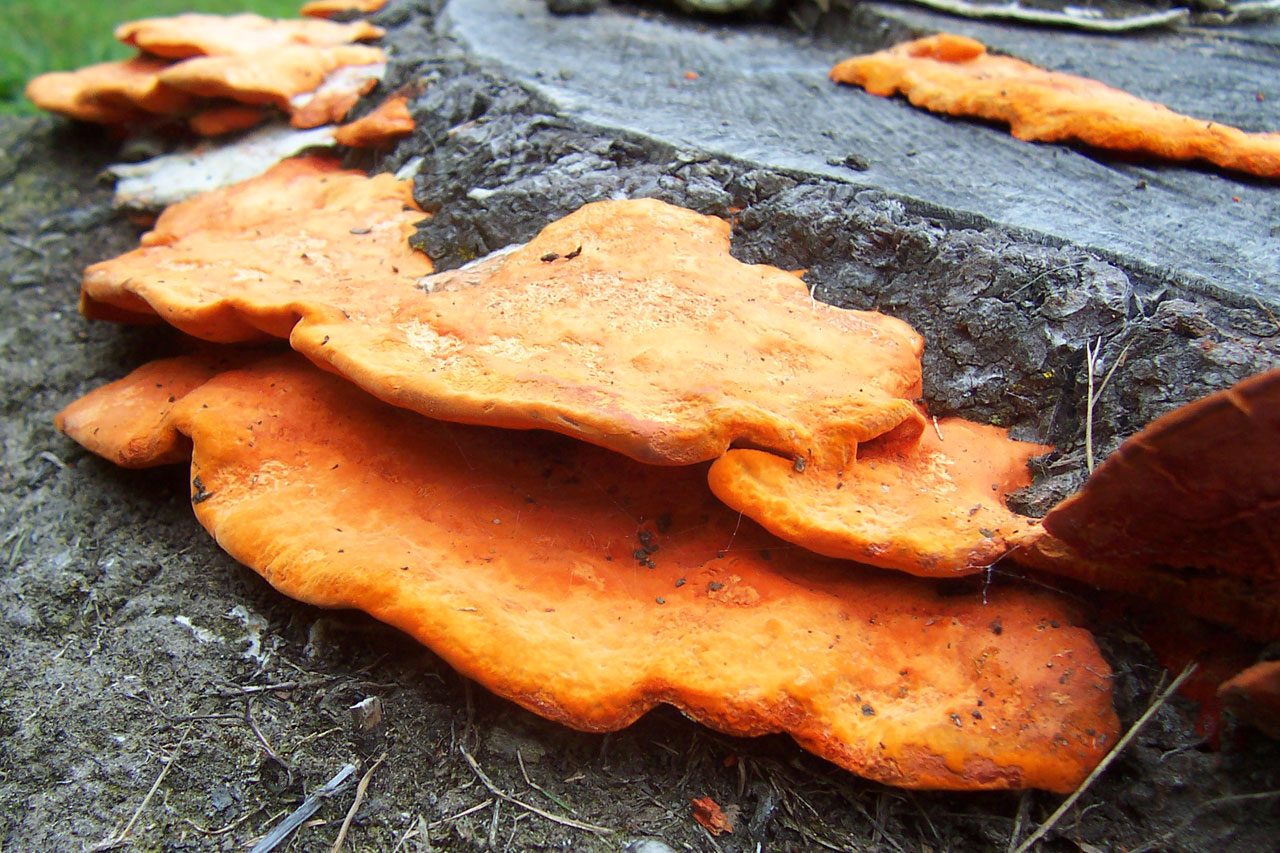
| Decomposer | Breaks down dead material and waste | Bacteria, fungi |
Energy is lost at every step, through movement, keeping warm (heat from respiration) and waste such as droppings. Only a small part of the energy at one level reaches the next. So food chains rarely have more than four or five links, and there are fewer animals at each level going up.
Decomposers (bacteria and fungi) feed on dead plants, dead animals and waste. They release the minerals in them, such as nitrates, back into the soil for plants to take up, and give out carbon dioxide as they respire. Earthworms and woodlice help by breaking dead leaves into small pieces. Without decomposers, dead things would pile up and plants would run short of minerals.

Stretch A pyramid of numbers shows how many organisms there are at each level of a food chain. It is not always pyramid-shaped: one oak tree can feed 2000 caterpillars. A pyramid of biomass shows the total mass at each level and is almost always pyramid-shaped.
Written to the KS3 national curriculum. Last changed 2 November 2026.
Key words
Say them, spell them, use them in an answer.
- food chain
- energy
- Sun
- Decomposers
- minerals
- pyramid of numbers
- pyramid of biomass
Common misconception
Often said“The arrows in a food chain point to the thing being eaten.”
In factThe arrows show where the energy goes: from the food to the organism that eats it. They point to the eater.
Did you know?
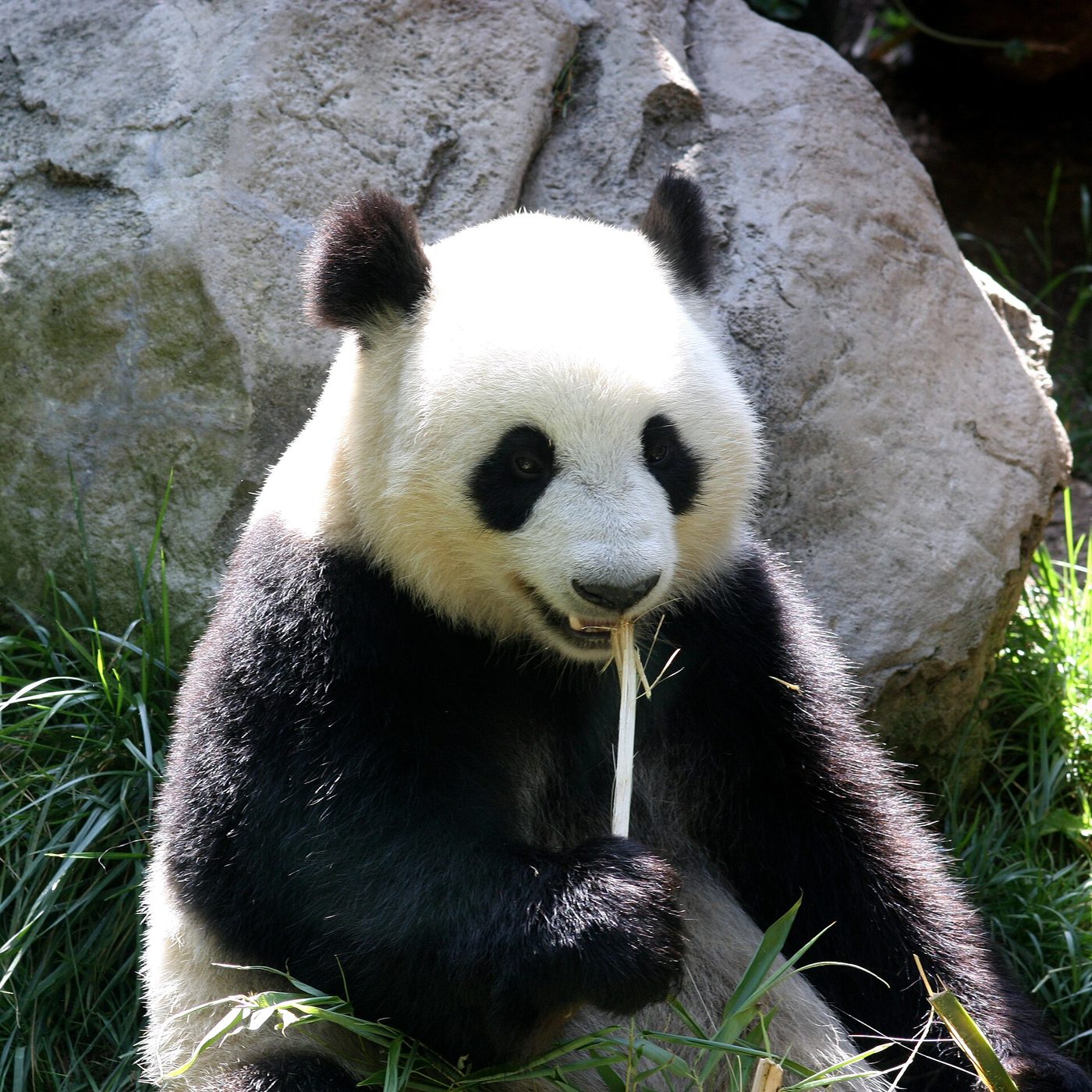
Giant panda
A bear with a meat-eater’s gut that eats almost nothing but bamboo. Its gut is poor at digesting it, so it spends most of the day eating, getting through around 12 to 38 kg of bamboo.
Photo: Kevin Dooley, CC BY 2.0, via Wikimedia Commons

Try 5 questions
Quick questions on food chains, marked as you go. Each one explains the answer.
Question 1 of 5
The first consumer in a food chain is always a carnivore.
Choose an answer. Each question explains itself.
The homework sheet
About twenty minutes. Everything on it is in the notes above; the answers are on the last page.
Free homework sheet
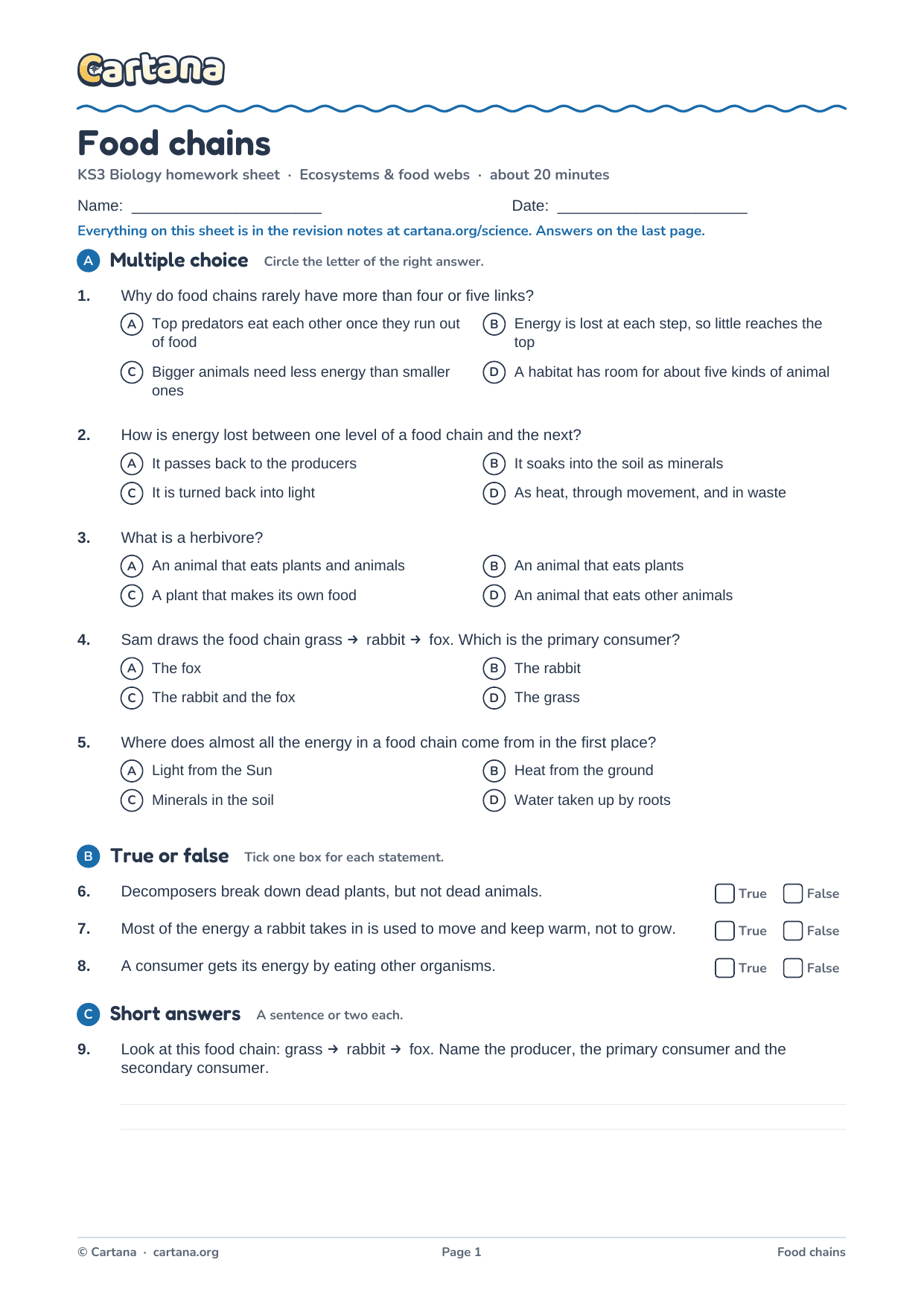
Food chains homework sheet
17 questions, about twenty minutes, with the answers on the last page: multiple choice, true or false, short answers, key words to define and one to explain in full.
KS3 Ecosystems & food webs
Revised the whole unit? There is a 40-mark Ecosystems & food webs test paper with a mark scheme.
 Watch the trailer · 1:06
New from Cartana · Beta test 1–31 December
Revision that feels like an adventure
Cartana is our KS3 learning adventure: sail between islands, answer quick-fire questions and battle bosses. It starts with science, with maths on the way, and launches in 2027. This December a small group of testers gets to play it first.
In the Cartana adventure, food chains is Chainlink Falls, a district of the island Munchu Picchu.
- Play the game before its official release
- Help us build it with your feedback
- Earn exclusive in-game items in return
More in this unit