
KS3 Biology · Body systems & health
Breathing
- The path air takes: trachea, bronchi, bronchioles and alveoli
- Gas exchange in the alveoli, and how they are adapted for it
- How the diaphragm and intercostal muscles make you breathe in and out
- The bell jar model, measuring lung volume, exercise and asthma
- 2 min read
- 5 quick questions
- Free homework sheet
- Years 7 to 9
Revision notes
Air goes in through your nose or mouth, down the trachea (windpipe), into two bronchi, along smaller and smaller bronchioles, and ends in hundreds of millions of tiny air sacs called alveoli. Mucus traps dust and microbes, and tiny hairs called cilia sweep it up and out.
- trachea (windpipe)
- bronchus
- bronchiole
- alveoli (air sacs)
- rib
- intercostal muscles
- diaphragm
Gas exchange happens in the alveoli. Oxygen diffuses from the air into the blood in the capillaries; carbon dioxide diffuses from the blood into the air, to be breathed out.
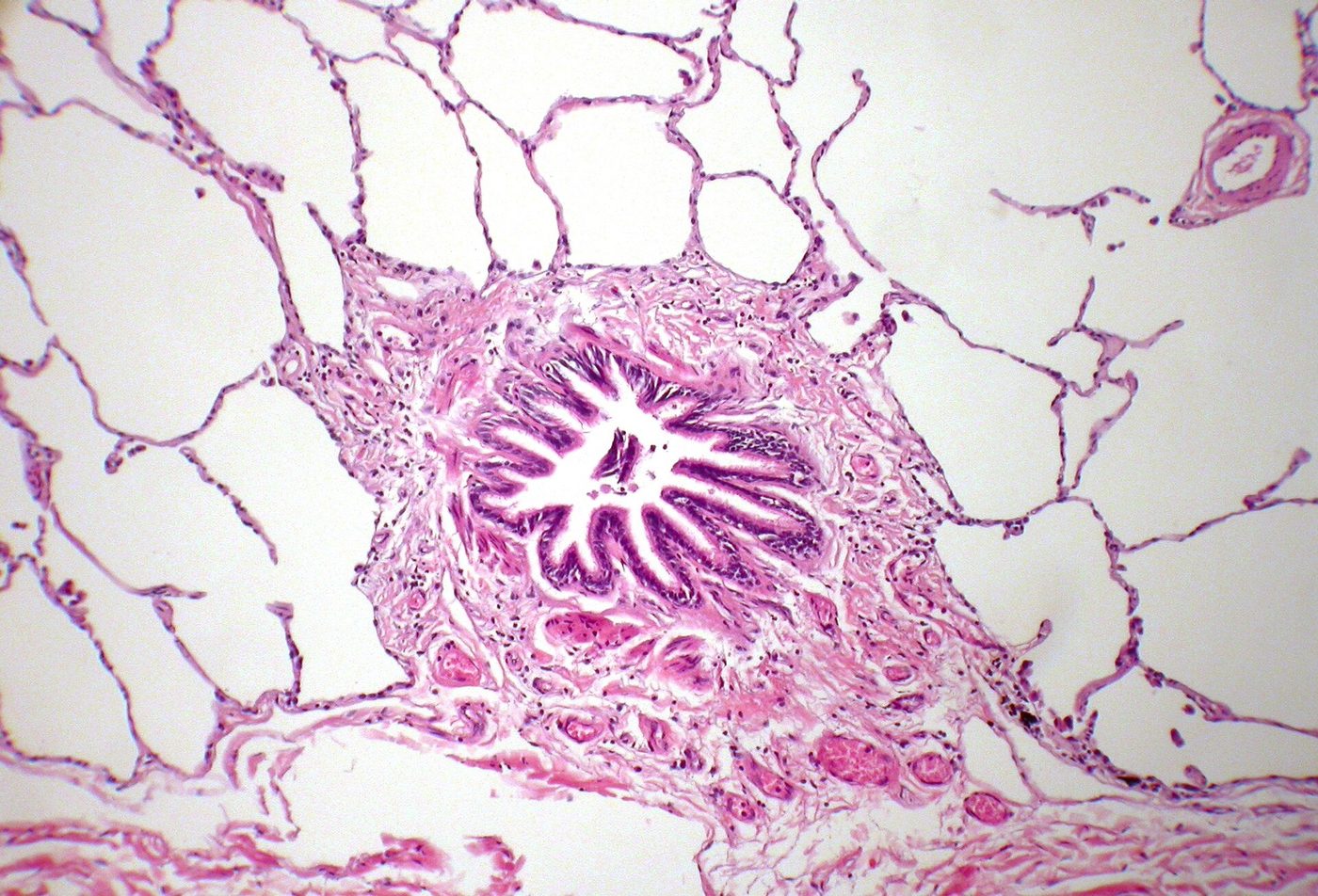

| The alveoli have… | …which helps because |
|---|---|
| Walls one cell thick | Gases only have a short way to diffuse |
| A huge surface area (hundreds of millions of them) | Lots of gas can cross at once |
| A moist lining | Gases dissolve before they diffuse across |
| A rich supply of capillaries | Blood keeps carrying the oxygen away, so diffusion keeps going |
| Breathing in | Breathing out | |
|---|---|---|
| Intercostal muscles | Contract: the ribs move up and out | Relax: the ribs move down and in |
| Diaphragm | Contracts and flattens | Relaxes and domes upwards |
| Volume of the chest | Increases | Decreases |
| Pressure inside | Falls below the air outside, so air moves in | Rises above the air outside, so air is pushed out |
- Y-tube: trachea and bronchi
- balloon: a lung
- bell jar: the chest
- rubber sheet: the diaphragm
The bell jar model. The rubber sheet is the diaphragm, the balloons are the lungs, the Y-tube is the trachea and bronchi, and the jar is the chest. Pull the sheet down and the balloons fill. But the glass cannot move like real ribs, and real lungs are spongy, not hollow balloons.
| Gas | Air breathed in | Air breathed out |
|---|---|---|
| Oxygen | About 21% | About 16% |
| Carbon dioxide | About 0.04% | About 4% |
| Nitrogen | About 78% | About 78% |
Measuring lung volume: breathe out fully through a tube into an upside-down bottle full of water. The water pushed out equals the air breathed out. A spirometer does it more accurately. Exercise makes you breathe faster and deeper, and regular exercise strengthens the breathing muscles. In asthma, the airways swell, tighten and fill with mucus; a reliever inhaler relaxes the muscles around them. Smoking damages the cilia and the alveoli: see Drugs and health.
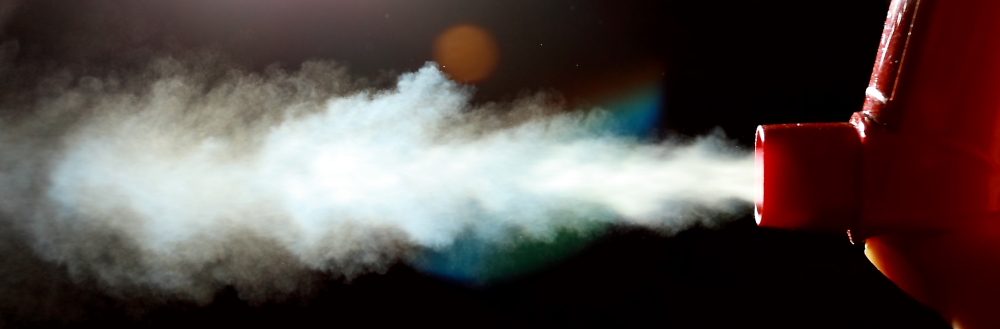

Breathing is not respiration. Breathing moves air in and out of the lungs. Respiration is the reaction in every cell that releases energy from glucose.
Written to the KS3 national curriculum. Last changed 2 November 2026.
Key words
Say them, spell them, use them in an answer.
- trachea
- bronchi
- bronchioles
- alveoli
- cilia
- Gas exchange
- diffuses
- Measuring lung volume
- Exercise
- asthma
- Smoking
Common misconception
Often said“You breathe in oxygen and breathe out carbon dioxide.”
In factYou breathe air in and air out. Breathed-out air is still about 16% oxygen (down from 21%) and about 4% carbon dioxide (up from 0.04%).
Did you know?
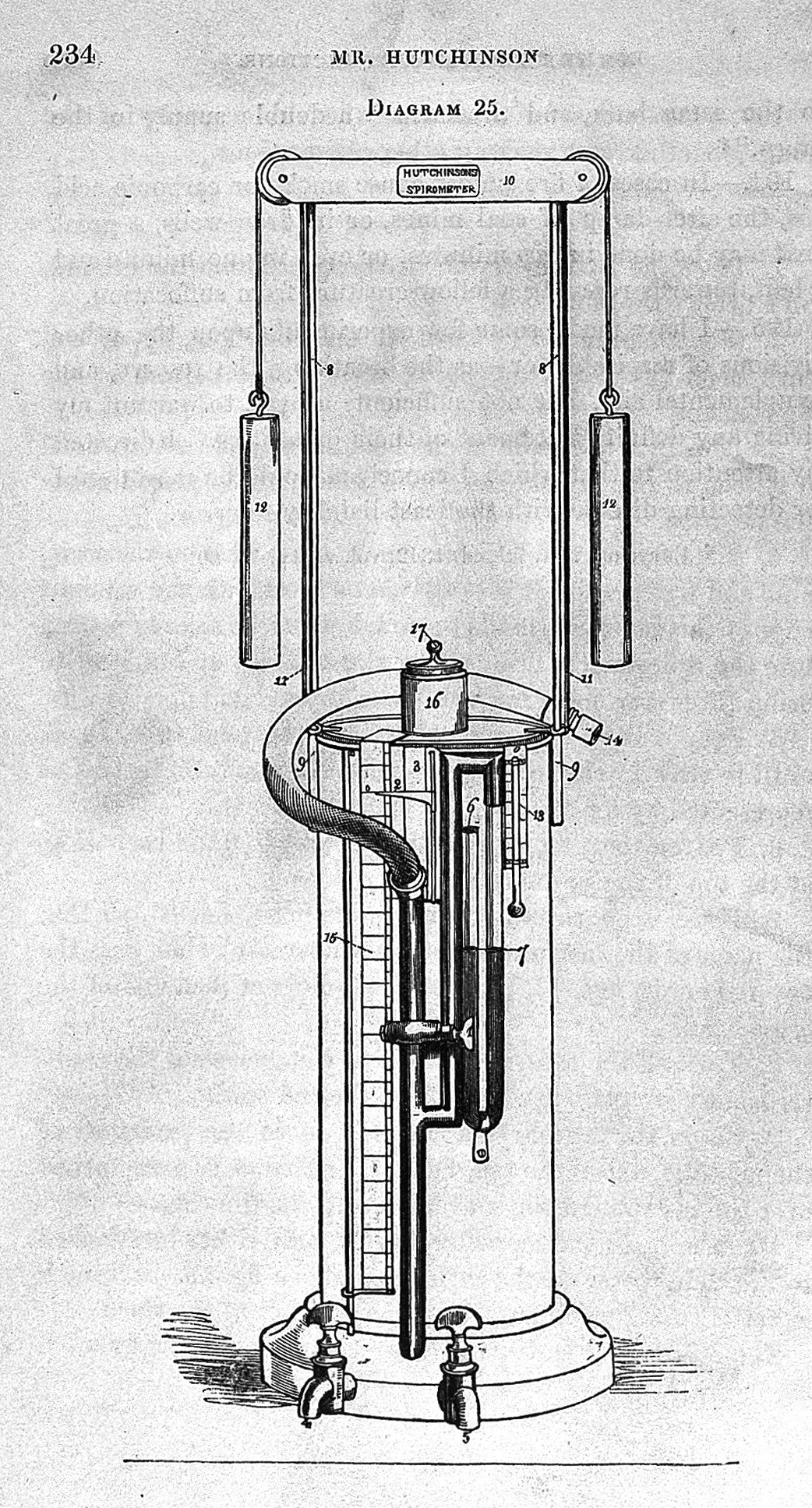
Hutchinson’s spirometer
In 1846 a London doctor, John Hutchinson, built a spirometer and measured how much air more than 2,000 people could breathe out. He called it the vital capacity, and doctors still use the name.
Photo: Wellcome Collection, CC BY 4.0, via Wikimedia Commons

Try 5 questions
Quick questions on breathing, marked as you go. Each one explains the answer.
Question 1 of 5
Which feature helps the lungs exchange gases quickly?
Choose an answer. Each question explains itself.
The homework sheet
About twenty minutes. Everything on it is in the notes above; the answers are on the last page.
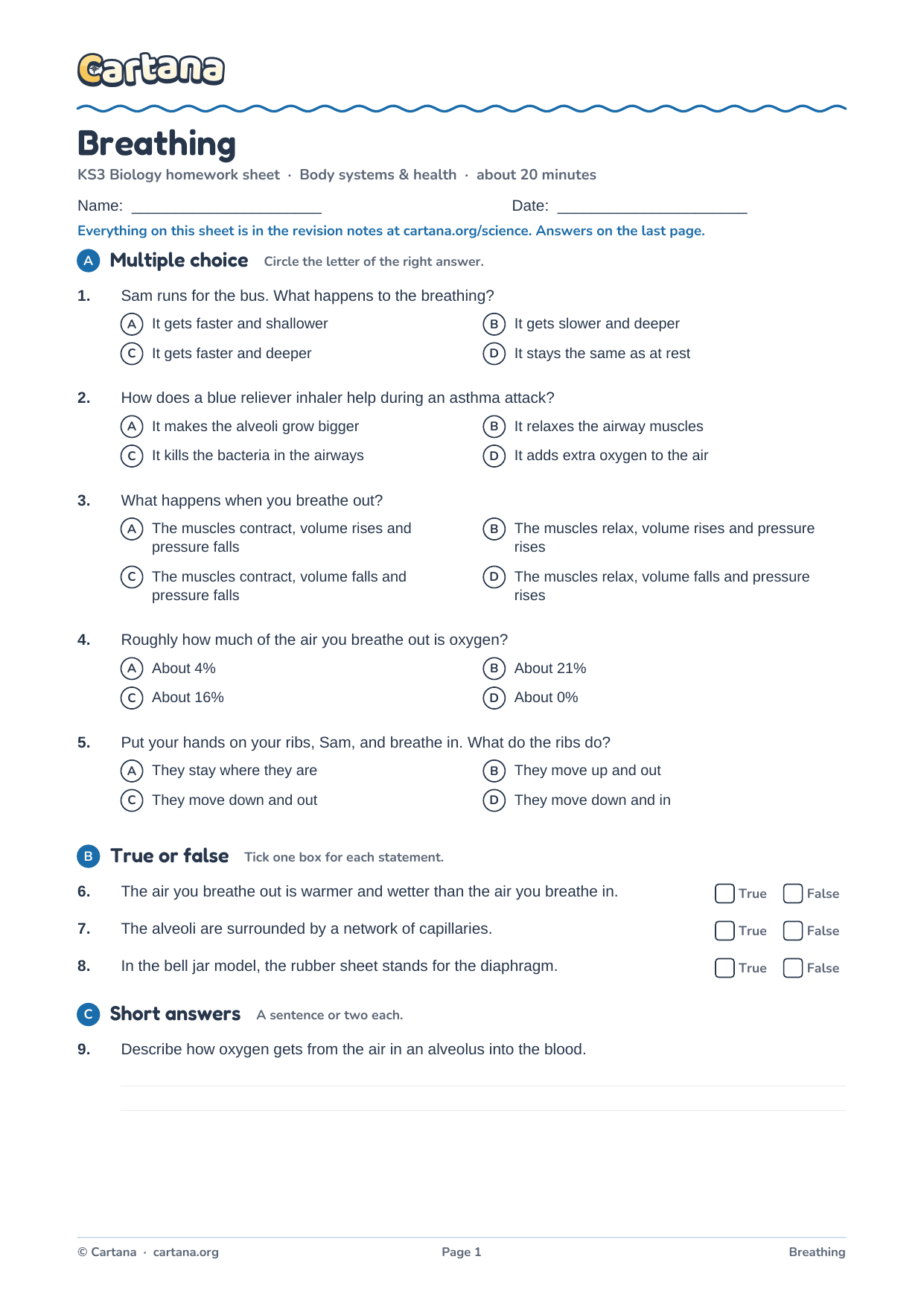
Free homework sheet
Breathing homework sheet
17 questions, about twenty minutes, with the answers on the last page: multiple choice, true or false, short answers, key words to define and one to explain in full.
KS3 Body systems & health
Revised the whole unit? There is a 40-mark Body systems & health test paper with a mark scheme.
 Watch the trailer · 1:06
New from Cartana · Beta test 1–31 December
Revision that feels like an adventure
Cartana is our KS3 learning adventure: sail between islands, answer quick-fire questions and battle bosses. It starts with science, with maths on the way, and launches in 2027. This December a small group of testers gets to play it first.
In the Cartana adventure, breathing is Bellows Bay, a district of the island Cardia.
- Play the game before its official release
- Help us build it with your feedback
- Earn exclusive in-game items in return
More in this unit