
KS3 Biology · Photosynthesis & respiration
Photosynthesis
- The word equation: carbon dioxide + water → glucose + oxygen, using light and chlorophyll
- Where each substance comes from and where it goes
- Why plants and algae are producers, and what chemosynthesis is
- How carbon moves round the carbon cycle
- 2 min read
- 5 quick questions
- Free homework sheet
- Years 7 to 9
Revision notes
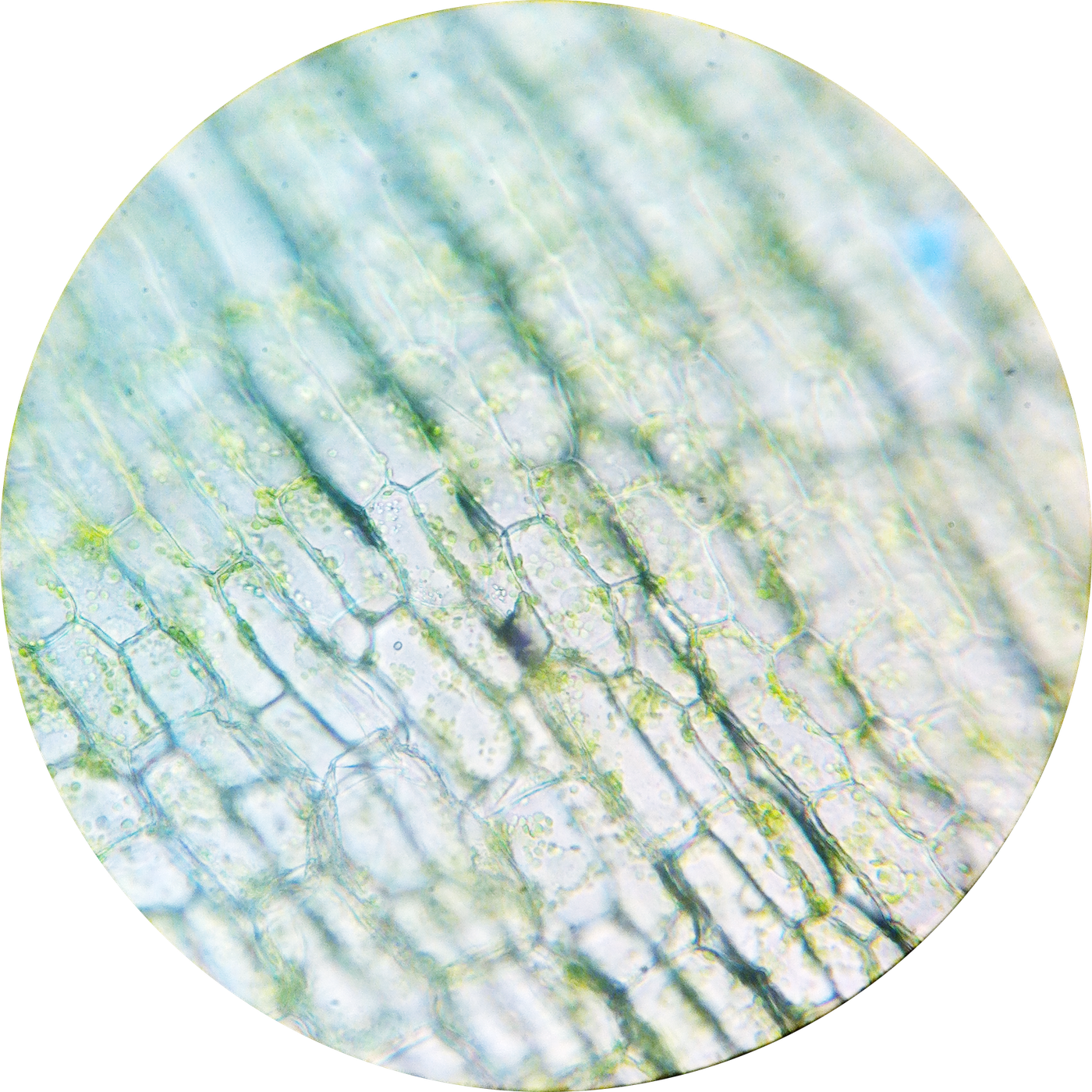
Photosynthesis is how plants and algae make their own food, glucose, using light energy. It happens in the chloroplasts, which contain the green pigment chlorophyll. Chlorophyll absorbs the light.
Stretch The balanced symbol equation: 6CO₂ + 6H₂O → C₆H₁₂O₆ + 6O₂
Light is not a reactant. It is the energy that drives the reaction. The reactants are carbon dioxide and water; the products are glucose and oxygen. The energy ends up in a chemical store in the glucose.
| Substance | Where it comes from, or where it goes |
|---|---|
| Carbon dioxide | From the air, into the leaf through the stomata |
| Water | From the soil, through the root hair cells, up the stem in the xylem |
| Glucose | Made in the leaf. Used for respiration; stored as starch (insoluble); made into cellulose for cell walls, proteins (using nitrates) and fats and oils for seeds |
| Oxygen | Some is used in respiration; the rest leaves through the stomata |
Plants and algae make their own food, so they are producers. Almost every food chain starts with one. Photosynthesis also takes carbon dioxide out of the air, and it made almost all the oxygen in it.
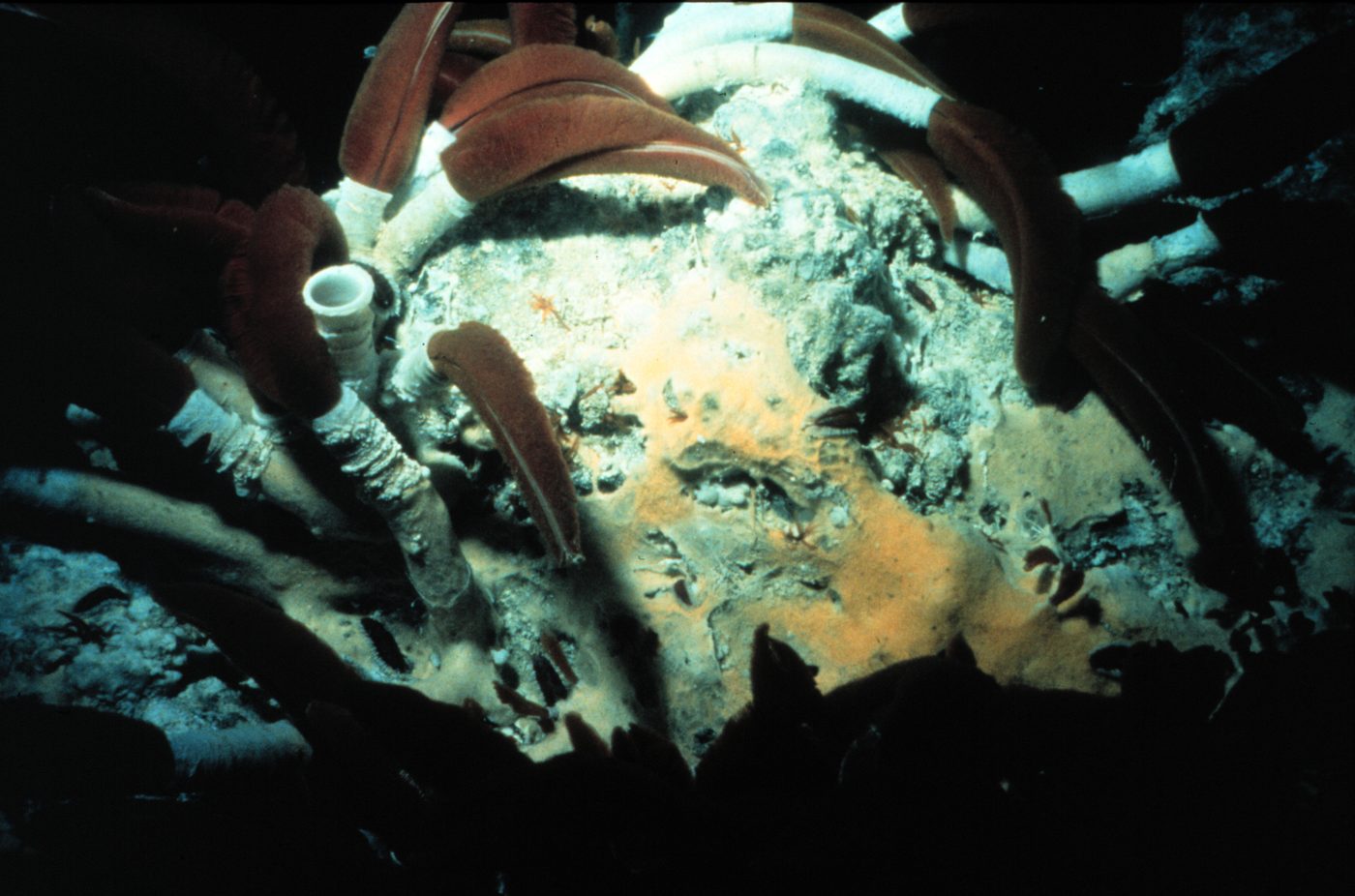
Some bacteria, for example at deep-sea vents where there is no light, make glucose using energy from chemical reactions instead of light. Whole communities of animals depend on them.

Mushrooms and yeast are fungi, not plants: no chlorophyll, so no photosynthesis.

The carbon cycle
Carbon keeps moving round. Photosynthesis takes carbon dioxide out of the air and builds the carbon into glucose, then into the rest of the plant. Animals get that carbon by eating plants (or animals that ate plants). Respiration by plants, animals and decomposers puts carbon dioxide back into the air, and so does burning wood and fossil fuels. Coal, oil and gas formed from the remains of living things that died millions of years ago.
Written to the KS3 national curriculum. Last changed 5 November 2026.
Key words
Say them, spell them, use them in an answer.
- Photosynthesis
- glucose
- light energy
- chloroplasts
- chlorophyll
- stomata
- root hair cells
- xylem
- starch
- cellulose
- proteins
- fats and oils
- producers
- bacteria
- chemical reactions
- fungi
Common misconception
Often said“Light is one of the ingredients of photosynthesis.”
In factLight is the energy source. The ingredients (reactants) are carbon dioxide and water.
Did you know?
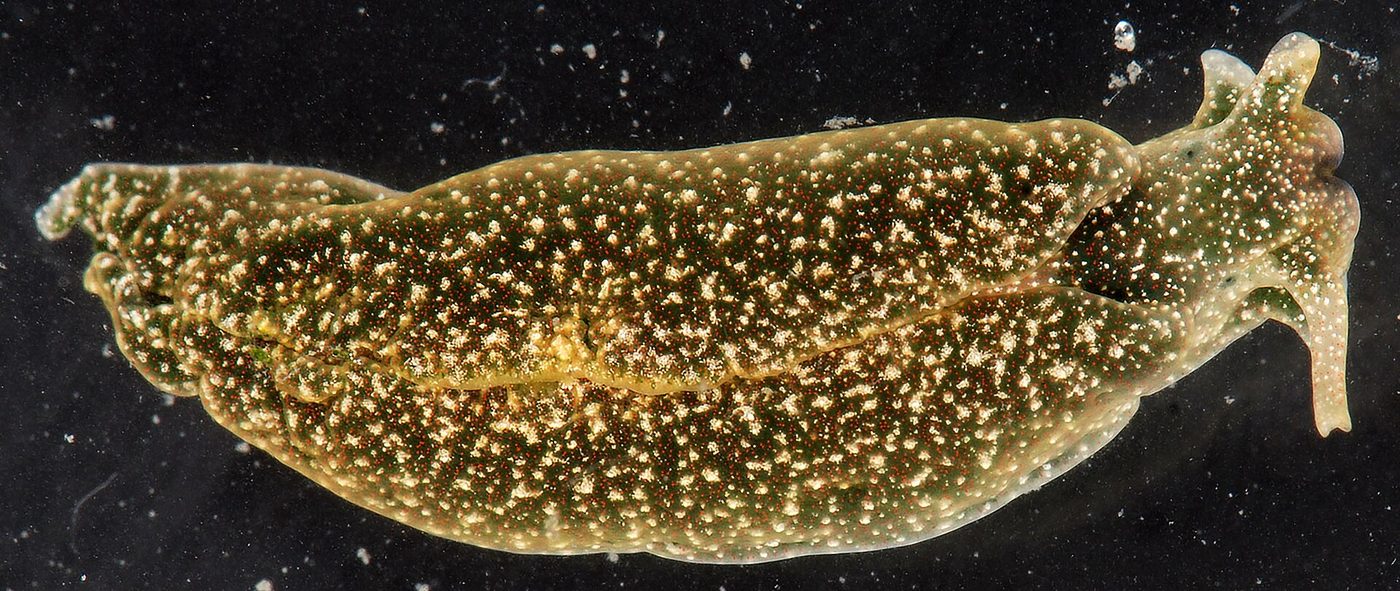
Emerald sea slug
An animal that runs partly on sunlight. It eats algae and keeps their chloroplasts working inside its own cells, sometimes for months, using them to photosynthesise.
Photo: Smithsonian Environmental Research Center, CC BY 2.0, via Wikimedia Commons

Try 5 questions
Quick questions on photosynthesis, marked as you go. Each one explains the answer.
Question 1 of 5
Which word equation for photosynthesis is correct?
Choose an answer. Each question explains itself.
The homework sheet
About twenty minutes. Everything on it is in the notes above; the answers are on the last page.
Free homework sheet
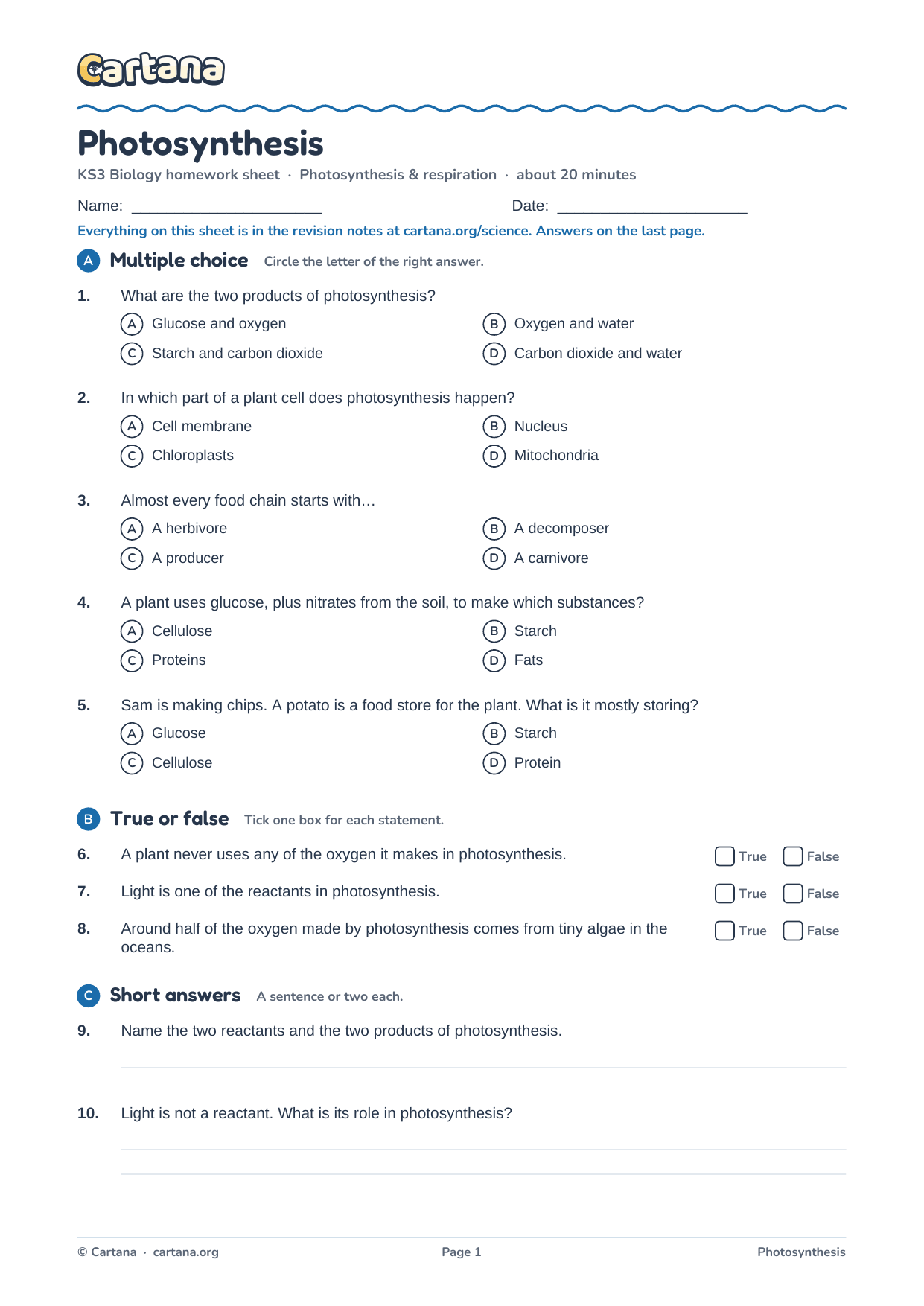
Photosynthesis homework sheet
17 questions, about twenty minutes, with the answers on the last page: multiple choice, true or false, short answers, key words to define and one to explain in full.
KS3 Photosynthesis & respiration
Revised the whole unit? There is a 40-mark Photosynthesis & respiration test paper with a mark scheme.
 Watch the trailer · 1:06
New from Cartana · Beta test 1–31 December
Revision that feels like an adventure
Cartana is our KS3 learning adventure: sail between islands, answer quick-fire questions and battle bosses. It starts with science, with maths on the way, and launches in 2027. This December a small group of testers gets to play it first.
In the Cartana adventure, photosynthesis is The Sugar Works, a district of the island Sugarleaf.
- Play the game before its official release
- Help us build it with your feedback
- Earn exclusive in-game items in return
More in this unit