
KS3 Biology · Digestion & nutrition
Malnutrition
- What malnutrition means: too much, too little, or the wrong balance
- Deficiency diseases: scurvy, rickets, anaemia, night blindness and kwashiorkor
- Obesity, starvation and the energy balance
- What too little fibre or too little water does
- 1 min read
- 5 quick questions
- Free homework sheet
- Years 7 to 9
Revision notes
Malnutrition
Malnutrition means eating too much, too little, or the wrong balance of nutrients.
| Condition | Cause | Signs |
|---|---|---|
| Scurvy | Lack of vitamin C | Bleeding gums, wounds that will not heal |
| Rickets | Lack of vitamin D (or calcium) | Soft, weak, bowed bones |
| Anaemia | Lack of iron | Pale, tired, breathless |
| Night blindness | Lack of vitamin A | Poor vision in dim light |
| Kwashiorkor | Lack of protein | Swollen belly, thin limbs, poor growth |
| Constipation | Too little fibre | Food moves slowly; hard to go |
| Obesity | More energy in than out, for a long time | Raised risk of type 2 diabetes, heart disease, high blood pressure |
| Dehydration | Too little water (or losing it in sweat or illness) | Thirst, headache, tiredness, dark yellow urine, dizziness |
| Starvation | Too little food overall | Body uses up its stored carbohydrate and fat, then breaks down muscle |



Written to the KS3 national curriculum. Last changed 2 November 2026.
Key words
Say them, spell them, use them in an answer.
- Scurvy
- Rickets
- Anaemia
- Night blindness
- Kwashiorkor
- Constipation
- Obesity
- Dehydration
- Starvation
Common misconception
Often said“Pooing is excretion.”
In factFaeces were never part of your cells: that is egestion. Excretion removes cell waste like urea and carbon dioxide.
Try 5 questions
Quick questions on malnutrition, marked as you go. Each one explains the answer.
Question 1 of 5
Ate nothing but white toast, crisps and squash through a 48-hour Switch 2 session. Tummy ache, and has not been able to go to the toilet for days. What is wrong with The Marathon Gamer?
Choose an answer. Each question explains itself.
The homework sheet
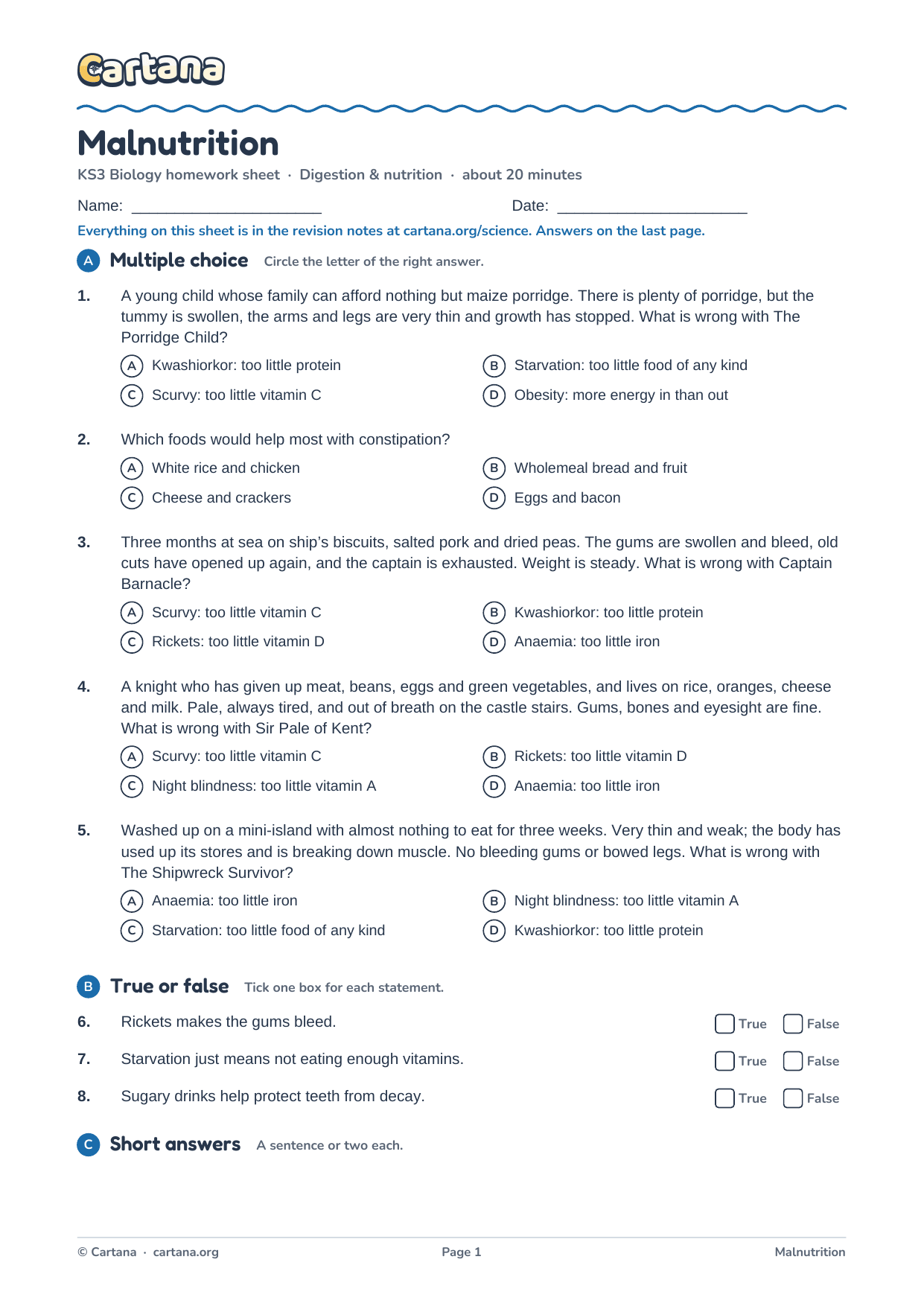
About twenty minutes. Everything on it is in the notes above; the answers are on the last page.
Free homework sheet
Malnutrition homework sheet
17 questions, about twenty minutes, with the answers on the last page: multiple choice, true or false, short answers, key words to define and one to explain in full.
KS3 Digestion & nutrition
Revised the whole unit? There is a 40-mark Digestion & nutrition test paper with a mark scheme.
 Watch the trailer · 1:06
New from Cartana · Beta test 1–31 December
Revision that feels like an adventure
Cartana is our KS3 learning adventure: sail between islands, answer quick-fire questions and battle bosses. It starts with science, with maths on the way, and launches in 2027. This December a small group of testers gets to play it first.
In the Cartana adventure, malnutrition is Île Hôpital, a district of the island The Alimentary Archipelago.
- Play the game before its official release
- Help us build it with your feedback
- Earn exclusive in-game items in return
More in this unit