
KS3 Biology · Ecosystems & food webs
Food webs
- What a food web is and how to read one, with each organism shown once
- Interdependence: food, shelter, pollination and spreading seeds
- Predicting the knock-on effects when a species is removed or booms
- Introduced and invasive species, from cane toads to grey squirrels, and keystone species
- 1 min read
- 5 quick questions
- Free homework sheet
- Years 7 to 9
Revision notes
A food web is lots of food chains joined together. It is more realistic than one chain, because most animals eat more than one thing and are eaten by more than one thing. Each organism appears once, with all its arrows.
Interdependence: organisms depend on each other for food, shelter, pollination and spreading seeds. A change to one population has knock-on effects on others.
| If this happens… | …then usually |
|---|---|
| A predator is removed | Its prey increase, because fewer are eaten |
| A prey animal is removed | Its predators decrease, unless they can switch to other food |
| A population booms | Its food decreases and its predators increase |
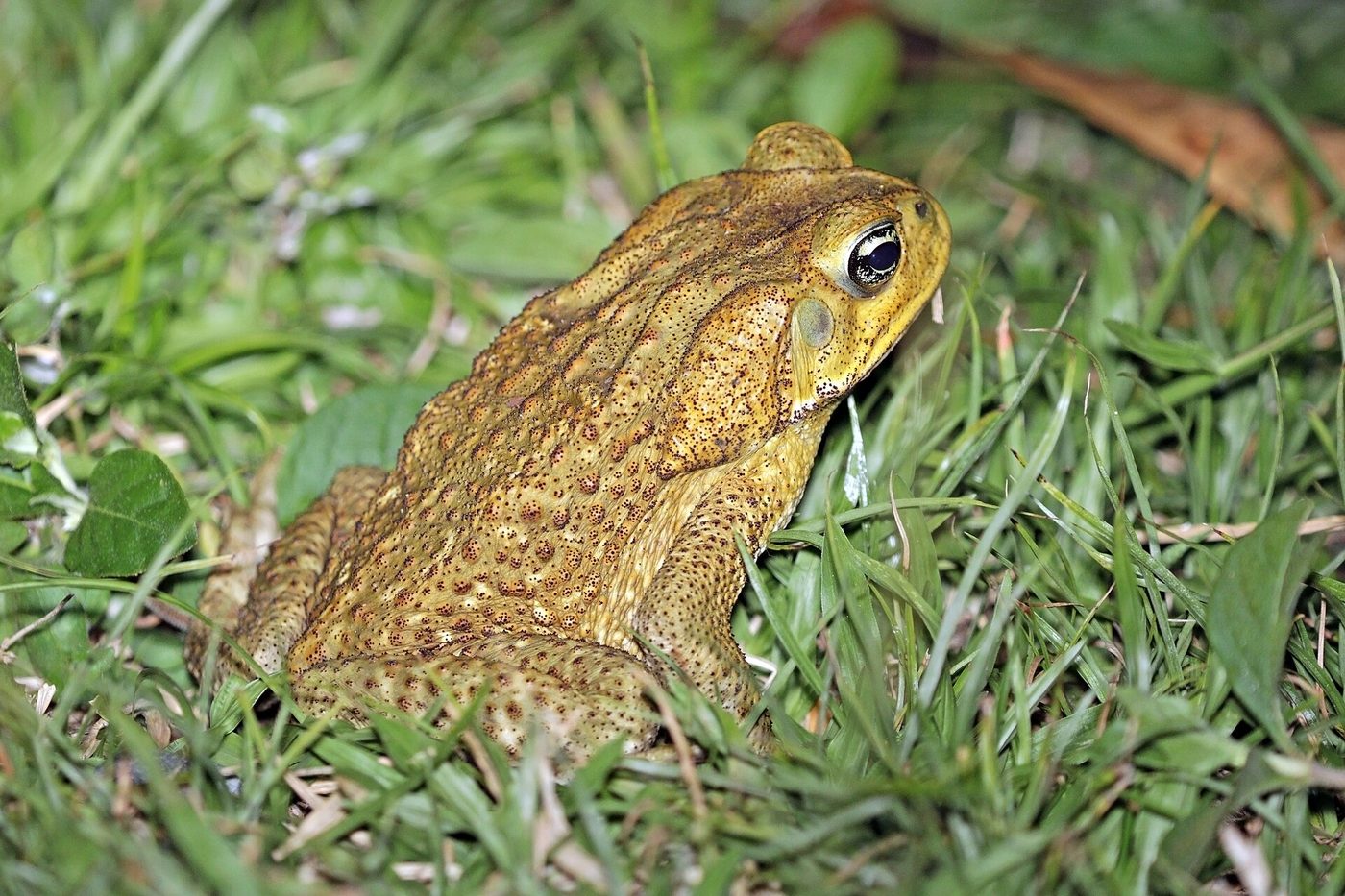
Introduced species are brought into a new area by people. With no natural predators there, some spread fast and harm native wildlife: they compete for food and space, spread disease or poison predators. Famous examples: cane toads in Australia (1935), grey squirrels in Britain, rats on seabird islands and signal crayfish in British rivers.

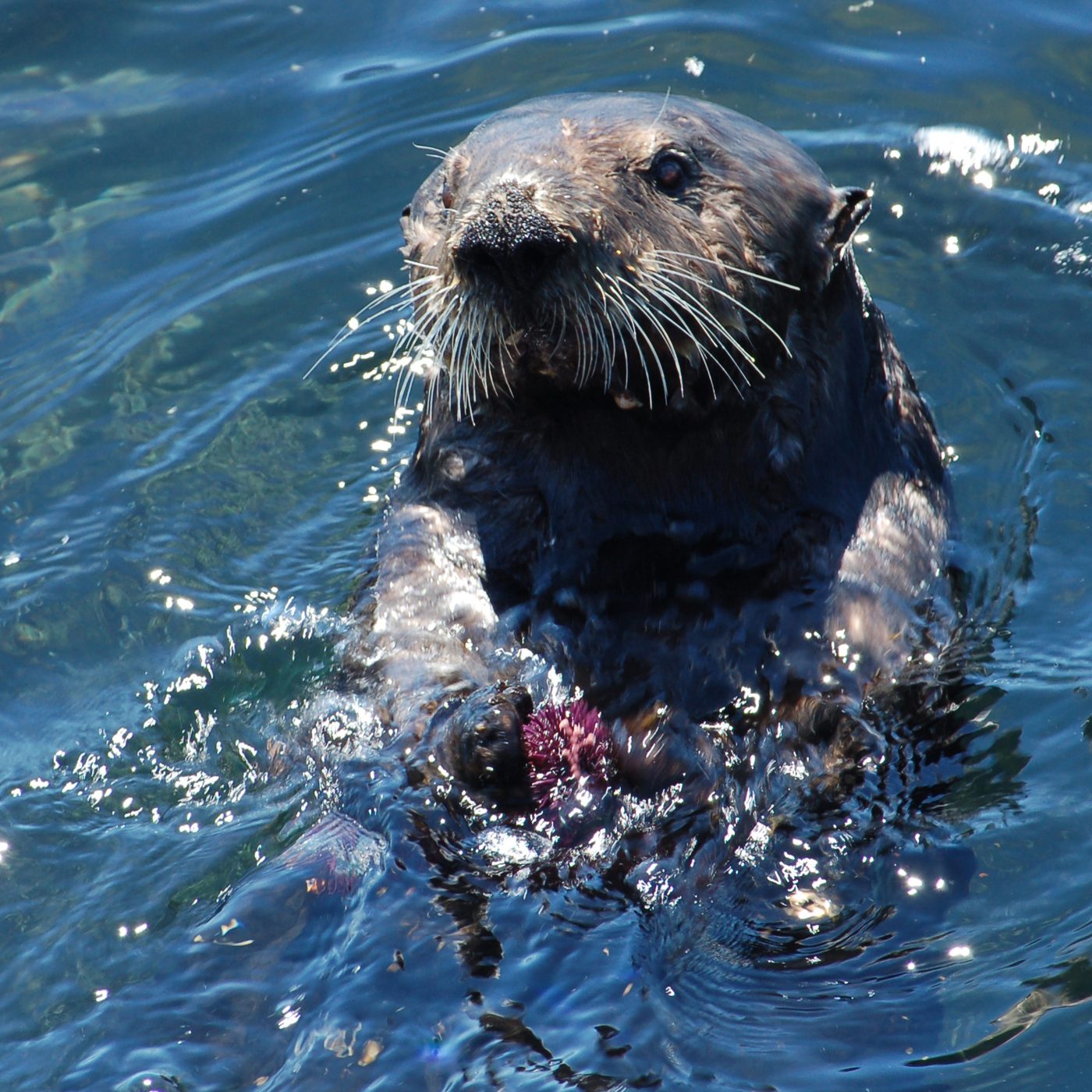
Stretch A keystone species has a much bigger effect on its ecosystem than its numbers suggest. Sea otters eat sea urchins; without the otters, urchins strip kelp forests bare.

Written to the KS3 national curriculum. Last changed 2 November 2026.
Key words
Say them, spell them, use them in an answer.
- food web
- Interdependence
- knock-on effects
- Introduced species
- cane toads
- grey squirrels
- rats
- signal crayfish
- keystone species
Common misconception
Often said“If a species disappears, only its predators notice.”
In factKnock-on effects spread through the whole web: its prey, its competitors and their predators all change too.
Did you know?
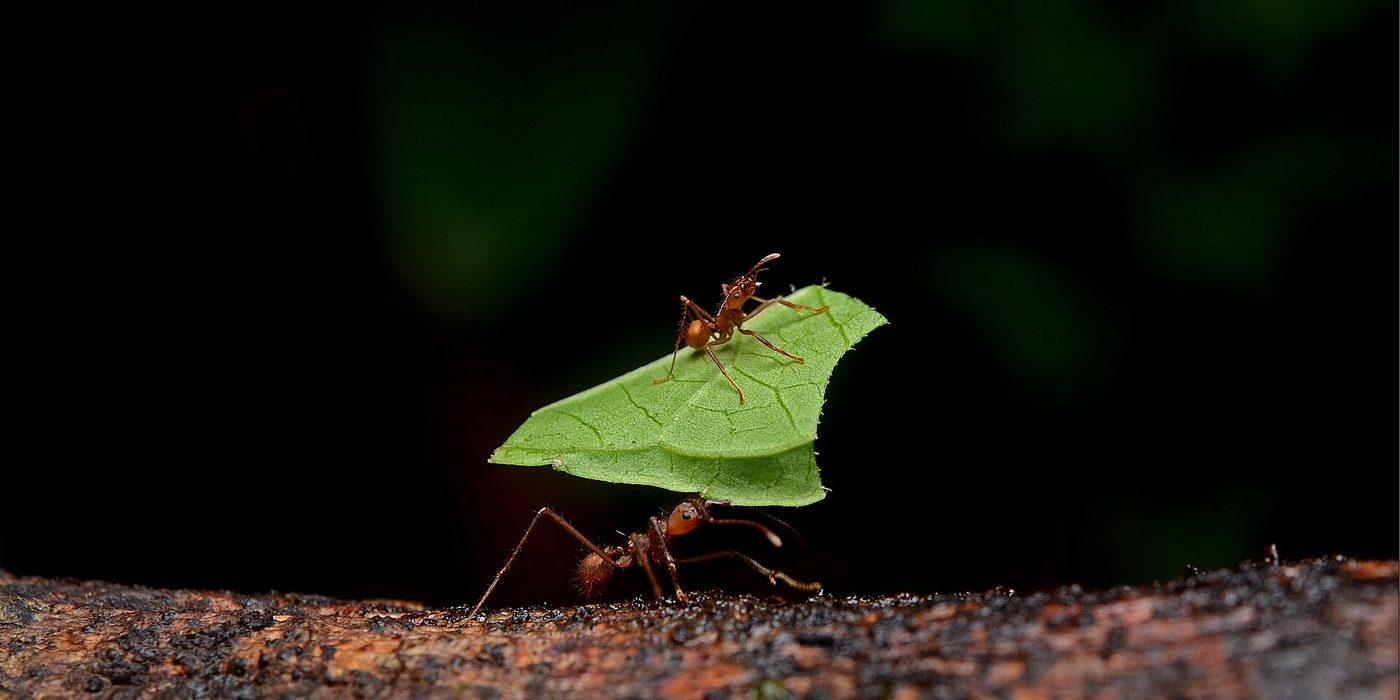
Leafcutter ants
They cut leaves and carry them home, but they do not eat them. They grow a fungus on the leaves and eat the fungus. The ants and the fungus cannot live without each other.
Photo: Geoff Gallice, CC BY 2.0, via Wikimedia Commons

Try 5 questions
Quick questions on food webs, marked as you go. Each one explains the answer.
Question 1 of 5
What is a food web?
Choose an answer. Each question explains itself.
The homework sheet
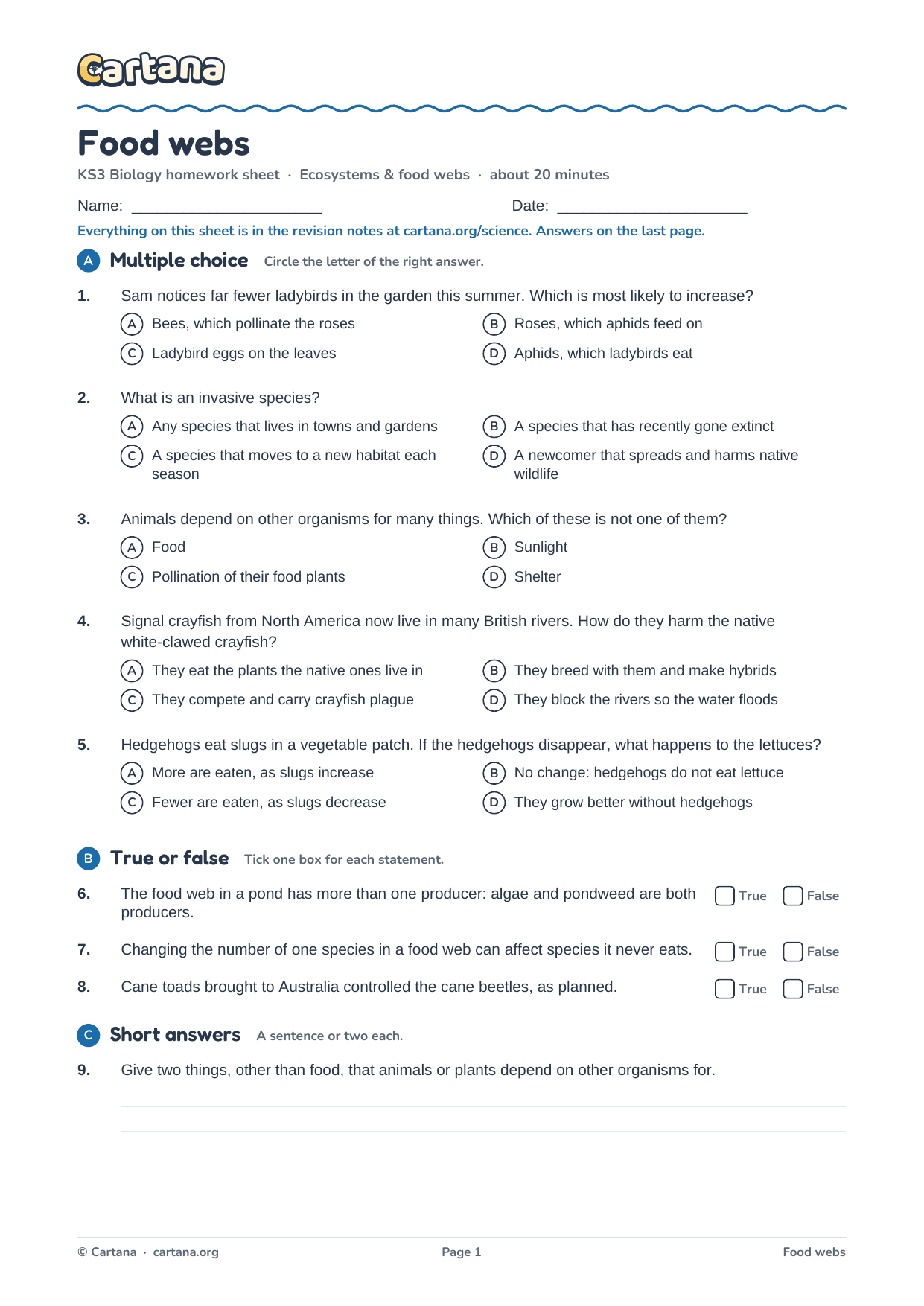
About twenty minutes. Everything on it is in the notes above; the answers are on the last page.
Free homework sheet
Food webs homework sheet
17 questions, about twenty minutes, with the answers on the last page: multiple choice, true or false, short answers, key words to define and one to explain in full.
KS3 Ecosystems & food webs
Revised the whole unit? There is a 40-mark Ecosystems & food webs test paper with a mark scheme.
 Watch the trailer · 1:06
New from Cartana · Beta test 1–31 December
Revision that feels like an adventure
Cartana is our KS3 learning adventure: sail between islands, answer quick-fire questions and battle bosses. It starts with science, with maths on the way, and launches in 2027. This December a small group of testers gets to play it first.
In the Cartana adventure, food webs is Canopy Crossings, a district of the island Munchu Picchu.
- Play the game before its official release
- Help us build it with your feedback
- Earn exclusive in-game items in return
More in this unit