
KS3 Biology · Ecosystems & food webs
Ecosystems and sampling
- Habitat, population, community, ecosystem and niche
- Sampling with random quadrats, and estimating the size of a population
- Abiotic and biotic factors, and how the seasons change a habitat
- Transects, sweep nets and pitfall traps
- 2 min read
- 5 quick questions
- Free homework sheet
- Years 7 to 9
Revision notes
| Word | Meaning | Example |
|---|---|---|
| Habitat | The place where an organism lives | The meadow |
| Population | All the organisms of one species in an area | All the daisies |
| Community | All the populations of different species in an area | Daisies, worms, beetles, blackbirds… |
| Ecosystem | A community plus the non-living parts: soil, water, light, temperature | The whole meadow, living and not |
| Niche | The role of a species: what it eats, where it lives, what it does | Dung beetles recycle dung |
Different species can co-exist in one habitat because they have different niches: blue tits feed among the twigs, woodpeckers on the trunk. Every organism matters: producers make the food, pollinators help plants reproduce and decomposers recycle nutrients.
Sampling with quadrats. You cannot count every plant in a big area, so you count a sample. Place quadrats at random, using random numbers as coordinates on a grid, so the sample is not biased. Use plenty of them. Then estimate = mean number per quadrat × number of quadrats that fit in the area. A 200 m² meadow with a mean of 4 daisies per 1 m² quadrat holds about 4 × 200 = 800.
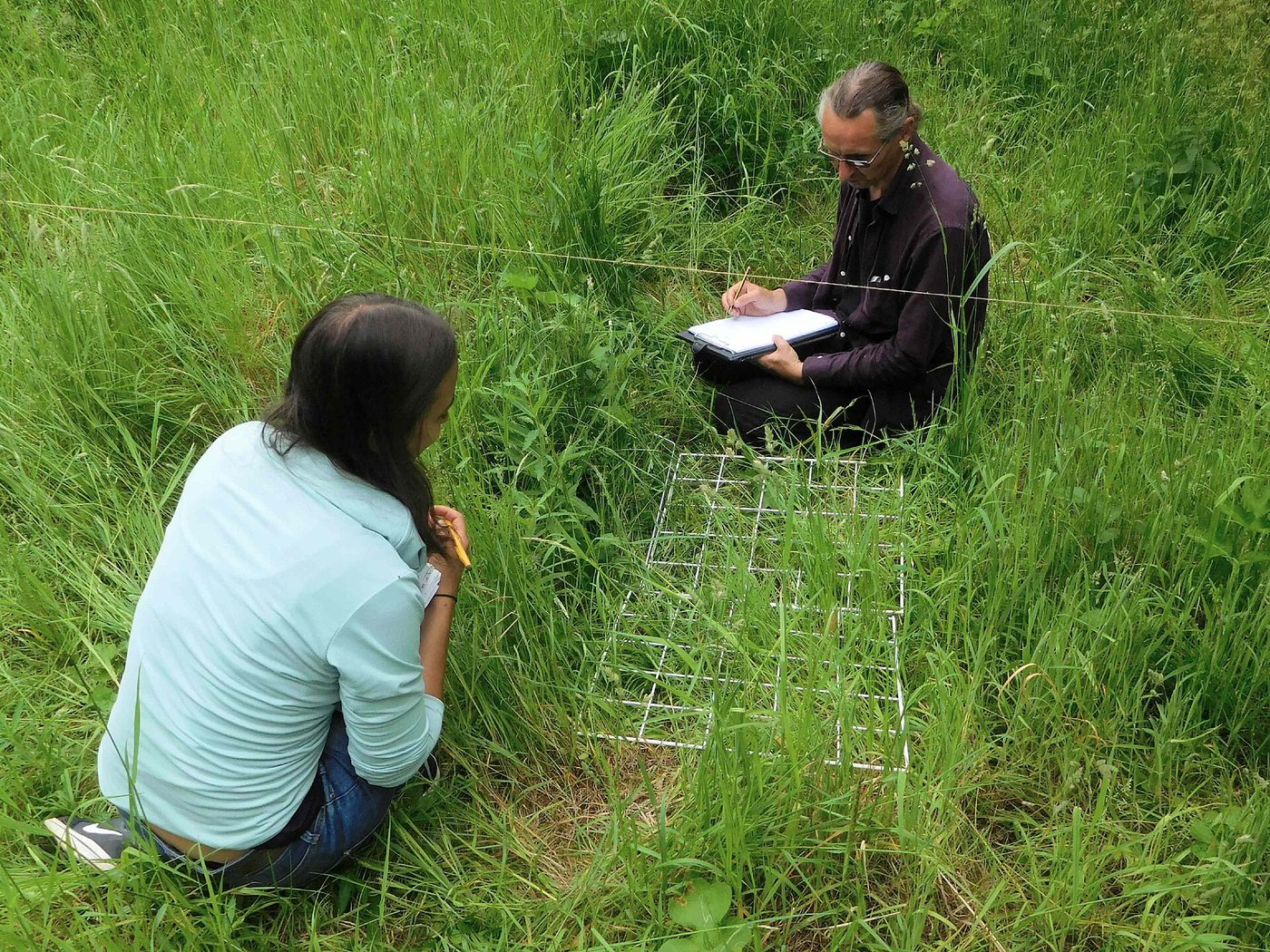

Abiotic and biotic factors. Abiotic factors are the non-living parts of an ecosystem: light, temperature, water, wind, and the minerals and acidity of the soil. Biotic factors are living: food, predators, competitors, grazers and disease. A change in either can change which species live in a habitat, and how many.
The seasons change the abiotic factors. In a British wood, bluebells grow early in spring and make their food before the trees are in full leaf; the trees drop their leaves in autumn; swallows fly south when the flying insects run out, and hedgehogs hibernate. Plants and animals are adapted to cope.
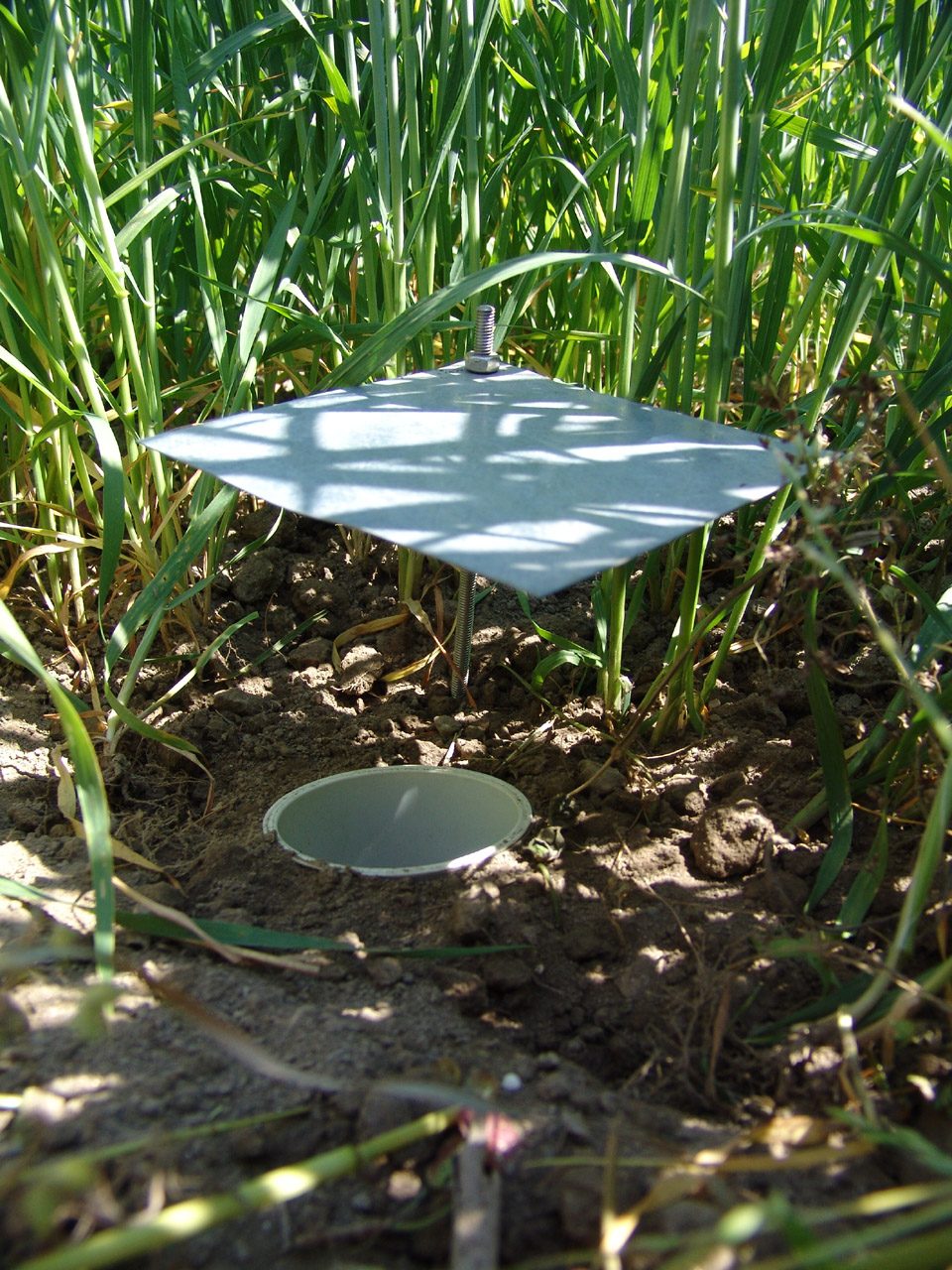
To see how living things change across an area, such as from a shady hedge into an open field, use a transect: lay a tape and sample at regular points along it, and measure a physical factor such as light. Other kit: sweep nets for insects in long grass, and pitfall traps for animals that walk along the ground.

Written to the KS3 national curriculum. Last changed 2 November 2026.
Key words
Say them, spell them, use them in an answer.
- co-exist
- producers
- pollinators
- decomposers
- Sampling with quadrats
- random
- Abiotic
- Biotic
- sweep nets
- pitfall traps
Common misconception
Often said“A habitat and an ecosystem are the same thing.”
In factA habitat is where an organism lives. An ecosystem is all the living things in an area plus the non-living parts.
Did you know?
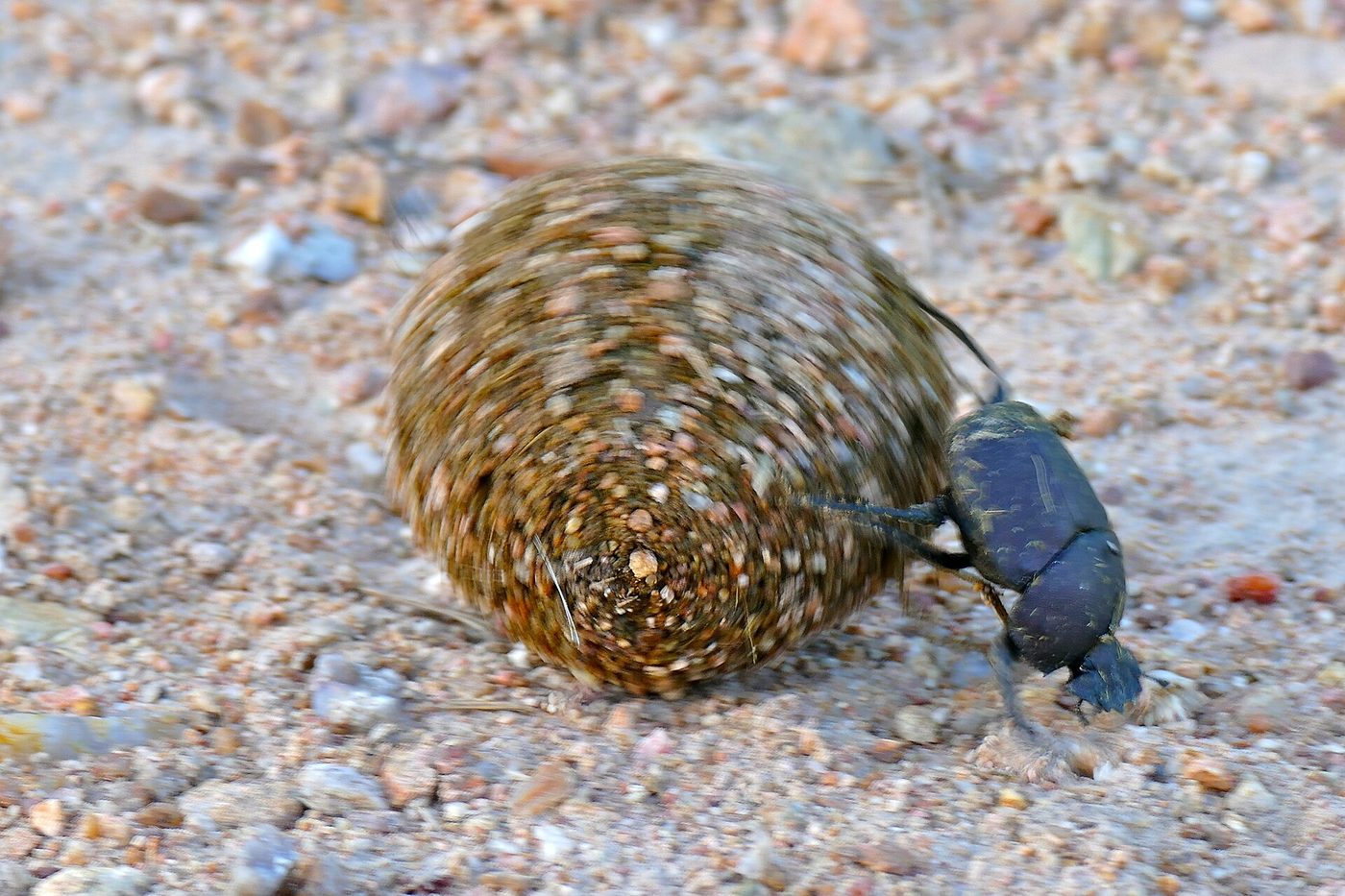
Dung beetle
Its food is dung. Some kinds roll balls of it away from the pile in a straight line, steering by the Milky Way on dark nights. Burying dung returns nutrients to the soil.
Photo: Bernard Dupont, CC BY-SA 2.0, via Wikimedia Commons

Try 5 questions
Quick questions on ecosystems and sampling, marked as you go. Each one explains the answer.
Question 1 of 5
A rotting log in the meadow is home to woodlice, beetles and fungi. To the woodlice, the log is…
Choose an answer. Each question explains itself.
The homework sheet
About twenty minutes. Everything on it is in the notes above; the answers are on the last page.
Free homework sheet
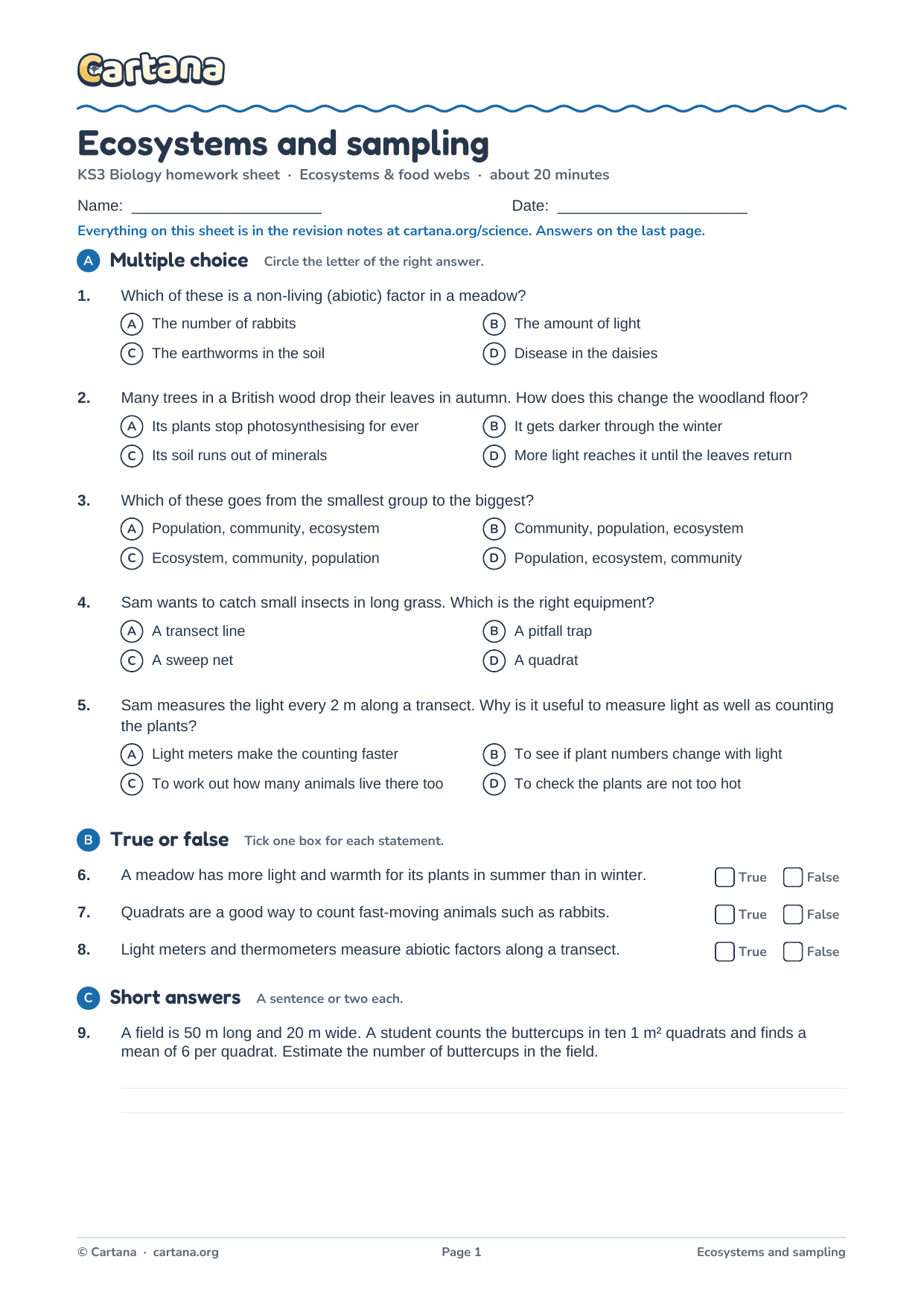
Ecosystems and sampling homework sheet
17 questions, about twenty minutes, with the answers on the last page: multiple choice, true or false, short answers, key words to define and one to explain in full.
KS3 Ecosystems & food webs
Revised the whole unit? There is a 40-mark Ecosystems & food webs test paper with a mark scheme.
 Watch the trailer · 1:06
New from Cartana · Beta test 1–31 December
Revision that feels like an adventure
Cartana is our KS3 learning adventure: sail between islands, answer quick-fire questions and battle bosses. It starts with science, with maths on the way, and launches in 2027. This December a small group of testers gets to play it first.
In the Cartana adventure, ecosystems and sampling is Quadrat Meadows, a district of the island Munchu Picchu.
- Play the game before its official release
- Help us build it with your feedback
- Earn exclusive in-game items in return
More in this unit