
KS3 Biology · Genetics & evolution
Extinction
- Extinct and endangered, and the changes that cause extinction
- The dodo, the woolly mammoth, the passenger pigeon and the thylacine
- Biodiversity, and why variation helps a species cope with change
- Gene banks, seed banks and frozen zoos, and what fossils tell us
- 3 min read
- 5 quick questions
- Free homework sheet
- Years 7 to 9
Revision notes
A species is extinct when no living members are left anywhere. It is endangered when it is at risk of extinction. Extinction happens when the environment changes faster than a species can cope: a new predator or disease arrives, its habitat is destroyed, the climate changes, or it is hunted.
| Extinct | When | Why |
|---|---|---|
| Dodo | 1600s | Sailors reached Mauritius; hunting, and the pigs, rats and monkeys they brought ate its eggs. It had never had predators |
| Woolly mammoth | Most about 10,000 years ago; the last, on Wrangel Island, about 4,000 years ago | A warming climate shrank its cold grassland, and humans hunted it |
| Passenger pigeon | 1914 | Once billions in North America; hunted for food and its forests cut down |
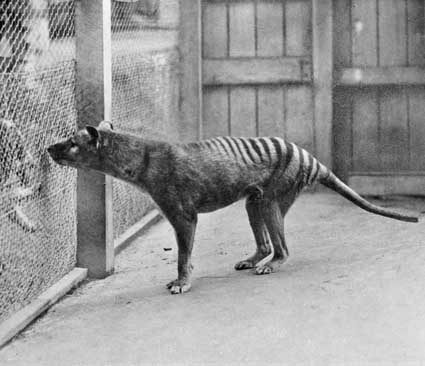
| Thylacine | 1936 | Hunted in Tasmania; the last one died in Hobart Zoo |

Biodiversity is the variety of living things in a place, or on Earth. It matters because living things depend on each other in food webs, and because variety is what lets life cope with change. A species with lots of variation is more likely to have some individuals that suit new conditions. A species of copies has all its eggs in one basket.
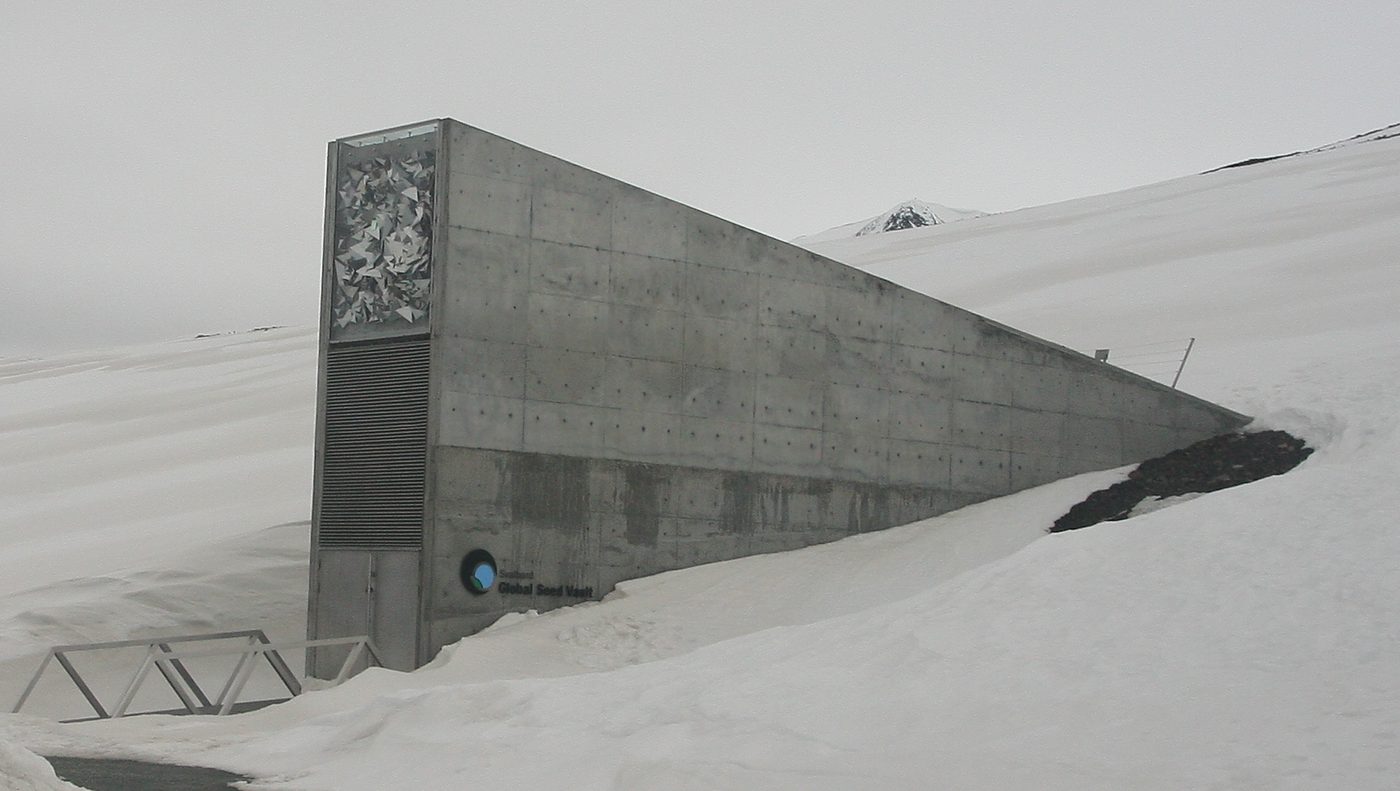
Gene banks store hereditary material so that a species’ genes are not lost. Seed banks keep seeds cold (about −18 °C), dry and sealed, so they stay alive for decades. The Svalbard Global Seed Vault in Arctic Norway is built into a frozen mountain and holds more than a million samples from around the world; Kew’s Millennium Seed Bank in Sussex is the biggest store of wild-plant seeds. Frozen zoos keep eggs, sperm and cells from endangered animals. Breeding programmes in zoos raise numbers and keep variation. Gene banks keep samples from many plants of a species, not one, to preserve its variation.

Fossils. A fossil is the remains or traces of a living thing from long ago, preserved in rock: bones, shells, leaves, footprints. Fossils show that many species that once lived are now extinct, and that living things have changed over millions of years. In the early 1800s Mary Anning found the skeletons of extinct sea reptiles, ichthyosaurs and plesiosaurs, in the cliffs at Lyme Regis in Dorset.
Stretch Frozen is not saved: a species also needs a habitat to live in, so protecting habitats and setting up reserves comes first. Scientists have talked about bringing back extinct species such as the mammoth from frozen DNA, but nothing extinct has been brought back to live in the wild, and most scientists say protecting living species matters more.
Written to the KS3 national curriculum. Last changed 2 November 2026.
Key words
Say them, spell them, use them in an answer.
- extinct
- endangered
- Biodiversity
- variation
- Gene banks
- Seed banks
- Frozen zoos
- Breeding programmes
- Fossils
- Mary Anning
Common misconception
Often said“The dodo died out because it was stupid.”
In factThe dodo had no predators on Mauritius, so it had never needed to fear anything. When sailors arrived with pigs, rats and monkeys, it was hunted and its eggs were eaten. The island changed too fast for it.
Did you know?
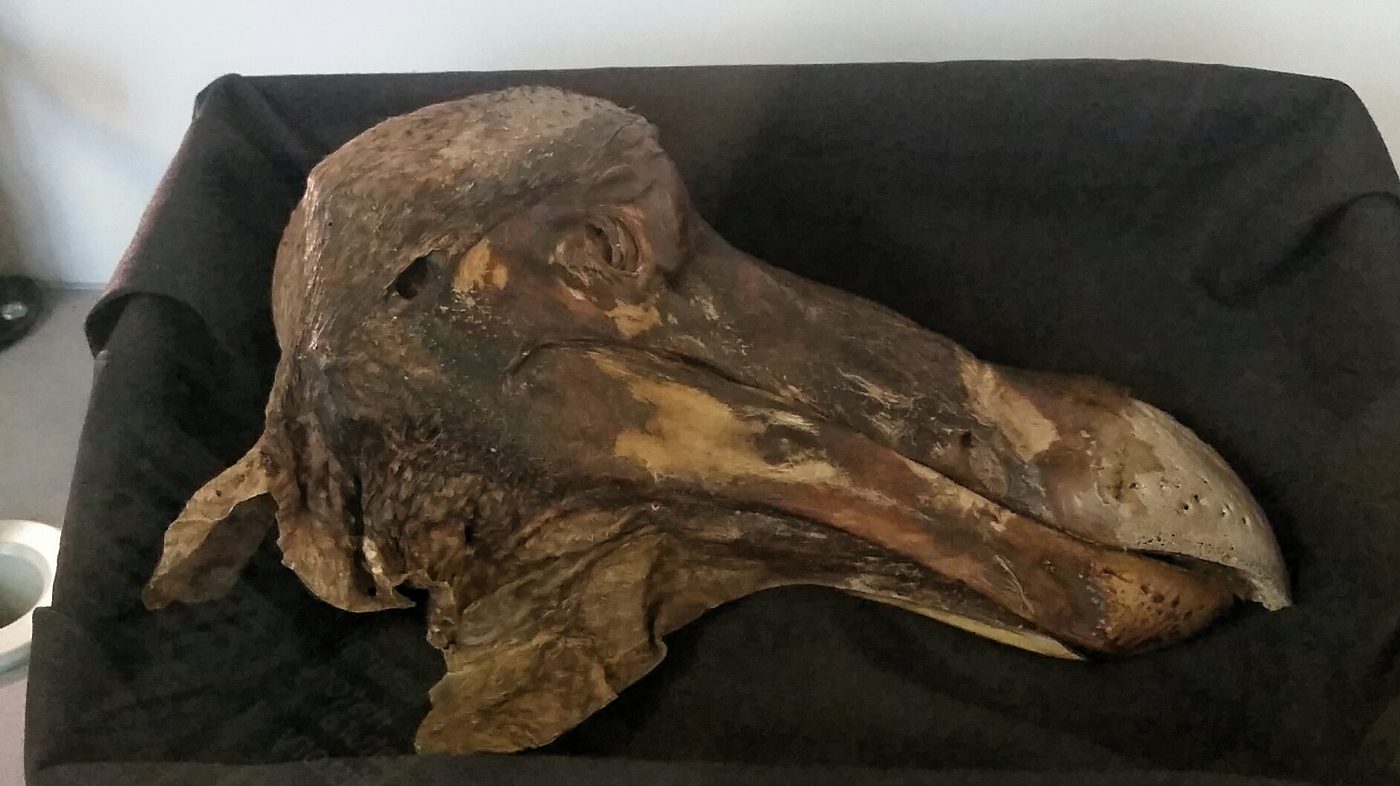
The Oxford dodo
The Oxford University Museum of Natural History holds the only soft tissue of a dodo left anywhere in the world: a mummified head and a foot. Every other dodo is bones or drawings. Its DNA showed that the dodo’s closest living relative is the Nicobar pigeon.

Try 5 questions
Quick questions on extinction, marked as you go. Each one explains the answer.
Question 1 of 5
Why did the dodo die out within about a century of sailors landing on Mauritius?
Choose an answer. Each question explains itself.
The homework sheet
About twenty minutes. Everything on it is in the notes above; the answers are on the last page.
Free homework sheet
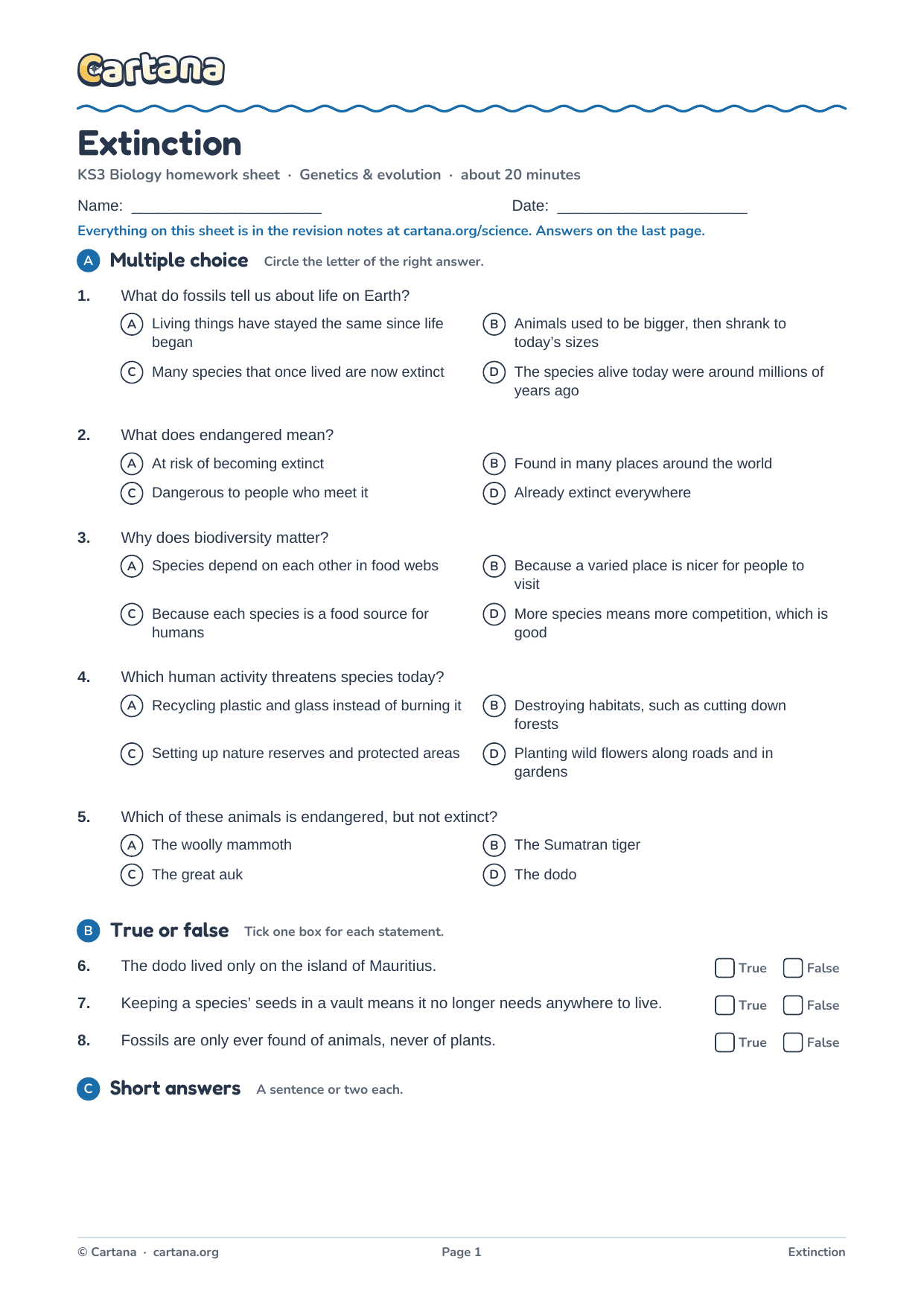
Extinction homework sheet
17 questions, about twenty minutes, with the answers on the last page: multiple choice, true or false, short answers, key words to define and one to explain in full.
KS3 Genetics & evolution
Revised the whole unit? There is a 40-mark Genetics & evolution test paper with a mark scheme.
 Watch the trailer · 1:06
New from Cartana · Beta test 1–31 December
Revision that feels like an adventure
Cartana is our KS3 learning adventure: sail between islands, answer quick-fire questions and battle bosses. It starts with science, with maths on the way, and launches in 2027. This December a small group of testers gets to play it first.
In the Cartana adventure, extinction is The Frost Vault, a district of the island The Gene Pool.
- Play the game before its official release
- Help us build it with your feedback
- Earn exclusive in-game items in return
More in this unit