
KS3 Biology · Digestion & nutrition
Digestive system
- The organs of the digestive system, in the order food passes through them
- Mechanical and chemical digestion, and how teeth, peristalsis and bile help
- How the villi in the small intestine absorb digested food
- Helpful bacteria in the large intestine, and why egestion is not excretion
- 2 min read
- 5 quick questions
- Free homework sheet
- Years 7 to 9
Revision notes
The digestive system
Digestion breaks large, insoluble food molecules into small, soluble ones that can pass through the gut wall into the blood. Mechanical digestion is teeth and churning; chemical digestion is enzymes.
- Mouth. Teeth chew (mechanical digestion); saliva with amylase starts on starch.
- Oesophagus. Muscular tube. Peristalsis pushes food down to the stomach.
- Stomach. Churns food with hydrochloric acid and protease. Acid kills microbes.
- Small intestine. Digestion finishes; villi absorb small soluble molecules into the blood.
- Large intestine. Absorbs water. Home to helpful bacteria. Forms faeces.
- Rectum. Stores faeces until they leave the body.
- Anus. Faeces leave the body: egestion.
Side organs (food never passes through them): the liver makes bile, the gall bladder stores it, and the pancreas makes all three types of enzyme. Bile breaks fat into small droplets (emulsifies it) and neutralises stomach acid.
Peristalsis: waves of muscle contraction push food along the gut, whichever way up you are.
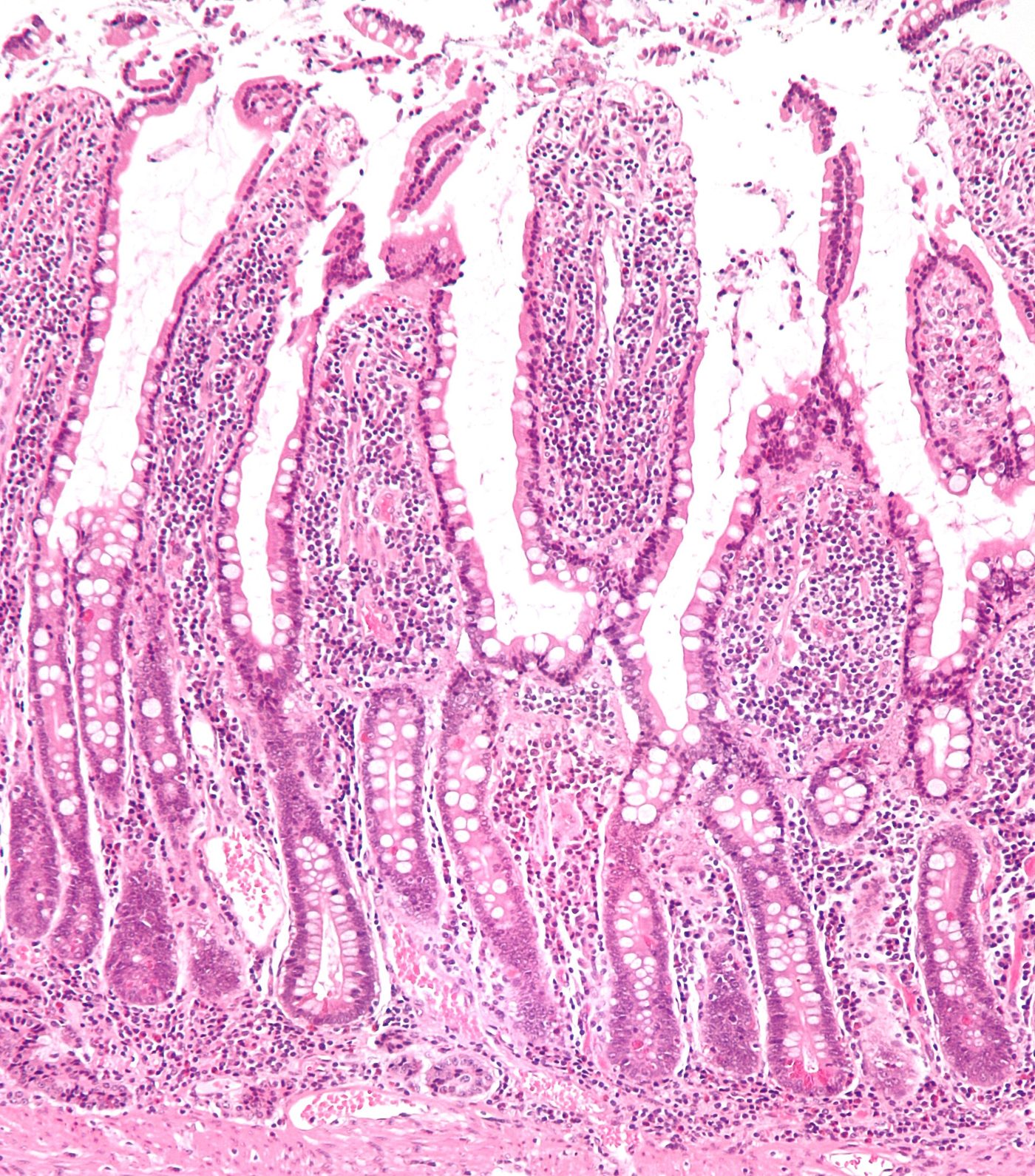
Millions of finger-like villi line the small intestine. Huge surface area, walls one cell thick, and a rich blood supply, so digested food reaches the blood fast.
Faeces leaving the anus is egestion: that food was never part of your cells. Excretion removes waste made by cells, like carbon dioxide and urea.

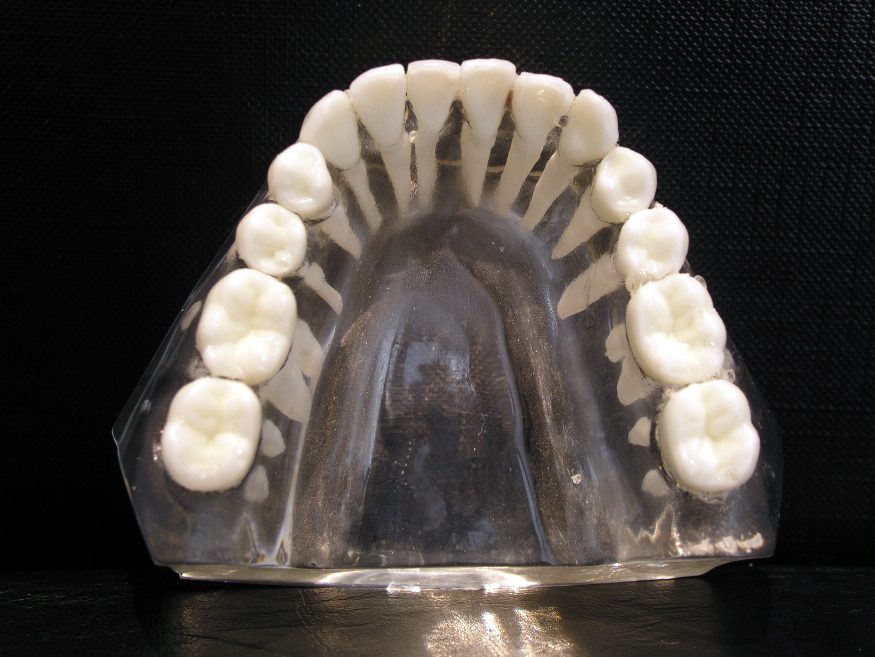
Incisors at the front cut and bite. Canines are pointed, for gripping and tearing. Premolars and molars at the back are broad and bumpy, for grinding. Bacteria in plaque turn sugar into acid that dissolves enamel: tooth decay.
Cells make tissues, tissues make organs, and organs together make an organ system, like the digestive system. The stomach has muscular tissue to churn, glandular tissue to make acid and enzymes, and epithelial tissue to line it.

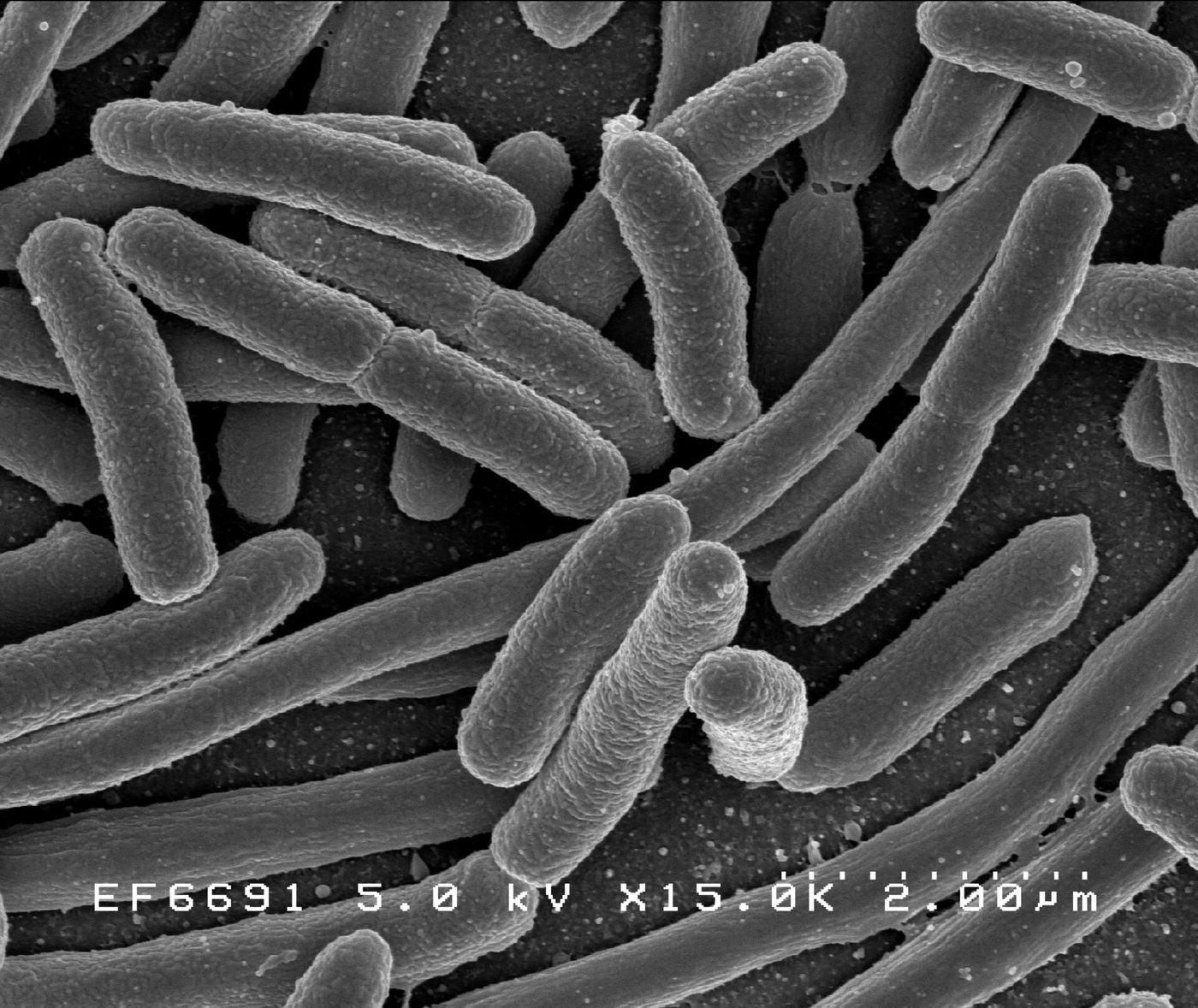
Bacteria in the gut
Some bacteria cause disease, but many are harmless and some are helpful. Trillions of helpful bacteria live in the large intestine. They break down some of the fibre our own enzymes cannot, make vitamins such as vitamin K, and protect us by competing with harmful microbes for food and space. Stomach acid kills most microbes before they get that far.

Stretch Antibiotics kill bacteria and cannot tell helpful from harmful, which is why they sometimes upset digestion.
Written to the KS3 national curriculum. Last changed 2 November 2026.
Key words
Say them, spell them, use them in an answer.
- Digestion
- Mechanical
- chemical
- Side organs
- liver
- gall bladder
- pancreas
- Incisors
- Canines
- Premolars
- molars
- tissues
- organs
- organ system
- muscular
- glandular
Common misconception
Often said“Digestion all happens in the stomach.”
In factMost chemical digestion, and nearly all absorption, happens in the small intestine.
Try 5 questions
Quick questions on digestive system, marked as you go. Each one explains the answer.
Question 1 of 5
Which statement about bacteria is correct?
Choose an answer. Each question explains itself.
The homework sheet
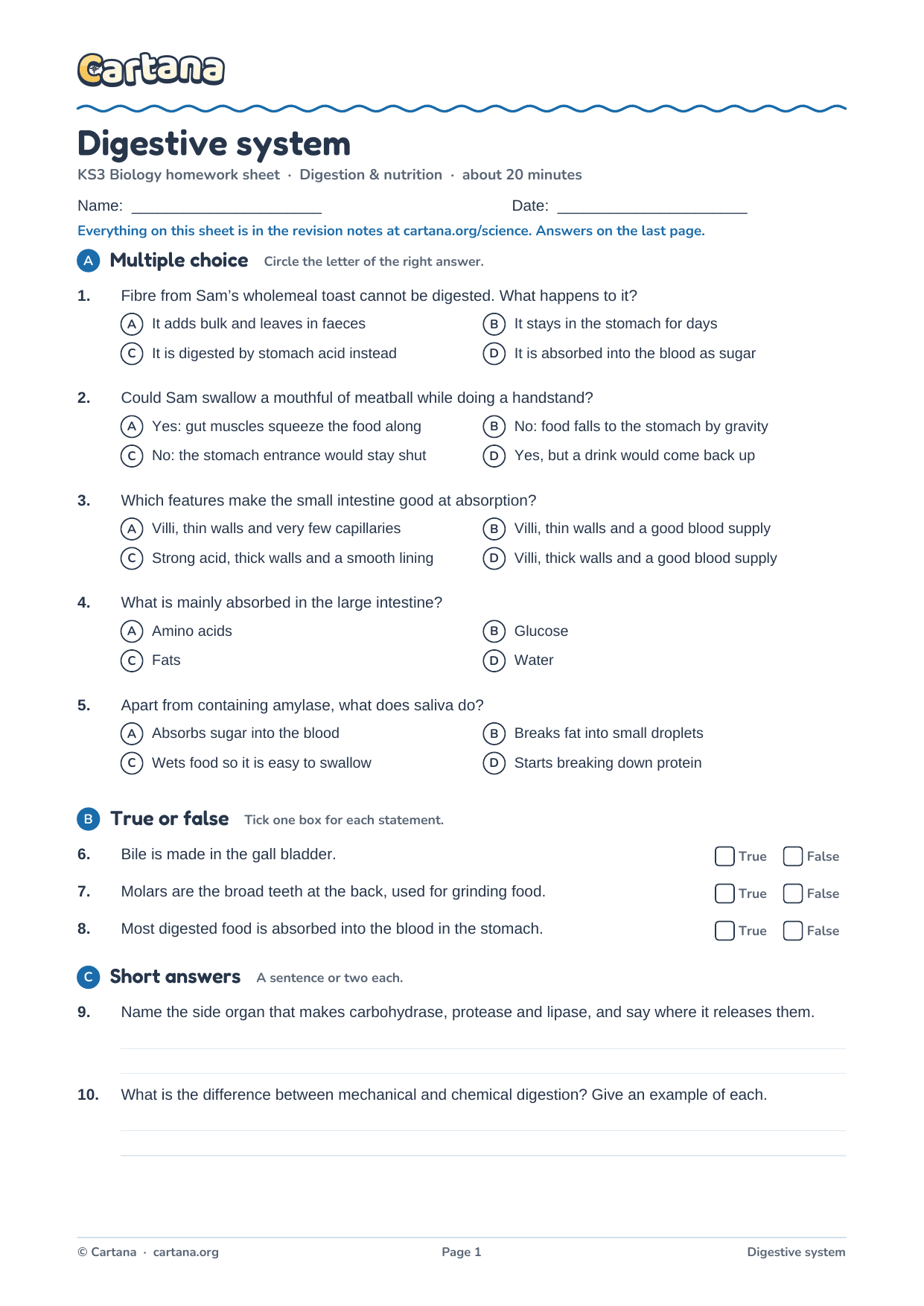
About twenty minutes. Everything on it is in the notes above; the answers are on the last page.
Free homework sheet
Digestive system homework sheet
17 questions, about twenty minutes, with the answers on the last page: multiple choice, true or false, short answers, key words to define and one to explain in full.
KS3 Digestion & nutrition
Revised the whole unit? There is a 40-mark Digestion & nutrition test paper with a mark scheme.
 Watch the trailer · 1:06
New from Cartana · Beta test 1–31 December
Revision that feels like an adventure
Cartana is our KS3 learning adventure: sail between islands, answer quick-fire questions and battle bosses. It starts with science, with maths on the way, and launches in 2027. This December a small group of testers gets to play it first.
In the Cartana adventure, digestive system is Île Digestion, a district of the island The Alimentary Archipelago.
- Play the game before its official release
- Help us build it with your feedback
- Earn exclusive in-game items in return
More in this unit