
KS3 Biology · Years 7 to 9
Reproduction
How plants and humans reproduce: the parts of a flower, pollination and fertilisation, seeds and how they are dispersed (with the sycamore investigation), the human reproductive systems and sex cells, and the menstrual cycle, pregnancy and birth.
- 5 topics
- 11 min of notes
- 5 homework sheets
- Test paper
The topics, in order
Each has its revision notes, key words, a common misconception and quick questions; the homework sheets are free to print.
- 1FlowersFlower structure: the parts and their jobs1 min read5 questionsHomework sheet
- 2PollinationPollination, fertilisation, seeds and fruit2 min read5 questionsHomework sheet
- 3SeedsSeed dispersal and the sycamore investigation3 min read5 questionsHomework sheet
- 4Reproductive systemsThe reproductive systems, sperm and egg cells2 min read5 questionsHomework sheet
- 5PregnancyThe menstrual cycle, pregnancy and birth3 min read5 questionsHomework sheet
Test the whole unit
When the topics are revised, one paper covers them all, marked the way an exam would be.
Test paper
KS3 Reproduction Test Paper with Mark Scheme
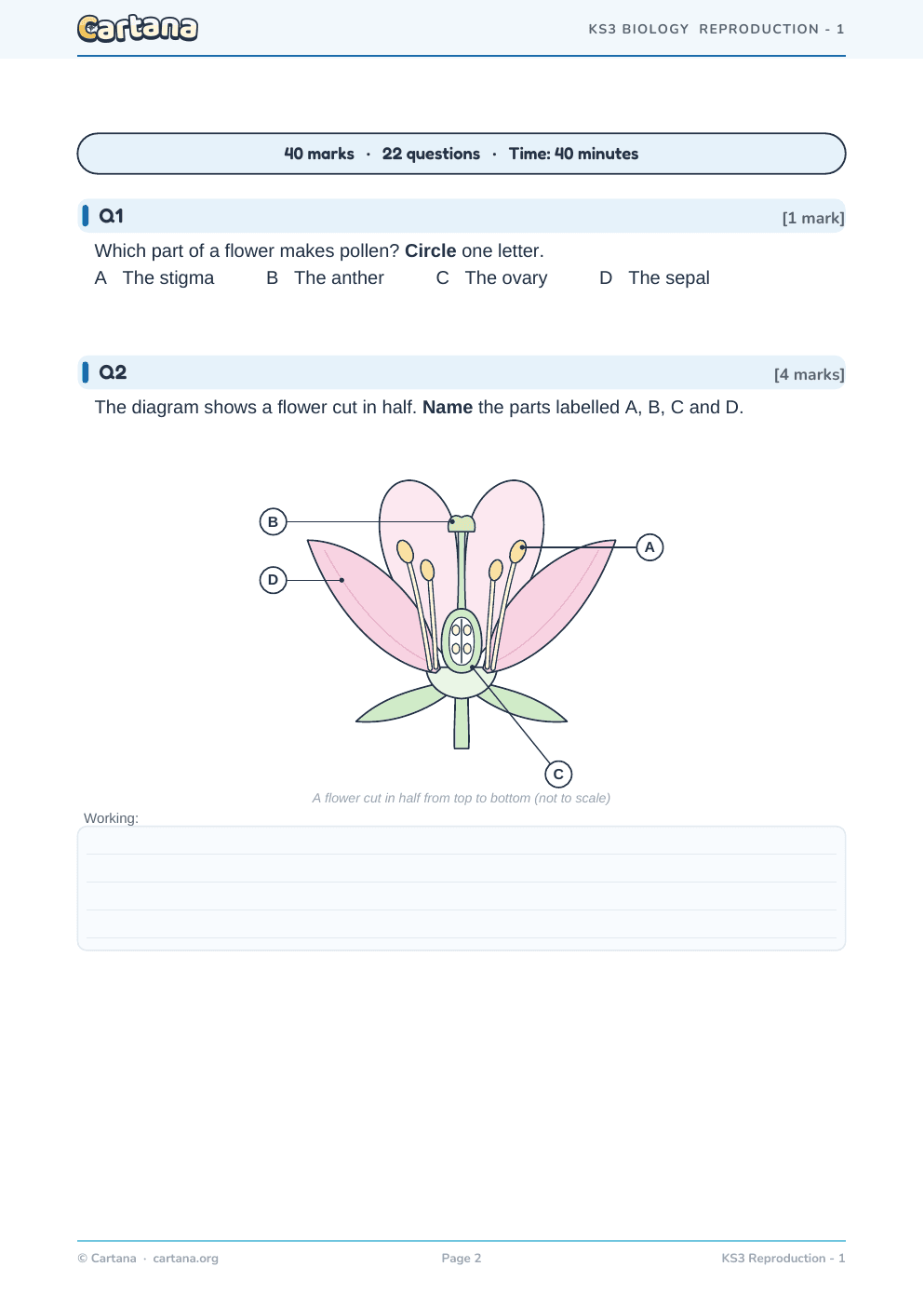
A 40-mark KS3 biology test paper on reproduction for Years 7 to 9: 22 questions in 40 minutes, with a flower, a carpel, seeds, the female system and a sperm cell to label, the sycamore investigation and the menstrual cycle. Plain-English mark scheme included.
- 40 marks, 22 questions
- 40 minutes
- Mark scheme included, 13 pages
Did you know?
- A dandelion clock is a ball of seeds, each with its own parachute. One head can carry about 150 of them.
- The biggest seed in the world is the coco de mer, a palm seed from the Seychelles that can weigh 25 kg.
- The oldest seed ever to sprout was a 2,000-year-old date seed from Israel, planted in 2005. The tree is called Methuselah.
- A single poppy seed head can hold hundreds of seeds, and each one grew from its own ovule.
 Watch the trailer · 1:06
New from Cartana · Beta test 1–31 December
Revision that feels like an adventure
Cartana is our KS3 learning adventure: sail between islands, answer quick-fire questions and battle bosses. It starts with science, with maths on the way, and launches in 2027. This December a small group of testers gets to play it first.
In the Cartana adventure, reproduction is the island The Nursery.
- Play the game before its official release
- Help us build it with your feedback
- Earn exclusive in-game items in return