
KS3 Biology · Photosynthesis & respiration
Respiration
- Aerobic respiration: the word equation and where it happens
- Anaerobic respiration in muscles and in yeast
- Testing for carbon dioxide, and for the heat respiration releases
- Photosynthesis and respiration together, by day and by night
- 3 min read
- 5 quick questions
- Free homework sheet
- Years 7 to 9
Revision notes
Respiration is a chemical reaction in every living cell, all the time, that transfers energy from glucose. It is not the same as breathing: breathing just moves air in and out of the lungs.
Aerobic respiration uses oxygen and happens in the mitochondria. The energy is used for moving, growing, repairing cells and keeping warm. Glucose and oxygen reach your cells in the blood.
In hard exercise, such as a sprint, oxygen cannot reach the muscles fast enough. Anaerobic respiration releases less energy. Lactic acid builds up, and the muscles get tired (fatigue). Afterwards you keep breathing hard to repay the oxygen debt.
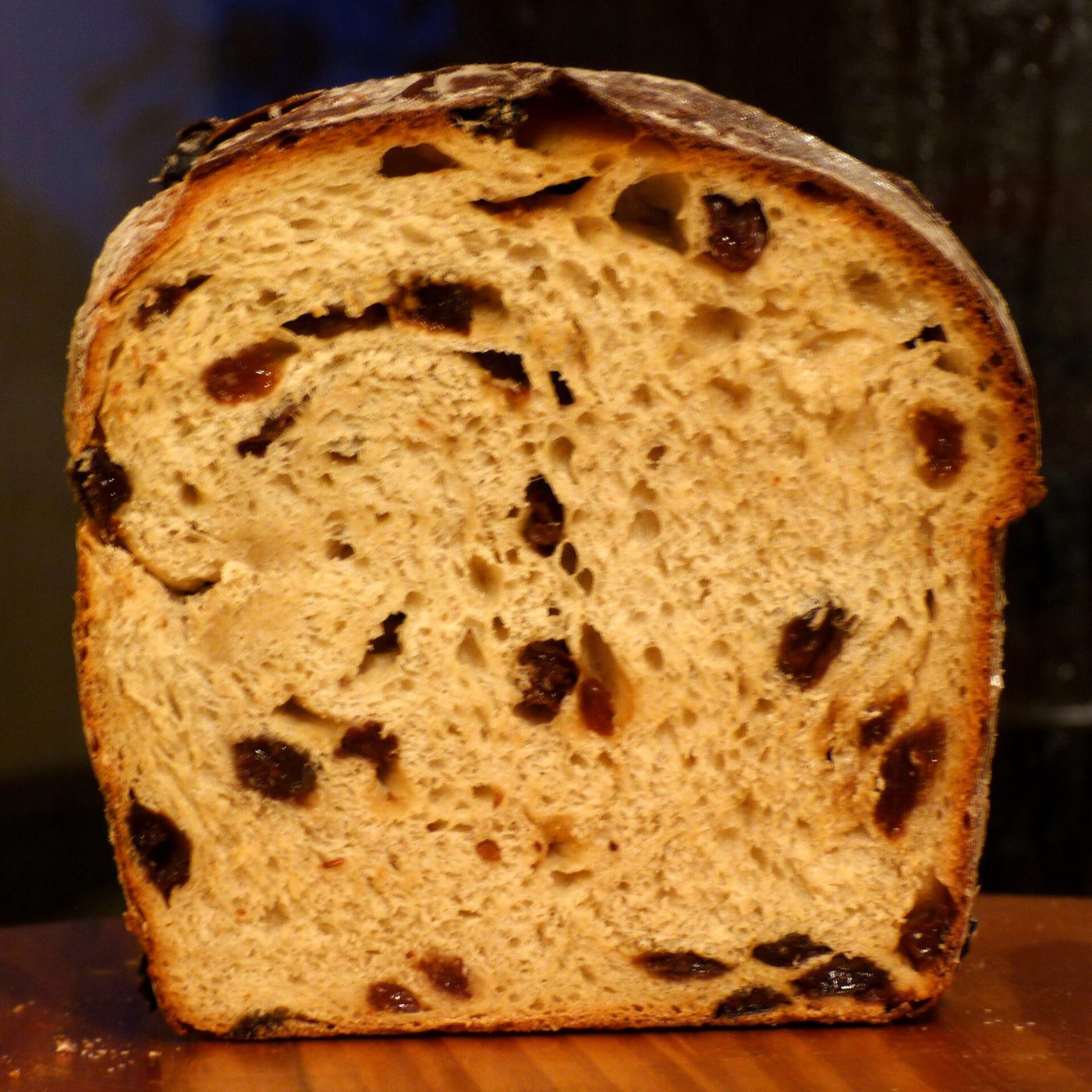
Used to make bread (the carbon dioxide makes the dough rise; the ethanol evaporates in the oven) and beer and wine. Bacteria ferment too: in yoghurt, bacteria turn the sugar in milk into lactic acid, which thickens it and makes it sour.

Two practicals
Bubble the gas through limewater: carbon dioxide turns it milky (cloudy). Breathed-out air turns limewater milky much faster than the air in the room, because respiration in your cells adds carbon dioxide: about 4% of breathed-out air, against about 0.04% of room air.
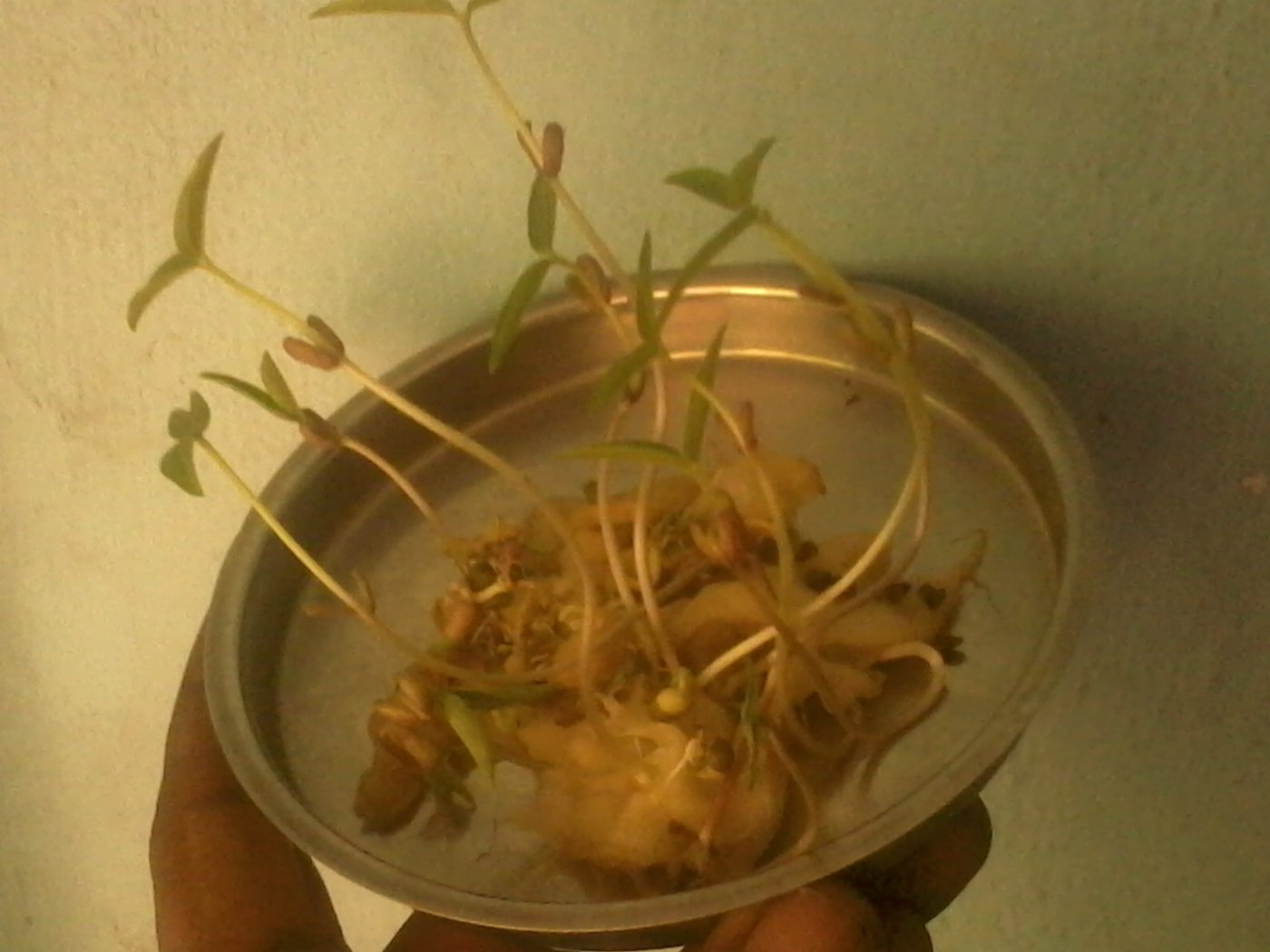
Put germinating peas in one vacuum flask and boiled (dead) peas in another, each with a thermometer, and rinse both lots in disinfectant first so microbes on them cannot respire. The living peas get warmer: some of the energy respiration releases heats the surroundings. The boiled peas are the control.

| Aerobic | Anaerobic (muscles) | |
|---|---|---|
| Oxygen? | Needed | Not needed |
| Products | Carbon dioxide and water | Lactic acid |
| Energy released | Lots | Much less |
| When | All the time | Short, hard exercise |
Photosynthesis and respiration
| Photosynthesis | Respiration | |
|---|---|---|
| Where | Chloroplasts | Every living cell; in plant and animal cells, the mitochondria |
| When | Only in the light | All the time, day and night |
| Takes in | Carbon dioxide and water | Glucose and oxygen |
| Gives out | Glucose and oxygen | Carbon dioxide and water |
| Energy | Stored in glucose | Released from glucose |
In bright light, photosynthesis is faster than respiration, so a plant takes in carbon dioxide and gives out oxygen overall. At night there is only respiration, so it takes in oxygen and gives out carbon dioxide.
This indicator shows changes in carbon dioxide. It is red (orange-red) with the normal amount of carbon dioxide in the air, turns yellow when there is more carbon dioxide and purple when there is less. Pondweed in the indicator turns it purple in bright light (photosynthesis is faster than respiration), leaves it red in dim light (the two rates are about equal) and turns it yellow in the dark (respiration only).
Stretch At dawn and dusk the two rates are equal and there is no overall gas exchange: the compensation point.
Written to the KS3 national curriculum. Last changed 5 November 2026.
Key words
Say them, spell them, use them in an answer.
- Respiration
- Aerobic respiration
- mitochondria
- oxygen debt
- Bacteria
- germinating peas
- control
- Hydrogencarbonate indicator
- yellow
- purple
- compensation point
Common misconception
Often said“Respiration means breathing.”
In factRespiration is a chemical reaction in every living cell that releases energy from glucose. Breathing just moves air in and out of the lungs.
Did you know?
Goldfish
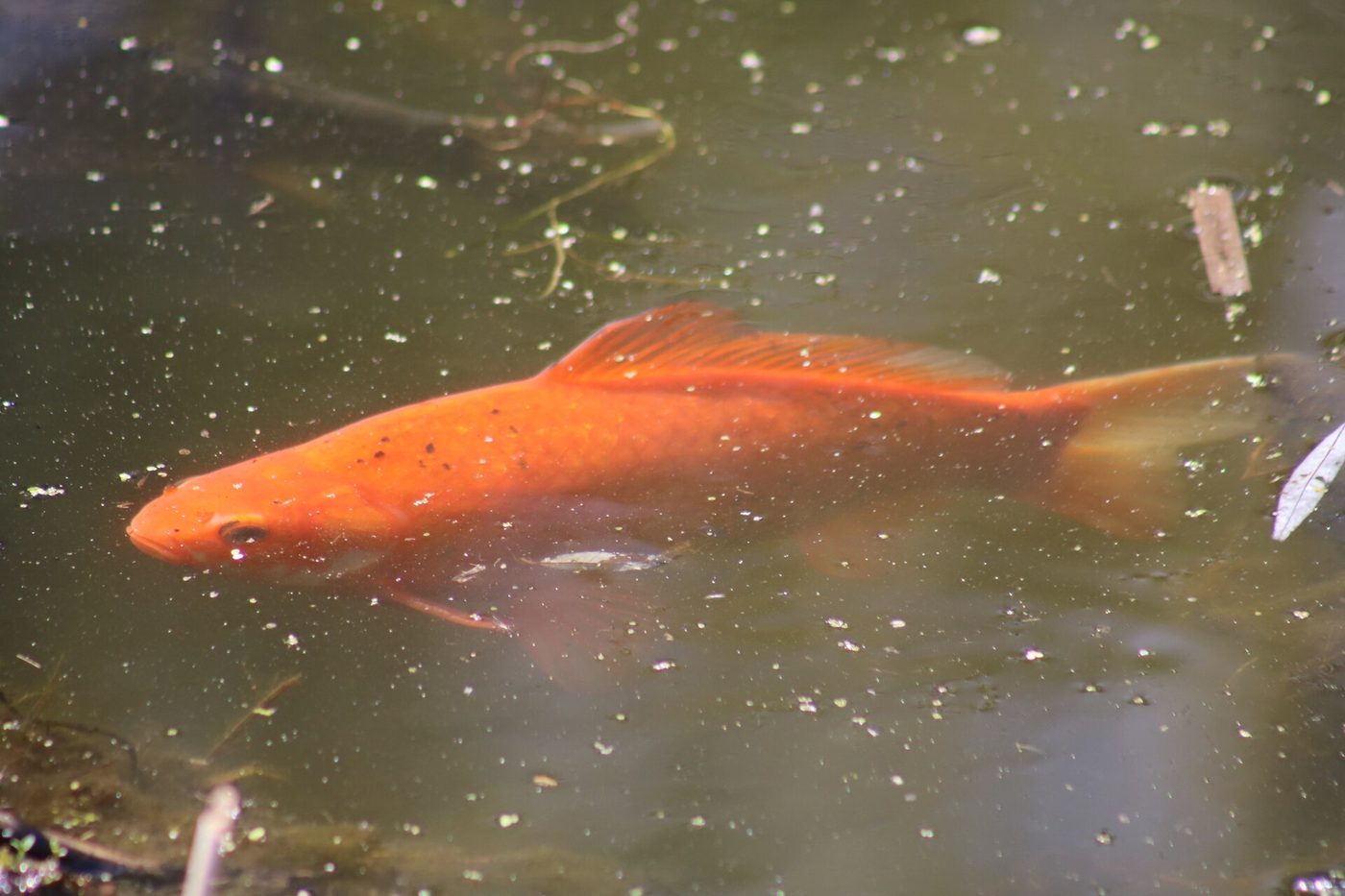
Goldfish and their wild cousins, crucian carp, can survive without oxygen under the ice of a frozen pond, the carp for months. They respire anaerobically and turn the lactic acid into alcohol, which leaves through their gills.
Photo: Jackson Kusack, CC0, via Wikimedia Commons

Try 5 questions
Quick questions on respiration, marked as you go. Each one explains the answer.
Question 1 of 5
Where in a cell does aerobic respiration happen?
Choose an answer. Each question explains itself.
The homework sheet
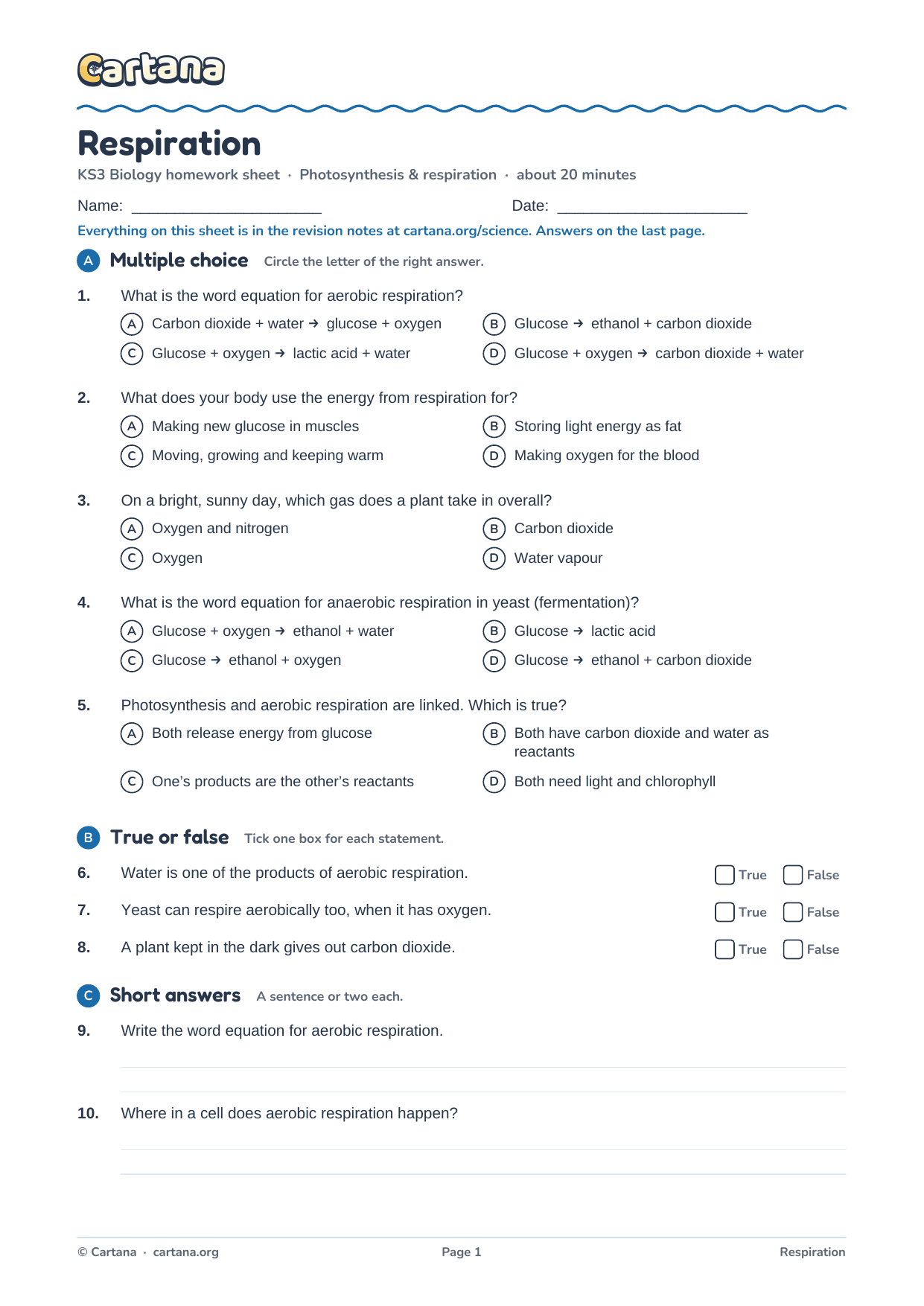
About twenty minutes. Everything on it is in the notes above; the answers are on the last page.
Free homework sheet
Respiration homework sheet
17 questions, about twenty minutes, with the answers on the last page: multiple choice, true or false, short answers, key words to define and one to explain in full.
KS3 Photosynthesis & respiration
Revised the whole unit? There is a 40-mark Photosynthesis & respiration test paper with a mark scheme.
 Watch the trailer · 1:06
New from Cartana · Beta test 1–31 December
Revision that feels like an adventure
Cartana is our KS3 learning adventure: sail between islands, answer quick-fire questions and battle bosses. It starts with science, with maths on the way, and launches in 2027. This December a small group of testers gets to play it first.
In the Cartana adventure, respiration is The Powerhouse, a district of the island Sugarleaf.
- Play the game before its official release
- Help us build it with your feedback
- Earn exclusive in-game items in return
More in this unit