
KS3 Biology · Reproduction
Flowers
- The four rings of a flower: sepals, petals, stamens and the carpel
- The male parts (anther and filament) and the female parts (stigma, style and ovary)
- What each part does, from making pollen to holding the ovules
- What the ovules and the ovary become after fertilisation
- 1 min read
- 5 quick questions
- Free homework sheet
- Years 7 to 9
Revision notes
A flower is the part of a plant that makes seeds. Most flowers have both male parts and female parts, arranged in rings: sepals on the outside, then petals, then the stamens, with the carpel in the middle.
| Part | Job |
|---|---|
| Sepals | Green, leaf-like; protect the flower while it is a bud |
| Petals | Often large and brightly coloured, to attract insects |
| Stamen (male): anther + filament | The anther makes pollen, which carries the male sex cells; the filament holds it up |
| Carpel (female): stigma + style + ovary | The sticky stigma catches pollen; the style joins it to the ovary, which holds the ovules, each with a female sex cell (an egg cell) |
| Nectary | Deep in the flower; makes sugary nectar to reward visiting insects |
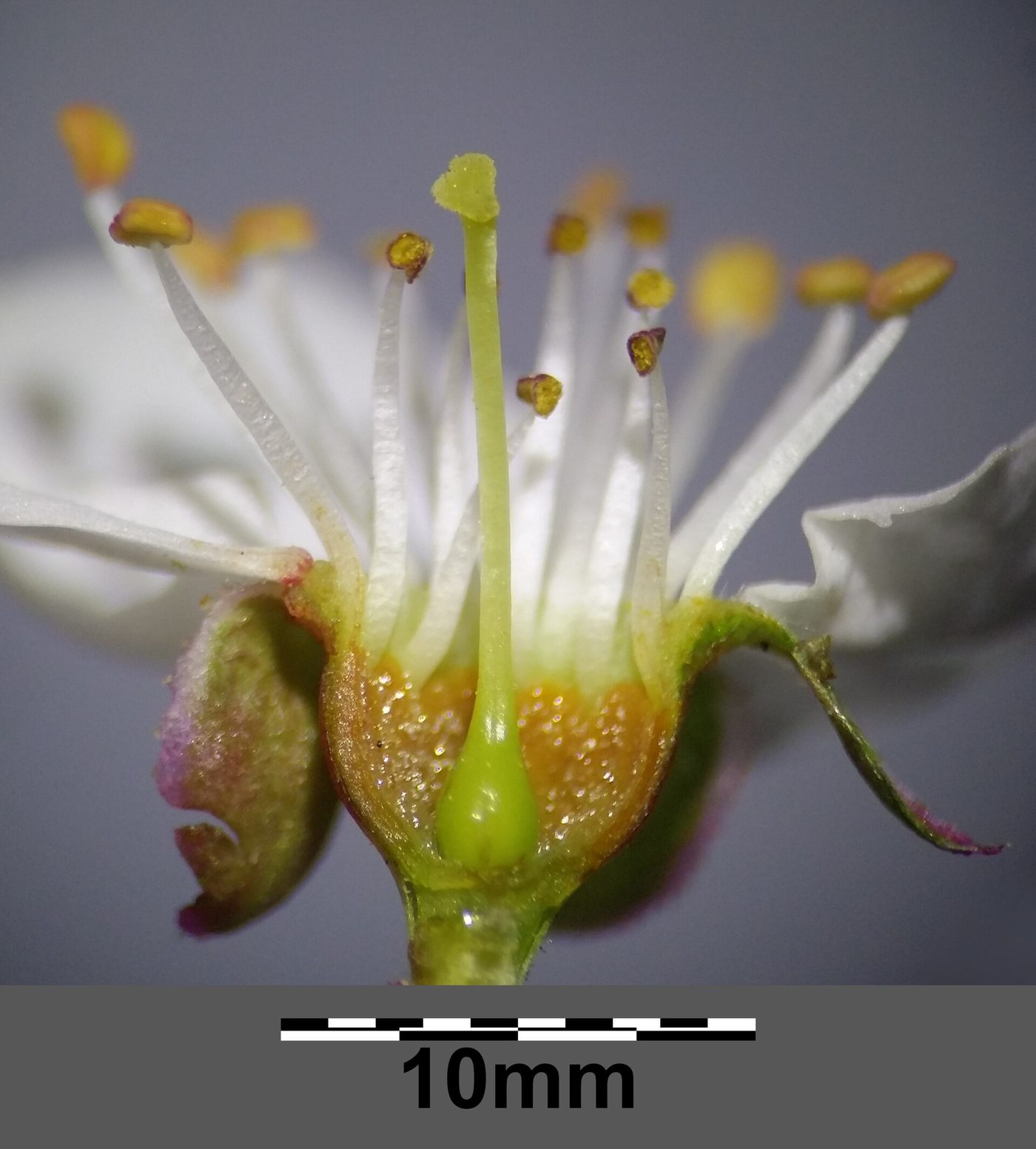

After fertilisation, each ovule becomes a seed, and the ovary becomes the fruit around the seeds.
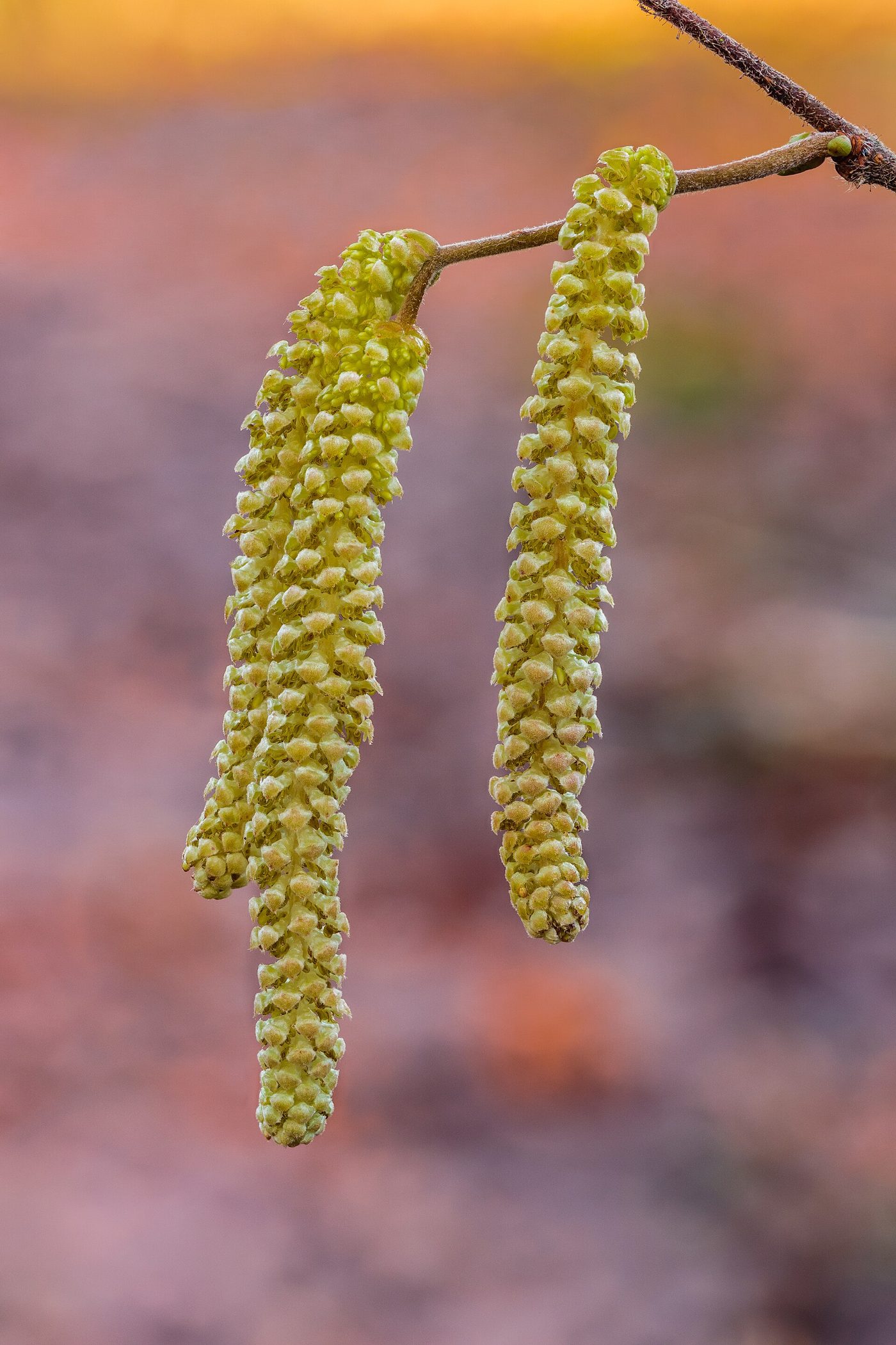
Stretch Flowers vary a lot in shape and number of parts, but most are built from the same kinds of part. Many wind-pollinated flowers have tiny petals or none at all, and a few plants, such as hazel, have separate male flowers (the catkins) and female flowers. A poppy ovary holds hundreds of ovules; a cherry makes just one seed.

Written to the KS3 national curriculum. Last changed 2 November 2026.
Key words
Say them, spell them, use them in an answer.
- male
- female
- sepals
- petals
- stamens
- carpel
- anther
- pollen
- filament
- stigma
- style
- ovary
- ovules
- nectar
- ovule
- seed
Common misconception
Often said“The petals make the seeds.”
In factThe anthers make pollen, and the ovules inside the ovary become the seeds. Petals are the advert that brings the insects in.
Did you know?
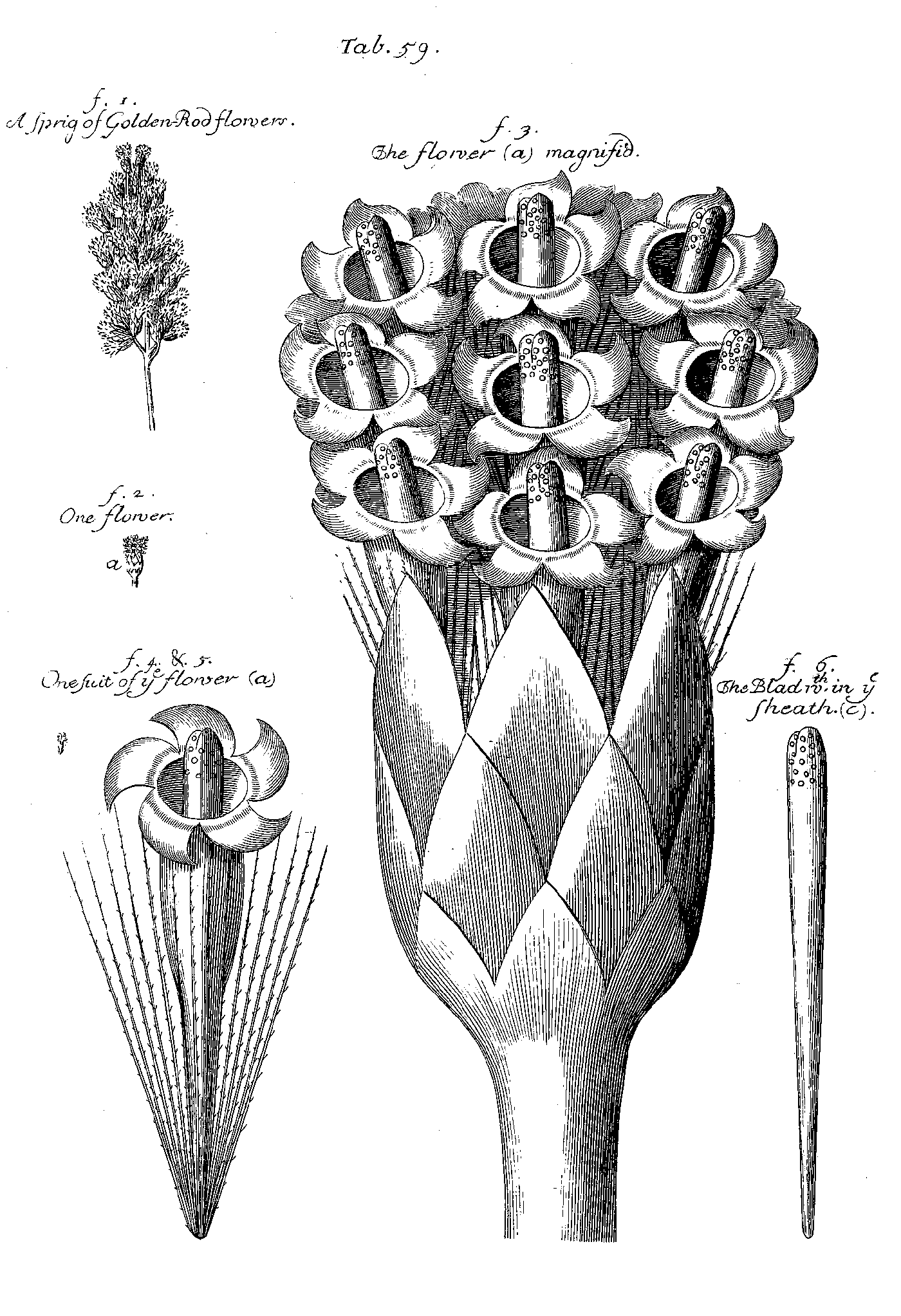
Grew’s flower drawings
In 1682 Nehemiah Grew, a London doctor, published The Anatomy of Plants, with drawings of the insides of flowers made under a microscope. He was among the first to say that the stamens are a flower’s male parts.
Photo: Nehemiah Grew (1682), Public domain, via Wikimedia Commons

Try 5 questions
Quick questions on flowers, marked as you go. Each one explains the answer.
Question 1 of 5
What is nectar for?
Choose an answer. Each question explains itself.
The homework sheet
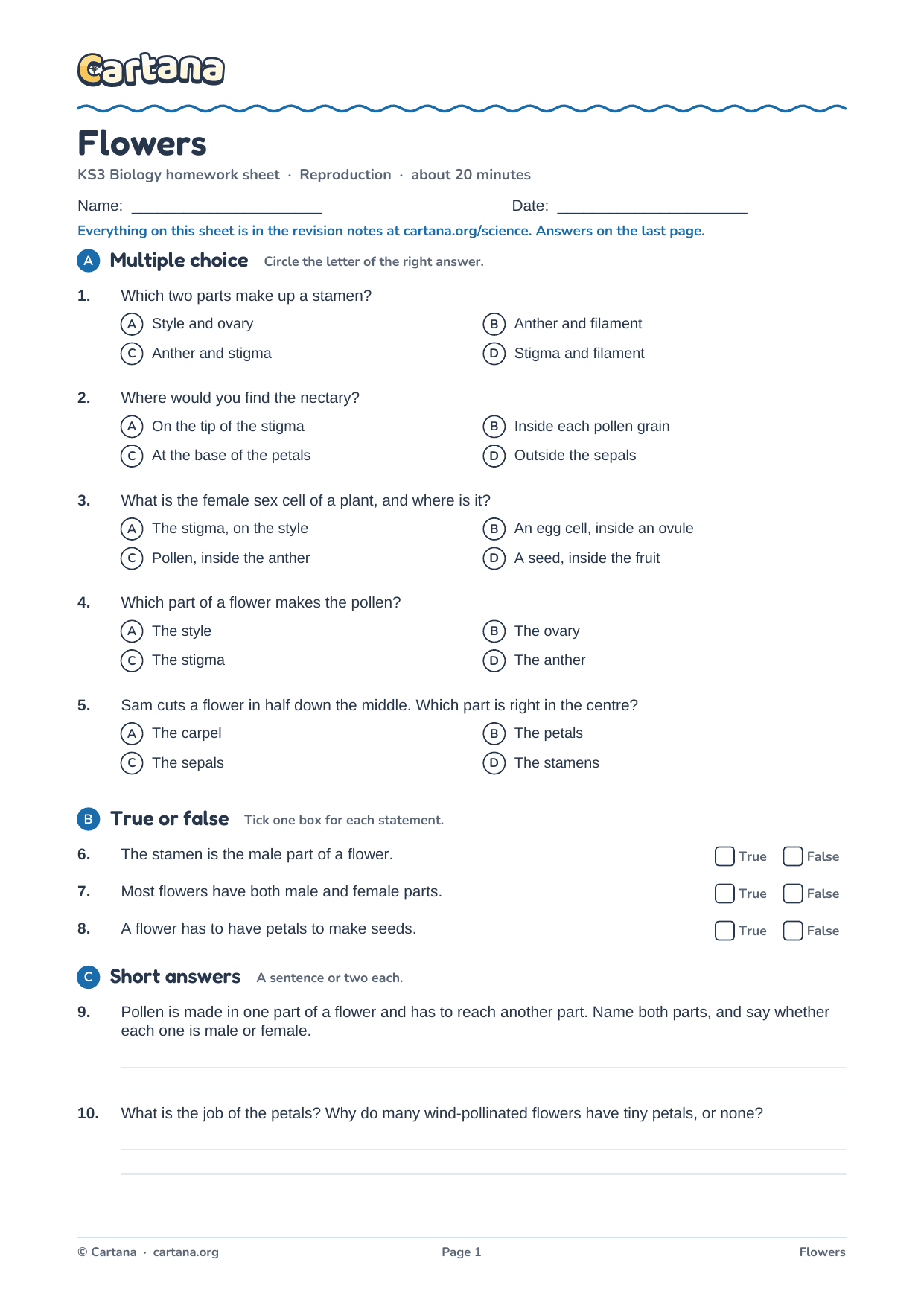
About twenty minutes. Everything on it is in the notes above; the answers are on the last page.
Free homework sheet
Flowers homework sheet
17 questions, about twenty minutes, with the answers on the last page: multiple choice, true or false, short answers, key words to define and one to explain in full.
KS3 Reproduction
Revised the whole unit? There is a 40-mark Reproduction test paper with a mark scheme.
 Watch the trailer · 1:06
New from Cartana · Beta test 1–31 December
Revision that feels like an adventure
Cartana is our KS3 learning adventure: sail between islands, answer quick-fire questions and battle bosses. It starts with science, with maths on the way, and launches in 2027. This December a small group of testers gets to play it first.
In the Cartana adventure, flowers is The Flower Beds, a district of the island The Nursery.
- Play the game before its official release
- Help us build it with your feedback
- Earn exclusive in-game items in return
More in this unit