
KS3 Biology · Digestion & nutrition
Enzymes
- Enzymes as biological catalysts, and the lock-and-key idea of the active site
- Carbohydrase, protease and lipase: what each breaks down and what it makes
- Why enzymes work best near 37 °C, and what denatured means
- The amylase practical with iodine, and how to read its results
- 2 min read
- 5 quick questions
- Free homework sheet
- Years 7 to 9
Revision notes
Enzymes
Enzymes are biological catalysts: they speed up reactions and are not used up. Each one has an active site that fits one type of molecule, like a key in a lock.
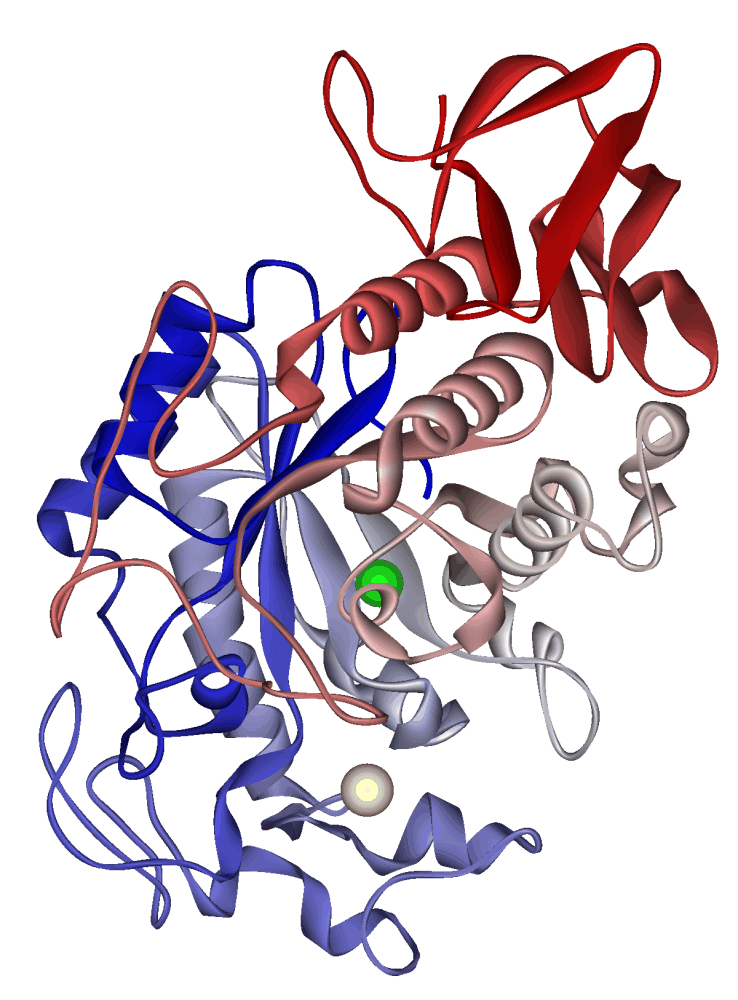

Human enzymes work best at about 37 °C. Too hot and the active site changes shape: the enzyme is denatured and stops working.
The amylase practical
- Put starch solution and amylase, in separate tubes, into water baths at different temperatures (for example 20, 37 and 80 °C) for a few minutes, so each starts at the right temperature.
- Put a drop of iodine in each well of a spotting tile.
- Add the amylase to the starch at each temperature and start the stopwatch. Set up a control tube of starch and water with no amylase.
- Every 30 seconds, add a drop from each tube to a fresh well of iodine.
- Record the time when the iodine stays orange-brown: the starch has gone.
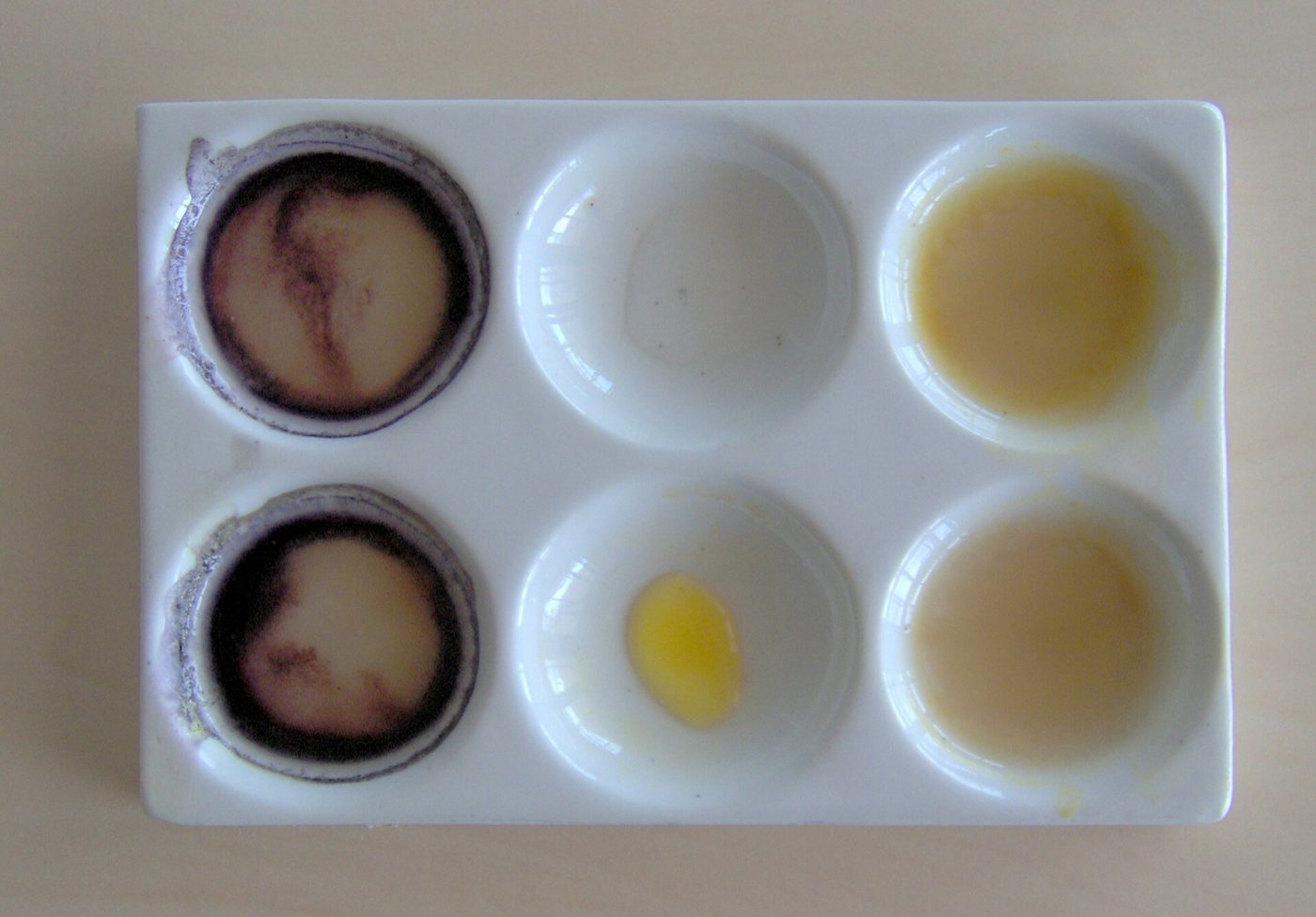

Results: fastest at 37 °C, slower at 20 °C, and the starch never goes at 80 °C (denatured). The control stays blue-black, which shows it is the amylase that breaks down the starch. Fair test: only the temperature changes.
The temperature is the independent variable (what you change); the time for the starch to go is the dependent variable (what you measure). Repeat the experiment and check your results agree: that makes them more reliable.
Written to the KS3 national curriculum. Last changed 2 November 2026.
Key words
Say them, spell them, use them in an answer.
- active site
- Sugars (glucose)
- Amino acids
- denatured
- Results
- independent variable
- dependent variable
- reliable
Common misconception
Often said“Enzymes get used up.”
In factThey are catalysts: unchanged and reused. Heat is what stops them, by denaturing them.
Try 5 questions
Quick questions on enzymes, marked as you go. Each one explains the answer.
Question 1 of 5
Sam adds iodine solution to a sample that contains starch. What colour does it turn?
Choose an answer. Each question explains itself.
The homework sheet
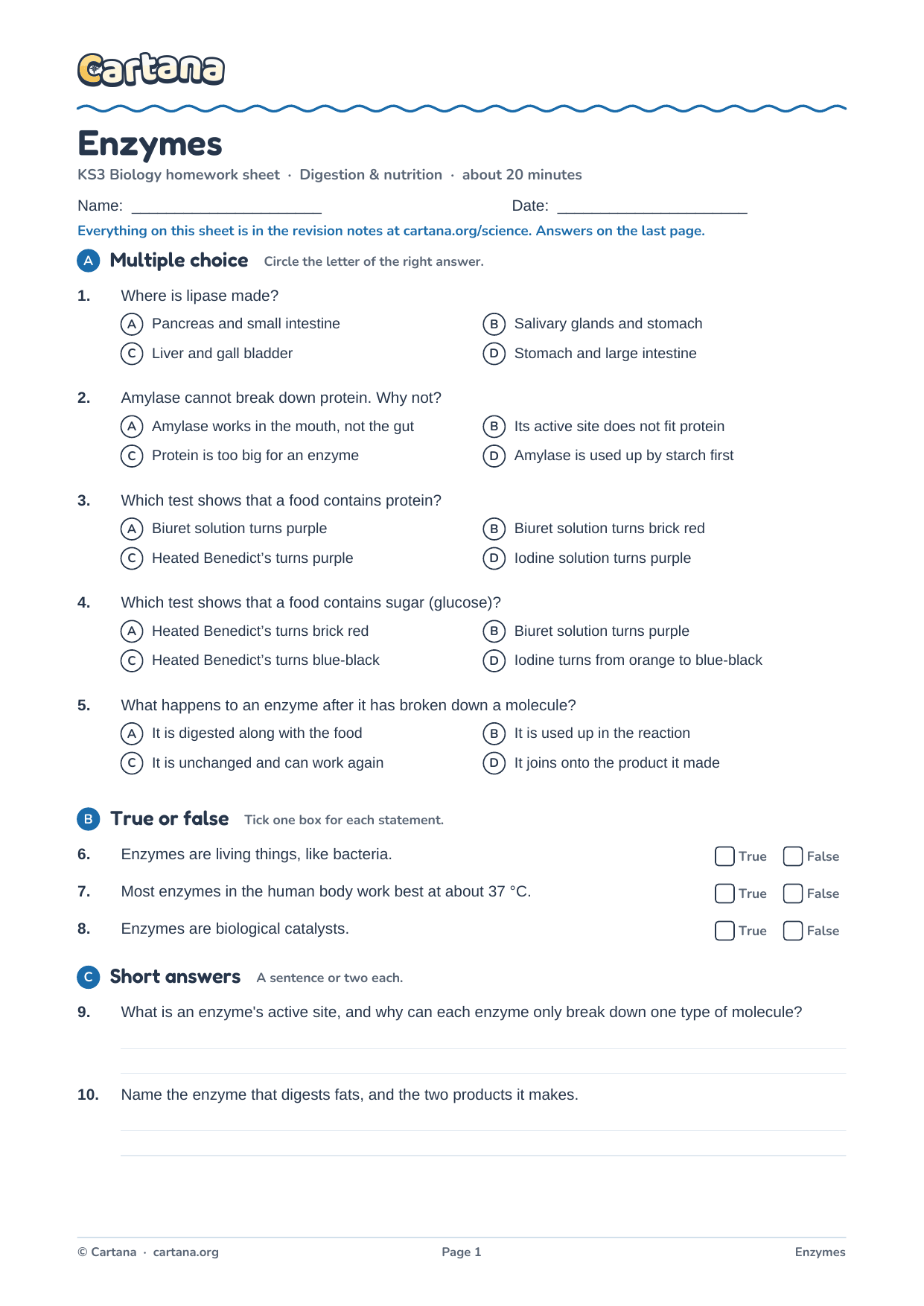
About twenty minutes. Everything on it is in the notes above; the answers are on the last page.
Free homework sheet
Enzymes homework sheet
17 questions, about twenty minutes, with the answers on the last page: multiple choice, true or false, short answers, key words to define and one to explain in full.
KS3 Digestion & nutrition
Revised the whole unit? There is a 40-mark Digestion & nutrition test paper with a mark scheme.
 Watch the trailer · 1:06
New from Cartana · Beta test 1–31 December
Revision that feels like an adventure
Cartana is our KS3 learning adventure: sail between islands, answer quick-fire questions and battle bosses. It starts with science, with maths on the way, and launches in 2027. This December a small group of testers gets to play it first.
In the Cartana adventure, enzymes is Île Enzyme, a district of the island The Alimentary Archipelago.
- Play the game before its official release
- Help us build it with your feedback
- Earn exclusive in-game items in return
More in this unit