
KS3 Biology · Body systems & health
Health
- What a drug is: medicinal and recreational drugs, stimulants and depressants
- Nicotine, tar and carbon monoxide: what tobacco smoke does to the body
- Alcohol: its short- and long-term effects, and how to work out units
- Addiction, the law on smoking and vaping, and checking health claims
- 3 min read
- 5 quick questions
- Free homework sheet
- Years 7 to 9
Revision notes
A drug is a substance that changes the way your body or mind works. Medicinal drugs treat or prevent illness: paracetamol for pain, antibiotics for bacterial infections, inhalers for asthma. Recreational drugs are taken for their effect on the mind. Caffeine, nicotine and alcohol are legal, but in the UK only adults can buy alcohol, tobacco and nicotine vapes. Many other drugs are illegal.

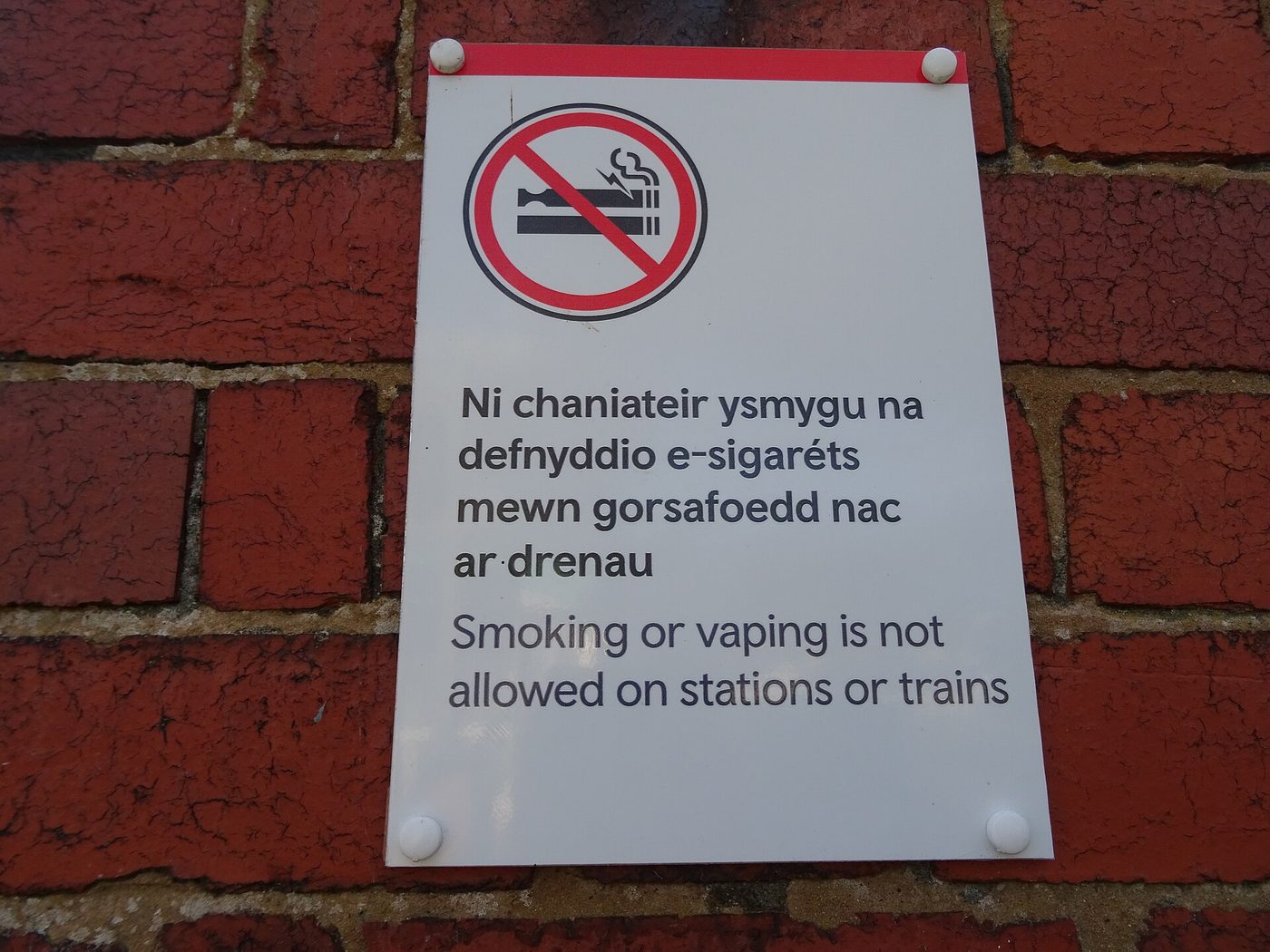
The law on smoking and vaping. Under the Tobacco and Vapes Act 2026, from 29 October 2026 you must be 18 to buy any vape, even one with no nicotine in it, or nicotine pouches. From 1 January 2027 it is illegal to sell tobacco to anyone born on or after 1 January 2009, however old they are: if that is you, nobody will ever be allowed to sell you cigarettes. The aim is a smokefree generation.

| Type | What it does | Examples |
|---|---|---|
| Stimulant | Speeds up the nervous system: more alert, faster heart rate | Caffeine, nicotine |
| Depressant | Slows down the nervous system: slower reactions | Alcohol, solvents |
| Painkiller | Reduces pain | Paracetamol, ibuprofen |
Many drugs are addictive: the body comes to depend on them, and stopping brings unpleasant withdrawal symptoms. Drug misuse means using a drug in a harmful way: too much, too often, or a medicine not as prescribed. Sniffing solvents such as glue or aerosols can kill, even the first time.
| In tobacco smoke | What it does |
|---|---|
| Nicotine | An addictive stimulant. Raises the heart rate and blood pressure |
| Tar | Sticky; coats the airways and alveoli, damages the cilia, and contains chemicals that cause cancer |
| Carbon monoxide | A poisonous gas that takes the place of oxygen in red blood cells, so less oxygen reaches the body |
Smoking causes lung cancer, heart disease, bronchitis and emphysema (damaged alveoli, so less surface for gas exchange). Smoking in pregnancy means less oxygen for the baby, which may be born early or small. Passive smoking harms the people nearby. Vapes have no tar, but most contain addictive nicotine, and they are not harmless.
Alcohol is a depressant. In the short term it slows reactions and harms judgement, balance and speech. Over years, heavy drinking damages the liver (cirrhosis) and the brain, and causes heart disease and some cancers. Units of alcohol = strength (%) × volume (ml) ÷ 1000. A 500 ml beer at 4% holds 4 × 500 ÷ 1000 = 2 units. UK doctors advise adults not to regularly drink more than 14 units a week, say an alcohol-free childhood is the healthiest option, and advise no alcohol at all in pregnancy.
Check the evidence. Real medicines are tested in fair trials before doctors can use them. A “miracle cure” that has never been tested, sold from the back of a wagon, is called quackery.
Written to the KS3 national curriculum. Last changed 2 November 2026.
Key words
Say them, spell them, use them in an answer.
- drug
- Medicinal drugs
- Recreational drugs
- withdrawal symptoms
- Drug misuse
- emphysema
- Passive smoking
- Alcohol
- Check the evidence
Common misconception
Often said“Alcohol warms you up.”
In factAlcohol widens the blood vessels near your skin, so you feel warmer, but your body actually loses heat faster.
Did you know?
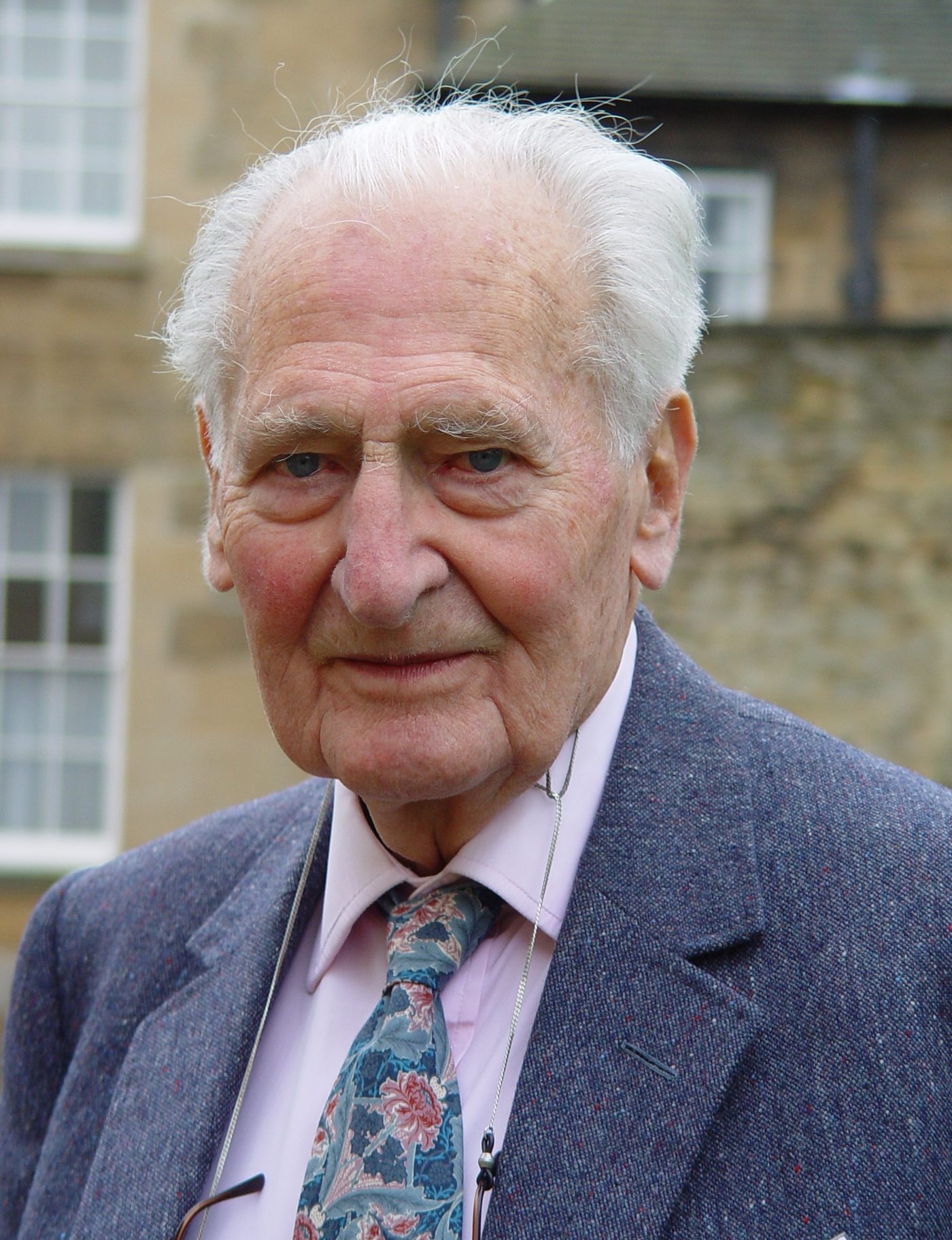
Doll and Hill’s smoking study
In 1950 Richard Doll and Austin Bradford Hill found that people with lung cancer were far more likely to have been smokers. In 1951 they began following more than 40,000 British doctors, and kept going for 50 years: the evidence showed that smoking causes lung cancer, heart disease and many other illnesses.
Photo: CJ DUB, CC BY-SA 2.0 ca, via Wikimedia Commons

Try 5 questions
Quick questions on health, marked as you go. Each one explains the answer.
Question 1 of 5
Antibiotics are medicinal drugs. What do they treat?
Choose an answer. Each question explains itself.
The homework sheet
About twenty minutes. Everything on it is in the notes above; the answers are on the last page.
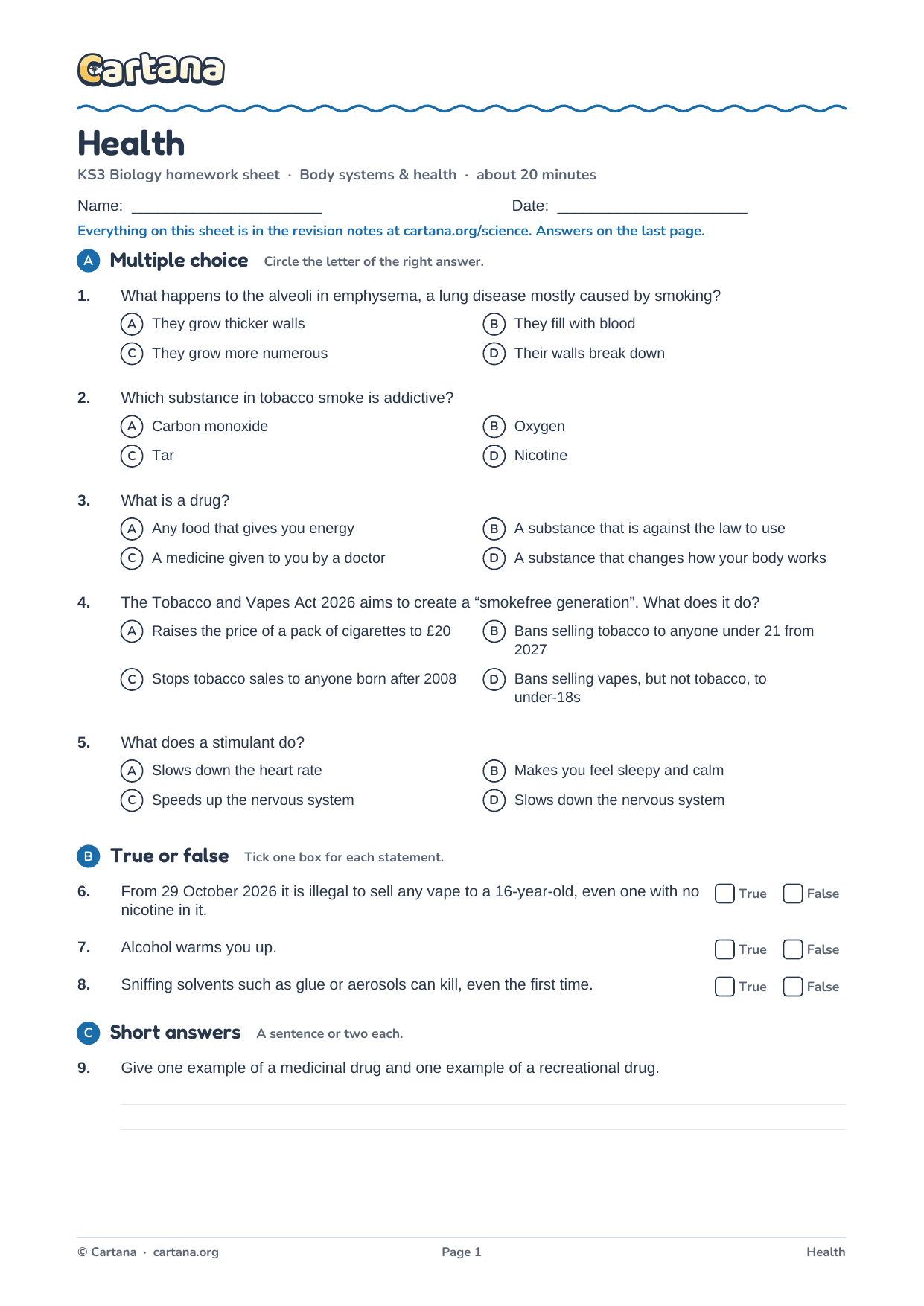
Free homework sheet
Health homework sheet
17 questions, about twenty minutes, with the answers on the last page: multiple choice, true or false, short answers, key words to define and one to explain in full.
KS3 Body systems & health
Revised the whole unit? There is a 40-mark Body systems & health test paper with a mark scheme.
 Watch the trailer · 1:06
New from Cartana · Beta test 1–31 December
Revision that feels like an adventure
Cartana is our KS3 learning adventure: sail between islands, answer quick-fire questions and battle bosses. It starts with science, with maths on the way, and launches in 2027. This December a small group of testers gets to play it first.
In the Cartana adventure, health is Remedy Row, a district of the island Cardia.
- Play the game before its official release
- Help us build it with your feedback
- Earn exclusive in-game items in return
More in this unit