
KS3 Biology · Photosynthesis & respiration
Water and minerals
- Root hair cells, xylem and the transpiration stream
- The three jobs water does in a plant
- Nitrates, phosphates, potassium and magnesium, and the signs of running short
- Van Helmont's willow: why plants do not eat soil
- 2 min read
- 5 quick questions
- Free homework sheet
- Years 7 to 9
Revision notes
Plants get water and minerals from the soil through their roots. They do not get food from the soil: they make it by photosynthesis.
- Root hair cells have a long, thin extension: a large surface area for taking in water and minerals. No chloroplasts: there is no light underground.
- Water travels up the stem in xylem vessels. Water evaporating from the leaves through the stomata pulls more up behind it: the transpiration stream.
- Plants need water as a reactant, to keep their cells firm (without it they wilt) and to carry minerals.
- Root cells respire, so roots need oxygen from air spaces in the soil. Waterlogged soil can kill a plant.
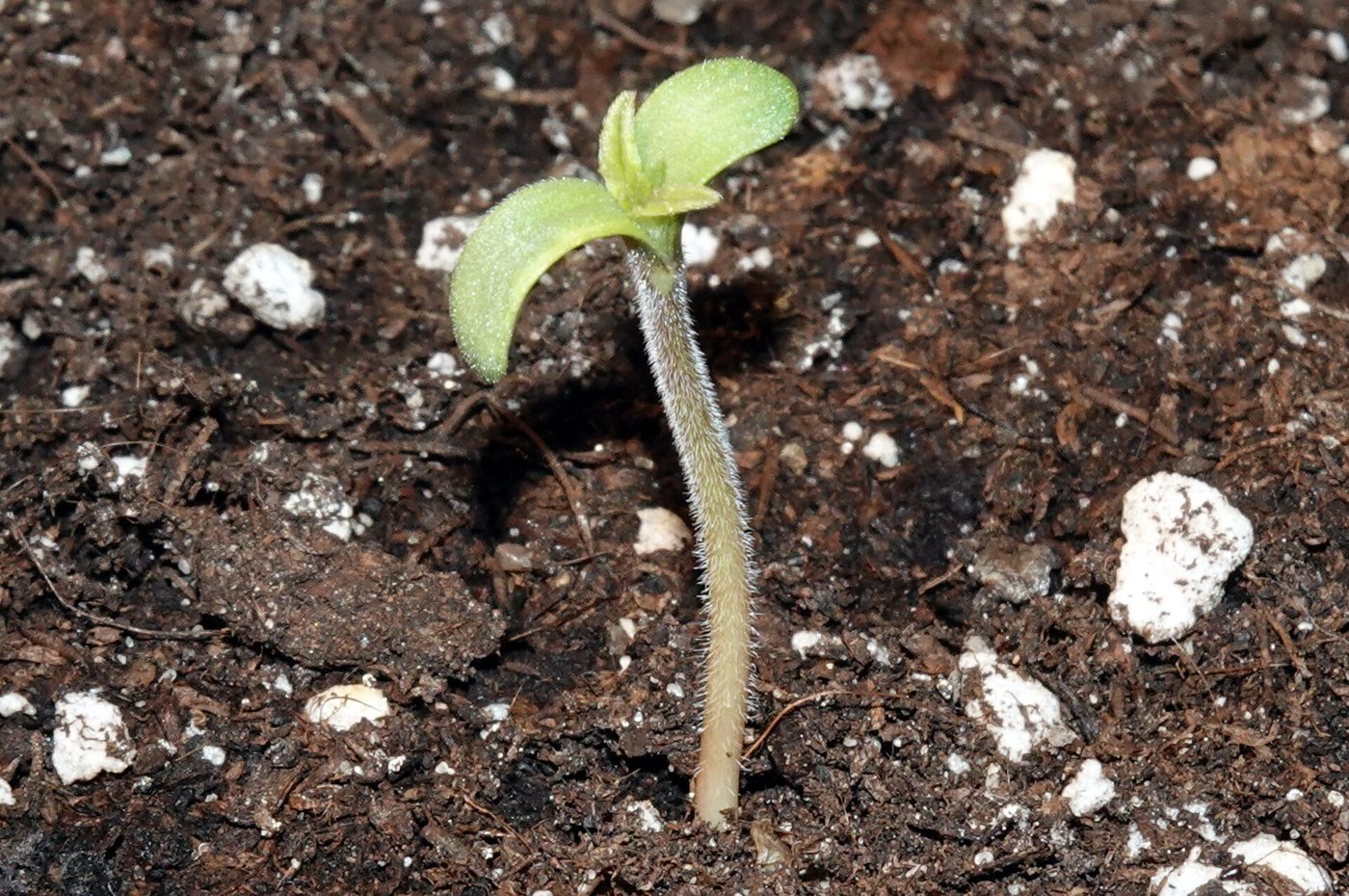

Stretch Water enters root hair cells by osmosis. Phloem carries dissolved sugars from the leaves to the rest of the plant.
Minerals
A fertiliser adds minerals to the soil. Every harvest carries minerals away from the field, so farmers have to replace them. Fertiliser is not plant food.
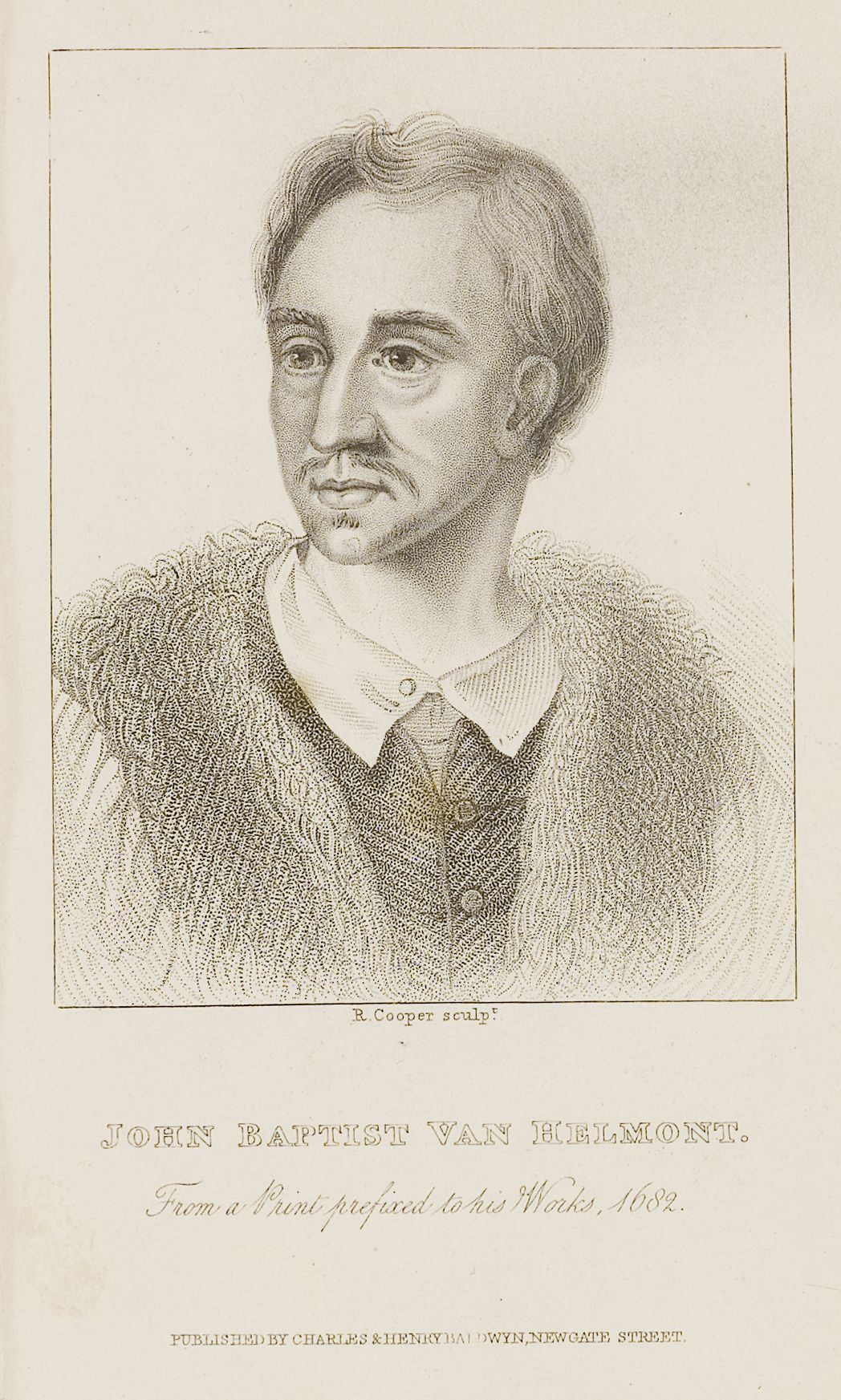
He grew a willow in a pot of soil for five years, giving it only water. The tree gained about 74 kg; the soil lost about 57 g. So plants do not eat soil. We now know most of a plant’s mass comes from carbon dioxide in the air, built into glucose.

Written to the KS3 national curriculum. Last changed 5 November 2026.
Key words
Say them, spell them, use them in an answer.
- water
- minerals
- xylem
- transpiration stream
- reactant
- carry minerals
- oxygen
- osmosis
- Phloem
- fertiliser
- carbon dioxide
Common misconception
Often said“Plants get their food from the soil.”
In factPlants make their own food, glucose, by photosynthesis. The soil gives them water and minerals.
Did you know?
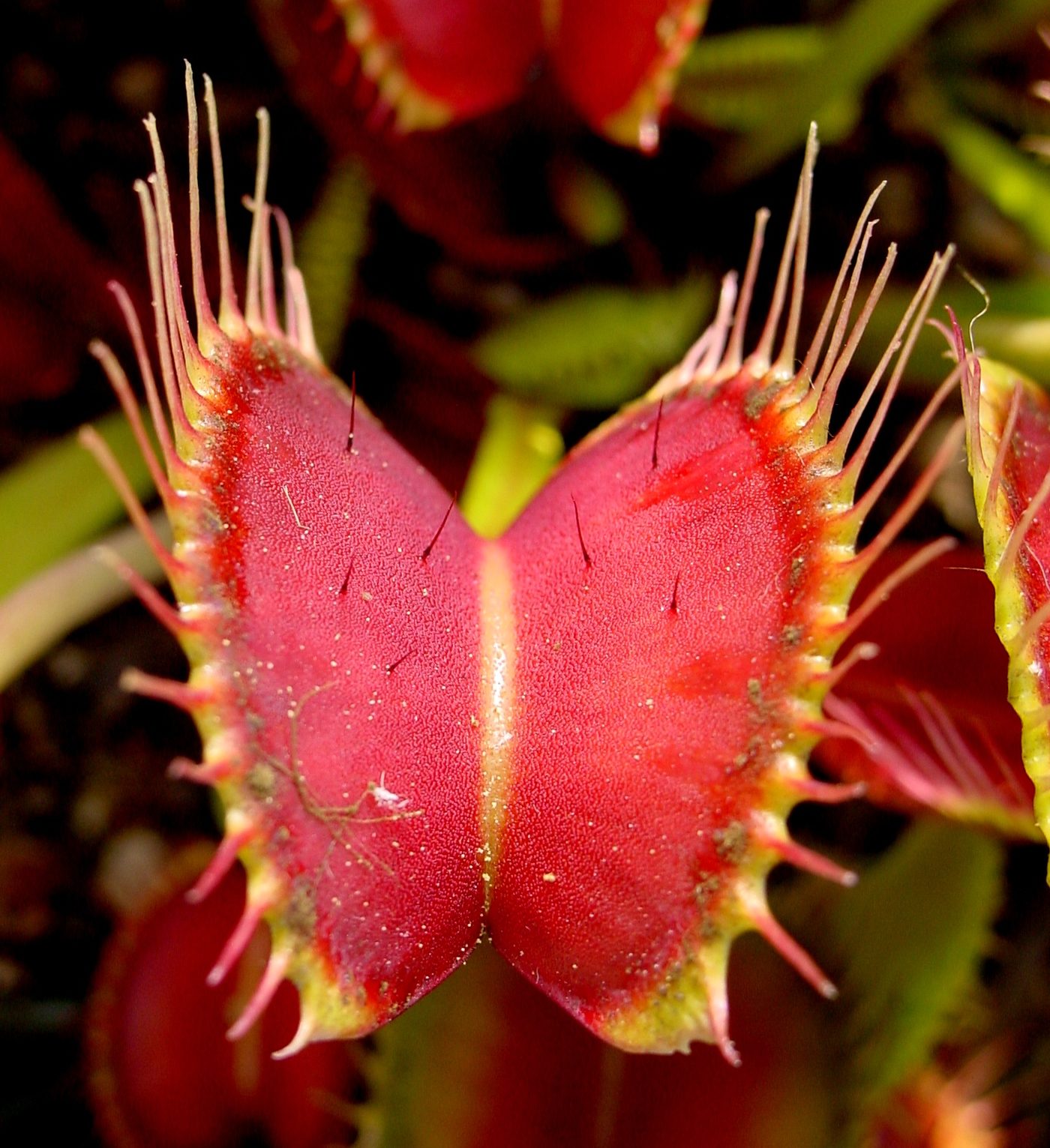
Venus flytrap
It grows in boggy soil with very little nitrogen, so it catches insects to get the minerals it is missing. It still makes all its own food by photosynthesis.
Photo: Noah Elhardt, CC BY-SA 2.5, via Wikimedia Commons

Try 5 questions
Quick questions on water and minerals, marked as you go. Each one explains the answer.
Question 1 of 5
What is the job of root hair cells?
Choose an answer. Each question explains itself.
The homework sheet
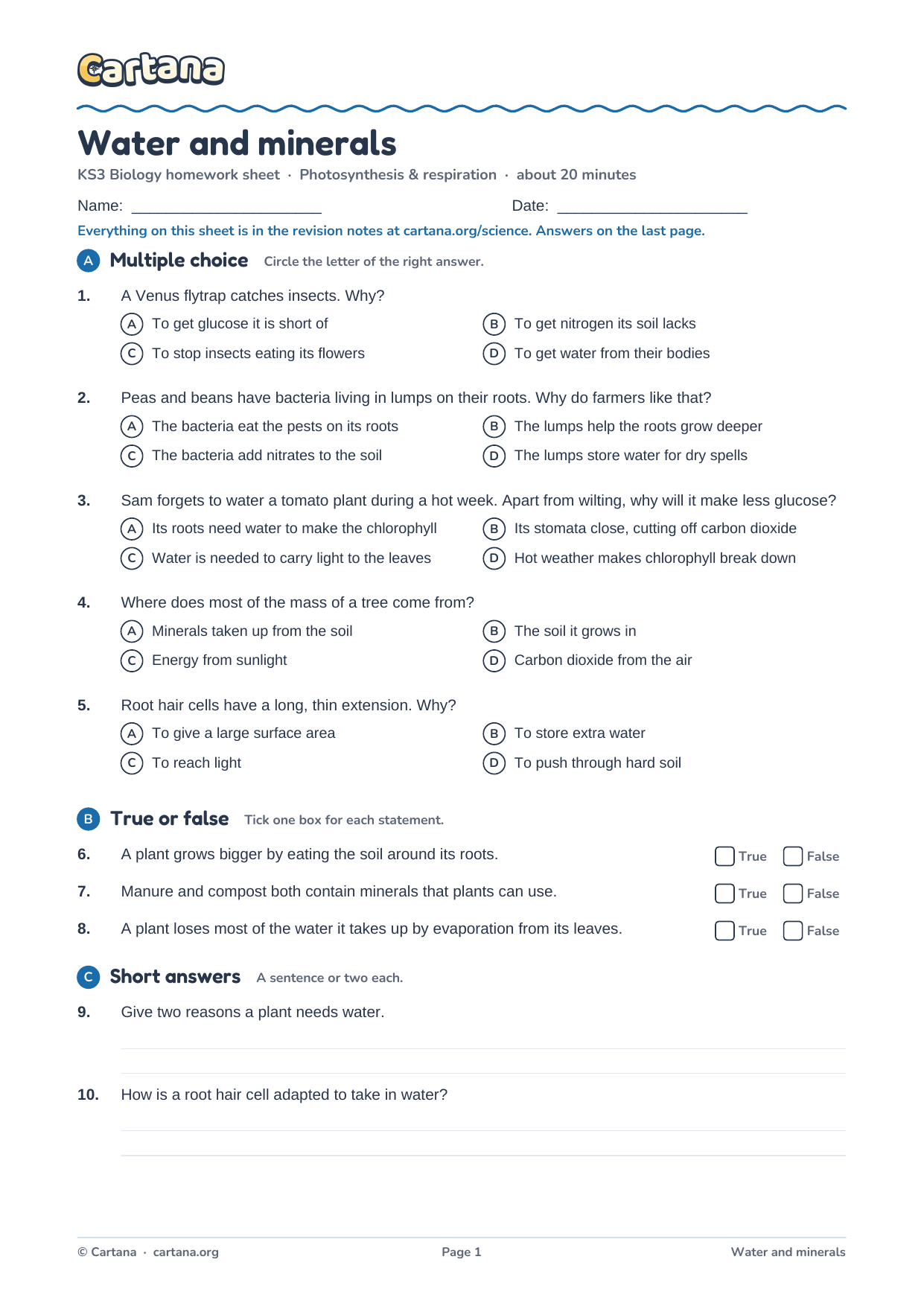
About twenty minutes. Everything on it is in the notes above; the answers are on the last page.
Free homework sheet
Water and minerals homework sheet
17 questions, about twenty minutes, with the answers on the last page: multiple choice, true or false, short answers, key words to define and one to explain in full.
KS3 Photosynthesis & respiration
Revised the whole unit? There is a 40-mark Photosynthesis & respiration test paper with a mark scheme.
 Watch the trailer · 1:06
New from Cartana · Beta test 1–31 December
Revision that feels like an adventure
Cartana is our KS3 learning adventure: sail between islands, answer quick-fire questions and battle bosses. It starts with science, with maths on the way, and launches in 2027. This December a small group of testers gets to play it first.
In the Cartana adventure, water and minerals is Root Hair Mines, a district of the island Sugarleaf.
- Play the game before its official release
- Help us build it with your feedback
- Earn exclusive in-game items in return
More in this unit