
KS3 Chemistry · Acids & alkalis
Indicators and pH
- The pH scale from 0 to 14, with everyday liquids at their usual pH
- Litmus, universal indicator and its colours, and pH meters
- Strong and weak acids and alkalis, and how diluting changes pH
- Making an indicator from red cabbage: what you do, see and learn
- 4 min read
- 5 quick questions
- Free homework sheet
- Years 7 to 9
Revision notes
The pH scale measures how acidic or alkaline a solution is, on a scale from 0 to 14: below 7 is acidic, 7 is neutral and above 7 is alkaline. An indicator is a dye that changes colour to show which.
What is the pH scale?
The pH of a solution is a number, usually from 0 to 14. Pure water has a pH of exactly 7: it is neutral. The lower the pH below 7, the more acidic the solution; the higher the pH above 7, the more alkaline it is. Lemon juice, at about pH 2, is far more acidic than black coffee, at about pH 5.
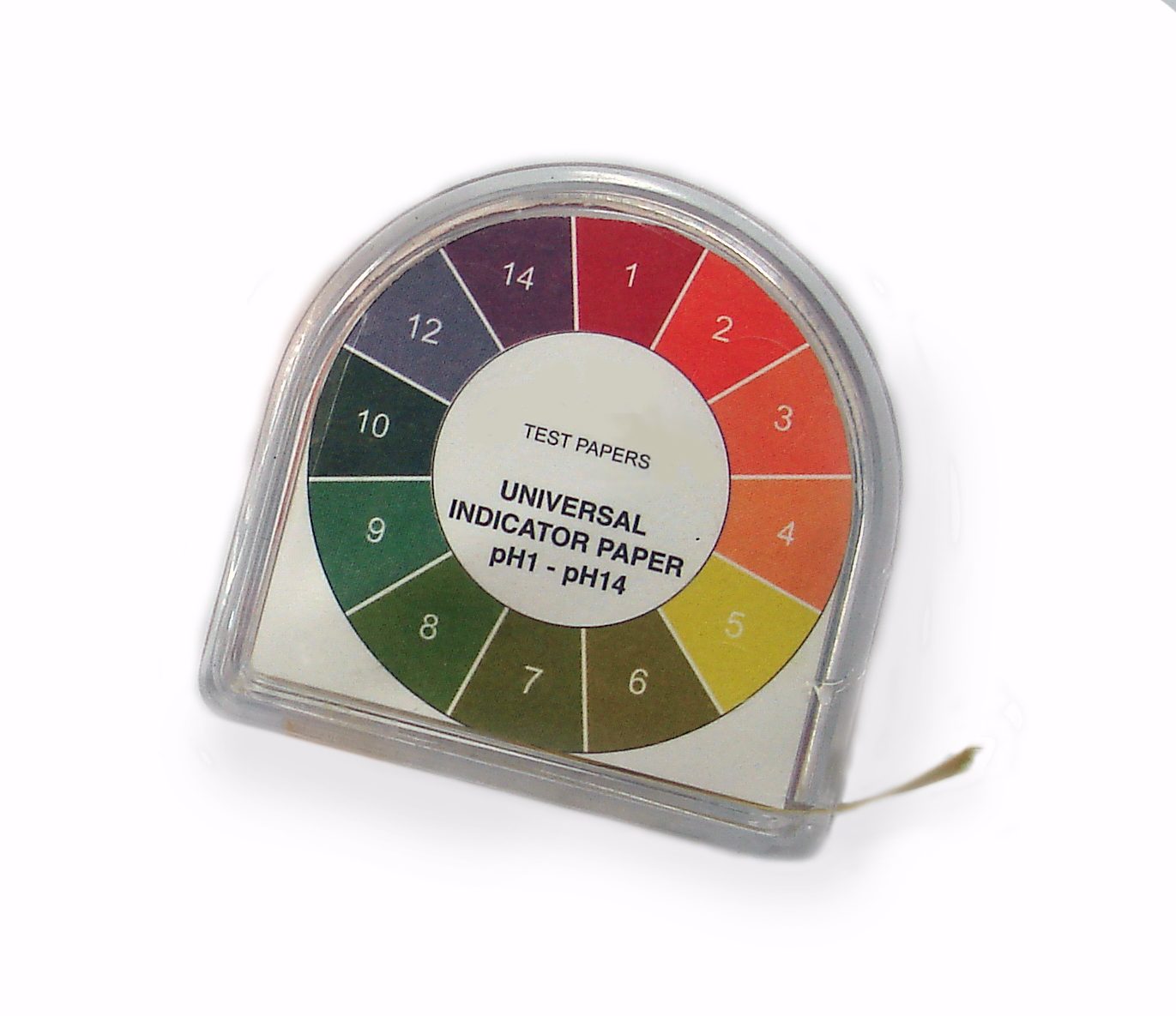
| pH | Universal indicator | The solution is |
|---|---|---|
| 0 to 3 | Red | Very acidic |
| 4 to 6 | Orange or yellow | Slightly acidic |
| 7 | Green | Neutral |
| 8 to 10 | Blue | Slightly alkaline |
| 11 to 14 | Purple | Very alkaline |
How do litmus and universal indicator work?
Litmus is a dye made from lichens. It is red in an acid and blue in an alkali. It usually comes as strips of paper: blue litmus paper turns red in an acid, and red litmus paper turns blue in an alkali. In a neutral solution neither paper changes. Litmus only tells you whether something is acidic or alkaline, not how strongly.
Universal indicator is a mixture of several dyes, so it has a different colour for each part of the scale. Add a few drops of the solution, or dip in a strip of universal indicator paper, then match the colour to a chart to read the pH. A pH meter is an electronic probe that gives the pH as a number, often to one decimal place. It is more precise, and it works on coloured or cloudy liquids where an indicator’s colour would be hard to see.
What are strong and weak acids?
A strong acid, such as hydrochloric, sulfuric or nitric acid, has a very low pH, about 0 to 2, even when it is dilute, and turns universal indicator red. A weak acid, such as citric or ethanoic acid, has a higher pH, nearer 3, with the same amount of acid dissolved. The acids in foods, such as fruit and vinegar, are weak acids.
Alkalis are the same. A strong alkali, such as sodium hydroxide, has a pH of 13 or 14; a weak alkali, such as ammonia solution, has a lower pH, about 11.
How concentrated a solution is changes its pH too. Lemon juice is about pH 2 because it contains a lot of citric acid. Add water and its pH rises towards 7, but it never goes past 7: a diluted acid is still an acid.
How do you make an indicator from red cabbage?
Many coloured plants contain dyes that act as indicators. Red cabbage makes one of the best.
- Chop a few red cabbage leaves into small pieces and put them in a beaker.
- Pour on hot water from a kettle, stir, and leave for ten minutes. Take care with the hot water.
- When it has cooled, filter or strain the liquid. It is a deep purple.
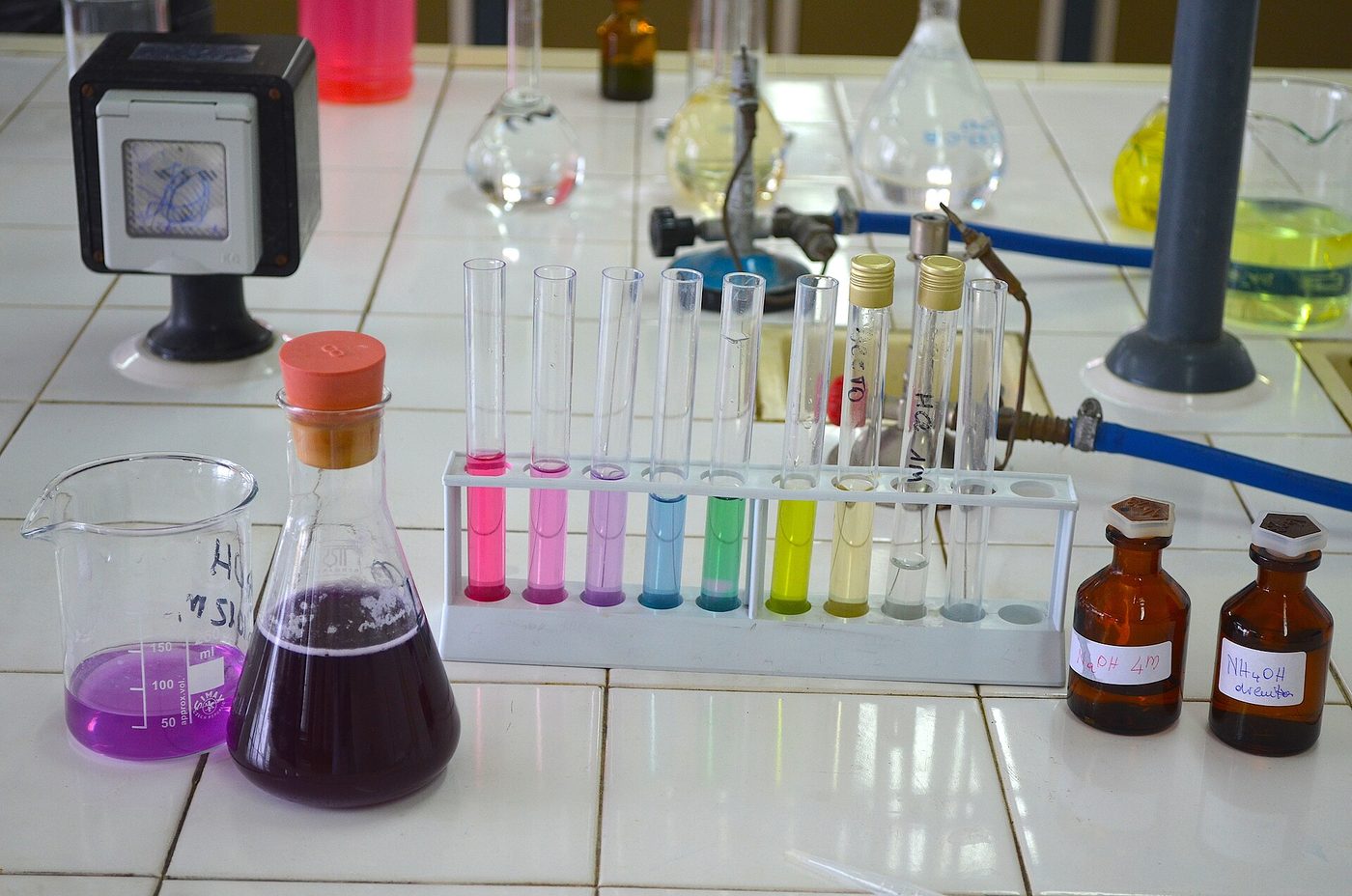
- Add a little of the purple liquid to test tubes of different liquids, such as lemon juice, vinegar, water, baking soda solution and washing soda solution.
What you see: the indicator turns red or pink in acids, stays purple in neutral water, and turns blue, then green, then yellow as the solution gets more alkaline. What it shows: the colour depends on the pH, so a homemade indicator can sort liquids into acids, alkalis and neutral ones, and even put them in order.
Stretch Each step down the pH scale is ten times more acidic. A solution of pH 3 is ten times more acidic than one of pH 4, and pH 2 is a hundred times more acidic than pH 4. So if you dilute a strong acid of pH 1 with water until its volume is ten times bigger, its pH goes up by just one, to pH 2.
Written to the KS3 national curriculum. Last changed 14 November 2026.
Key words
Say them, spell them, use them in an answer.
- pH scale
- indicator
- litmus
- universal indicator
- pH meter
- neutral
- strong acid
- weak acid
- strong alkali
- weak alkali
Common misconception
Often said“A strong acid and a concentrated acid are the same thing.”
In factThey are different ideas. Strong or weak is about which acid it is: hydrochloric acid is a strong acid even when it is dilute. Concentrated or dilute is about how much acid is dissolved in the water: vinegar is a dilute solution of a weak acid.
Did you know?
Hydrangeas
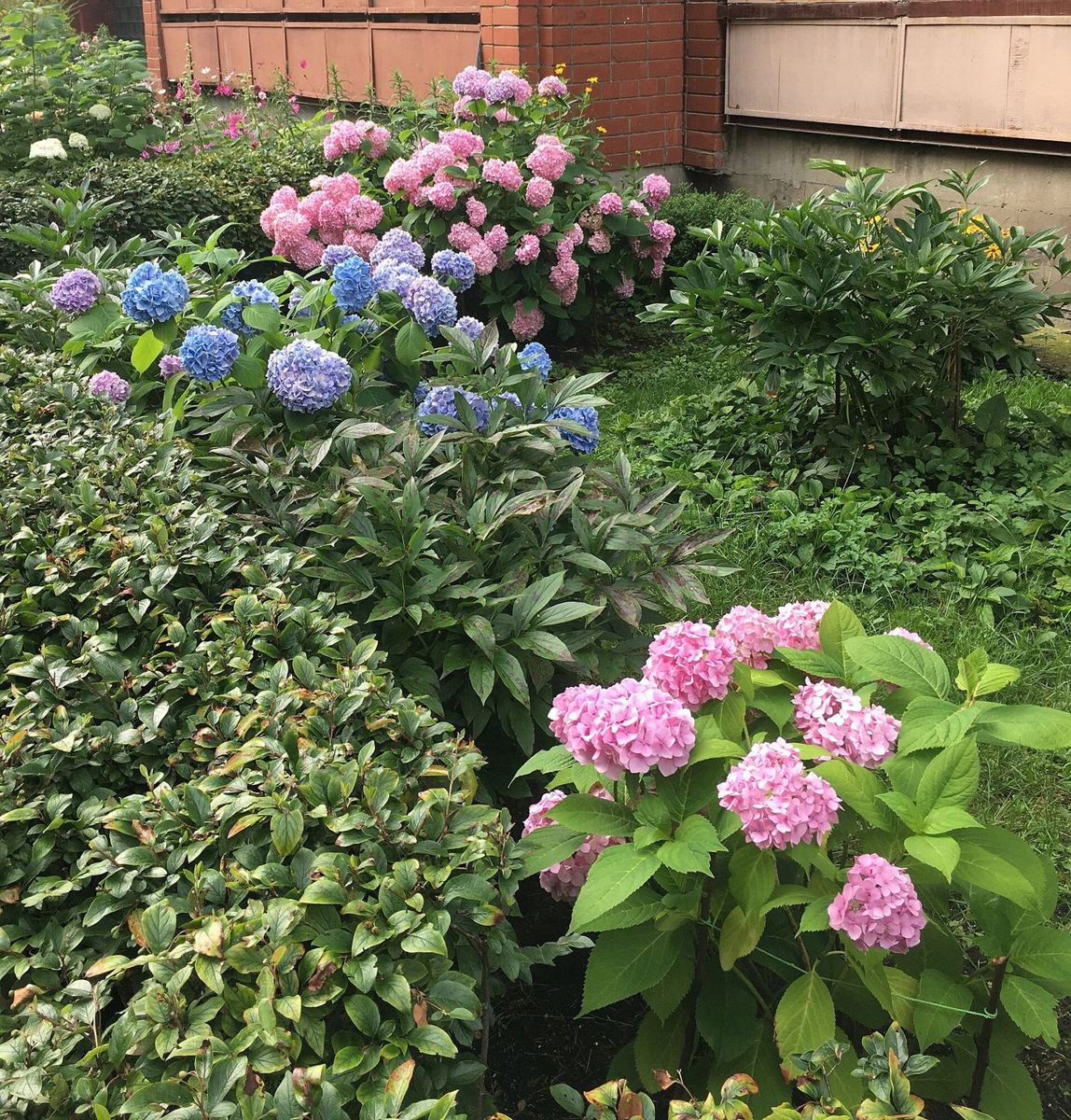
Many garden hydrangeas show the pH of their soil. The same plant has blue flowers in acidic soil and pink flowers in alkaline soil, because only in acidic soil can its roots take up aluminium, which turns the colour in the petals blue.
Try 5 questions
Quick questions on indicators and pH, marked as you go. Each one explains the answer.
Question 1 of 5
Sodium hydroxide solution has a pH of 14. What is it?
Choose an answer. Each question explains itself.
The homework sheet
About twenty minutes. Everything on it is in the notes above; the answers are on the last page.
Free homework sheet
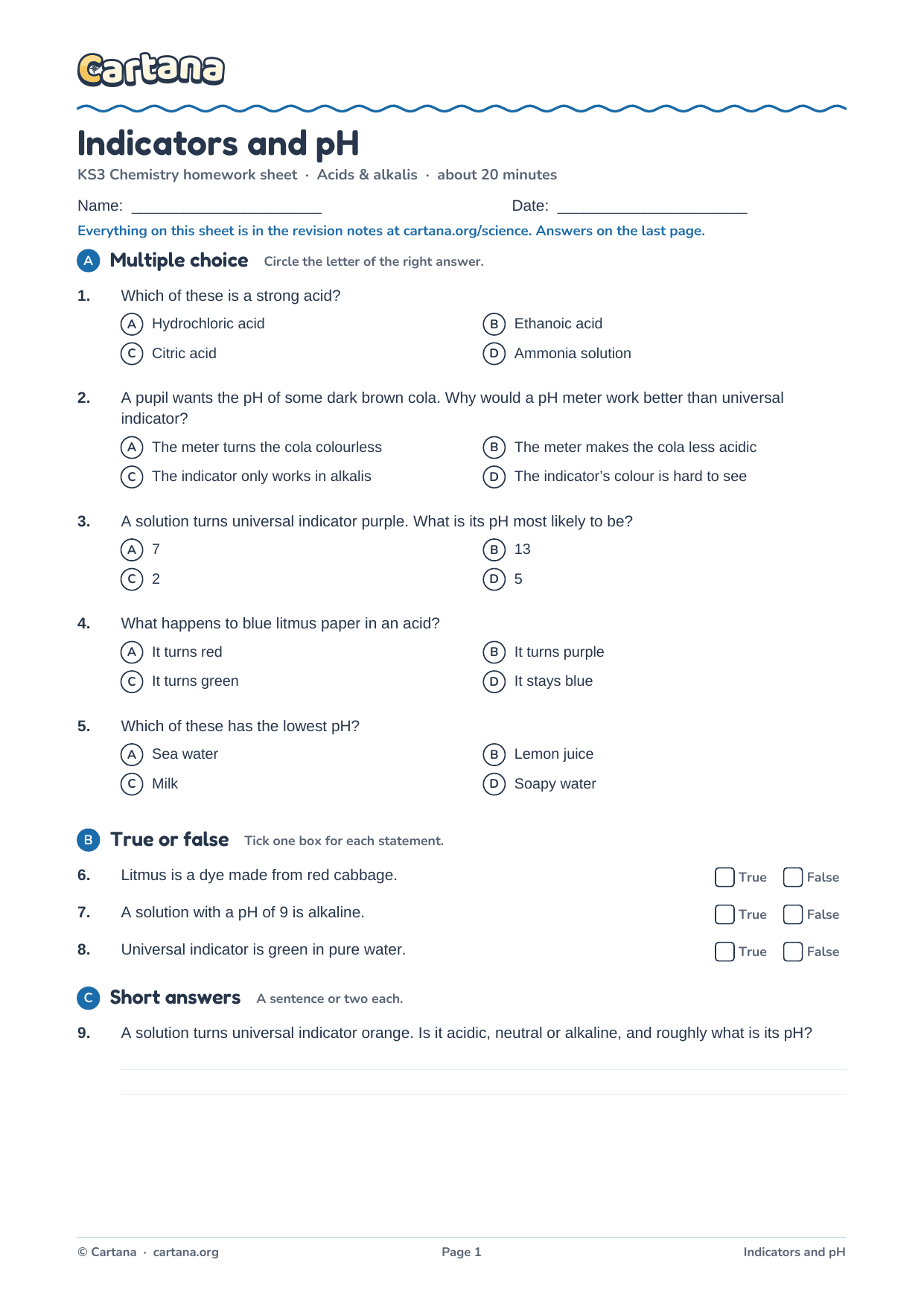
Indicators and pH homework sheet
17 questions, about twenty minutes, with the answers on the last page: multiple choice, true or false, short answers, key words to define and one to explain in full.
KS3 Acids & alkalis
Revised the whole unit?
When every topic in acids & alkalis is done, two different papers test the whole unit, each with its own mark scheme.


 Watch the trailer · 1:06
New from Cartana · Beta test 1–31 December
Revision that feels like an adventure
Cartana is our KS3 learning adventure: sail between islands, answer quick-fire questions and battle bosses. It starts with science, with maths on the way, and launches in 2027. This December a small group of testers gets to play it first.
In the Cartana adventure, every science unit is an island to explore. The island for acids & alkalis is being built.
- Play the game before its official release
- Help us build it with your feedback
- Earn exclusive in-game items in return
More in this unit
Acids & alkalis
- 1Acids and alkalisEveryday and laboratory acids and alkalis, bases and alkalis, concentrated and dilute solutions, hazard symbols and working safely
- 3NeutralisationNextAcid + alkali → salt + water, following the pH as alkali is added to an acid, and uses of neutralisation for indigestion, soil, teeth and stings
- 4Acids and metalsMetal + acid → salt + hydrogen, the squeaky pop test, which metals react with dilute acids, and naming the salt from the acid
- 5Making saltsNaming salts, acids with metal oxides and metal carbonates, the test for carbon dioxide, and making copper sulfate crystals step by step