
KS3 Chemistry · Acids & alkalis
Neutralisation
- Acid + alkali → salt + water, and naming the salt
- Neutralising an acid in the lab with universal indicator, step by step
- How the pH changes as alkali is added, on a graph
- Everyday uses: indigestion tablets, soil, toothpaste, and the truth about stings
- 4 min read
- 5 quick questions
- Free homework sheet
- Years 7 to 9
Revision notes
Neutralisation is the reaction in which an acid and a base cancel each other out. When the base is an alkali, the products are a salt and water: acid + alkali → salt + water.
What happens when an acid reacts with an alkali?
A base is any substance that neutralises an acid, and an alkali is a base that dissolves in water. An acid and an alkali react to make two new substances: a salt and water. If they are mixed in exactly the right amounts, neither is left over, so the solution ends up neutral, with a pH of 7.
A salt here does not just mean table salt. It is a compound made when an acid reacts with a base. Its first name comes from the metal in the base, and its second name from the acid: hydrochloric acid makes chlorides, sulfuric acid makes sulfates and nitric acid makes nitrates (more in making salts).
| Acid | Alkali | Salt made |
|---|---|---|
| Hydrochloric acid | Sodium hydroxide | Sodium chloride |
| Sulfuric acid | Potassium hydroxide | Potassium sulfate |
| Nitric acid | Sodium hydroxide | Sodium nitrate |
So hydrochloric acid + sodium hydroxide → sodium chloride + water. The salt stays dissolved in the water: evaporate the water and the salt is left behind as crystals. Neutralisation also gives out energy, so the mixture gets a little warmer: it is an exothermic reaction (see energy changes).
How do you neutralise an acid in the lab?
- Wearing eye protection, measure 25 cm3 of dilute hydrochloric acid into a conical flask with a measuring cylinder, and stand the flask on a white tile so colours are easy to see.
- Add a few drops of universal indicator. It turns red: the acid has a low pH.
- Fill a burette, a long tube marked in cm3 with a tap at the bottom, with dilute sodium hydroxide solution.
- Run the alkali into the flask a little at a time, swirling after each addition. Near the end, add it drop by drop.
- Stop when the indicator turns green. Read the burette to find how much alkali you added.
What you see: the colour changes from red to orange, then yellow, then green as the acid is used up. One drop too many turns it blue or purple, because there is now more alkali than acid. What it shows: the alkali cancels out the acid, and there is one exact amount that makes the mixture neutral.
How does the pH change as alkali is added?
A pH meter in the flask shows how the pH changes. At first it rises only slowly, because there is still plenty of acid left. Close to the neutral point it shoots up: just 1 cm3 more alkali, about twenty drops, takes it from about 3 to about 11. Then it levels off, as the extra alkali makes the mixture alkaline. The same happens in reverse if you add an acid to an alkali: the pH falls.
Where is neutralisation used?
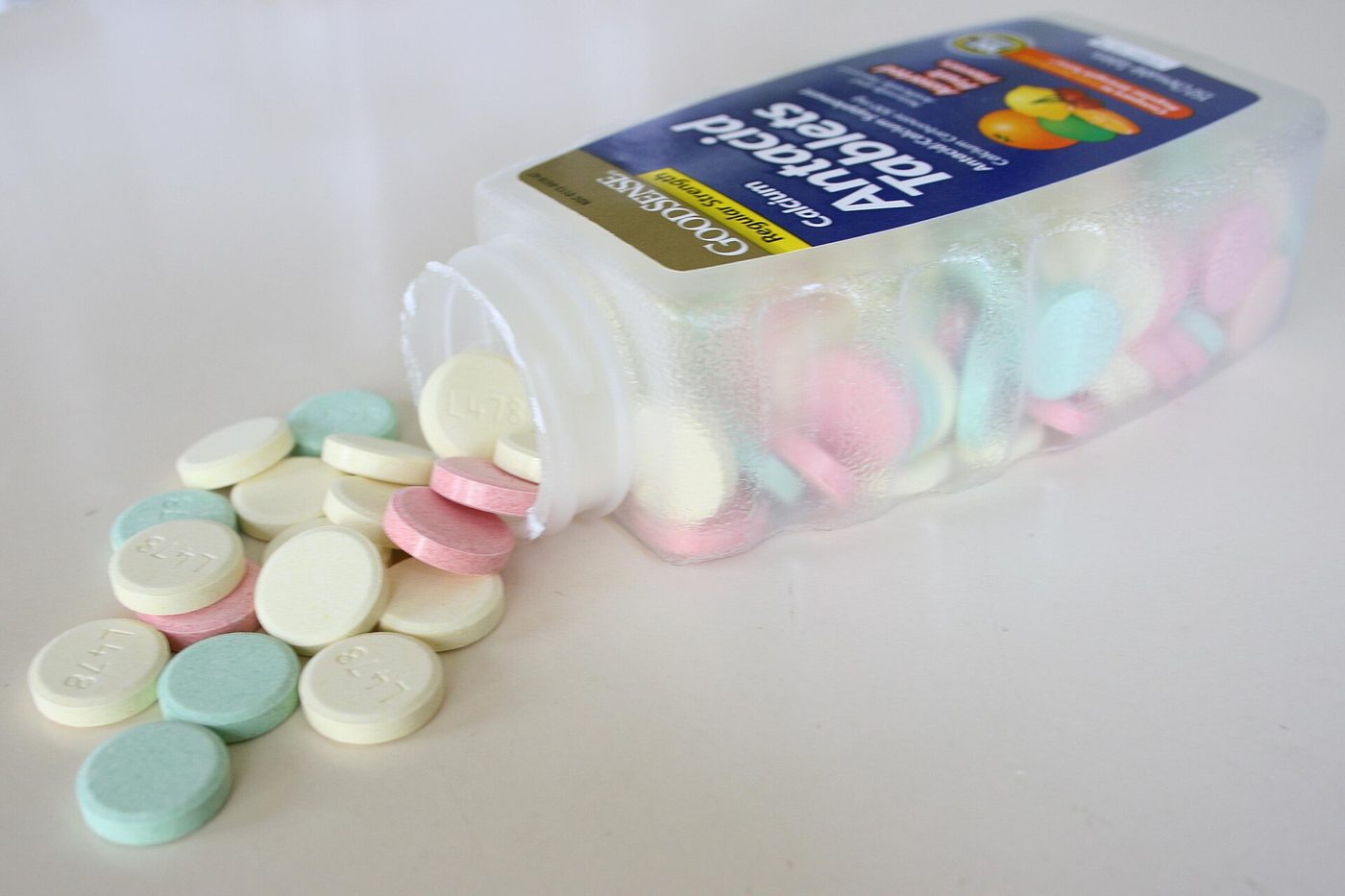
- Indigestion: your stomach makes hydrochloric acid, and too much of it causes indigestion. Antacid tablets contain bases such as calcium carbonate or magnesium hydroxide, which neutralise the extra acid.
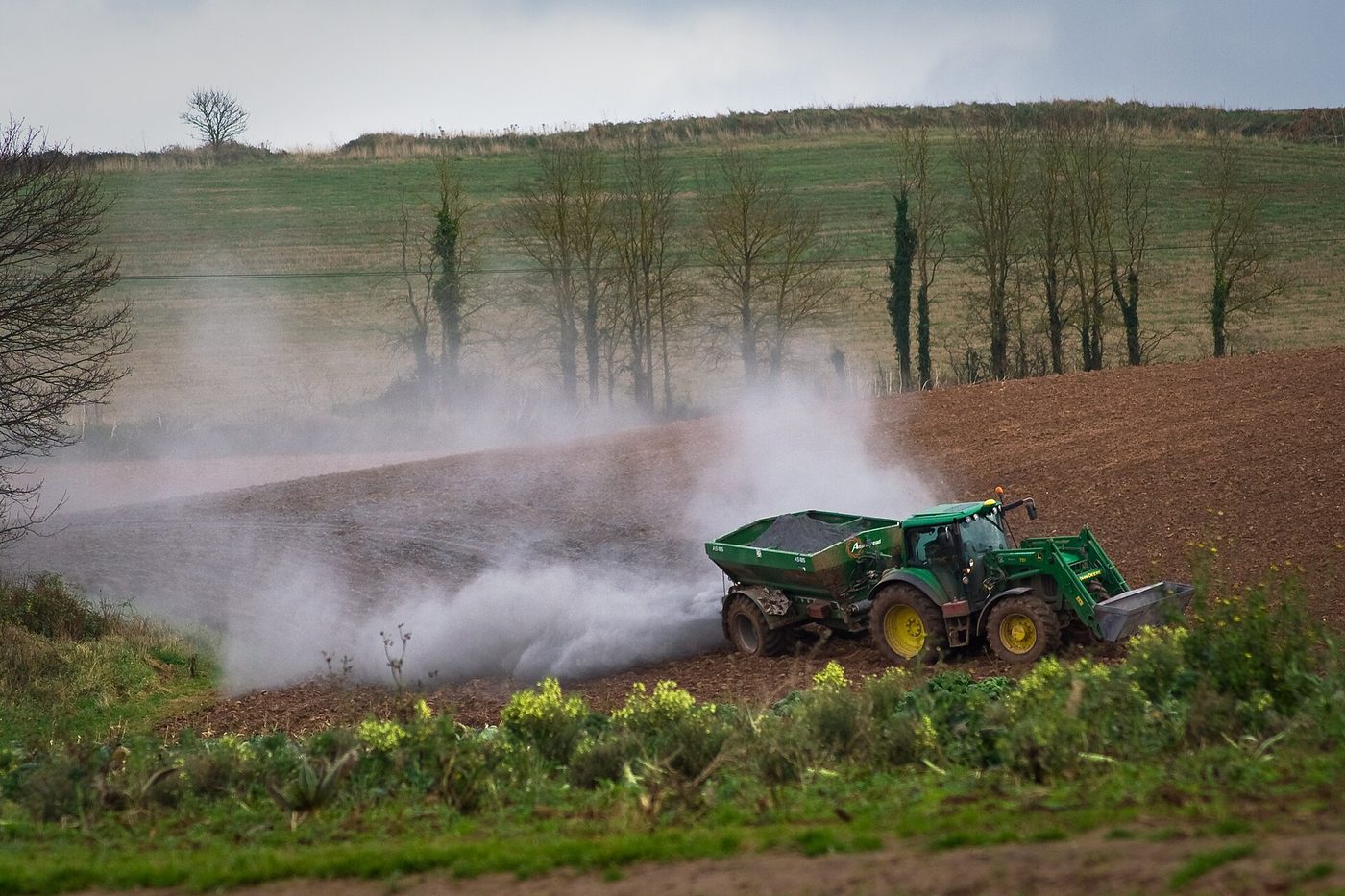
- Soil: most crops grow best in soil with a pH of about 6 to 7. Farmers spread slaked lime (calcium hydroxide) or powdered limestone (calcium carbonate) on fields that are too acidic.
- Teeth: bacteria in your mouth turn sugar into acids that attack tooth enamel. Most toothpastes are slightly alkaline, and help to neutralise the acid.
- Stings: bee venom is slightly acidic, so an old remedy is to dab on baking soda, a weak alkali. It does little good: the venom is under the skin, where the baking soda cannot reach it, and the pain comes from other substances in the venom, not from the acid.
Stretch Every acid releases hydrogen ions, H+, in water, and every alkali releases hydroxide ions, OH−. In neutralisation they join to make water: H+ + OH− → H2O. The other ions, such as sodium and chloride, are left in the solution. Evaporate the water and they come together as crystals of the salt.
Written to the KS3 national curriculum. Last changed 14 November 2026.
Key words
Say them, spell them, use them in an answer.
- neutralisation
- salt
- base
- alkali
- neutral
- burette
- antacid
- exothermic
Common misconception
Often said“Once an acid has been neutralised, there is nothing left in the flask but water.”
In factA salt is made too, and it stays dissolved in the water. Neutralise hydrochloric acid with sodium hydroxide, then evaporate the water, and white crystals of sodium chloride are left behind.
Did you know?
Liming lakes
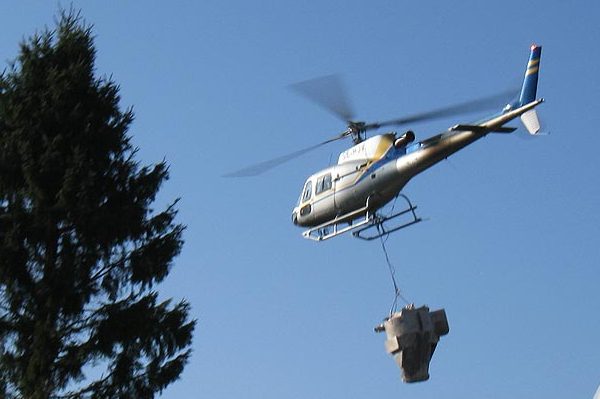
Acid rain made thousands of lakes in Sweden too acidic for fish. Since 1977 Sweden has spread powdered limestone on them, from boats and even helicopters, to neutralise the acid. As acid rain has lessened, fewer lakes have needed it.
Photo: Bulver, CC BY-SA 3.0, via Wikimedia Commons
Try 5 questions
Quick questions on neutralisation, marked as you go. Each one explains the answer.
Question 1 of 5
What happens to the temperature when an acid neutralises an alkali?
Choose an answer. Each question explains itself.
The homework sheet
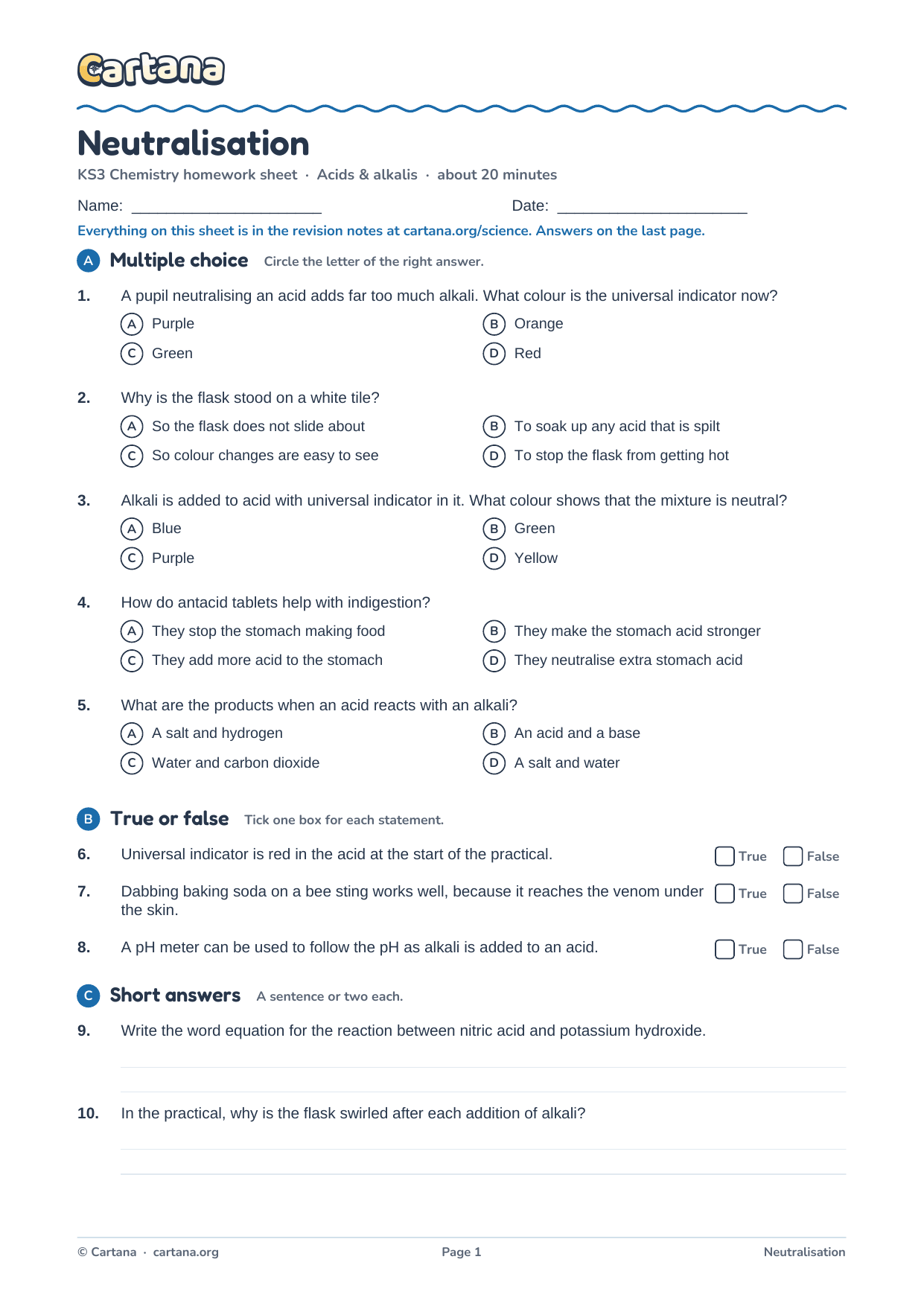
About twenty minutes. Everything on it is in the notes above; the answers are on the last page.
Free homework sheet
Neutralisation homework sheet
17 questions, about twenty minutes, with the answers on the last page: multiple choice, true or false, short answers, key words to define and one to explain in full.
KS3 Acids & alkalis
Revised the whole unit?
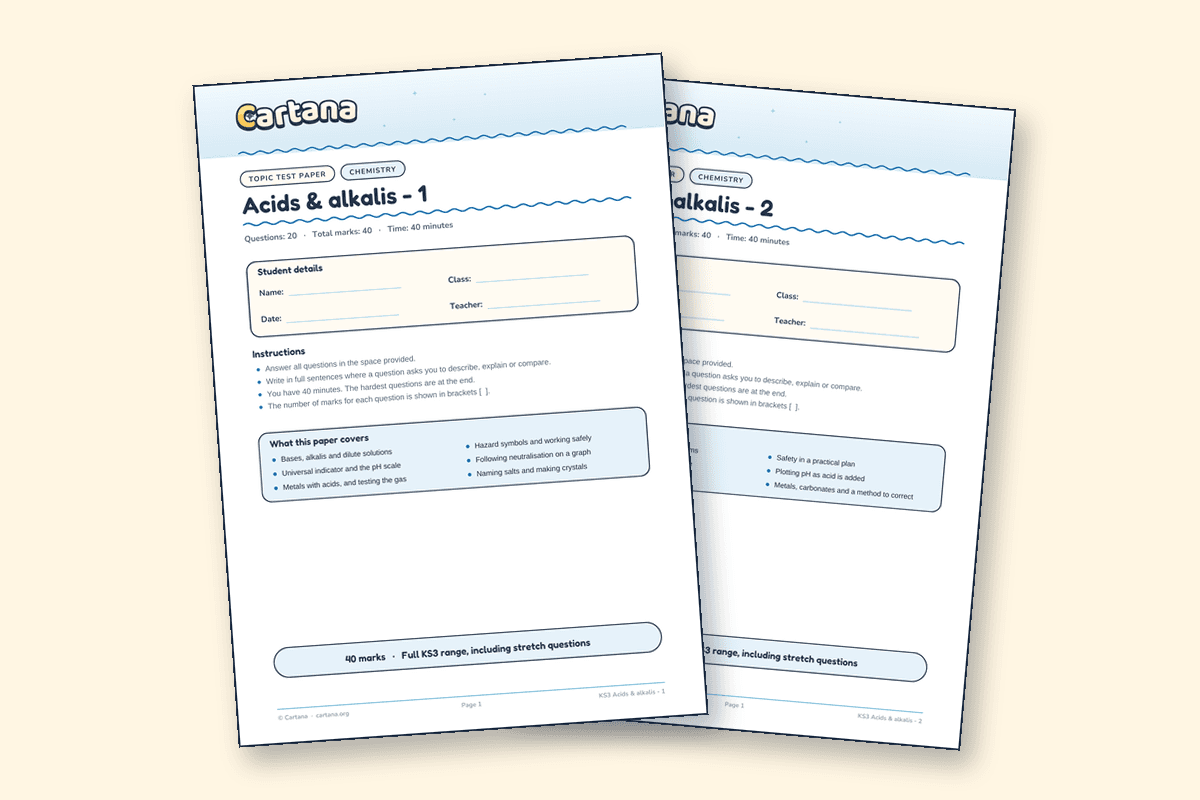
When every topic in acids & alkalis is done, two different papers test the whole unit, each with its own mark scheme.


 Watch the trailer · 1:06
New from Cartana · Beta test 1–31 December
Revision that feels like an adventure
Cartana is our KS3 learning adventure: sail between islands, answer quick-fire questions and battle bosses. It starts with science, with maths on the way, and launches in 2027. This December a small group of testers gets to play it first.
In the Cartana adventure, every science unit is an island to explore. The island for acids & alkalis is being built.
- Play the game before its official release
- Help us build it with your feedback
- Earn exclusive in-game items in return
More in this unit
Acids & alkalis
- 1Acids and alkalisEveryday and laboratory acids and alkalis, bases and alkalis, concentrated and dilute solutions, hazard symbols and working safely
- 2Indicators and pHThe pH scale from 0 to 14, litmus and universal indicator, pH meters, strong and weak acids and alkalis, and making a red cabbage indicator
- 4Acids and metalsNextMetal + acid → salt + hydrogen, the squeaky pop test, which metals react with dilute acids, and naming the salt from the acid
- 5Making saltsNaming salts, acids with metal oxides and metal carbonates, the test for carbon dioxide, and making copper sulfate crystals step by step