
KS3 Chemistry · Acids & alkalis
Acids and metals
- Metal + acid → salt + hydrogen, with word equations
- Which common metals react with dilute acids, and which do not
- Collecting hydrogen and the squeaky pop test
- Naming the salt from the acid: chlorides, sulfates and nitrates
- 4 min read
- 5 quick questions
- Free homework sheet
- Years 7 to 9
Revision notes
Many metals react with dilute acids, fizzing as they give off hydrogen gas and leaving a salt dissolved in the solution: metal + acid → salt + hydrogen. Magnesium and hydrochloric acid, for example, make magnesium chloride and hydrogen.
What happens when a metal reacts with an acid?
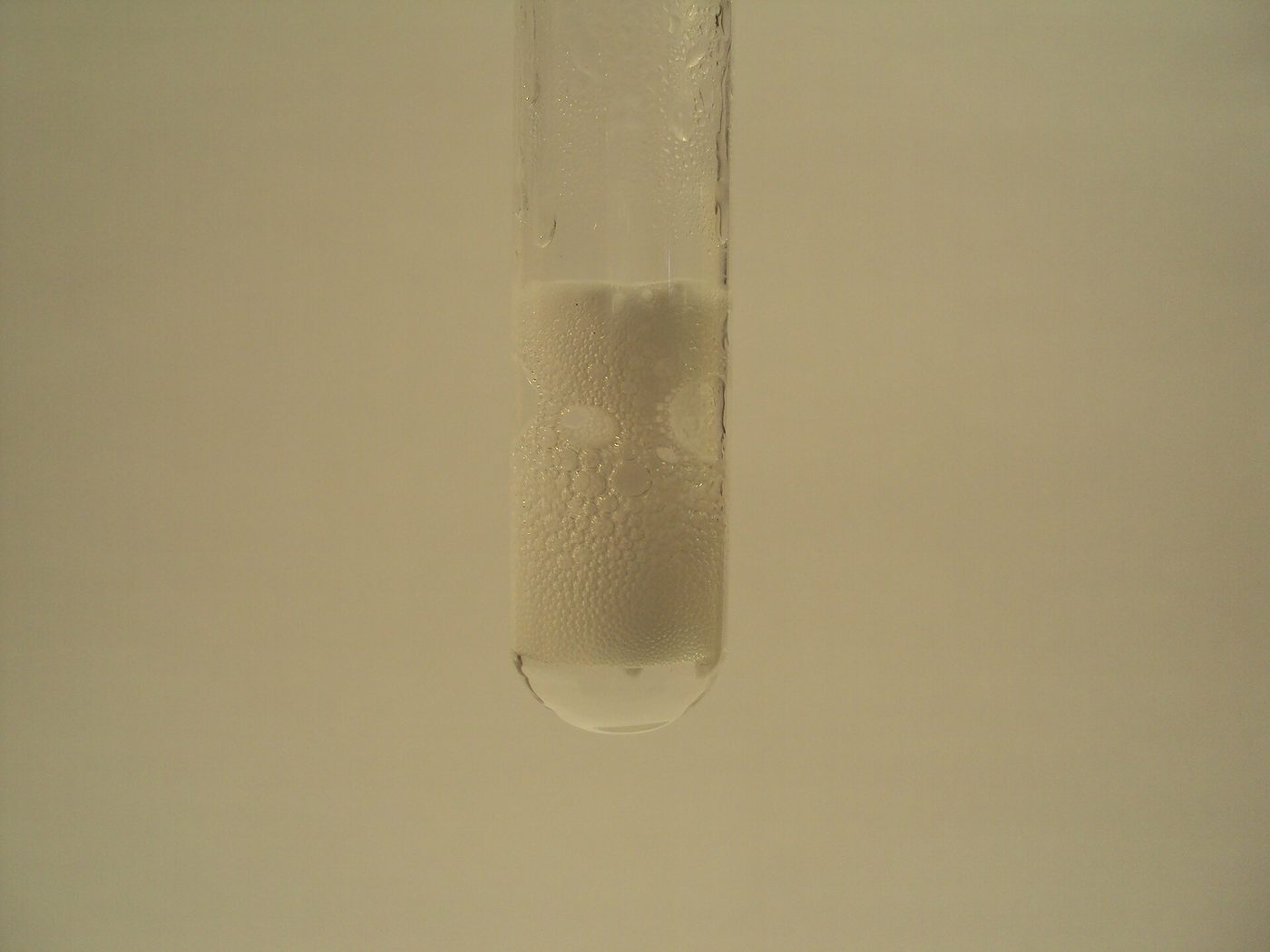
Drop a piece of magnesium ribbon into dilute hydrochloric acid and it fizzes hard. The bubbles are hydrogen gas. The tube gets warm, and the magnesium gets smaller and smaller. It has not just dissolved: it has reacted to make a new substance, magnesium chloride, which stays dissolved in the colourless solution.
magnesium + hydrochloric acid → magnesium chloride + hydrogen
zinc + sulfuric acid → zinc sulfate + hydrogen
A salt is a compound made when an acid reacts with a metal or a base. Here the metal takes the place of the hydrogen in the acid, and the hydrogen is given off as a gas.
Which metals react with acids?
| Metal | In dilute hydrochloric acid |
|---|---|
| Magnesium | Fizzes fast and gets warm |
| Zinc | Fizzes steadily |
| Iron | Fizzes slowly |
| Copper | No reaction |
| Silver, gold | No reaction |
Aluminium reacts too, but only after a while, once the thin coat of oxide on its surface has been eaten away. Metals such as sodium and potassium react so violently with acids that this is never done in school. Putting metals in order of how readily they react gives the reactivity series, which you meet when you study metals.
Copper, silver and gold do not react with dilute acids at all. That is one reason they are used for coins, jewellery and water pipes.
How do you test for hydrogen?
- Wearing eye protection, put a few short pieces of magnesium ribbon in a boiling tube (a wide test tube) and add dilute hydrochloric acid to a depth of about 2 cm.
- Hold an empty test tube upside down over its mouth to collect the gas. Hydrogen is much less dense than air, so it rises and collects in the upturned tube.
- After a few seconds, keep the tube upside down and hold a lit splint at its mouth.
What you see and hear: a squeaky pop. What it shows: the gas is hydrogen. It burns very fast with oxygen from the air, making water: hydrogen + oxygen → water.
How do you name the salt?
The salt’s name has two parts. The first part is the metal. The second part comes from the acid:
| Acid | Its salts are | Example |
|---|---|---|
| Hydrochloric acid | Chlorides | Zinc chloride |
| Sulfuric acid | Sulfates | Iron sulfate |
| Nitric acid | Nitrates | Magnesium nitrate |
Name the products when iron reacts with dilute hydrochloric acid.
The metal is iron, so the salt starts with “iron”.
The acid is hydrochloric acid, so the salt is a chloride.
iron + hydrochloric acid → iron chloride + hydrogen
Nitric acid is the odd one out with metals: it usually gives off other gases instead of hydrogen, so experiments on metals and acids use hydrochloric or sulfuric acid. Its salts, the nitrates, are made in other ways (see making salts).
Stretch In symbols, magnesium and hydrochloric acid react like this: Mg + 2HCl → MgCl2 + H2. Count the atoms: 1 magnesium, 2 hydrogen and 2 chlorine on each side, so it is balanced. The 2 in front of HCl is needed because one magnesium atom takes the place of two hydrogen atoms (see word and symbol equations).
Written to the KS3 national curriculum. Last changed 14 November 2026.
Key words
Say them, spell them, use them in an answer.
- hydrogen
- salt
- squeaky pop
- boiling tube
- chloride
- sulfate
- nitrate
- reactivity series
Common misconception
Often said“Acids eat through any metal.”
In factCopper, silver and gold do not react with dilute acids at all, and iron reacts only slowly. That is why copper is used for water pipes and gold for jewellery that lasts for centuries.
Did you know?
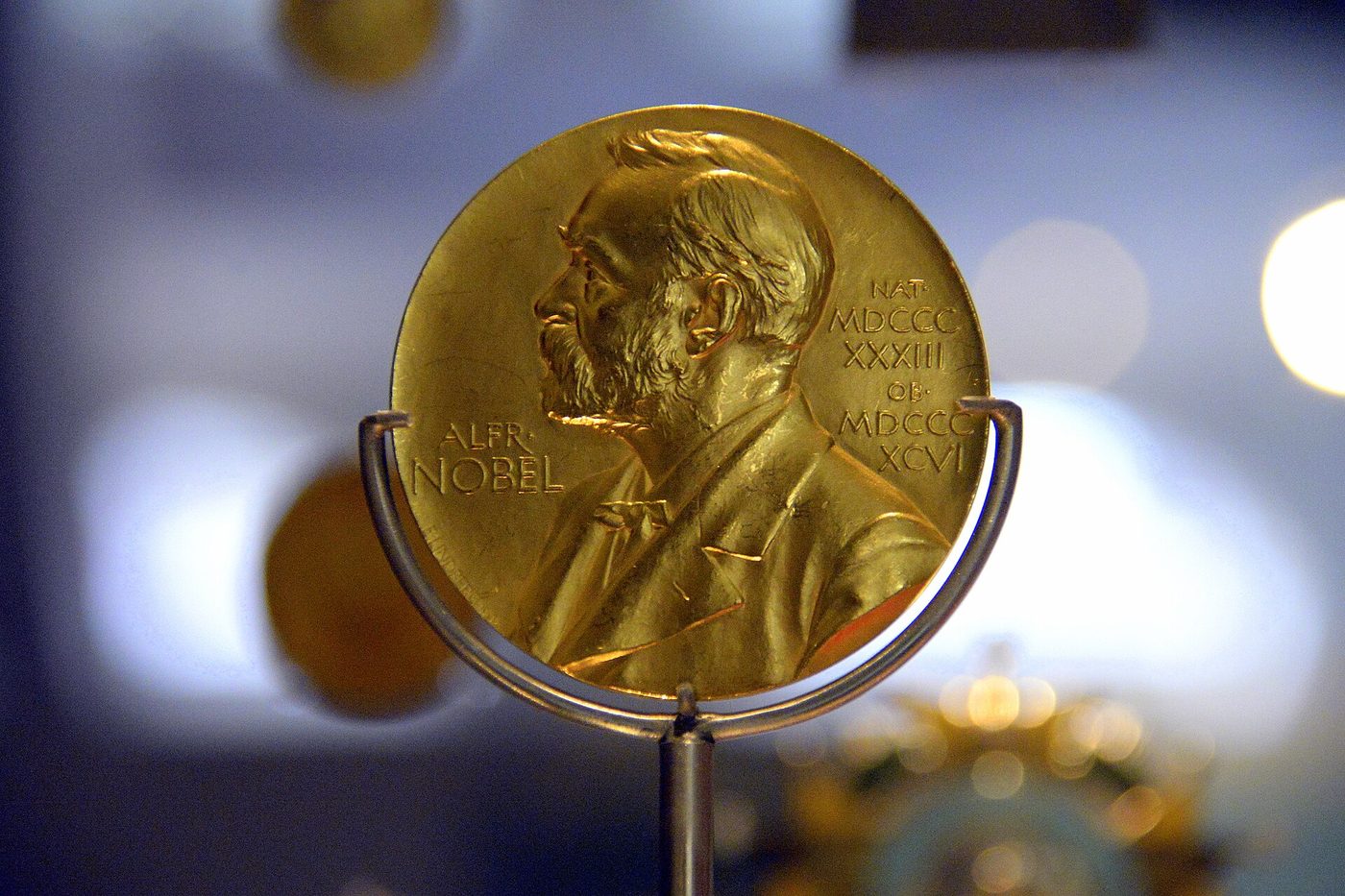
The hidden Nobel medals
When German troops invaded Denmark in 1940, the chemist George de Hevesy dissolved the gold Nobel Prize medals of two German physicists, Max von Laue and James Franck, so the Nazis could not find them. Gold reacts with neither nitric nor hydrochloric acid alone, but it dissolves in a mixture of the two, called aqua regia. The jar sat in his Copenhagen laboratory all through the war; afterwards the gold was recovered and the medals were made again.
Photo: Osama Shukir Muhammed Amin FRCP(Glasg), CC BY-SA 4.0, via Wikimedia Commons
Try 5 questions
Quick questions on acids and metals, marked as you go. Each one explains the answer.
Question 1 of 5
Why is hydrogen collected in a test tube held upside down?
Choose an answer. Each question explains itself.
The homework sheet
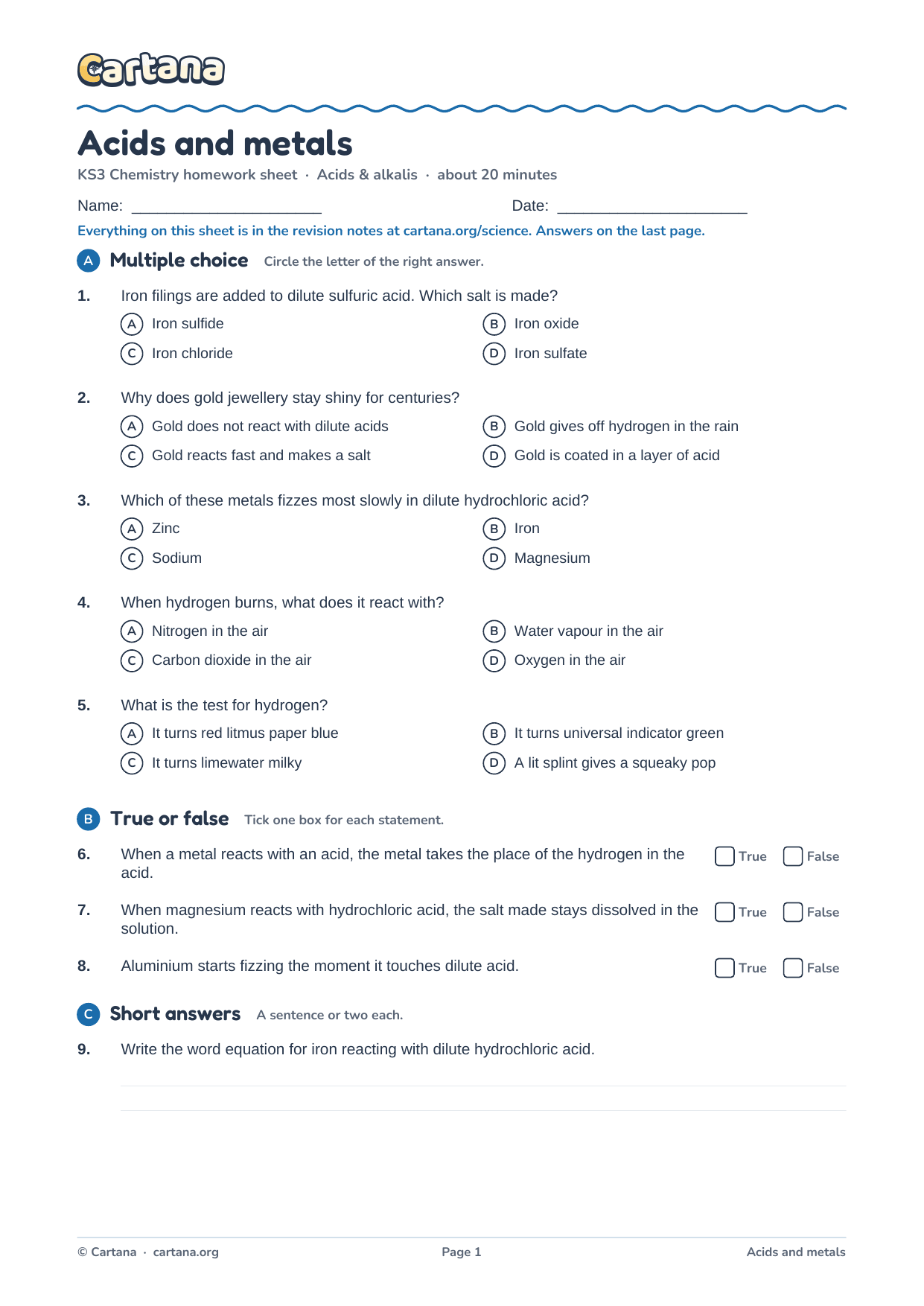
About twenty minutes. Everything on it is in the notes above; the answers are on the last page.
Free homework sheet
Acids and metals homework sheet
17 questions, about twenty minutes, with the answers on the last page: multiple choice, true or false, short answers, key words to define and one to explain in full.
KS3 Acids & alkalis
Revised the whole unit?
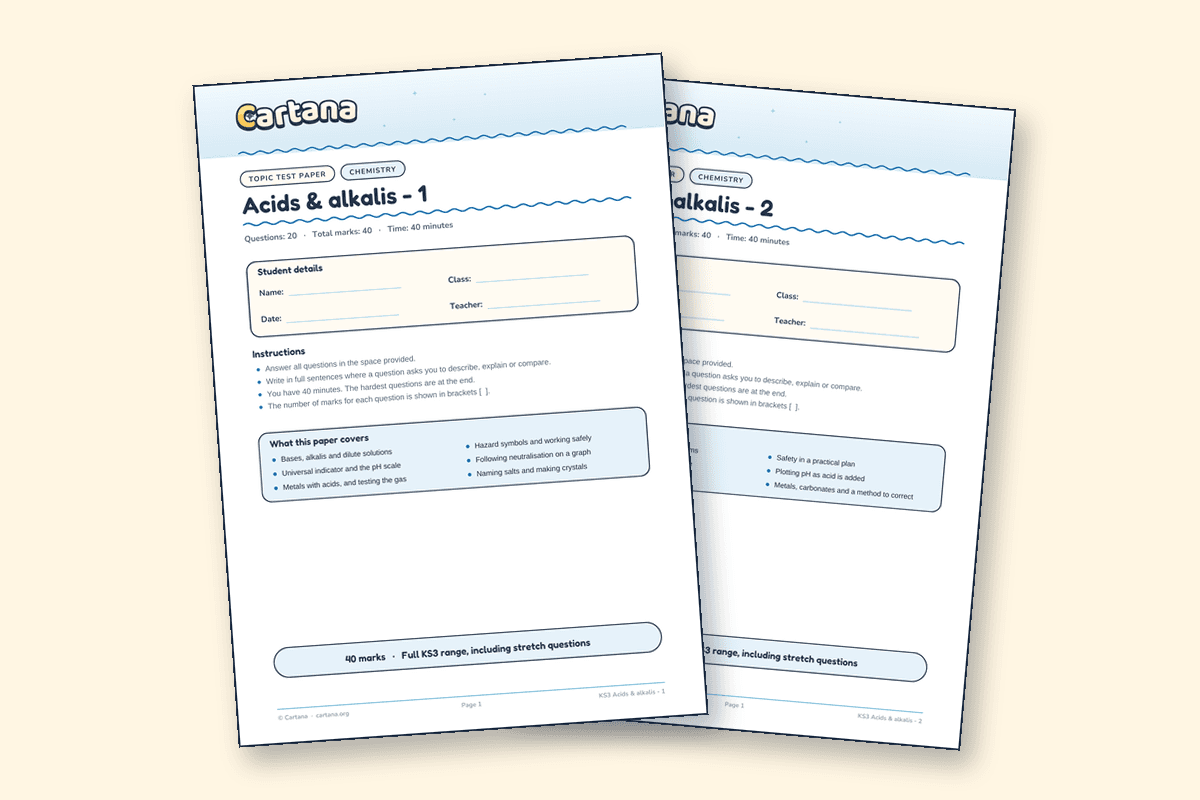
When every topic in acids & alkalis is done, two different papers test the whole unit, each with its own mark scheme.


 Watch the trailer · 1:06
New from Cartana · Beta test 1–31 December
Revision that feels like an adventure
Cartana is our KS3 learning adventure: sail between islands, answer quick-fire questions and battle bosses. It starts with science, with maths on the way, and launches in 2027. This December a small group of testers gets to play it first.
In the Cartana adventure, every science unit is an island to explore. The island for acids & alkalis is being built.
- Play the game before its official release
- Help us build it with your feedback
- Earn exclusive in-game items in return
More in this unit
Acids & alkalis
- 1Acids and alkalisEveryday and laboratory acids and alkalis, bases and alkalis, concentrated and dilute solutions, hazard symbols and working safely
- 2Indicators and pHThe pH scale from 0 to 14, litmus and universal indicator, pH meters, strong and weak acids and alkalis, and making a red cabbage indicator
- 3NeutralisationAcid + alkali → salt + water, following the pH as alkali is added to an acid, and uses of neutralisation for indigestion, soil, teeth and stings
- 5Making saltsNextNaming salts, acids with metal oxides and metal carbonates, the test for carbon dioxide, and making copper sulfate crystals step by step