
KS3 Physics · Light
Colour
- How a prism splits white light into the spectrum
- Colours as different frequencies of light
- Primary and secondary colours of light, and filters
- Why objects look coloured, and how they look in coloured light
- 5 min read
- 5 quick questions
- Free homework sheet
- Years 7 to 9
Revision notes
Colour is how your eyes tell apart different frequencies of light. White light is a mixture of all the colours of the spectrum; a coloured object or filter looks the colour of the light it sends on to your eye.
How does a prism split white light?
In 1666 Isaac Newton let a narrow beam of sunlight through a glass prism and saw a band of colours on the wall. A prism refracts light as it goes in and again as it comes out, and each colour is refracted by a slightly different amount: violet bends most and red least. So the colours fan out into a spectrum: red, orange, yellow, green, blue, indigo, violet. Splitting light into its colours like this is called dispersion.
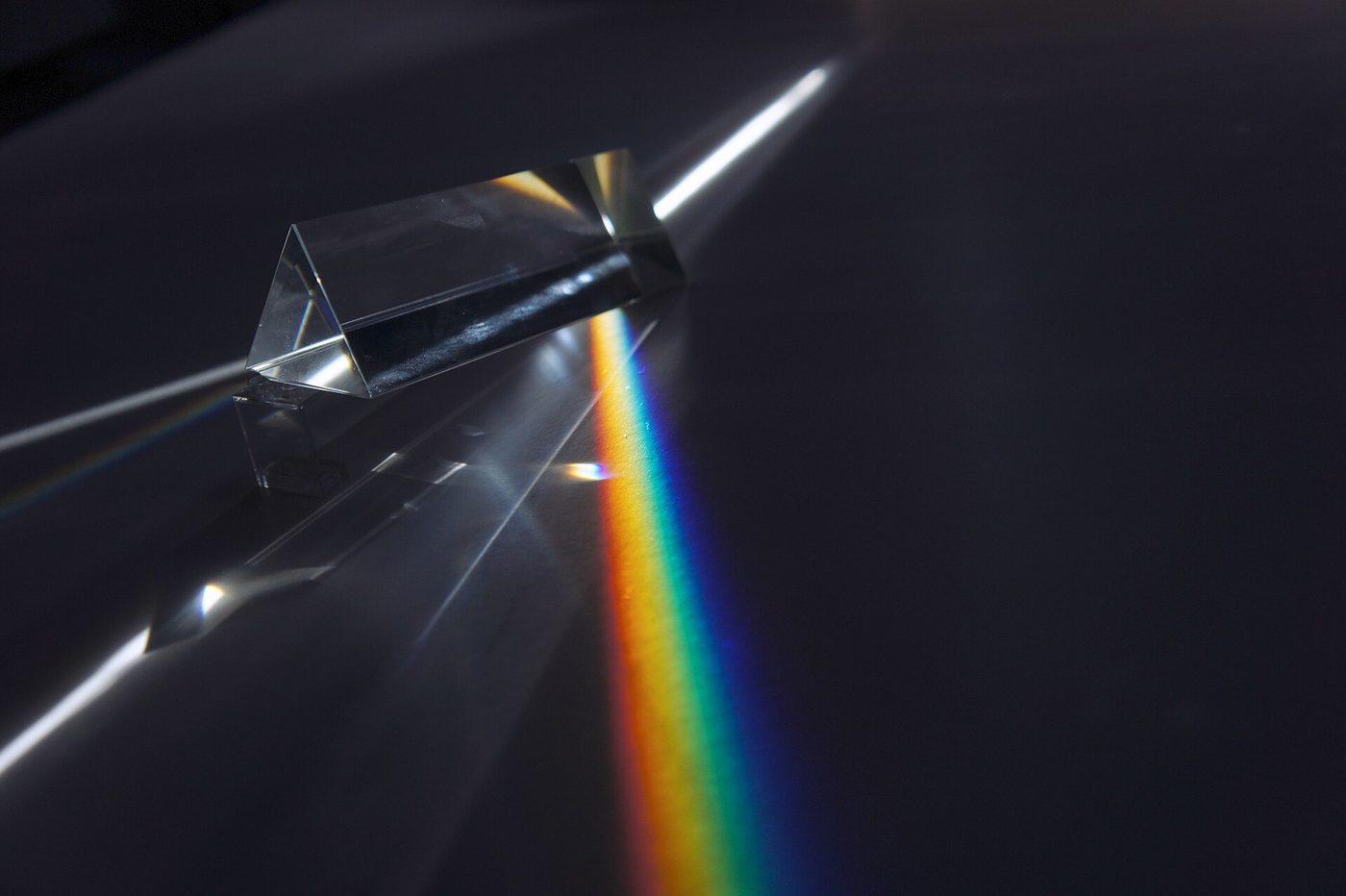
The prism does not add the colours. Newton showed this by putting a second prism the other way round in the coloured beam: the colours joined up into white light again. So white light is a mixture of all the colours. A rainbow is made the same way, by sunlight refracted and reflected inside raindrops.
What makes one colour different from another?
Light is a wave, and the colours differ in their frequency: the number of waves passing a point each second. Red light has the lowest frequency of visible light and violet the highest, with the other colours in spectrum order between them. Your eyes have three kinds of cone cell, most sensitive to red, green and blue light, and your brain works out a colour from how strongly each kind responds.
What are the primary colours of light?
The primary colours of light are red, green and blue. Shine all three on a white screen and they add up to white. Two at a time make the secondary colours:
- red + green = yellow
- red + blue = magenta
- green + blue = cyan
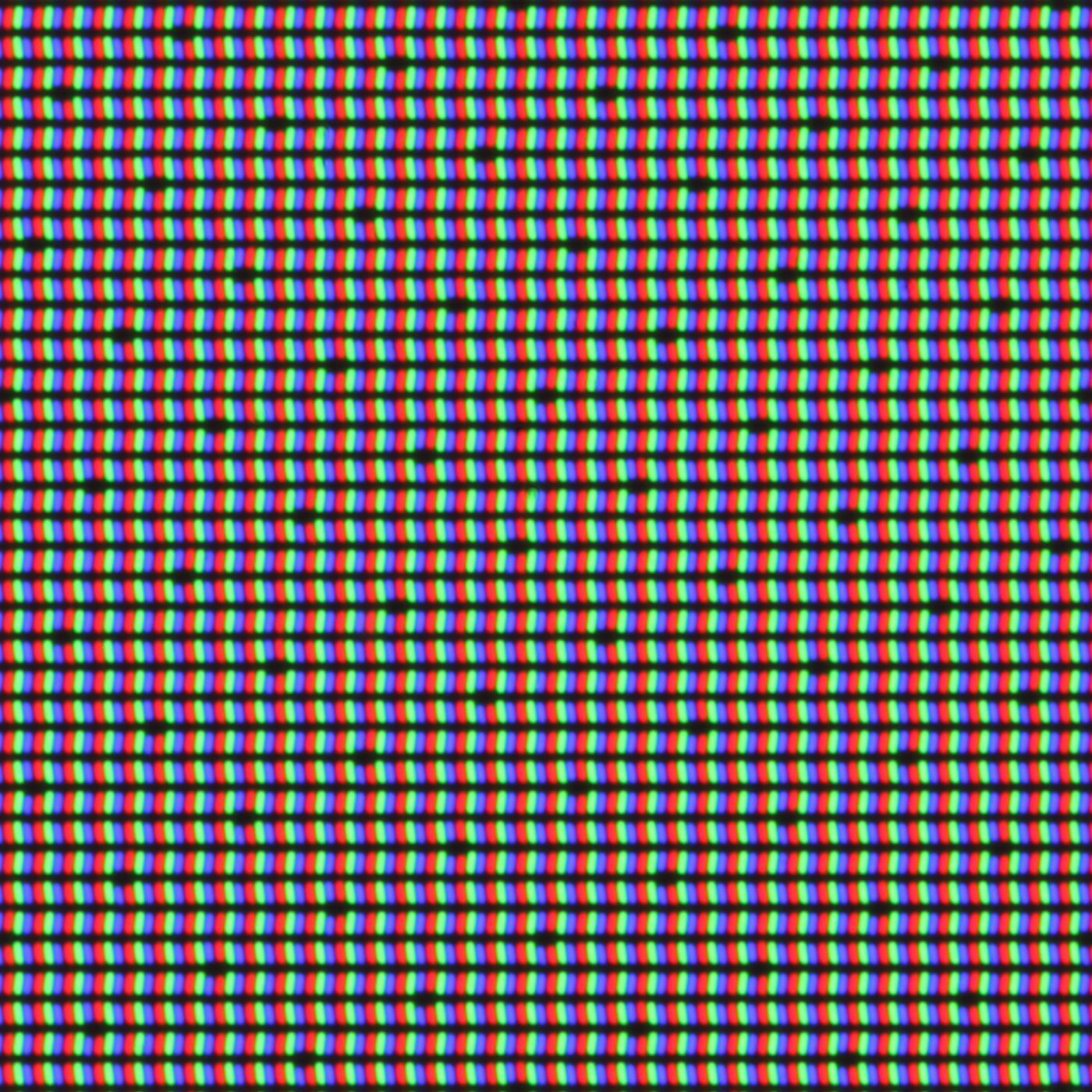
Every phone and TV screen uses this: it is made of tiny red, green and blue dots, and lighting them in different amounts makes every colour you see. (Mixing paints is different, because paints take colours away.)
What does a colour filter do?
A filter is a sheet of coloured plastic or glass. It transmits (lets through) light of its own colour and absorbs (takes in) the rest. A filter never adds colour: it only takes colours away.
- White light through a red filter comes out red: the red gets through and the green and blue are absorbed.
- Red light through a green filter: the green filter absorbs the red, so no light gets through and it looks black.
Why do objects look coloured?
Most objects are not luminous: you see them by the light they reflect. A coloured object reflects its own colour and absorbs the others. Its surface is rough, so it scatters the reflected light in all directions by diffuse reflection (see reflection), and you see the colour from anywhere.
- A red object reflects red light and absorbs green and blue.
- A white object reflects all colours.
- A black object absorbs all colours and reflects almost none.
In coloured light an object can only reflect the colours that reach it. If its own colour is missing, it reflects nothing and looks black. Each object’s colour in three kinds of light:
| Object | White light | Red light | Green light |
|---|---|---|---|
| Red | Red | Red | Black |
| Green | Green | Black | Green |
| Blue | Blue | Black | Black |
| White | White | Red | Green |
| Black | Black | Black | Black |
A football shirt is red with white numbers. What does it look like on a stage lit only by green light?
The red cloth reflects only red. No red light arrives, so it reflects nothing: black.
The white numbers reflect every colour that arrives. Only green arrives, so they reflect green: green.
The shirt looks black with green numbers.
Stretch Secondary colours work the same way. A yellow object reflects red and green light (together they look yellow) and absorbs blue. So in red light it looks red, in green light it looks green, and in blue light it looks black. A cyan filter transmits green and blue and absorbs red, so red light shone through it is stopped completely.
Written to the KS3 national curriculum. Last changed 14 November 2026.
Key words
Say them, spell them, use them in an answer.
- spectrum
- dispersion
- white light
- frequency
- primary colours
- secondary colours
- filter
- transmits
- absorbs
Common misconception
Often said“A red filter turns white light red by adding red to it.”
In factA filter cannot add colour. White light already contains red. A red filter lets the red through and absorbs every other colour, so only red light comes out.
Did you know?
Double rainbows
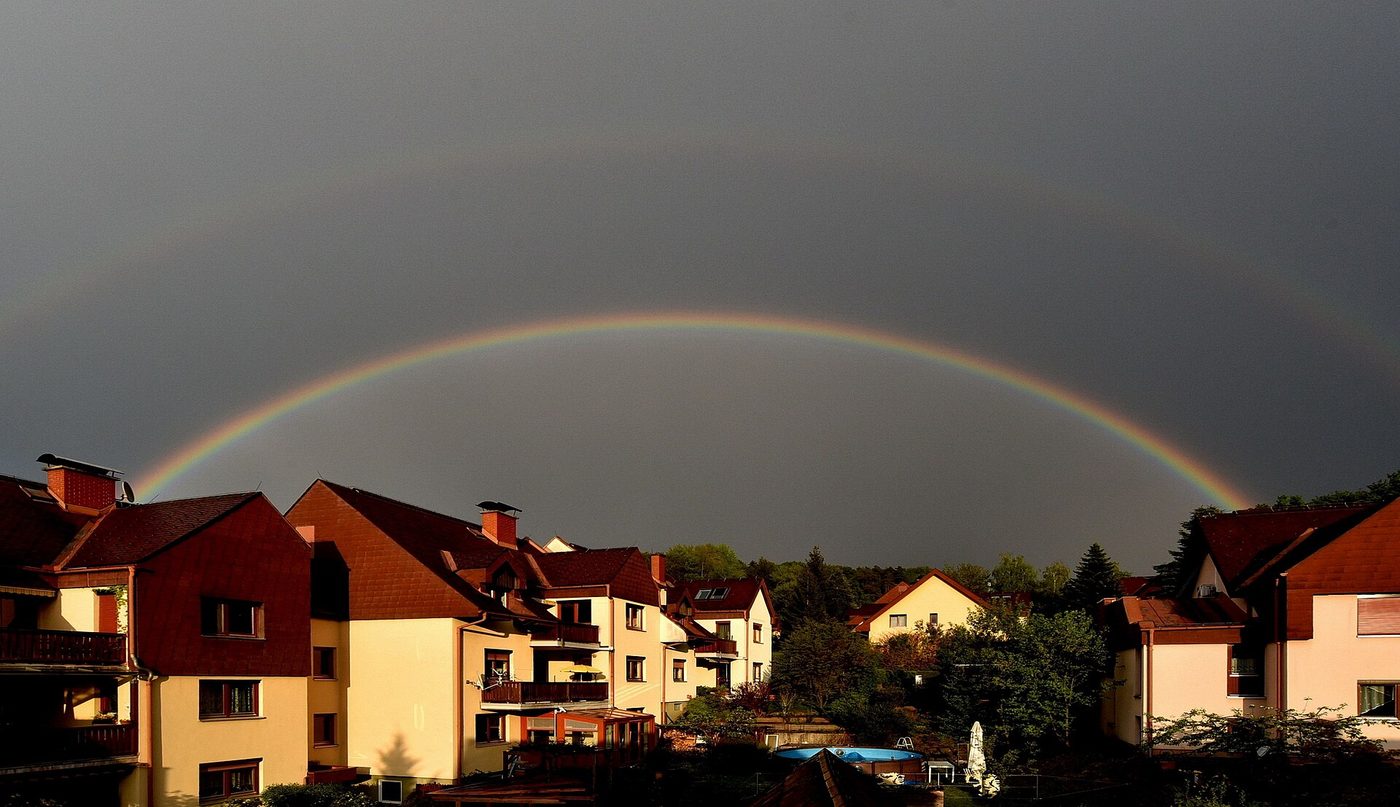
In a double rainbow, the fainter outer bow has its colours the other way round: red on the inside and violet on the outside. The sky between the two bows is darker than the sky around them.
Photo: Dnalor 01, CC BY-SA 3.0 at, via Wikimedia Commons
Try 5 questions
Quick questions on colour, marked as you go. Each one explains the answer.
Question 1 of 5
Which colour of light is bent the most by a prism?
Choose an answer. Each question explains itself.
The homework sheet
About twenty minutes. Everything on it is in the notes above; the answers are on the last page.
Free homework sheet
Colour homework sheet
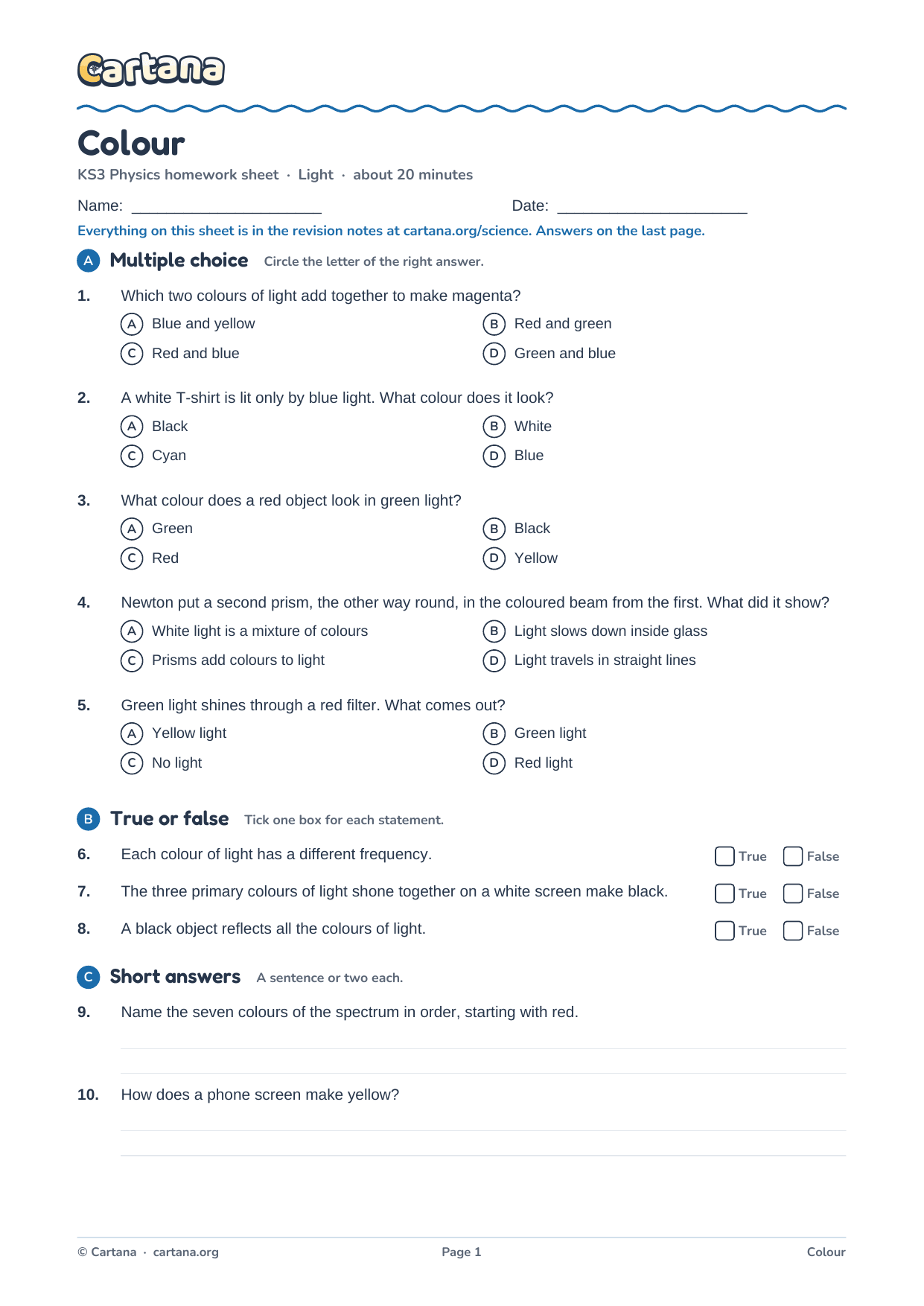
17 questions, about twenty minutes, with the answers on the last page: multiple choice, true or false, short answers, key words to define and one to explain in full.
KS3 Light
Revised the whole unit?
When every topic in light is done, two different papers test the whole unit, each with its own mark scheme.


 Watch the trailer · 1:06
New from Cartana · Beta test 1–31 December
Revision that feels like an adventure
Cartana is our KS3 learning adventure: sail between islands, answer quick-fire questions and battle bosses. It starts with science, with maths on the way, and launches in 2027. This December a small group of testers gets to play it first.
In the Cartana adventure, every science unit is an island to explore. The island for light is being built.
- Play the game before its official release
- Help us build it with your feedback
- Earn exclusive in-game items in return
More in this unit
Light
- 1How light travelsLight as a wave that needs no medium, its speed, rays and shadows, transparent, translucent and opaque materials, luminous and non-luminous objects, and light against sound
- 2ReflectionThe law of reflection, the normal, specular and diffuse reflection, the image in a plane mirror and the ray-box practical
- 3RefractionLight changing speed and direction between materials, bending towards and away from the normal, the glass block practical, and a convex lens bringing rays to a focus
- 4The eye and the cameraThe parts of the eye and their jobs, the image on the retina, the pinhole camera, the camera and the eye compared, and light causing chemical and electrical changes