
KS3 Physics · Light
How light travels
- Light as a wave that needs no material and travels at 300 000 km/s
- Rays, straight lines and how shadows form
- Luminous and non-luminous; transparent, translucent and opaque
- How light differs from sound
- 5 min read
- 5 quick questions
- Free homework sheet
- Years 7 to 9
Revision notes
Light is a wave that carries energy from a source, such as the Sun or a lamp, to everything it falls on. It travels in straight lines at 300 000 kilometres per second, and it needs no material to pass through, so it can cross empty space.
What are luminous and non-luminous objects?
A luminous object gives out its own light: the Sun, a flame, a lamp, a phone screen. A non-luminous object gives out no light of its own. You see it because light from a source bounces off it into your eyes. The Moon is non-luminous: moonlight is sunlight reflected from its surface.
How do we know light travels in straight lines?
On a diagram, light is drawn as a ray: a straight line with an arrow showing which way the light goes. A beam is a bundle of many rays. The evidence is all around: sunbeams through clouds and trees are straight, and you cannot see round a corner.
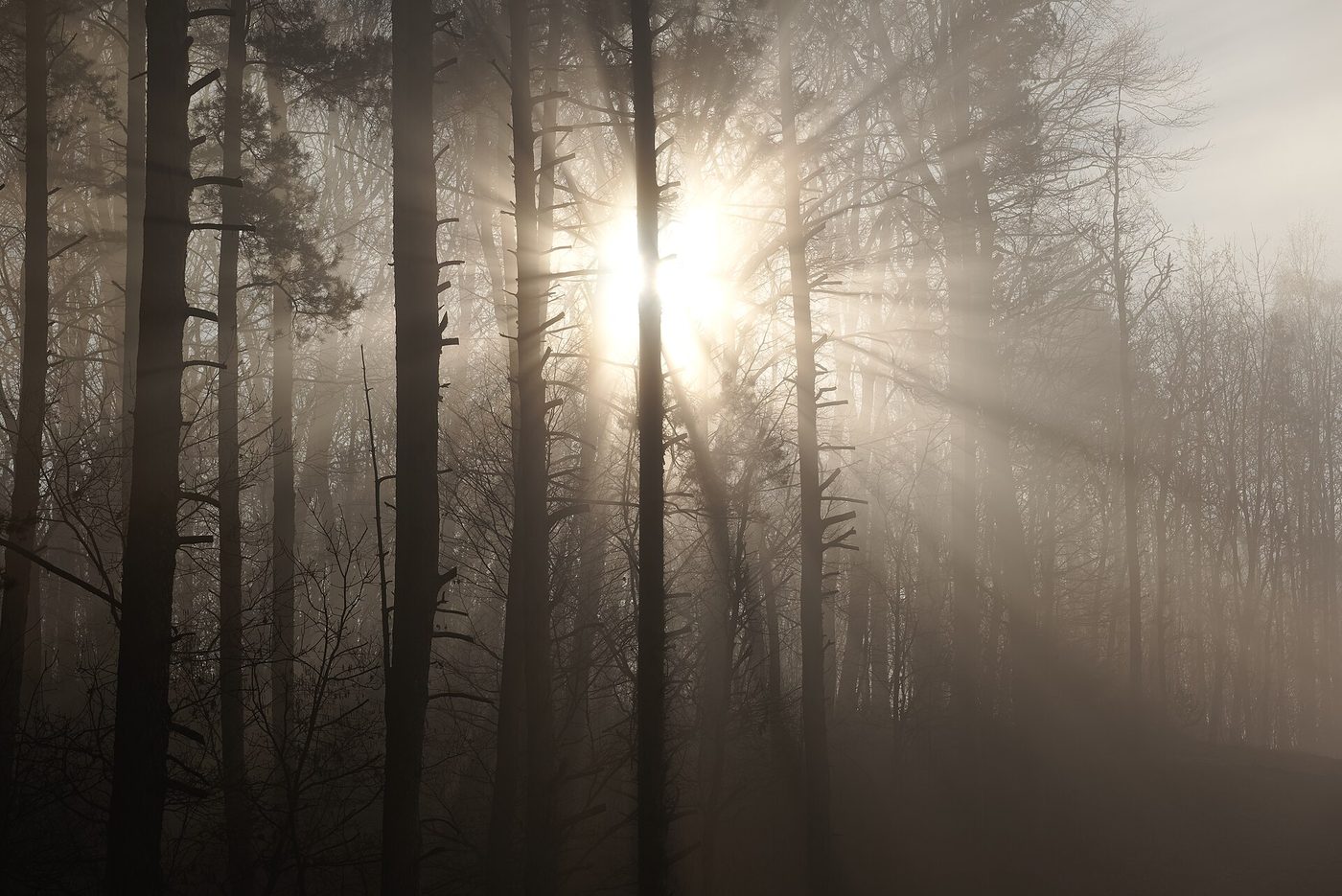
A classic demonstration uses three cards, each with a small hole in the middle, in a row in front of a lamp.
- Line up the holes by threading a straight piece of string through all three, then pull the string out.
- Look through the holes: you can see the lamp.
- Move the middle card a few millimetres sideways: the lamp disappears.
Light only gets through when the holes are in a straight line, so it does not bend round to find the hole.
How are shadows made?
An opaque object stops light passing through it. Because light travels in straight lines, it cannot get round behind the object, so there is a dark area called a shadow. A shadow has the same outline as the object. Move the object closer to the lamp and its shadow on the wall gets bigger.
What do transparent, translucent and opaque mean?
When light reaches a material, it can pass through (transmission), be taken in and warm the material (absorption), or bounce off (reflection). A material that sends light off in many directions scatters it.
| Material | What happens to the light | Examples |
|---|---|---|
| Transparent | Passes straight through; you see clearly through it | Clear glass, water, air |
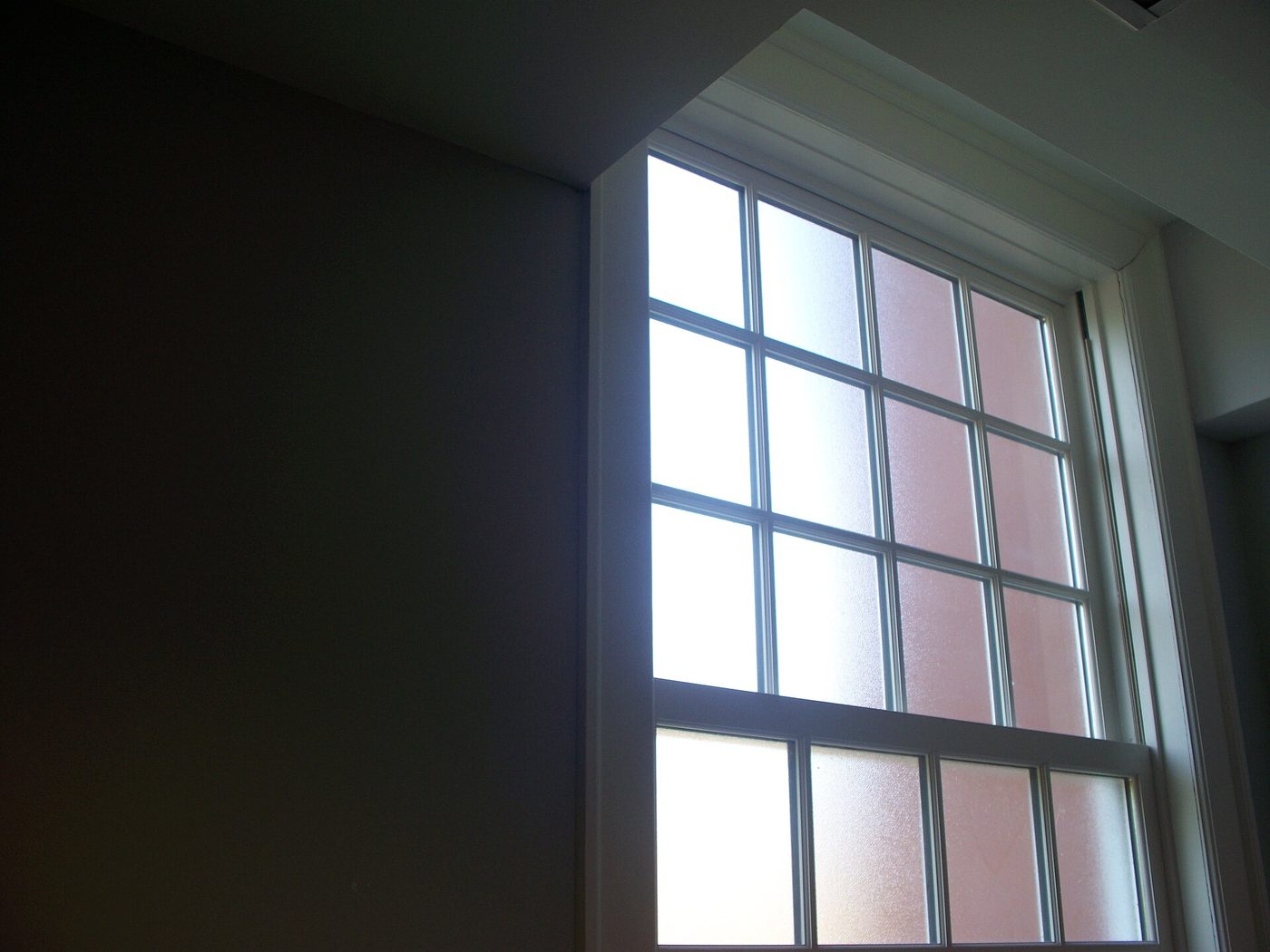
| Translucent | Passes through but is scattered; you cannot see clearly through it | Frosted glass, tracing paper |
| Opaque | None passes through; it is absorbed or reflected | Wood, metal, brick |
How fast does light travel?
In empty space light travels at about 300 000 km/s, which is 300 000 000 m/s (3 × 10⁸ m/s). This is the speed of light: nothing travels faster. Light needs no particles to carry it, so it crosses the vacuum of space: a space with no particles at all. In air it goes almost as fast; in water and glass it slows down (see refraction).
Distance in kilometres (km) and speed in kilometres per second (km/s) give the time in seconds (s). It is the speed equation rearranged.
The Sun is about 150 000 000 km from the Earth. How long does its light take to reach us?
time = distance ÷ speed
time = 150 000 000 km ÷ 300 000 km/s = 500 s
500 s is 8 minutes 20 seconds: you see the Sun as it was 8 minutes 20 seconds ago.
How is light different from sound?
Light and sound are both waves that carry energy, but they differ in important ways.
| Light | Sound | |
|---|---|---|
| Needs a material? | No: it crosses a vacuum | Yes: it cannot cross a vacuum |
| Speed in air | About 300 000 km/s | About 340 m/s |
| Fastest in | A vacuum | Solids |
| Kind of wave | Vibrates across the way it travels | Vibrates along the way it travels |
Light is nearly a million times faster, so you see lightning before you hear its thunder: the sound takes about 3 seconds to travel each kilometre.
Stretch Why are some shadows fuzzy? A big light source, such as a window, sends light from many points. Some places behind an object get no light from any part of the source: a full, dark shadow called the umbra. Round its edge, places get light from part of the source only: a paler shadow called the penumbra. A tiny source gives a sharp shadow with no penumbra.
Written to the KS3 national curriculum. Last changed 14 November 2026.
Key words
Say them, spell them, use them in an answer.
- luminous
- non-luminous
- ray
- beam
- shadow
- transparent
- translucent
- opaque
- absorption
- speed of light
- vacuum
Common misconception
Often said“We see things because light comes out of our eyes and lands on them.”
In factNothing comes out of your eyes. Light from a source such as the Sun or a lamp bounces off an object and travels into your eyes. In a completely dark room you see nothing at all, however hard you look.
Did you know?
Ole Rømer
In 1676 the Danish astronomer Ole Rømer noticed that the eclipses of Io, one of Jupiter’s moons, came several minutes late when the Earth was further from Jupiter. He realised the light had further to travel: the first evidence that light takes time to arrive.
Try 5 questions
Quick questions on how light travels, marked as you go. Each one explains the answer.
Question 1 of 5
Why does an object in a beam of light make a shadow?
Choose an answer. Each question explains itself.
The homework sheet
About twenty minutes. Everything on it is in the notes above; the answers are on the last page.
Free homework sheet
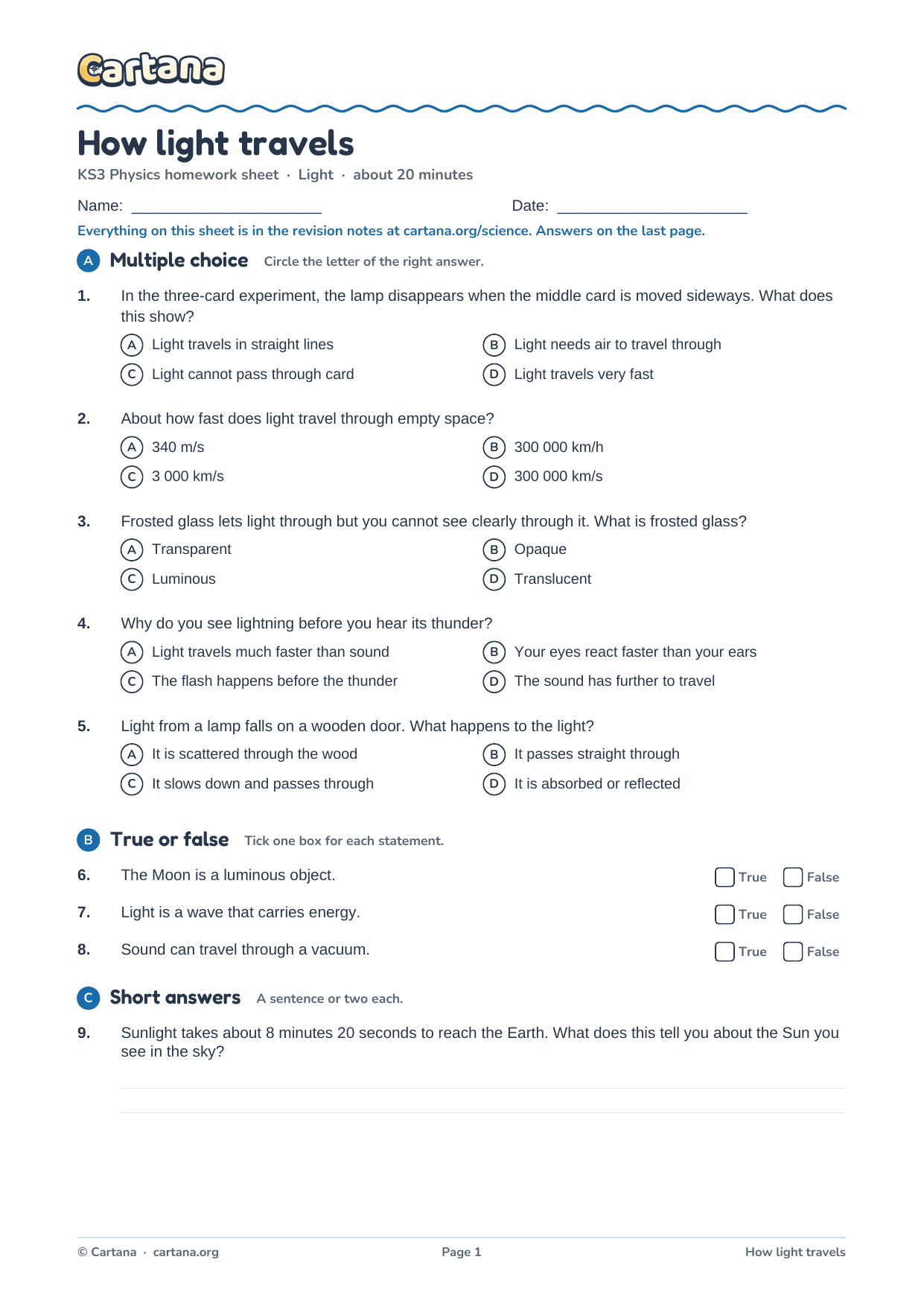
How light travels homework sheet
17 questions, about twenty minutes, with the answers on the last page: multiple choice, true or false, short answers, key words to define and one to explain in full.
KS3 Light
Revised the whole unit?
When every topic in light is done, two different papers test the whole unit, each with its own mark scheme.


 Watch the trailer · 1:06
New from Cartana · Beta test 1–31 December
Revision that feels like an adventure
Cartana is our KS3 learning adventure: sail between islands, answer quick-fire questions and battle bosses. It starts with science, with maths on the way, and launches in 2027. This December a small group of testers gets to play it first.
In the Cartana adventure, every science unit is an island to explore. The island for light is being built.
- Play the game before its official release
- Help us build it with your feedback
- Earn exclusive in-game items in return
More in this unit
Light
- 2ReflectionNextThe law of reflection, the normal, specular and diffuse reflection, the image in a plane mirror and the ray-box practical
- 3RefractionLight changing speed and direction between materials, bending towards and away from the normal, the glass block practical, and a convex lens bringing rays to a focus
- 4The eye and the cameraThe parts of the eye and their jobs, the image on the retina, the pinhole camera, the camera and the eye compared, and light causing chemical and electrical changes
- 5ColourWhite light split by a prism, the spectrum and frequency, the primary colours of light, filters, and why objects look coloured in white and coloured light