
KS3 Chemistry · Metals & materials
Extracting metals
- Ores, and the native metals found as the element itself
- Heating a metal oxide with carbon, and reduction
- The blast furnace in outline: what goes in and what comes out
- Electrolysis for metals above carbon, and why we recycle metals
- 5 min read
- 5 quick questions
- Free homework sheet
- Years 7 to 9
Revision notes
Extracting a metal means getting it out of its ore, the rock it is found in. Metals below carbon in the reactivity series are extracted by heating their oxides with carbon; more reactive metals need electricity.
Where do metals come from?
Most metals are found in the Earth’s crust as compounds, often oxides, mixed with other rock. An ore is a rock that contains enough of a metal compound to make extracting the metal worth the cost.
| Ore | Metal compound in it |
|---|---|
| Haematite | Iron oxide |
| Bauxite | Aluminium oxide |
| Malachite | Copper carbonate |
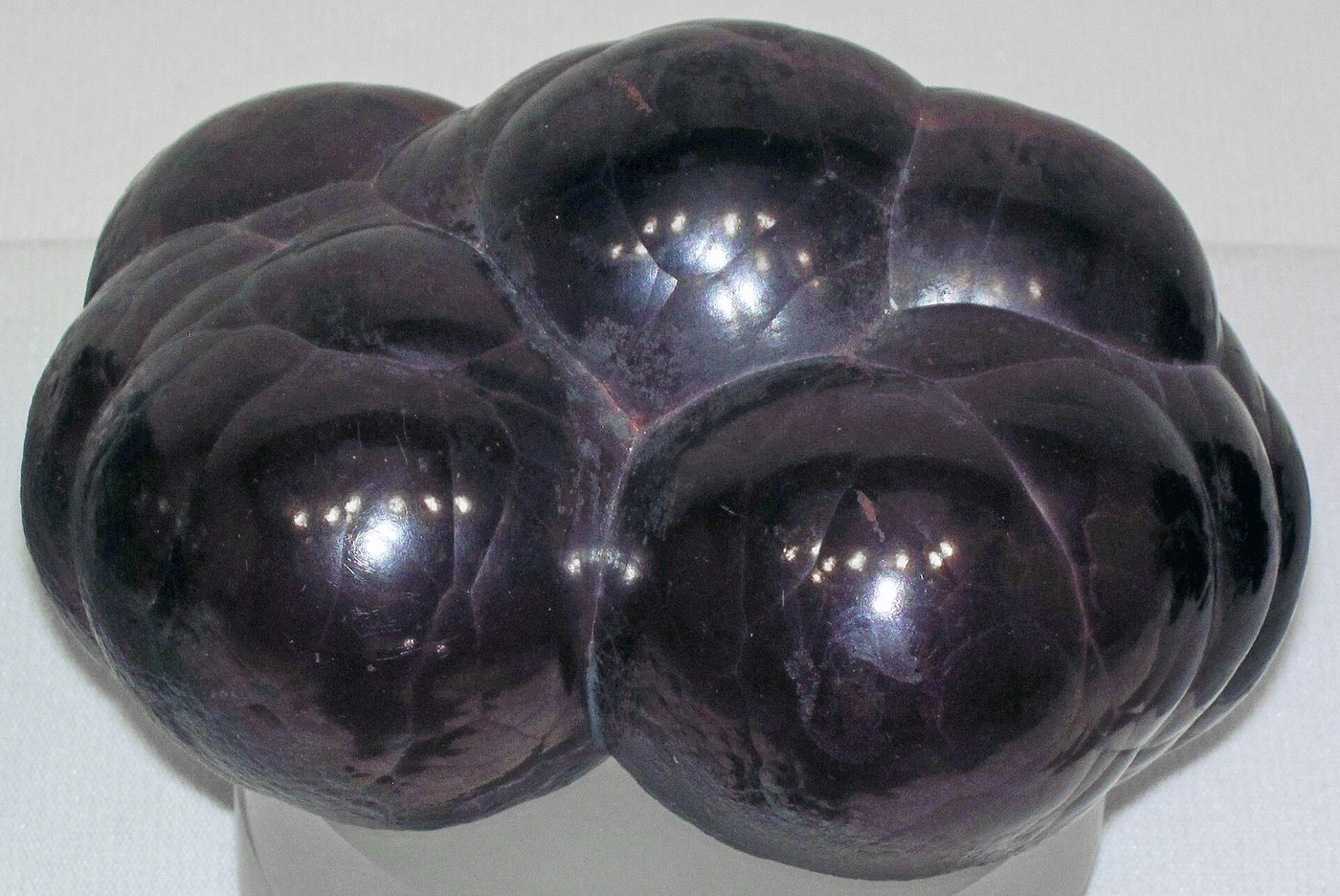
A few very unreactive metals, such as gold, silver and sometimes copper, are found as the element itself. These are native metals: they have not joined with oxygen or anything else, so they only need digging out and separating from the rock.
How does carbon get a metal out of its oxide?
Carbon is more reactive than zinc, iron, tin, lead and copper, so when one of their oxides is heated with carbon, the carbon takes the oxygen. It is a displacement reaction, with carbon in place of a metal.
Removing oxygen from a substance is called reduction: the metal oxide is reduced. At the same time the carbon gains oxygen, so it is oxidised.
- Mix black copper oxide powder with powdered charcoal (carbon) in a test tube.
- Heat the mixture strongly for several minutes, then let it cool.
- Tip it into a beaker of cold water.
What you see: the unused charcoal floats, and specks of brown copper sink to the bottom. What it shows: carbon has taken the oxygen from the copper oxide, leaving copper metal.
How is iron extracted in a blast furnace?
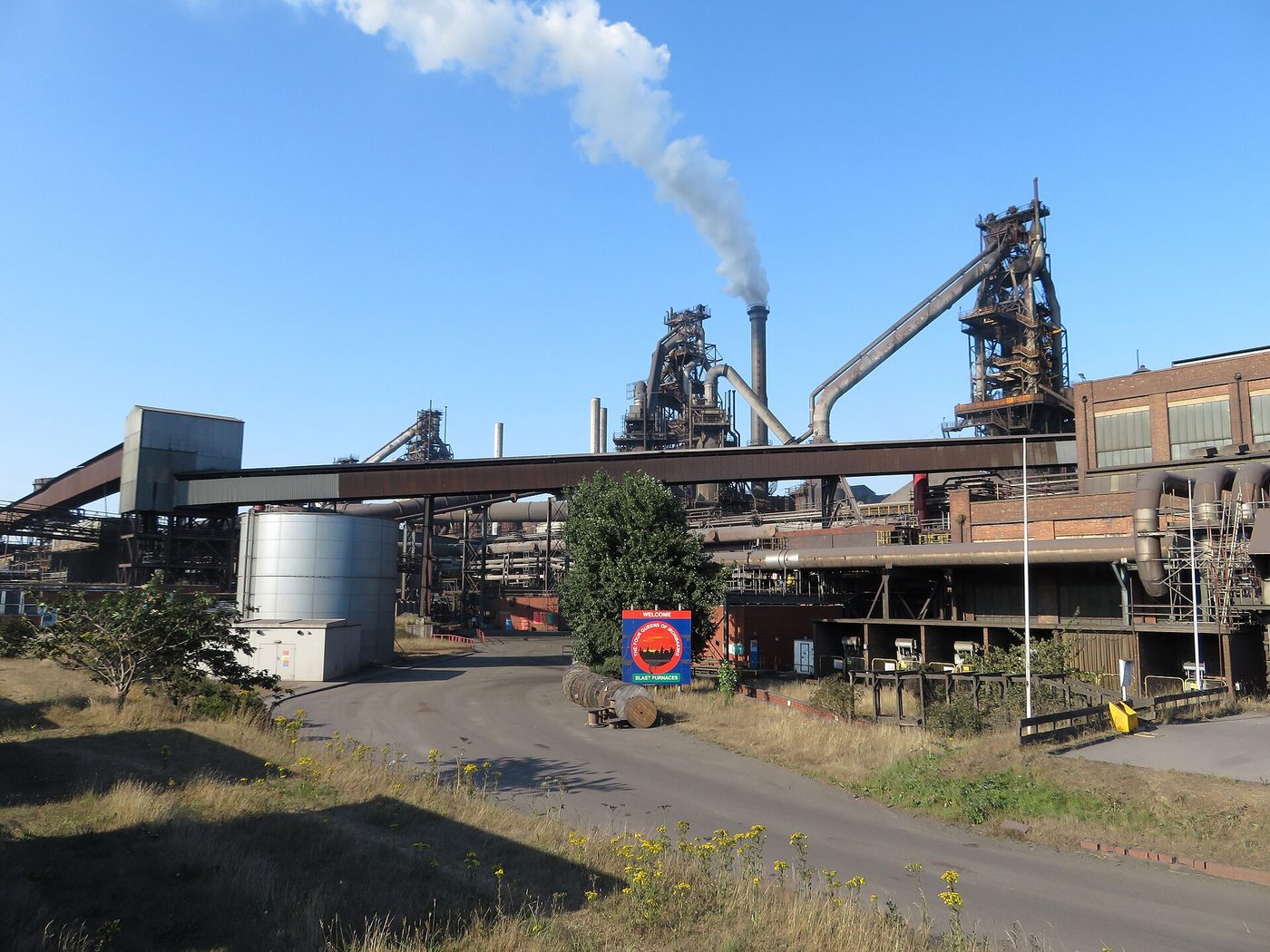
Iron is made on a huge scale in a blast furnace, a steel tower lined with heat-proof brick, often 30 m tall or more, which runs day and night for years. In outline:
- Iron ore (haematite), coke (almost pure carbon, made from coal) and limestone (a common rock, calcium carbonate) are tipped in at the top.
- Hot air is blasted in near the bottom. The coke burns in it, making the furnace very hot.
- Carbon takes the oxygen from the iron oxide: iron oxide + carbon → iron + carbon dioxide.
- The iron melts and trickles to the bottom, where it is run off.
- The limestone reacts with sand and other impurities in the ore to make slag. Molten slag floats on the molten iron and is run off separately; it is used for building roads.
- Hot waste gases leave at the top.
Why can’t carbon extract every metal?
Potassium, sodium, calcium, magnesium and aluminium are above carbon in the series. They hold on to oxygen more strongly than carbon can, so heating their oxides with carbon does nothing. They are extracted by electrolysis: passing electricity through the melted compound. This uses a great deal of electricity, so it costs much more than heating with carbon.
Why recycle metals?
Ores are a non-renewable resource: there is only so much in the ground. Mining scars the land and leaves heaps of waste rock, and extraction uses a lot of energy and releases carbon dioxide. Recycling melts down used metal to make new things. Making new aluminium cans from old ones uses only about 5% of the energy needed to extract new aluminium. Steel cans are easy to sort from aluminium ones with a magnet, because steel is mostly iron. Recycling does cost money and energy for collecting, sorting and transport.
Stretch In the blast furnace, most of the oxygen is really taken by carbon monoxide, a gas. The coke burns to carbon dioxide (carbon + oxygen → carbon dioxide), which reacts with more hot coke to make carbon monoxide (carbon dioxide + carbon → carbon monoxide). Then iron oxide + carbon monoxide → iron + carbon dioxide. The iron that comes out is about 4% carbon, which makes it brittle, so most of it is turned into steel by blowing oxygen through it to burn some of the carbon off.
Written to the KS3 national curriculum. Last changed 14 November 2026.
Key words
Say them, spell them, use them in an answer.
- ore
- native metal
- reduction
- blast furnace
- coke
- limestone
- slag
- electrolysis
- non-renewable
- recycling
Common misconception
Often said“Iron ore is just iron mixed with rock. You only need to melt it to get the iron out.”
In factIron ore is mostly iron oxide, a compound of iron and oxygen. Melting it would only give molten iron oxide. A chemical reaction is needed to take the oxygen away: in a blast furnace, carbon does it.
Did you know?
The Washington Monument
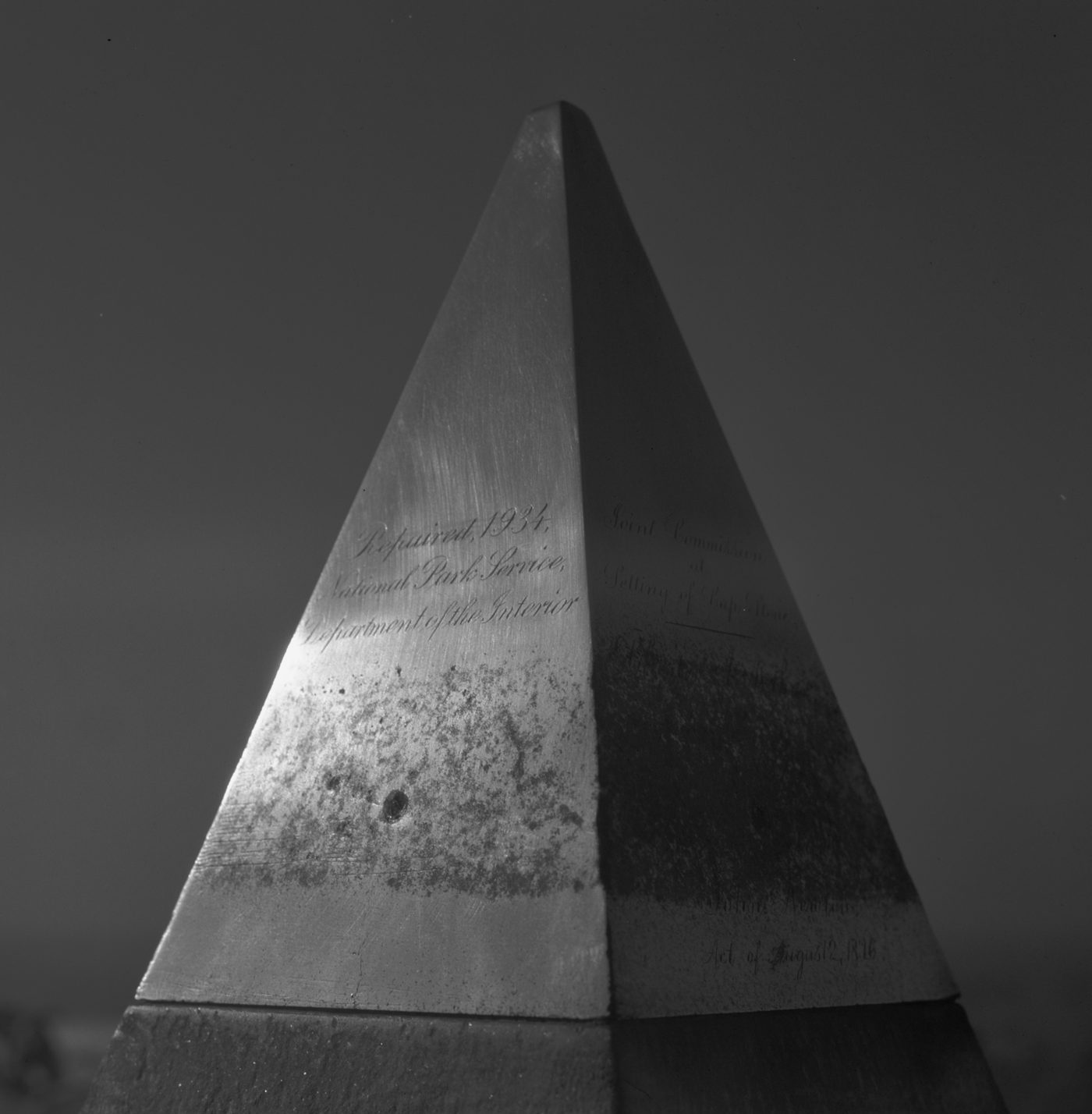
The tip of the Washington Monument in the USA is a small aluminium pyramid weighing about 2.8 kg, put in place in 1884. Aluminium was then so hard to extract that it cost about as much as silver. Two years later, a cheap way of extracting it with electricity was invented, and its price fell.
Photo: Theodor Horydczak, Public domain, via Wikimedia Commons
Try 5 questions
Quick questions on extracting metals, marked as you go. Each one explains the answer.
Question 1 of 5
Extracting a metal with electricity is cheaper than heating its oxide with carbon.
Choose an answer. Each question explains itself.
The homework sheet
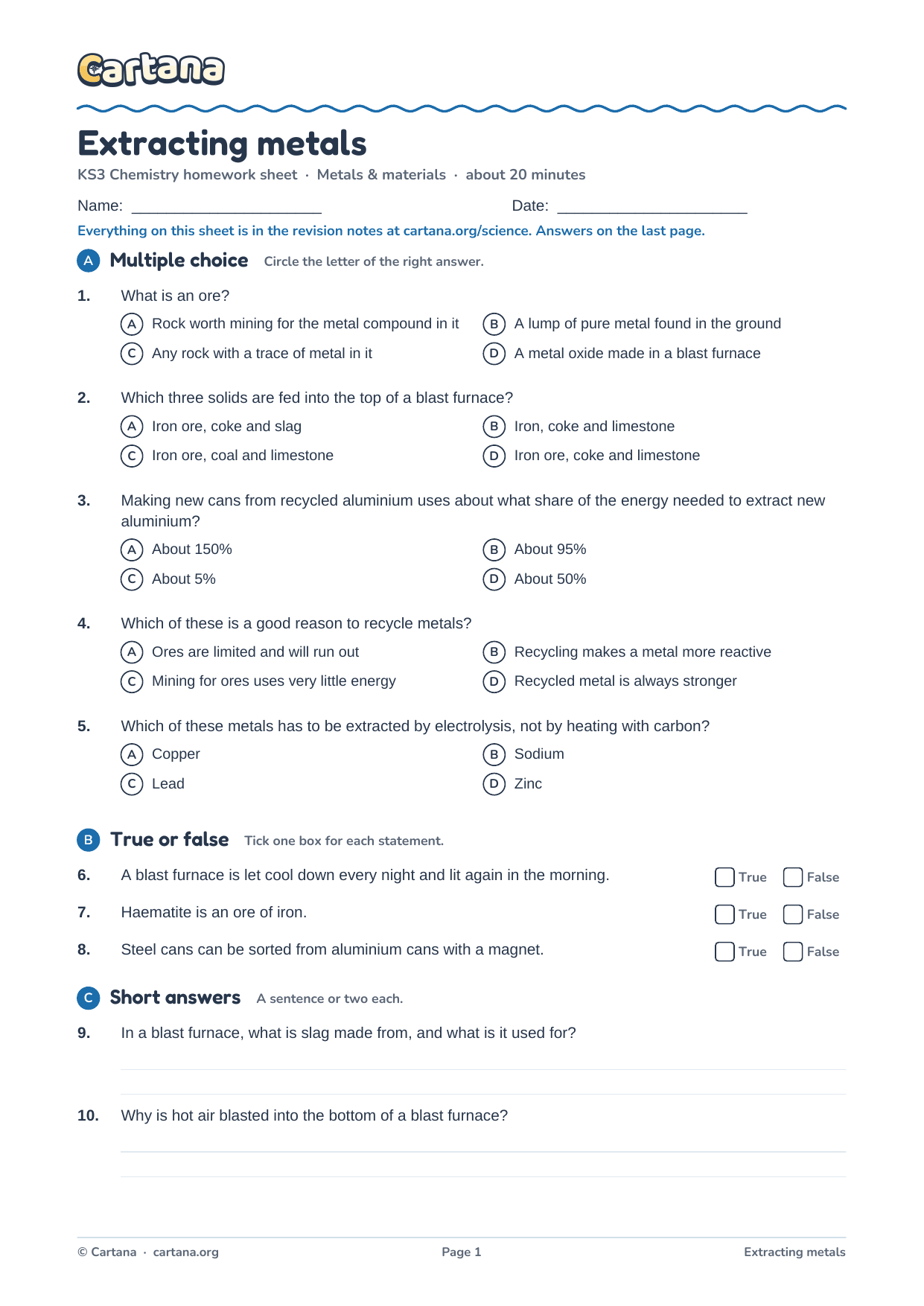
About twenty minutes. Everything on it is in the notes above; the answers are on the last page.
Free homework sheet
Extracting metals homework sheet
17 questions, about twenty minutes, with the answers on the last page: multiple choice, true or false, short answers, key words to define and one to explain in full.
KS3 Metals & materials
Revised the whole unit?
When every topic in metals & materials is done, two different papers test the whole unit, each with its own mark scheme.


 Watch the trailer · 1:06
New from Cartana · Beta test 1–31 December
Revision that feels like an adventure
Cartana is our KS3 learning adventure: sail between islands, answer quick-fire questions and battle bosses. It starts with science, with maths on the way, and launches in 2027. This December a small group of testers gets to play it first.
In the Cartana adventure, every science unit is an island to explore. The island for metals & materials is being built.
- Play the game before its official release
- Help us build it with your feedback
- Earn exclusive in-game items in return
More in this unit
Metals & materials
- 1Reactions of metalsHow metals react with oxygen, water and dilute acids, and why iron rusts
- 2The reactivity seriesThe order of the metals, with carbon and hydrogen placed, how it is worked out and how to use it to predict
- 3Displacement reactionsA more reactive metal pushing a less reactive one out of its compound, from an iron nail in copper sulfate to the thermite reaction
- 5Ceramics, polymers and compositesNextThe properties and uses of ceramics, polymers and composites, and how to choose a material for a job