
KS3 Chemistry · Metals & materials
Ceramics, polymers and composites
- Ceramics: how they are made, their properties and their uses
- Polymers: long-chain molecules, natural polymers and plastics
- Composites such as reinforced concrete, fibreglass and carbon fibre
- Choosing a material for a job by matching its properties
- 4 min read
- 5 quick questions
- Free homework sheet
- Years 7 to 9
Revision notes
Ceramics, polymers and composites are three families of materials besides metals. Ceramics are hard but brittle, polymers are made of very long molecules, and composites combine two materials to get the best of both.
What are ceramics?
Ceramics are made by heating clay or other minerals to a very high temperature, called firing. Pottery, china, bricks, tiles, porcelain and glass are ceramics. Most ceramics are:
- hard: they resist scratching, and are strong when squashed
- brittle: they crack or shatter instead of bending
- good insulators: they do not let electricity or heat through easily
- slow to change: they have high melting points and do not rot, rust or wear away in the weather
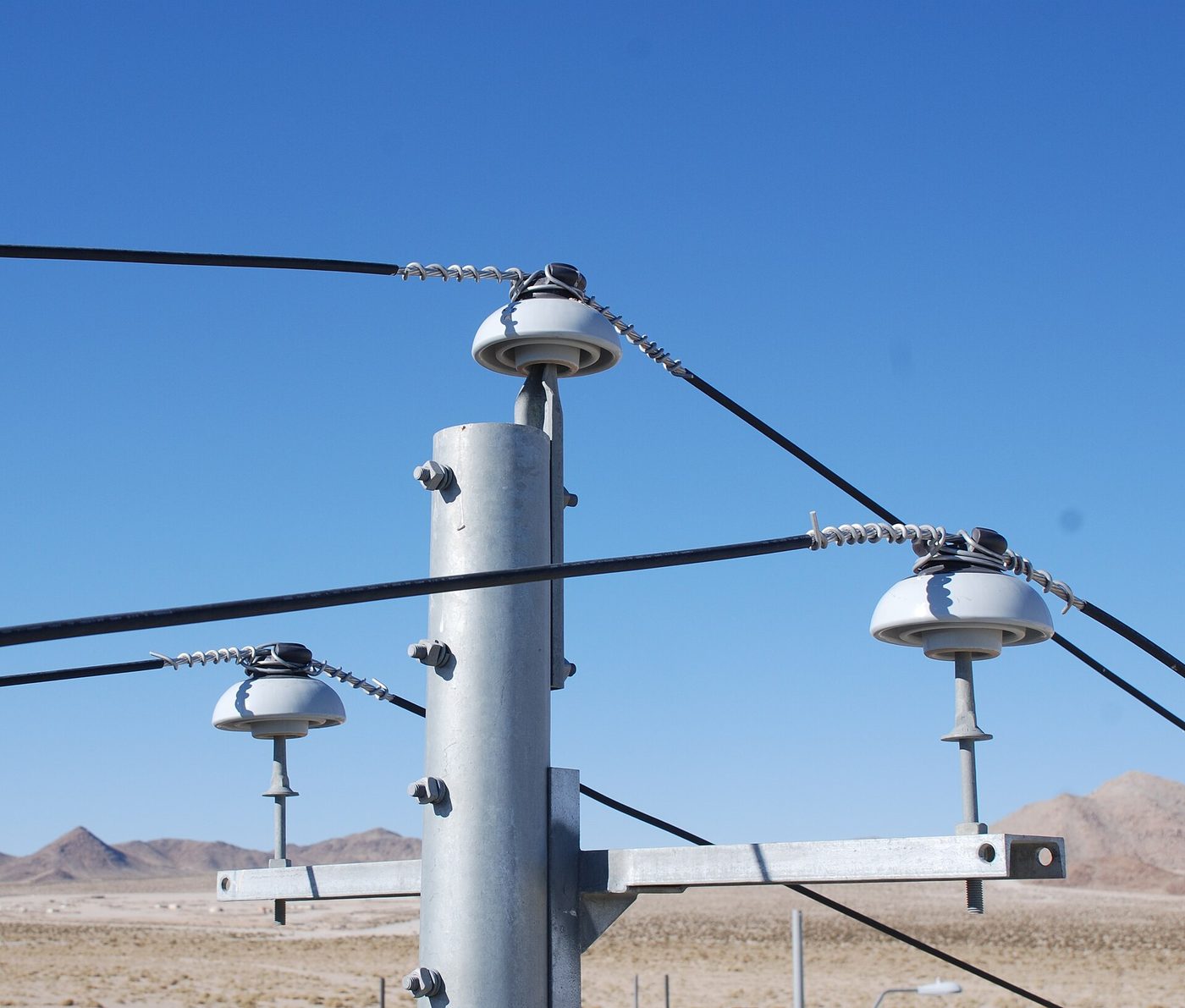
So ceramics are used for plates and mugs, sinks, oven linings, and the insulators that hold power cables on pylons.
What are polymers?
A polymer is a substance made of very long molecules. Each one is made by joining thousands of small molecules, called monomers, end to end in a chain.
Some polymers are natural: wool, silk, cotton and rubber. Most plastics are polymers made from crude oil, such as poly(ethene) for bags and bottles, PVC for pipes and window frames, and nylon for ropes and clothes. Their properties depend on the polymer, but most are:
- light (they have a low density)
- easy to mould into shape when warm
- electrical insulators, and waterproof
- unaffected by air and water, so they do not rust or rot
That last property is also a problem. Most plastics are not biodegradable: microbes cannot break them down, so plastic litter lasts for hundreds of years.
What are composites?
A composite is two or more materials combined, with each keeping its own properties. Usually fibres or bars of one material are set in another. Together they have a mix of properties that neither has alone.
| Composite | Made of | Used for |
|---|---|---|
| Reinforced concrete | Steel bars set in concrete | Bridges, buildings |
| Fibreglass | Glass fibres in plastic resin | Boat hulls, helmets |
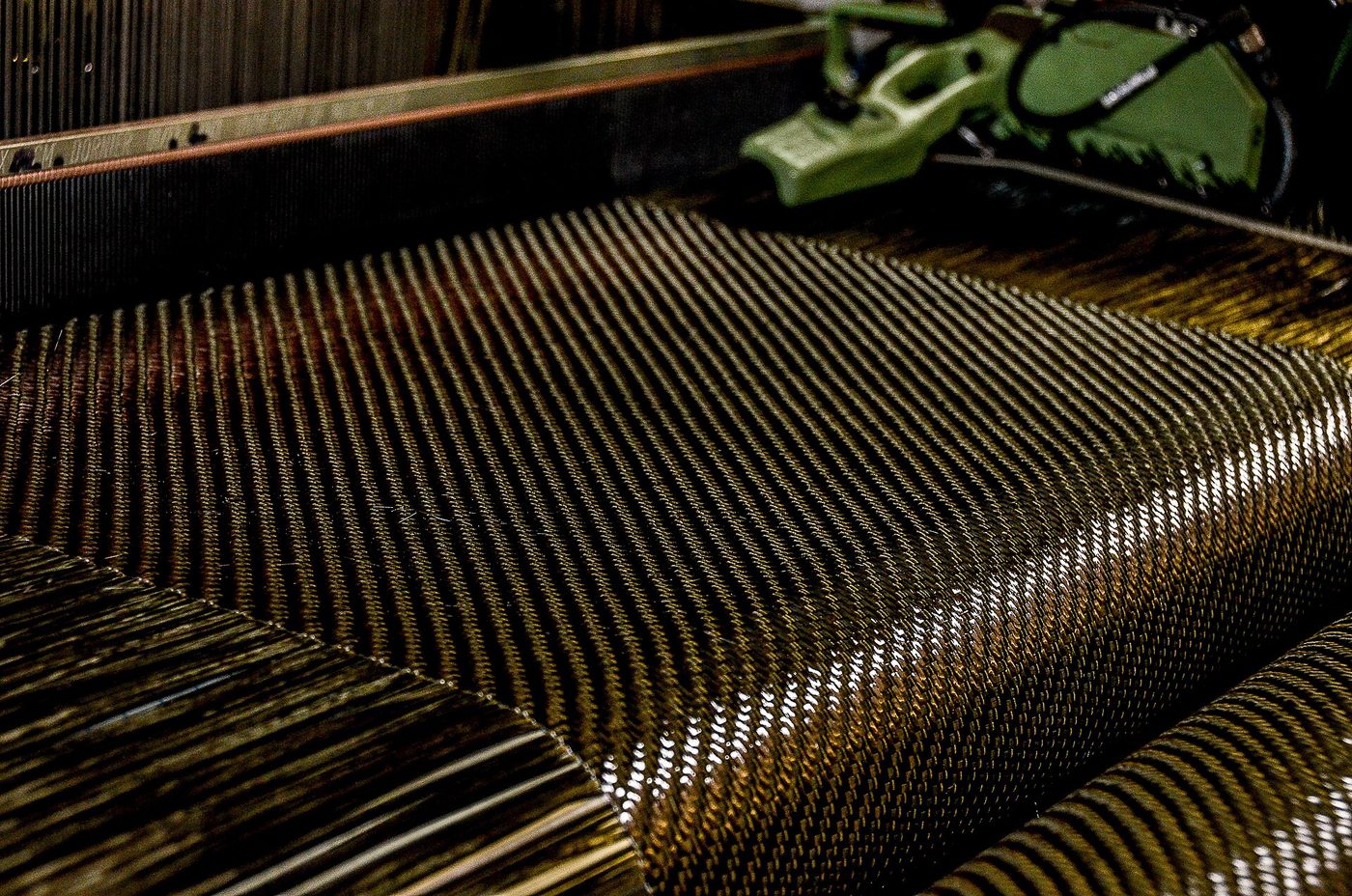
| Carbon fibre | Carbon fibres in plastic resin | Racing bikes, tennis rackets |
| Plywood | Thin wood sheets glued, grains crossed | Furniture, floors |
Concrete is strong when squashed but cracks easily when stretched. When a beam carries a load it sags a little: its top is squashed and its bottom is stretched. Steel bars near the bottom take the pull, so the beam does not crack.
How do you choose a material for a job?
List the properties the job needs, then find the material that has them all. Metals (see metals and non-metals) are in the table to compare.
| Property | Metals | Ceramics | Polymers |
|---|---|---|---|
| Electricity | Conduct | Insulate | Insulate |
| Heat | Conduct well | Insulate | Insulate |
| When hit | Bend or dent | Shatter | Bend or stretch |
| Density | Mostly high | Medium | Low |
| Melting point | Mostly high | Very high | Low |
Choose a material for the insulators that hold a power cable on a pylon.
Needs: must not conduct electricity; stiff and strong; must last for decades in sun, rain and frost.
Metals conduct, so they are ruled out. Most plastics soften in heat and slowly crack in sunlight.
Choice: a ceramic such as porcelain or toughened glass: an insulator that is hard and does not wear away in the weather.
Many newer lines use composite insulators instead: a glass-fibre rod inside a cover of silicone rubber, a polymer. They are lighter than porcelain and do not shatter.
Stretch Plastics come in two kinds. Thermosoftening plastics, such as poly(ethene), soften when heated and can be melted down and moulded again, so they can be recycled. Thermosetting plastics, such as melamine, have cross-links joining their chains to each other, so they do not soften when heated: they are used for plates, saucepan handles and electric plugs.
Written to the KS3 national curriculum. Last changed 14 November 2026.
Key words
Say them, spell them, use them in an answer.
- ceramic
- firing
- hard
- brittle
- insulator
- polymer
- monomer
- plastic
- biodegradable
- composite
Common misconception
Often said“Ceramics are just pottery: old-fashioned and weak, because a mug breaks when you drop it.”
In factCeramics are brittle, so a sharp knock can crack them, but they are very hard, strong when squashed and keep their strength at temperatures that would melt most metals. Ceramics line furnaces, coat the hottest parts of jet engines and insulate spark plugs.
Did you know?
Space Shuttle tiles
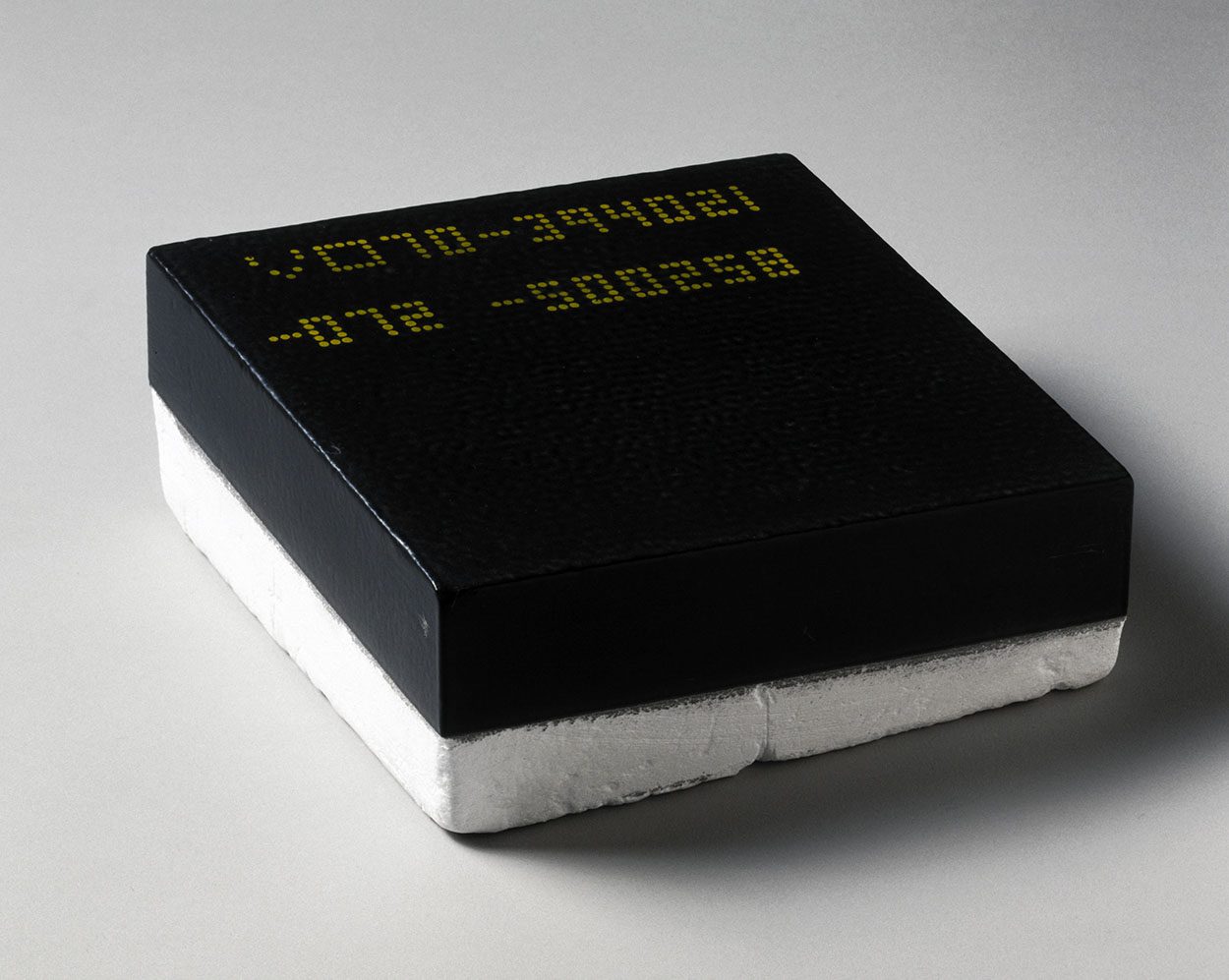
The Space Shuttle was covered in ceramic tiles made from very pure silica fibres, about nine-tenths empty space. They let heat through so slowly that a tile could be held by its edges while its middle was still glowing red hot.
Photo: Science Museum London, CC BY-SA 2.0, via Wikimedia Commons
Try 5 questions
Quick questions on ceramics, polymers and composites, marked as you go. Each one explains the answer.
Question 1 of 5
Which of these is a problem with many plastics?
Choose an answer. Each question explains itself.
The homework sheet
About twenty minutes. Everything on it is in the notes above; the answers are on the last page.
Free homework sheet
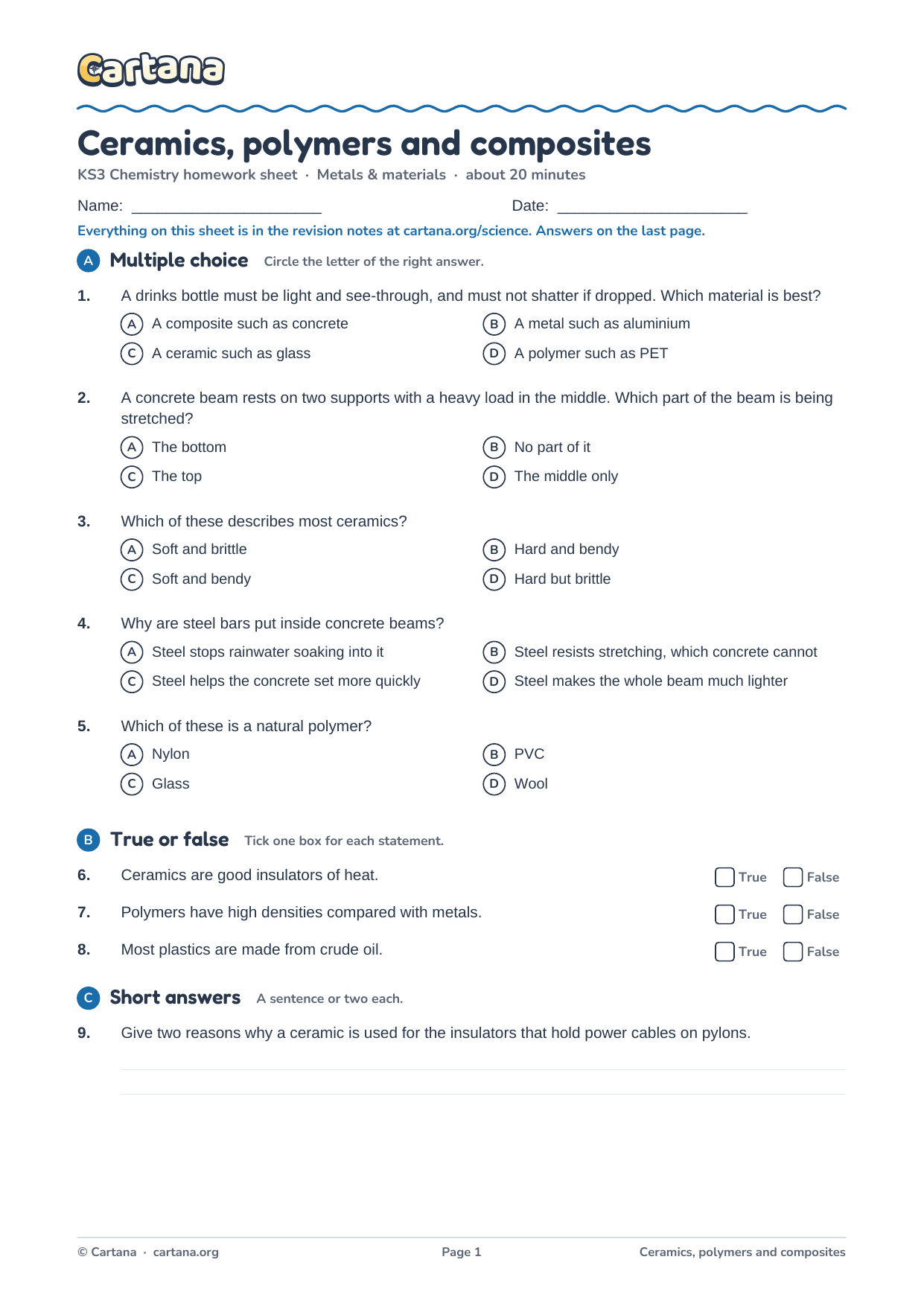
Ceramics, polymers and composites homework sheet
17 questions, about twenty minutes, with the answers on the last page: multiple choice, true or false, short answers, key words to define and one to explain in full.
KS3 Metals & materials
Revised the whole unit?
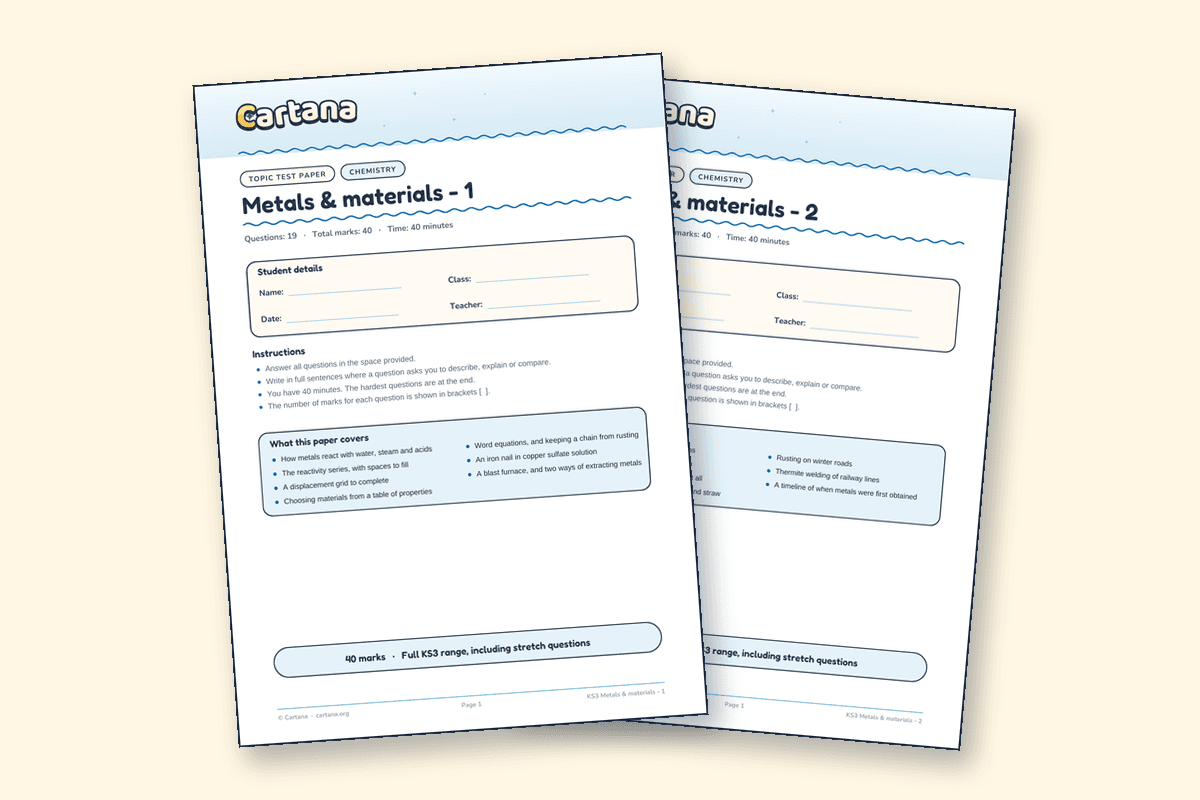
When every topic in metals & materials is done, two different papers test the whole unit, each with its own mark scheme.


 Watch the trailer · 1:06
New from Cartana · Beta test 1–31 December
Revision that feels like an adventure
Cartana is our KS3 learning adventure: sail between islands, answer quick-fire questions and battle bosses. It starts with science, with maths on the way, and launches in 2027. This December a small group of testers gets to play it first.
In the Cartana adventure, every science unit is an island to explore. The island for metals & materials is being built.
- Play the game before its official release
- Help us build it with your feedback
- Earn exclusive in-game items in return
More in this unit
Metals & materials
- 1Reactions of metalsHow metals react with oxygen, water and dilute acids, and why iron rusts
- 2The reactivity seriesThe order of the metals, with carbon and hydrogen placed, how it is worked out and how to use it to predict
- 3Displacement reactionsA more reactive metal pushing a less reactive one out of its compound, from an iron nail in copper sulfate to the thermite reaction
- 4Extracting metalsOres, native metals, heating with carbon, the blast furnace in outline, electrolysis for reactive metals, and recycling