
KS3 Chemistry · Metals & materials
Displacement reactions
- What displacement means: a more reactive metal taking a less reactive one’s place
- An iron nail in copper sulfate solution, and copper in silver nitrate
- Predicting displacement from the reactivity series, and the displacement grid
- The thermite reaction and welding railway rails
- 4 min read
- 5 quick questions
- Free homework sheet
- Years 7 to 9
Revision notes
A displacement reaction is one in which a more reactive metal takes the place of a less reactive metal in a compound, leaving the less reactive metal on its own. Iron displaces copper from copper sulfate: iron + copper sulfate → iron sulfate + copper.
What is a displacement reaction?
To displace means to push out of place. In a displacement reaction, a metal higher in the reactivity series (the metals in order of how readily they react) pushes a lower metal out of its compound. The more reactive metal ends up in the compound, and the less reactive one is left as the element.
If the metal is less reactive than the one in the compound, nothing happens. Copper in iron sulfate solution stays exactly as it is.
What happens when an iron nail is put in copper sulfate solution?
- Rub an iron nail with sandpaper so that it is clean and shiny.
- Stand it in a beaker of blue copper sulfate solution and watch.
- Leave it for a day, then look again.
What you see: within a minute the nail is coated in pink-brown copper. Over the next day the blue colour fades towards the pale green of iron sulfate. What it shows: iron is more reactive than copper.
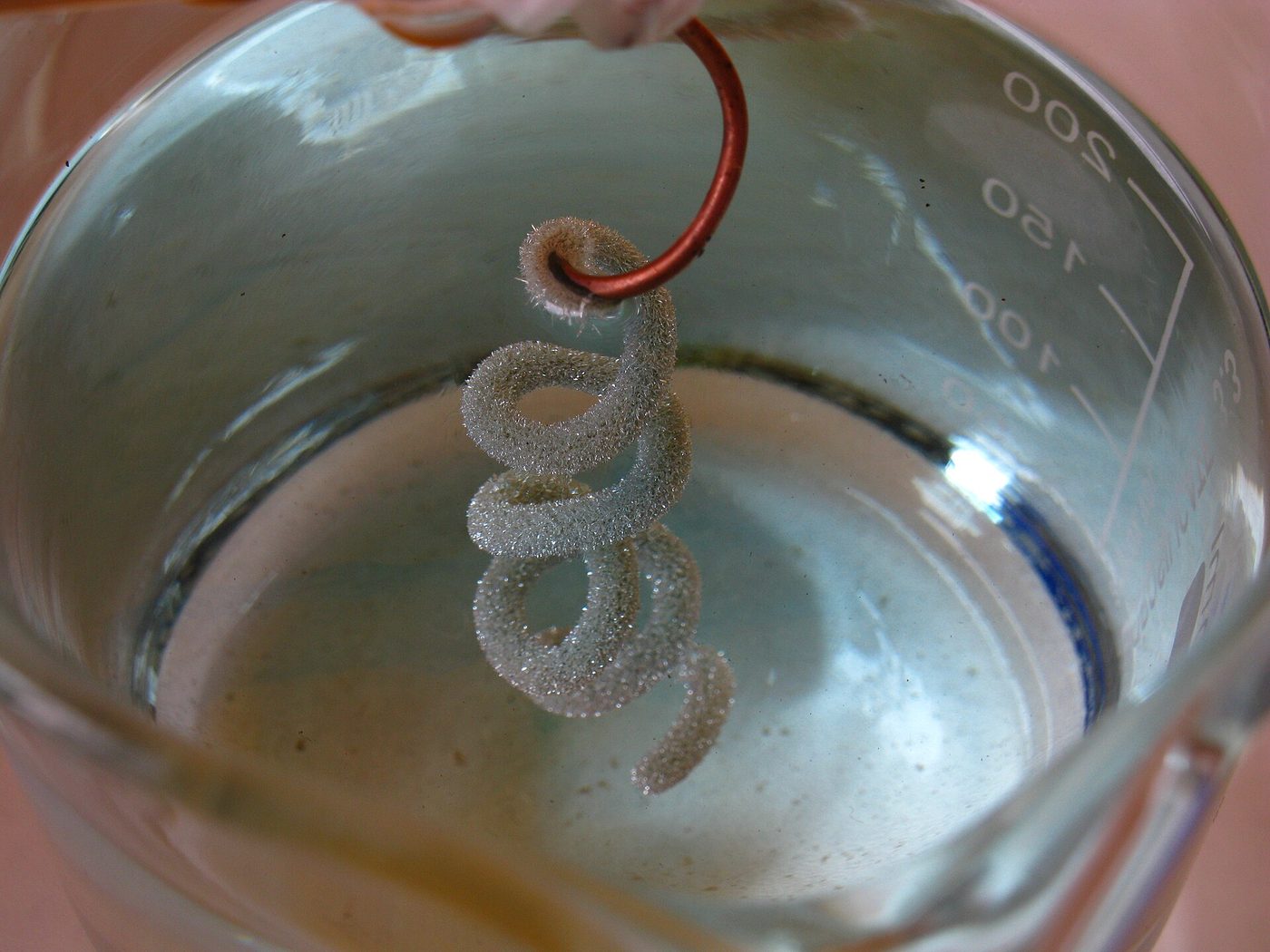
The same thing happens with other pairs. Zinc powder stirred into copper sulfate solution turns brown and the blue colour fades: zinc + copper sulfate → zinc sulfate + copper. A coil of copper wire in colourless silver nitrate solution grows grey silver crystals while the solution turns blue: copper + silver nitrate → copper nitrate + silver.
A thermometer in the solution shows a temperature rise: displacement reactions give out heat. They are exothermic (see exothermic and endothermic reactions).
How can you predict a displacement reaction?
Look up the two metals in the reactivity series. A metal displaces only metals below it.
Will zinc react with lead nitrate solution? Will silver react with copper sulfate solution?
Zinc is above lead, so zinc displaces lead: zinc + lead nitrate → zinc nitrate + lead.
Silver is below copper, so silver cannot displace copper: no reaction.
You can also work the series out with a displacement grid. Put drops of four metal sulfate solutions in a row of dips on a spotting tile (a white tile with rows of small dips), add a small piece of each metal down the rows, and look for a coating of new metal. The metal that displaces the most others is the most reactive.
What is the thermite reaction?
Displacement also works with solid compounds such as metal oxides, if they are heated. Aluminium powder mixed with iron oxide, and lit with a fuse of magnesium ribbon, reacts with a blinding glare and a shower of sparks:
Aluminium is more reactive than iron, so it takes the oxygen. This is the thermite reaction. It gives out so much heat (the mixture reaches about 2,500 °C) that the iron it makes is molten. Railway workers use it to weld rails (join them by melting metal into the gap): the molten iron runs into a mould round the gap between two rail ends and sets hard.
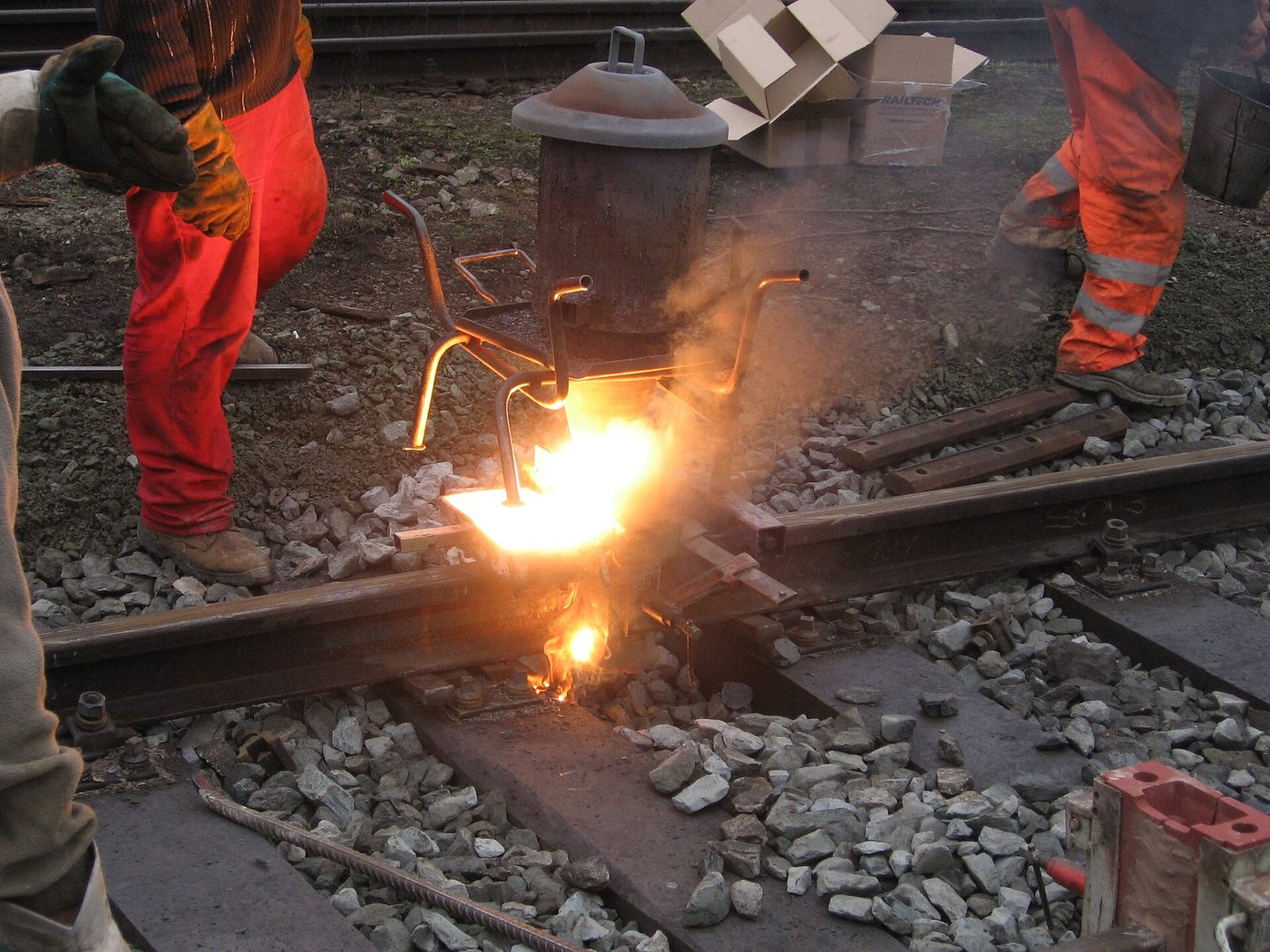
In the same way, magnesium powder heated with black copper oxide makes magnesium oxide and copper.
Stretch In symbols: Fe + CuSO4 → FeSO4 + Cu. Count the atoms: one iron, one copper, one sulfur and four oxygen on each side. The sulfate group, SO4, moves as a whole from the copper to the iron, the more reactive partner. The further apart the two metals are in the series, the more heat the reaction gives out: magnesium in copper sulfate warms the solution far more than iron does.
Written to the KS3 national curriculum. Last changed 14 November 2026.
Key words
Say them, spell them, use them in an answer.
- displace
- displacement reaction
- reactivity series
- exothermic
- spotting tile
- displacement grid
- thermite reaction
- weld
Common misconception
Often said“When an iron nail goes pink in copper sulfate, the iron has turned into copper.”
In factOne element can never turn into another in a chemical reaction. The copper was in the solution all along, as copper sulfate. The iron atoms that react take its place and go into the solution as iron sulfate, while the copper comes out as the metal.
Did you know?
Silver crystals
Hang a coil of copper wire in silver nitrate solution and a fur of glittering silver crystals grows on it, while the clear solution slowly turns blue. Copper is more reactive than silver, so it pushes the silver out.
Photo: ΛΦΠ, CC BY-SA 4.0, via Wikimedia Commons
Try 5 questions
Quick questions on displacement reactions, marked as you go. Each one explains the answer.
Question 1 of 5
Which of these is not a displacement reaction?
Choose an answer. Each question explains itself.
The homework sheet
About twenty minutes. Everything on it is in the notes above; the answers are on the last page.
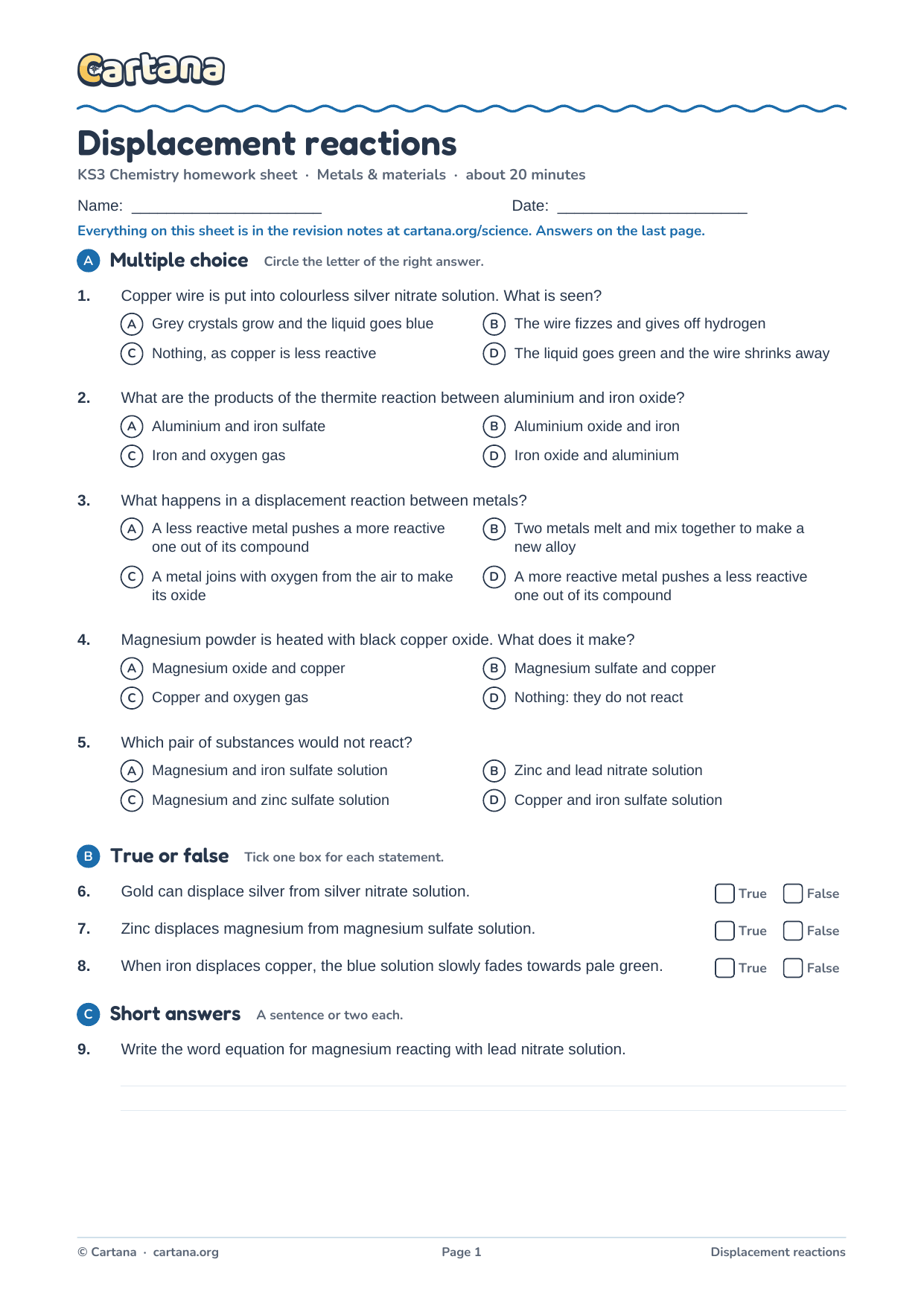
Free homework sheet
Displacement reactions homework sheet
17 questions, about twenty minutes, with the answers on the last page: multiple choice, true or false, short answers, key words to define and one to explain in full.
KS3 Metals & materials
Revised the whole unit?
When every topic in metals & materials is done, two different papers test the whole unit, each with its own mark scheme.


 Watch the trailer · 1:06
New from Cartana · Beta test 1–31 December
Revision that feels like an adventure
Cartana is our KS3 learning adventure: sail between islands, answer quick-fire questions and battle bosses. It starts with science, with maths on the way, and launches in 2027. This December a small group of testers gets to play it first.
In the Cartana adventure, every science unit is an island to explore. The island for metals & materials is being built.
- Play the game before its official release
- Help us build it with your feedback
- Earn exclusive in-game items in return
More in this unit
Metals & materials
- 1Reactions of metalsHow metals react with oxygen, water and dilute acids, and why iron rusts
- 2The reactivity seriesThe order of the metals, with carbon and hydrogen placed, how it is worked out and how to use it to predict
- 4Extracting metalsNextOres, native metals, heating with carbon, the blast furnace in outline, electrolysis for reactive metals, and recycling
- 5Ceramics, polymers and compositesThe properties and uses of ceramics, polymers and composites, and how to choose a material for a job