
KS3 Chemistry · Metals & materials
Reactions of metals
- Metals with oxygen: metal oxides, burning magnesium and tarnishing
- Metals with cold water and steam, from violent potassium to slow magnesium
- Metals with dilute acids: a salt and hydrogen, and how to compare them fairly
- Why iron rusts, the three-tube experiment, and how rusting is prevented
- 5 min read
- 5 quick questions
- Free homework sheet
- Years 7 to 9
Revision notes
Most metals react with oxygen to make metal oxides, and the more reactive ones also react with water and dilute acids, giving off hydrogen. How fast each metal reacts shows how reactive it is.
What happens when metals react with oxygen?
Many metals react with oxygen in the air to make a metal oxide, a compound of the metal and oxygen. Joining with oxygen is called oxidation (see combustion and oxidation).
- Magnesium ribbon, lit in a Bunsen flame, burns with a dazzling white flame and leaves a white powder: magnesium + oxygen → magnesium oxide.
- Iron wool held in a flame burns with orange sparks: iron + oxygen → iron oxide.
- Copper does not burn, but heated in a flame its surface turns black: copper + oxygen → copper oxide.
- Gold does not react with oxygen however strongly it is heated.
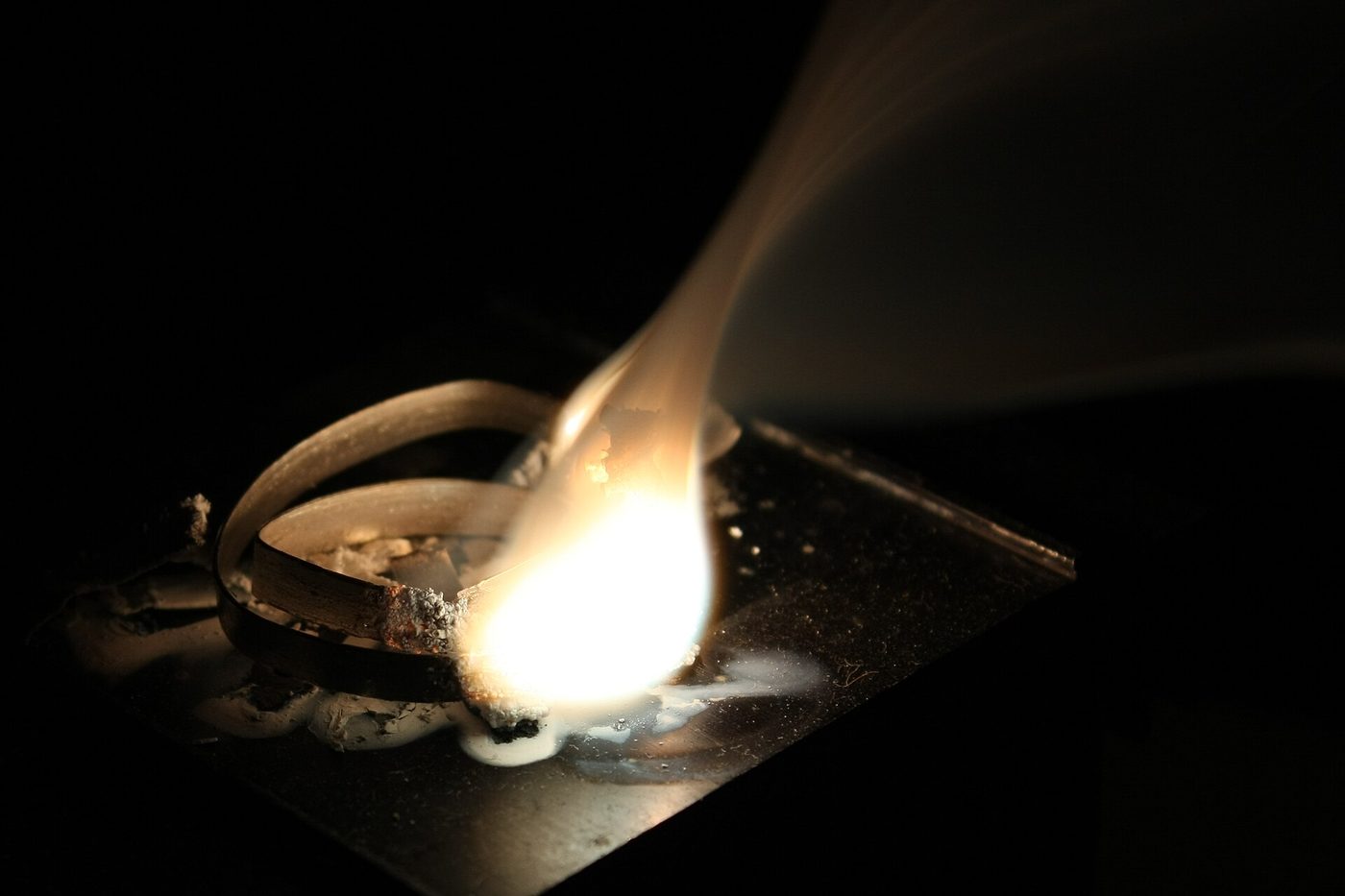
Many shiny metals go dull in air because a thin layer of oxide forms on the surface. This is tarnishing. Metal oxides are bases, which neutralise acids, while non-metal oxides such as carbon dioxide make acidic solutions (see metals and non-metals).
Do metals react with water?
Only the most reactive metals react with cold water. They make a metal hydroxide (a compound of the metal with oxygen and hydrogen) and hydrogen gas, which is what makes them fizz.
- Potassium and sodium react violently, whizzing about on the surface (see the alkali metals).
- Calcium sinks and fizzes steadily, and the water goes cloudy: calcium + water → calcium hydroxide + hydrogen.
- Magnesium reacts with cold water only very slowly: a few bubbles collect over several days.
- Copper, silver and gold do not react with water.
Hot magnesium reacts quickly with steam, glowing brightly. With steam a metal makes its oxide, not its hydroxide: magnesium + steam → magnesium oxide + hydrogen. Zinc and iron react with steam too, but only slowly, when strongly heated.
How do metals react with dilute acids?
Metals react with dilute acids more readily than with water. The fizzing is hydrogen, and the metal is used up, leaving a salt (a compound of the metal with part of the acid) dissolved in the solution.
magnesium + hydrochloric acid → magnesium chloride + hydrogen
iron + sulfuric acid → iron sulfate + hydrogen
| Metal | In dilute hydrochloric acid |
|---|---|
| Magnesium | Fizzes fast and gets warm |
| Zinc | Fizzes steadily |
| Iron | Fizzes slowly |
| Copper | No reaction |
To compare metals fairly, use same-sized pieces in the same volume of the same acid. A lit splint held at the mouth of the tube gives a squeaky pop: the test for hydrogen.
Why does iron rust?
Rusting is the slow oxidation of iron and steel. It needs both oxygen (from the air) and water.
Rust is flaky and crumbles away, uncovering fresh iron to rust. Only iron and steel rust. When other metals are slowly eaten away by reacting with air, water or other substances around them, they corrode, but that is not called rusting.
- Put an iron nail in each of three test tubes: A with water, open to the air; B resting on cotton wool in dry air over calcium chloride (which soaks up water vapour), sealed with a bung; C under boiled water (boiling drives out the dissolved air) with a layer of oil on top.
- Leave them for a week and look at the nails.
What you see: only nail A rusts. What it shows: rusting needs both air and water.
Salt water speeds rusting up, which is why ships and cars on salted winter roads rust quickly. Iron is protected by keeping air and water off it: paint, oil or grease, a plastic coating, or galvanising (a coat of zinc).
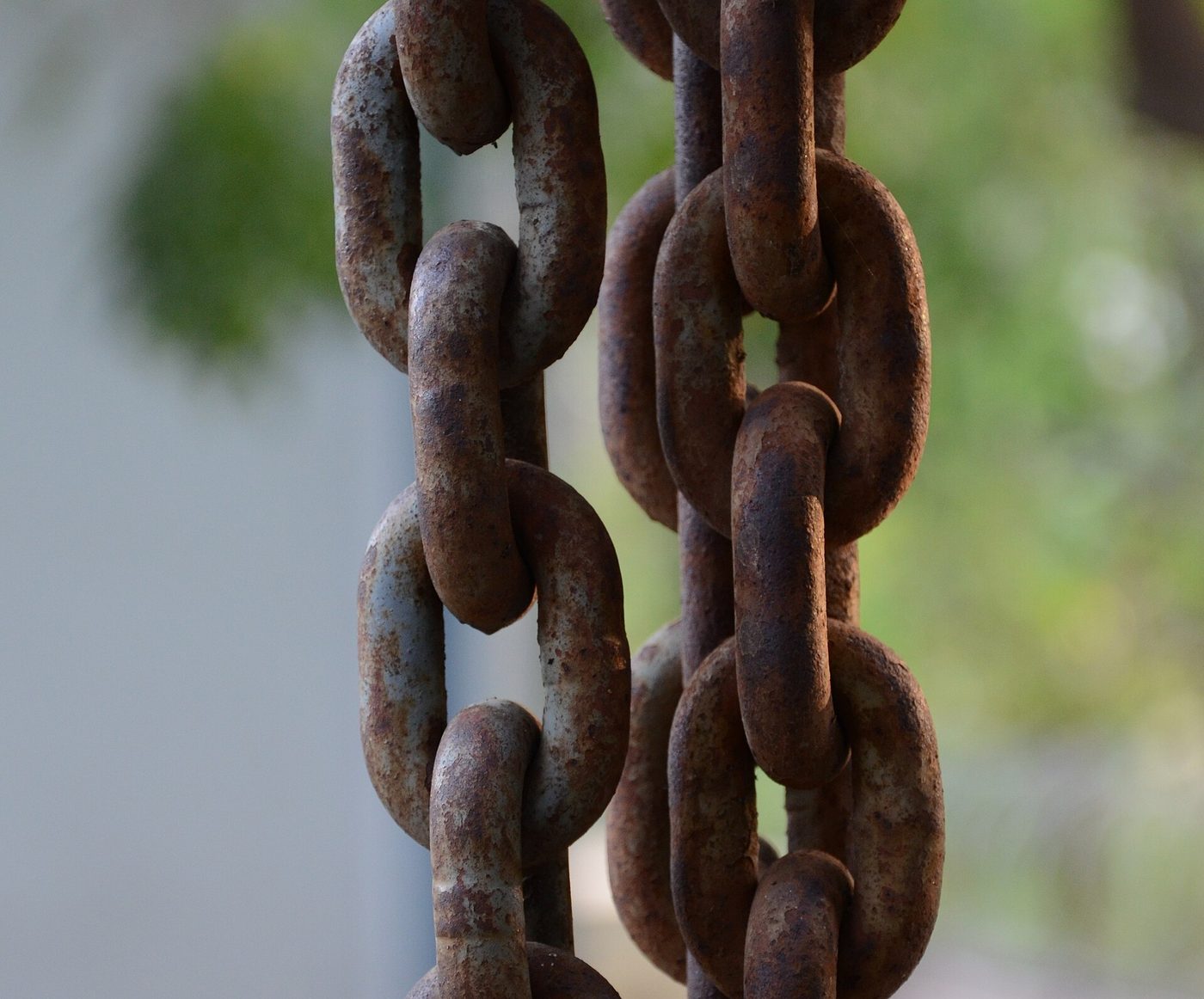
Stretch Galvanised iron stays protected even where the zinc is scratched. Zinc is more reactive than iron, so oxygen and water react with the zinc first. This is called sacrificial protection: ships carry blocks of zinc bolted to their steel hulls for the same reason.
Written to the KS3 national curriculum. Last changed 14 November 2026.
Key words
Say them, spell them, use them in an answer.
- metal oxide
- oxidation
- tarnishing
- metal hydroxide
- salt
- rusting
- corrode
- galvanising
Common misconception
Often said“Rust is just dirt that sits on the iron. Scrub it off and the metal underneath is as good as new.”
In factRust is a new substance, hydrated iron oxide, made when iron reacts with oxygen and water. The iron that turned into rust has gone: the rust flakes off and uncovers fresh iron, which rusts in its turn, so the metal gets thinner and weaker.
Did you know?
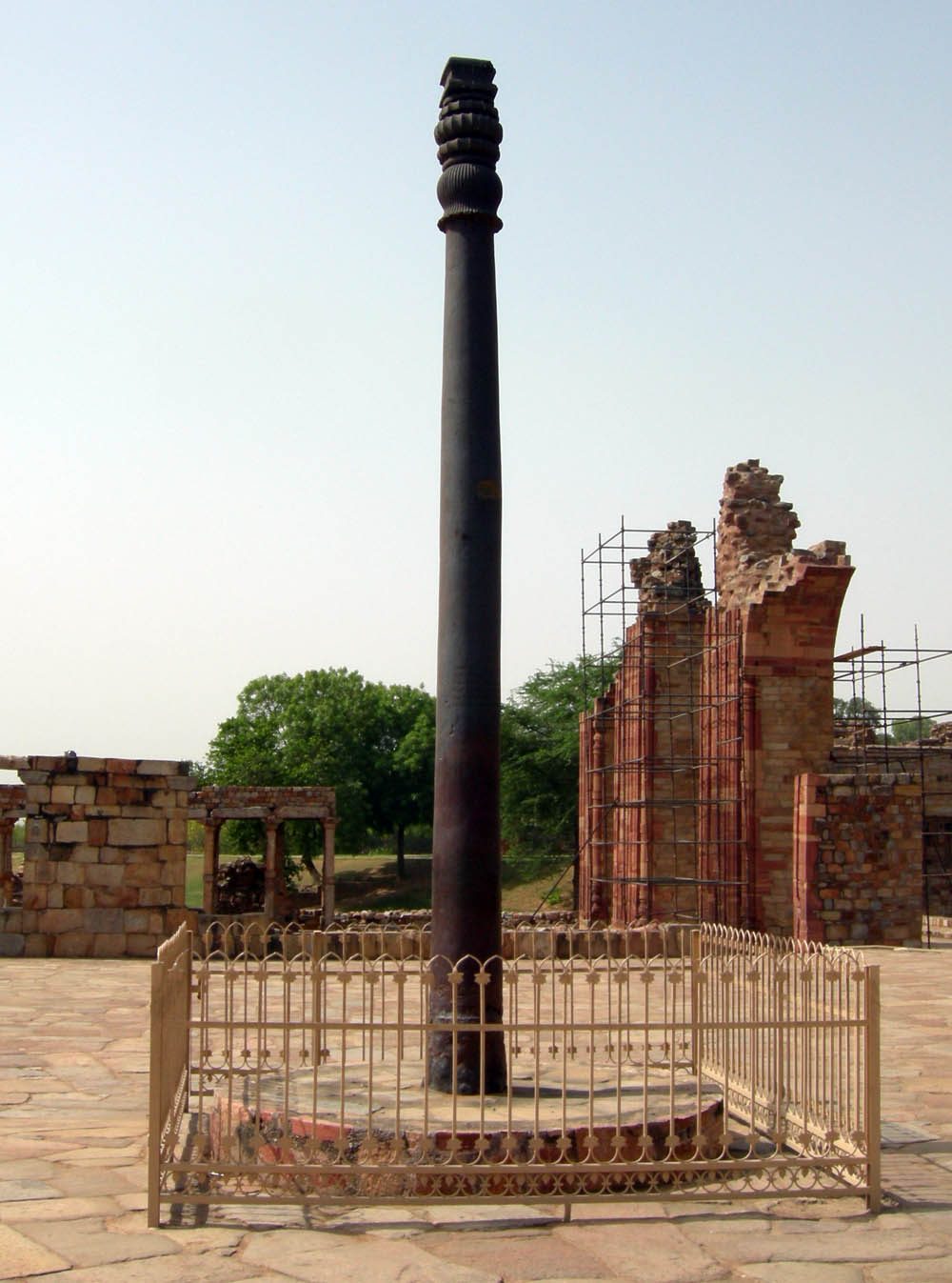
The iron pillar of Delhi
An iron pillar more than 7 m tall has stood outdoors in Delhi, India, for about 1,600 years with very little rust. Its iron is unusually rich in phosphorus, which helps a thin, even, protective layer form on its surface.
Photo: Mark A. Wilson, Public domain, via Wikimedia Commons
Try 5 questions
Quick questions on reactions of metals, marked as you go. Each one explains the answer.
Question 1 of 5
Calcium floats and whizzes about on the surface of cold water.
Choose an answer. Each question explains itself.
The homework sheet
About twenty minutes. Everything on it is in the notes above; the answers are on the last page.
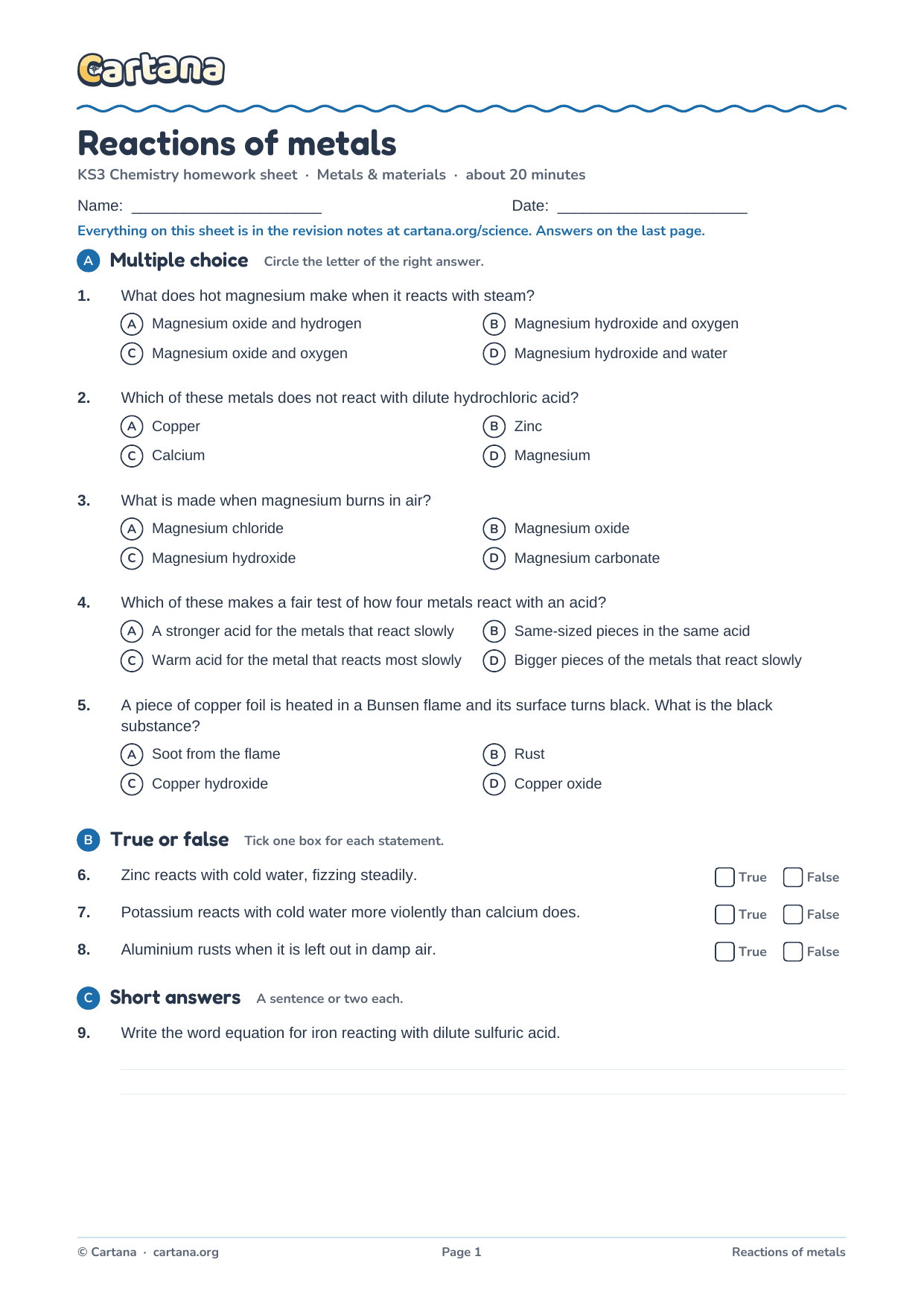
Free homework sheet
Reactions of metals homework sheet
17 questions, about twenty minutes, with the answers on the last page: multiple choice, true or false, short answers, key words to define and one to explain in full.
KS3 Metals & materials
Revised the whole unit?
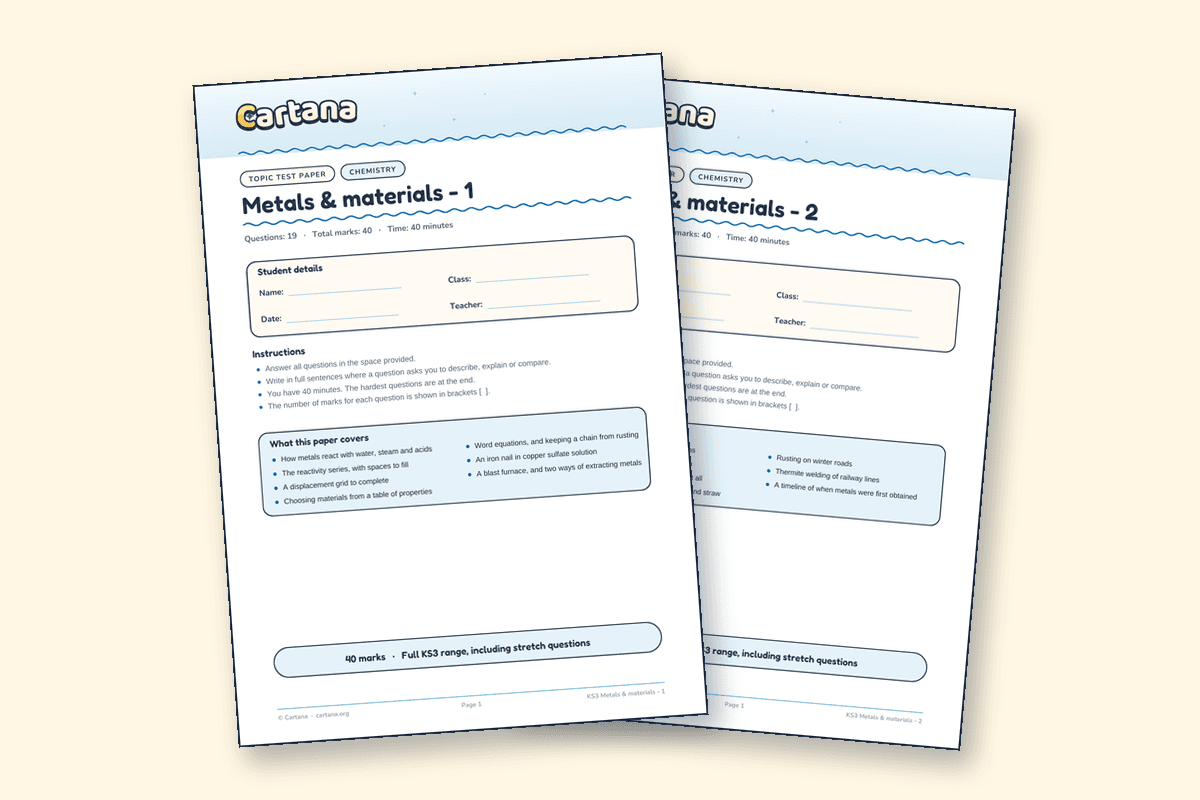
When every topic in metals & materials is done, two different papers test the whole unit, each with its own mark scheme.


 Watch the trailer · 1:06
New from Cartana · Beta test 1–31 December
Revision that feels like an adventure
Cartana is our KS3 learning adventure: sail between islands, answer quick-fire questions and battle bosses. It starts with science, with maths on the way, and launches in 2027. This December a small group of testers gets to play it first.
In the Cartana adventure, every science unit is an island to explore. The island for metals & materials is being built.
- Play the game before its official release
- Help us build it with your feedback
- Earn exclusive in-game items in return
More in this unit
Metals & materials
- 2The reactivity seriesNextThe order of the metals, with carbon and hydrogen placed, how it is worked out and how to use it to predict
- 3Displacement reactionsA more reactive metal pushing a less reactive one out of its compound, from an iron nail in copper sulfate to the thermite reaction
- 4Extracting metalsOres, native metals, heating with carbon, the blast furnace in outline, electrolysis for reactive metals, and recycling
- 5Ceramics, polymers and compositesThe properties and uses of ceramics, polymers and composites, and how to choose a material for a job