
KS3 Chemistry · The periodic table
Alkali metals
- The Group 1 metals: soft, low density, and stored under oil because they react with air and water
- The reaction with water: metal + water → metal hydroxide + hydrogen, and why the water turns alkaline
- What lithium, sodium and potassium do in water, and the test for hydrogen
- The trends down the group, and predicting rubidium from the pattern
- 3 min read
- 5 quick questions
- Free homework sheet
- Years 7 to 9
Revision notes
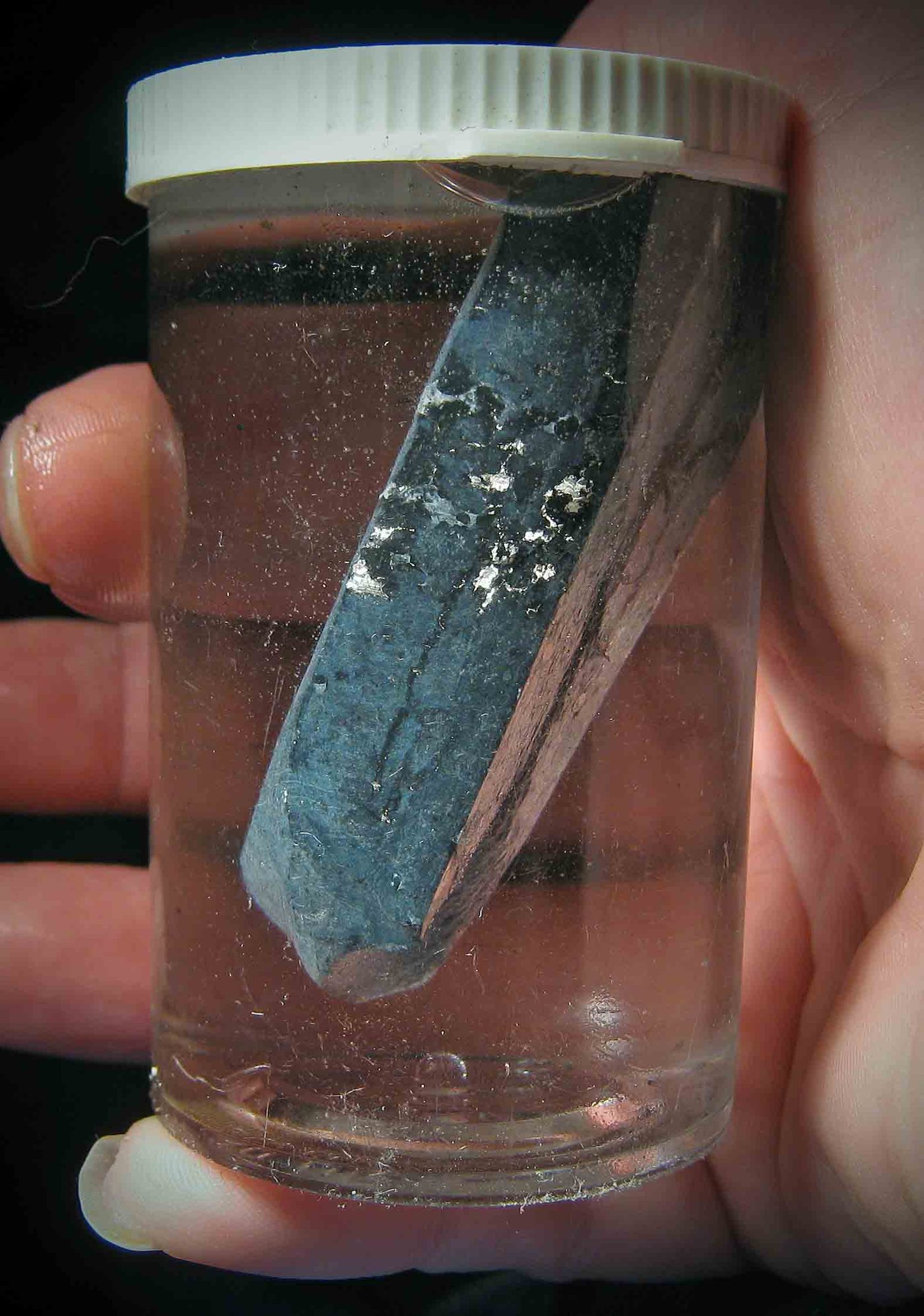
Group 1, the first column, holds the alkali metals: lithium, sodium and potassium, then rubidium, caesium and francium. They are metals, so they are shiny when freshly cut and conduct electricity, but they are unusual metals: soft enough to cut with a knife, with low melting points and low densities. Lithium, sodium and potassium are less dense than water, so they float.
Stored under oil. A freshly cut surface is shiny but goes dull within seconds: it tarnishes as it reacts with oxygen and water vapour in the air. They react quickly with water (potassium violently), so they are kept under oil, which keeps air and water away. They are handled with tongs, never with fingers.
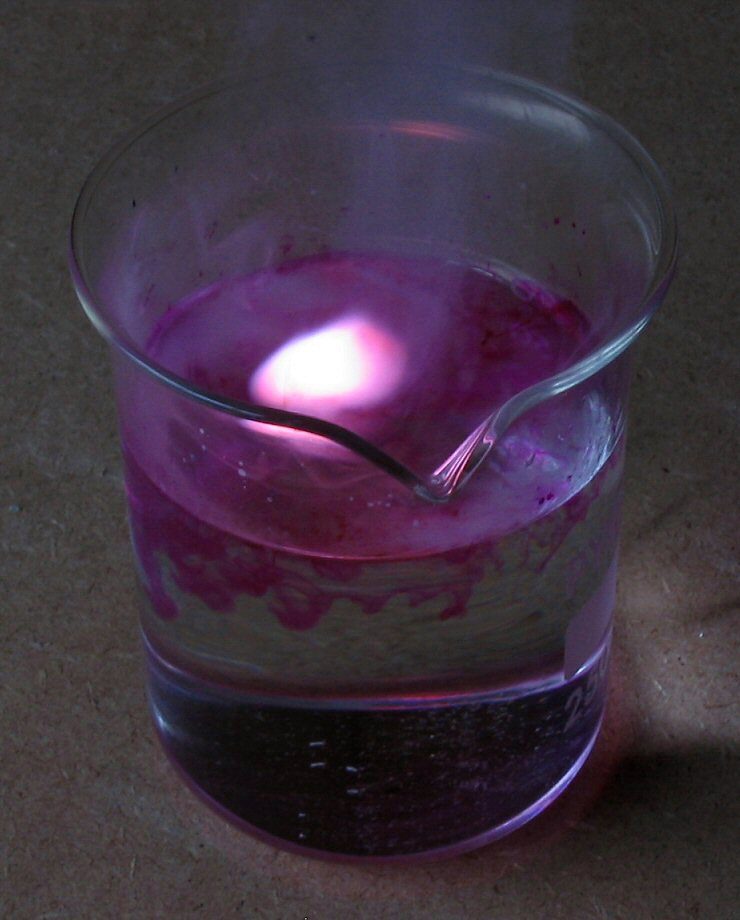
With water. Each alkali metal reacts with water to make a metal hydroxide and hydrogen: metal + water → metal hydroxide + hydrogen, for example sodium + water → sodium hydroxide + hydrogen. The hydroxide dissolves and makes the water alkaline, so universal indicator turns purple: that is why they are called the alkali metals. The fizzing is the hydrogen. The test for hydrogen: a lit splint gives a squeaky pop.
| Metal | What you see in water |
|---|---|
| Lithium | Floats and fizzes steadily until it is gone |
| Sodium | Melts into a silver ball and whizzes about on the surface (the reaction gives out enough heat to melt it) |
| Potassium | Bursts into a lilac flame (the hydrogen burning) and whizzes about |
| Rubidium and caesium | Explode. They are too dangerous for a school laboratory and are seen only on video |
A teacher shows lithium, sodium and potassium with tiny pieces, behind a safety screen, wearing goggles.
Trends down Group 1. Going down the group, reactivity increases (each metal reacts more violently than the one above), the melting point decreases, and the metals get softer. Density mostly increases, but potassium is less dense than sodium.
| Metal | Melting point (°C) | Density (g/cm³) |
|---|---|---|
| Lithium | 181 | 0.53 |
| Sodium | 98 | 0.97 |
| Potassium | 63 | 0.86 |
| Rubidium | 39 | 1.53 |
| Caesium | 28 | 1.93 |
Predicting. Use the pattern to predict an element you have not seen: rubidium is below potassium, so it reacts with water more violently than potassium, melts at a lower temperature, and makes rubidium hydroxide and hydrogen. The pattern predicts that francium, at the bottom, would be the most reactive of all; nobody has ever had enough francium to try.
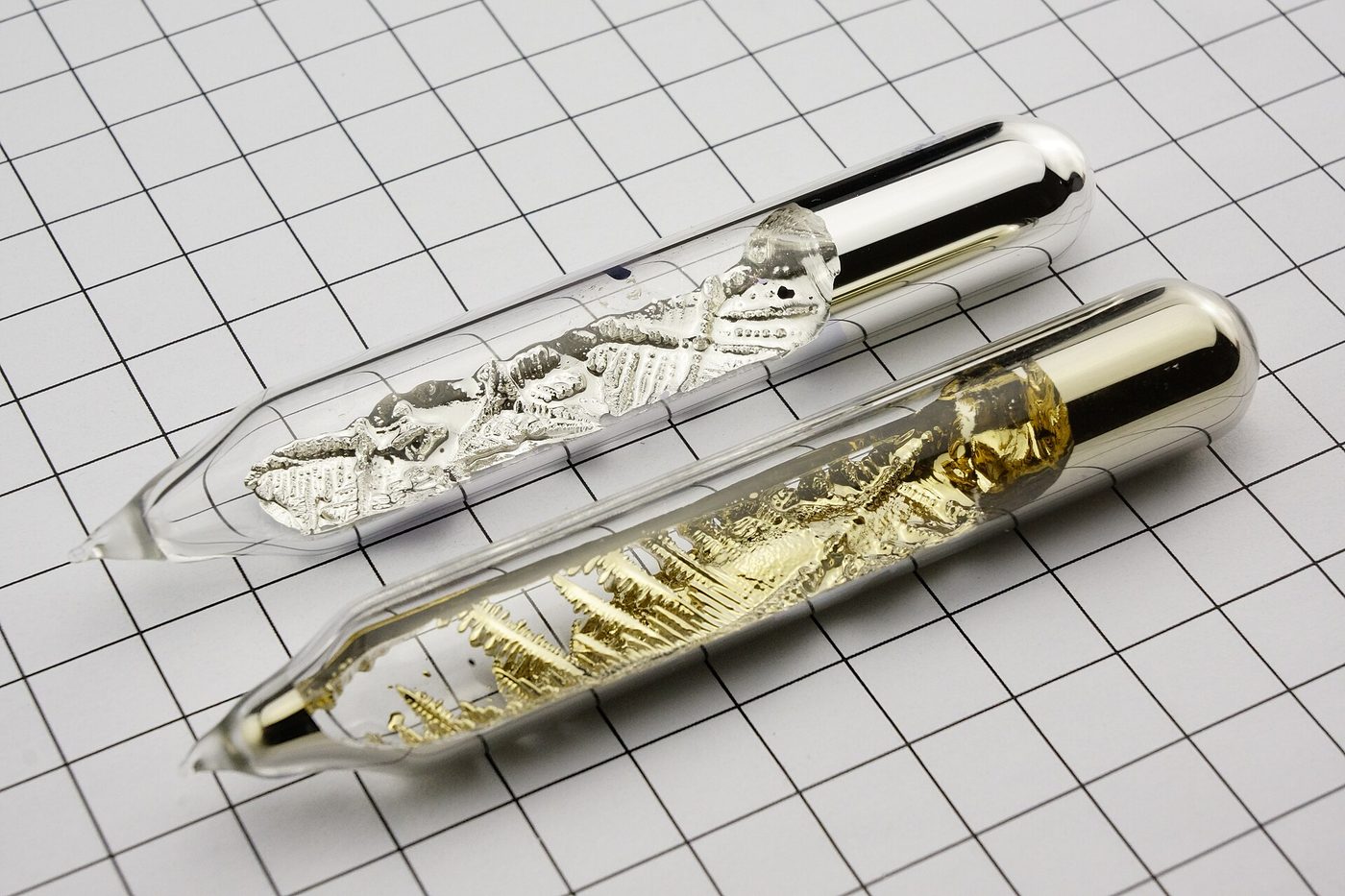
Stretch The alkali metals react with chlorine in the same way as each other too: sodium + chlorine → sodium chloride, potassium + chlorine → potassium chloride. Humphry Davy first made potassium and sodium in 1807, by passing electricity through their melted compounds. Lithium is used in rechargeable batteries; sodium vapour gave old street lamps their orange glow. Francium, at the bottom of the group, was found by Marguerite Perey in Paris in 1939, the last element discovered in nature. Its longest-lived form is half gone in 22 minutes, so nobody has ever had enough to see.
Written to the KS3 national curriculum. Last changed 12 November 2026.
Key words
Say them, spell them, use them in an answer.
- alkali metals
- Group 1
- tarnish
- metal hydroxide
- hydrogen
- alkaline
- universal indicator
- reactivity
Common misconception
Often said“The alkali metals get less reactive as you go down the group.”
In factThey get more reactive: lithium fizzes, sodium melts and whizzes about, potassium bursts into a lilac flame, and rubidium and caesium explode.
Did you know?
Davy’s potassium
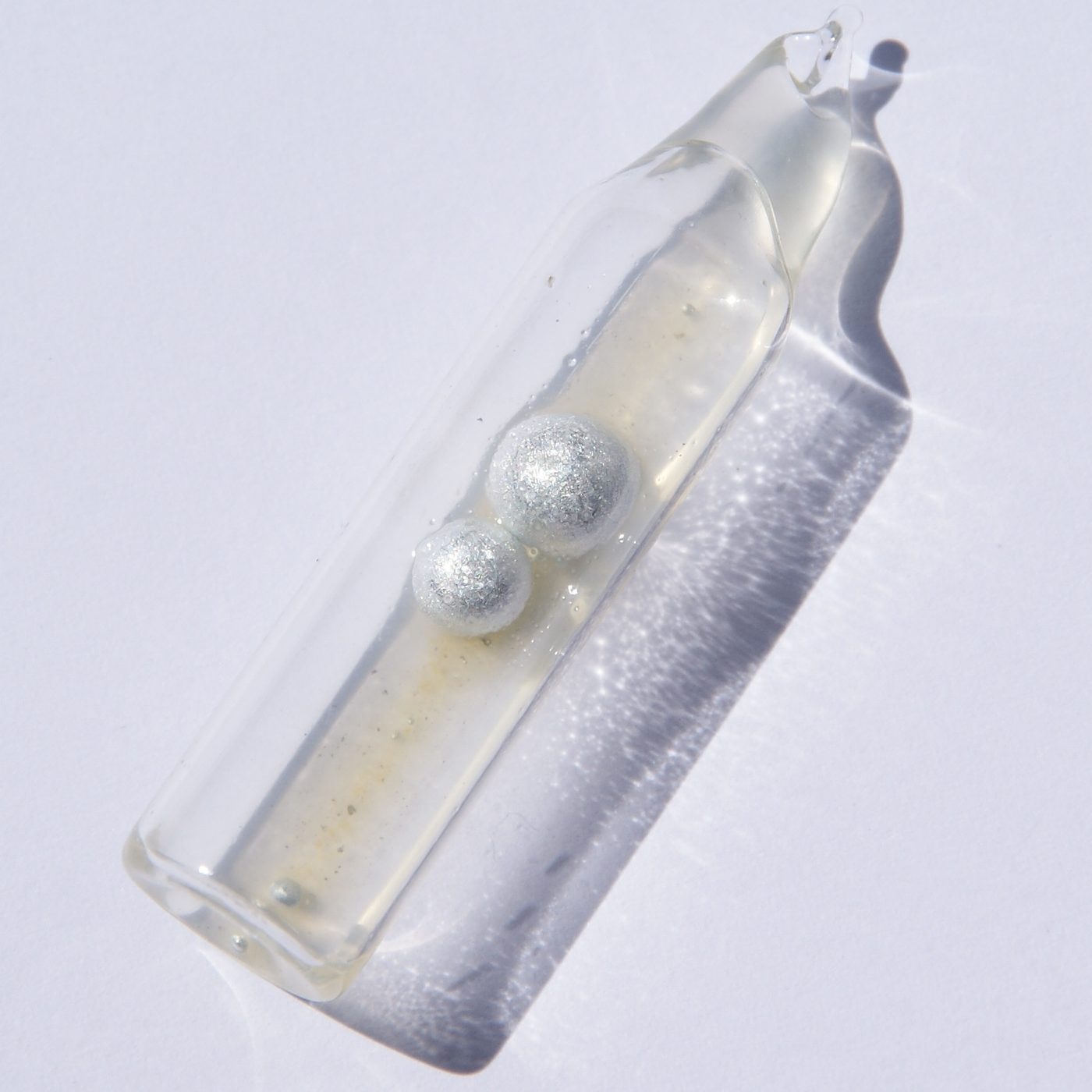
In 1807 Humphry Davy passed electricity through melted potash and made a metal nobody had ever seen: potassium. Little globules of it burst into flame as they appeared, and his cousin wrote that Davy danced about the laboratory in delight. Days later he made sodium the same way.
Try 5 questions
Quick questions on alkali metals, marked as you go. Each one explains the answer.
Question 1 of 5
Why are the Group 1 elements called the alkali metals?
Choose an answer. Each question explains itself.
The homework sheet
About twenty minutes. Everything on it is in the notes above; the answers are on the last page.
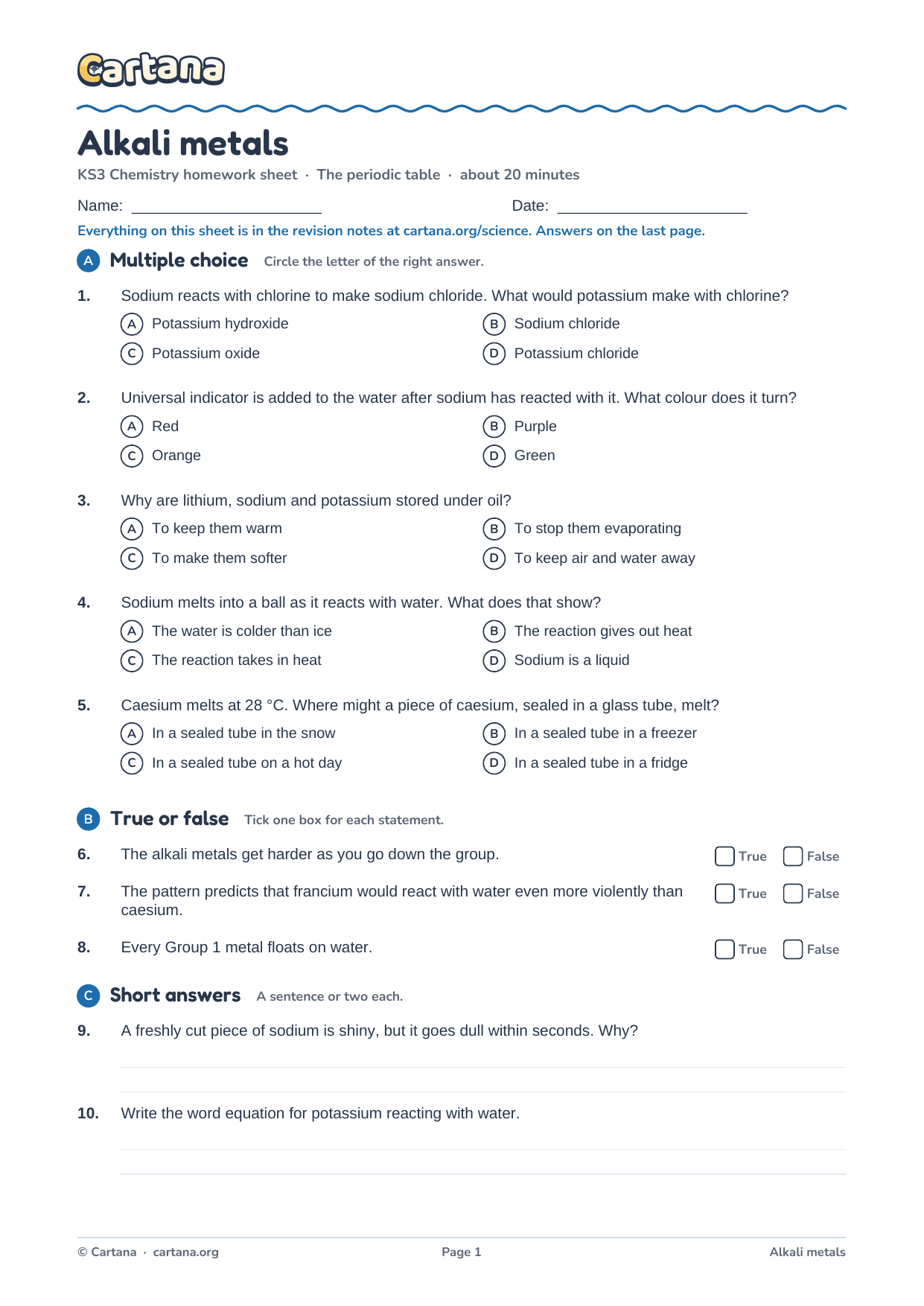
Free homework sheet
Alkali metals homework sheet
17 questions, about twenty minutes, with the answers on the last page: multiple choice, true or false, short answers, key words to define and one to explain in full.
KS3 The periodic table
Revised the whole unit?
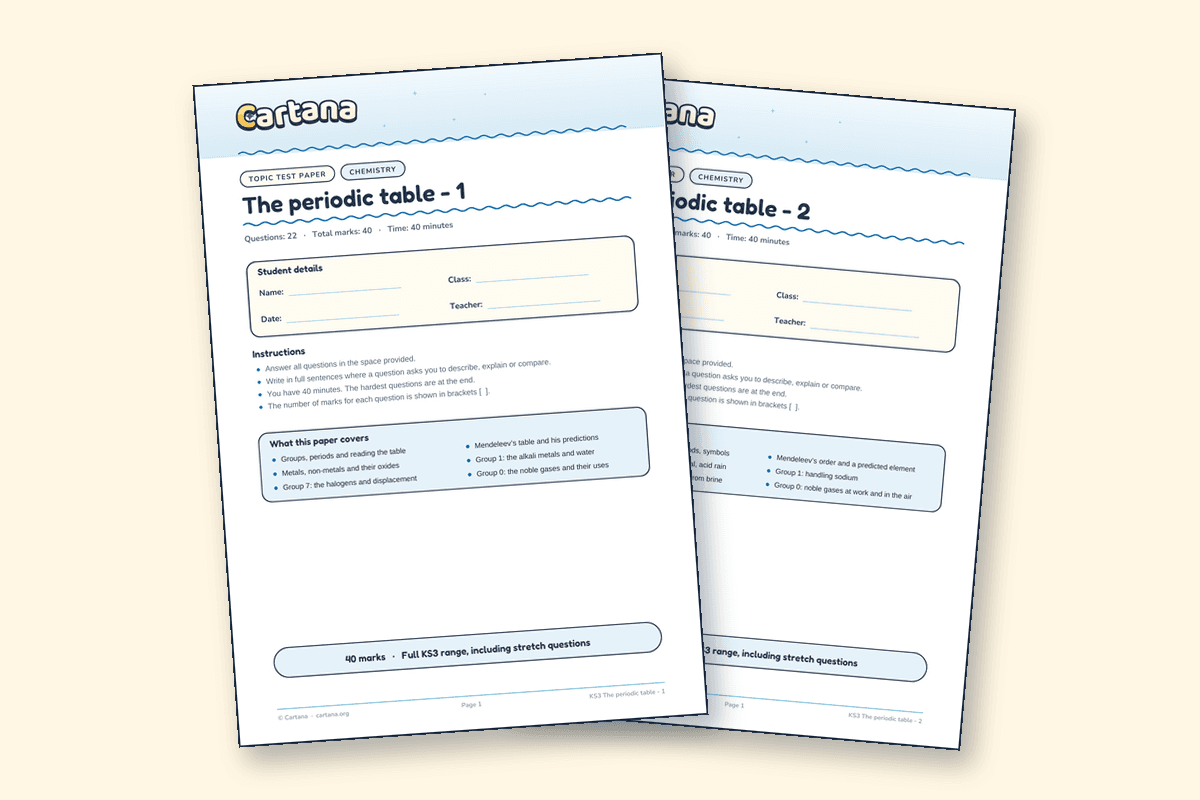
When every topic in the periodic table is done, two different papers test the whole unit, each with its own mark scheme.


 Watch the trailer · 1:06
New from Cartana · Beta test 1–31 December
Revision that feels like an adventure
Cartana is our KS3 learning adventure: sail between islands, answer quick-fire questions and battle bosses. It starts with science, with maths on the way, and launches in 2027. This December a small group of testers gets to play it first.
In the Cartana adventure, alkali metals is Fizzwater Cove, a district of the island Periodica.
- Play the game before its official release
- Help us build it with your feedback
- Earn exclusive in-game items in return
More in this unit