
KS3 Chemistry · The periodic table
Metals and non-metals
- The properties of metals and non-metals: shiny or dull, conductors or insulators, malleable, brittle, sonorous
- The stepped line that divides them on the table, and elements beside it such as silicon
- The exceptions: mercury, sodium, gallium and graphite, and why only iron, cobalt and nickel are magnetic
- Metal oxides make alkaline solutions, non-metal oxides acidic ones, and how that causes acid rain
- 3 min read
- 5 quick questions
- Free homework sheet
- Years 7 to 9
Revision notes
Most elements are metals. The non-metals are on the right of the periodic table, beyond the stepped line (the staircase). Elements right beside the line, such as silicon, have some properties of each.
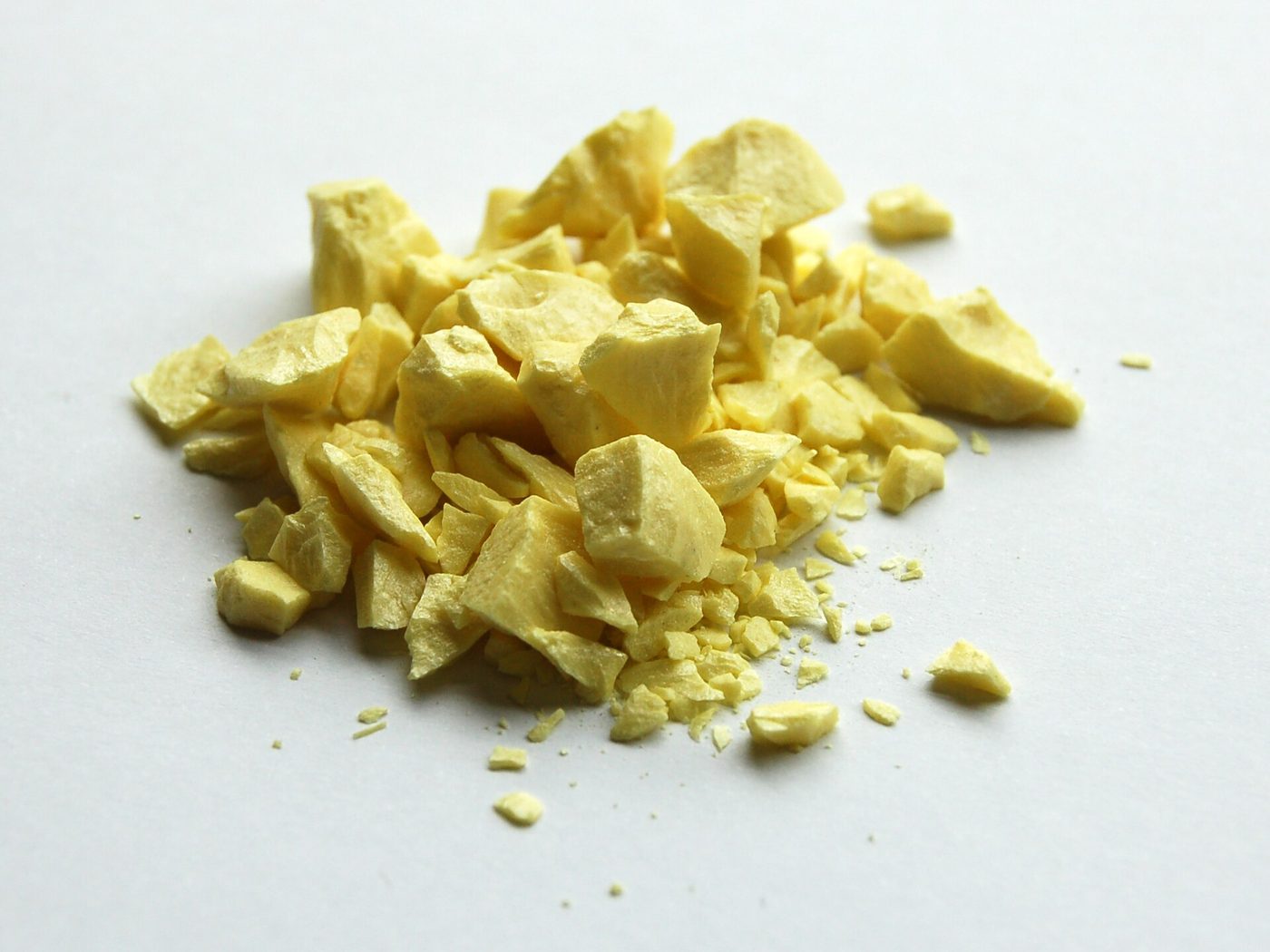
| Metals | Non-metals | |
|---|---|---|
| Look | Shiny | Dull |
| Heat and electricity | Good conductors | Poor conductors (insulators) |
| When hit | Malleable: can be hammered into shape without breaking. Ductile: can be drawn into wires | Brittle when solid: they shatter or crumble |
| Sound | Sonorous: they ring when struck | Not sonorous |
| Melting and boiling points | Mostly high; all solid at room temperature except mercury | Mostly low; many are gases at room temperature; bromine is the only liquid |
| Density | Mostly high | Mostly low |
Exceptions that catch people out. Mercury is a metal but a liquid at room temperature (it melts at −39 °C). Sodium is a metal but soft enough to cut and less dense than water, so it floats. Gallium melts at about 30 °C. Graphite, a form of carbon, is a non-metal but conducts electricity. Iodine is a non-metal but its crystals look shiny. Only iron, cobalt and nickel are magnetic (and steel, which is mostly iron): most metals are not.
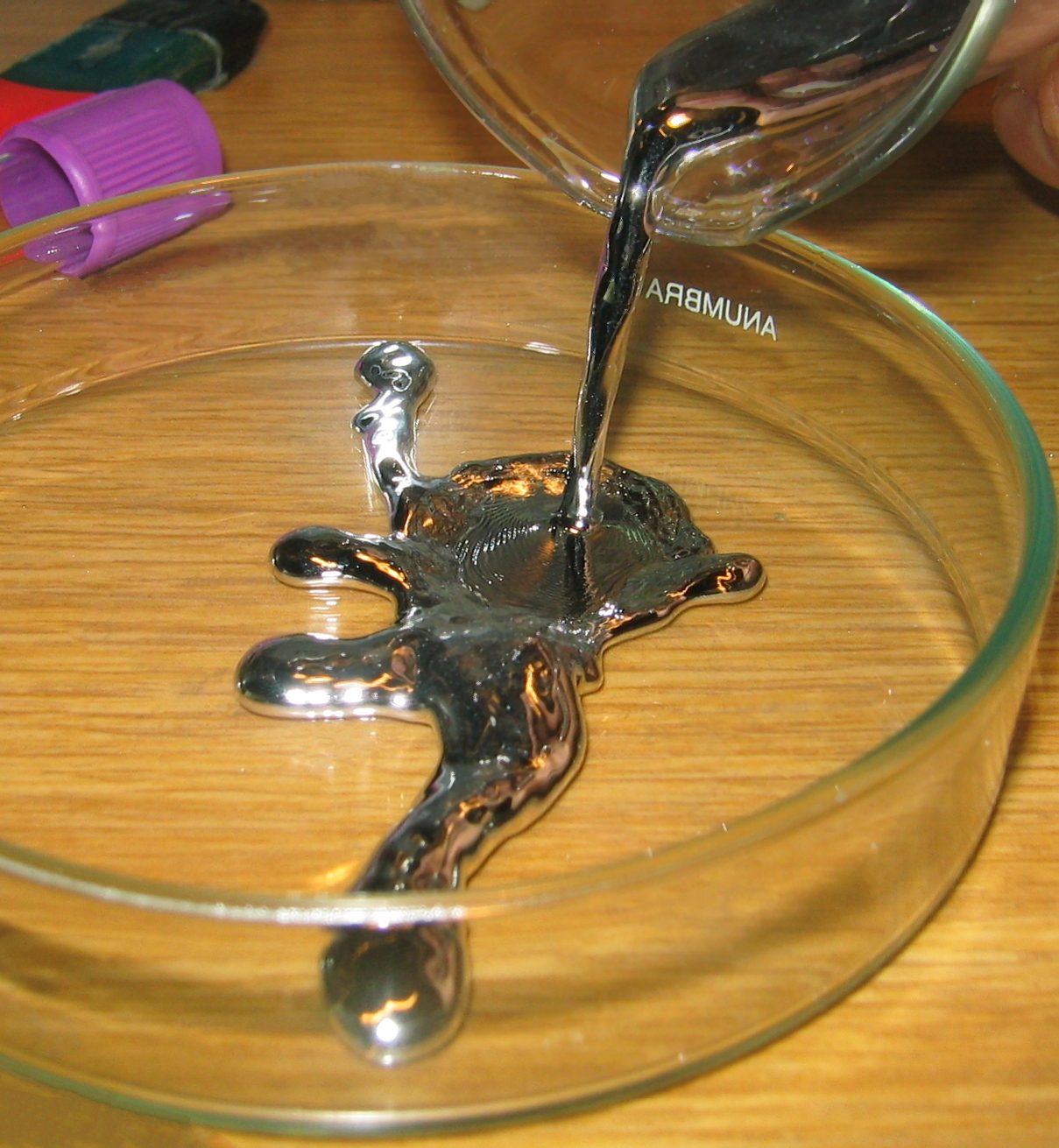
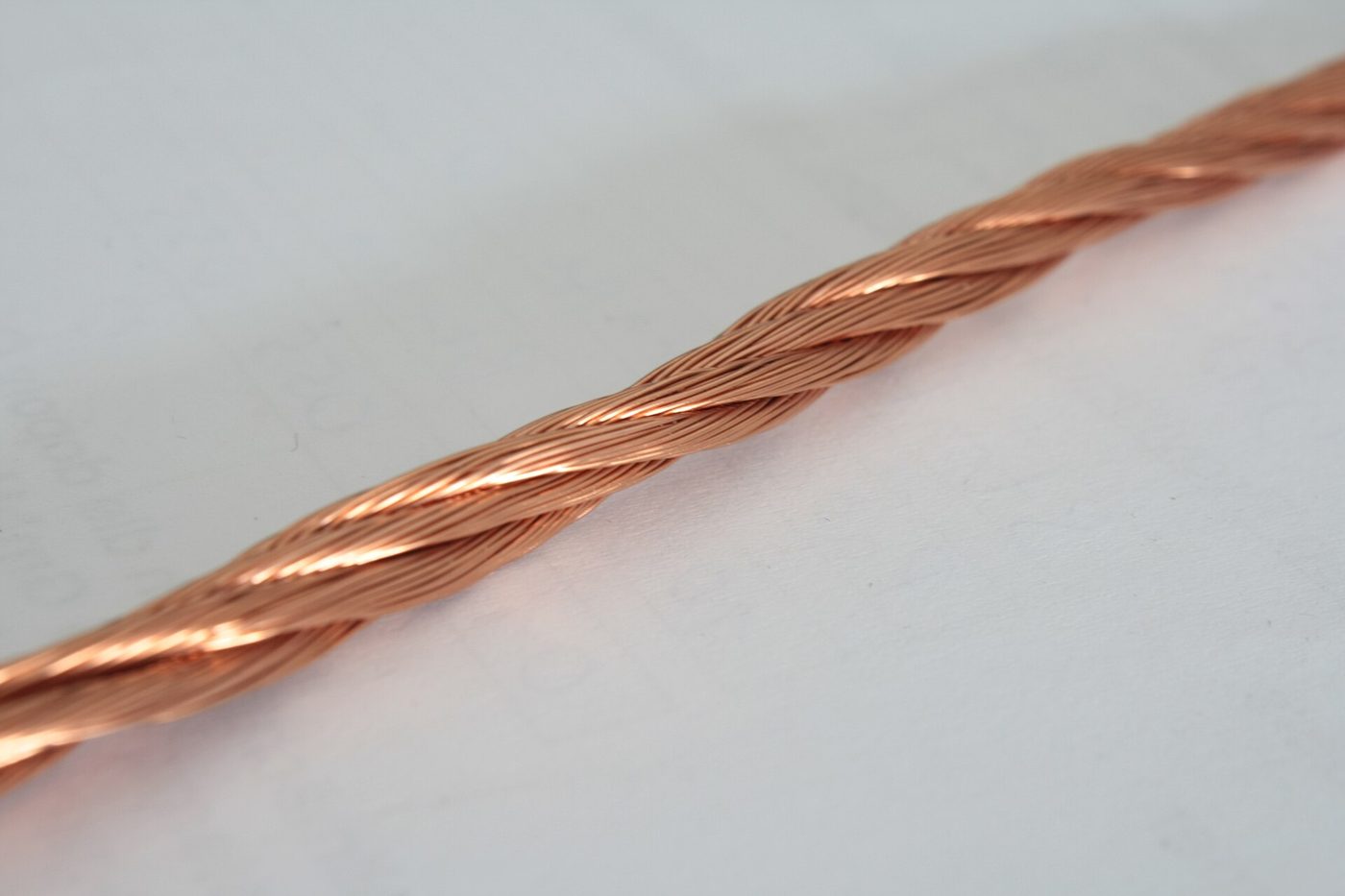
Uses follow properties. Copper for electrical wires (a good conductor, and ductile); aluminium for aircraft (a low density for a metal, and it does not rust); steel for a bell (sonorous); metal saucepans with plastic or wooden handles (metals conduct heat, plastic and wood are insulators); tungsten for the glowing wire in old light bulbs (it melts at about 3,400 °C).
Oxides. An oxide is a compound of an element with oxygen: when an element burns in air it makes its oxide (magnesium + oxygen → magnesium oxide). Metal oxides are bases: they neutralise acids. Those that dissolve in water make alkaline solutions, which turn universal indicator blue or purple. An alkali is a base that dissolves in water. Non-metal oxides, such as carbon dioxide and sulfur dioxide, dissolve in water to make acidic solutions, which turn universal indicator red, orange or yellow. So you can tell whether an element is a metal or a non-metal from its oxide.
Acid rain. Coal and oil contain some sulfur. When they burn, the sulfur makes sulfur dioxide, which dissolves in the water in clouds and makes the rain acidic (oxides of nitrogen from hot engines add to it). Acid rain wears away limestone buildings, damages trees and harms the life in lakes. Taking the sulfur out of fuels, or out of the waste gases, reduces it; taller chimneys only carry it further.
Stretch Rust is a form of iron oxide: iron reacts with oxygen and water. Silicon, beside the stepped line, is shiny like a metal, brittle like a non-metal, and conducts electricity a little, which is why it is used in computer chips. Copper oxide is a base that does not dissolve, so it leaves universal indicator green, but it still neutralises acids.
Written to the KS3 national curriculum. Last changed 12 November 2026.
Key words
Say them, spell them, use them in an answer.
- metal
- non-metal
- conductor
- insulator
- malleable
- ductile
- sonorous
- brittle
- oxide
- acid rain
Common misconception
Often said“All metals are magnetic.”
In factOnly three metals are magnetic: iron, cobalt and nickel (and steel, which is mostly iron). Copper, aluminium, gold and silver are not.
Did you know?
The disappearing spoon
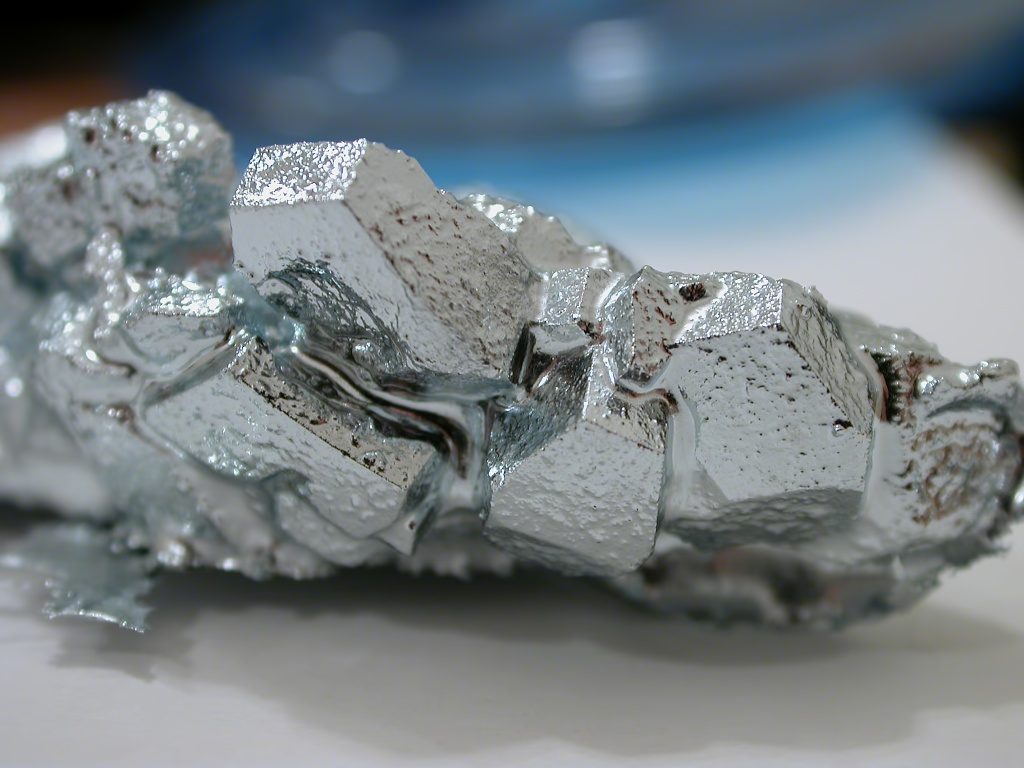
Gallium is a metal that melts at 29.8 °C, below the temperature of your hand. A spoon made of it melts in a cup of hot tea, which is an old chemists’ joke. Mendeleev predicted it as eka-aluminium in 1871, and Paul-Émile Lecoq de Boisbaudran found it in 1875.
Photo: foobar (English Wikipedia), CC BY-SA 3.0, via Wikimedia Commons
Try 5 questions
Quick questions on metals and non-metals, marked as you go. Each one explains the answer.
Question 1 of 5
Non-metals are usually poor conductors of heat and electricity.
Choose an answer. Each question explains itself.
The homework sheet
About twenty minutes. Everything on it is in the notes above; the answers are on the last page.
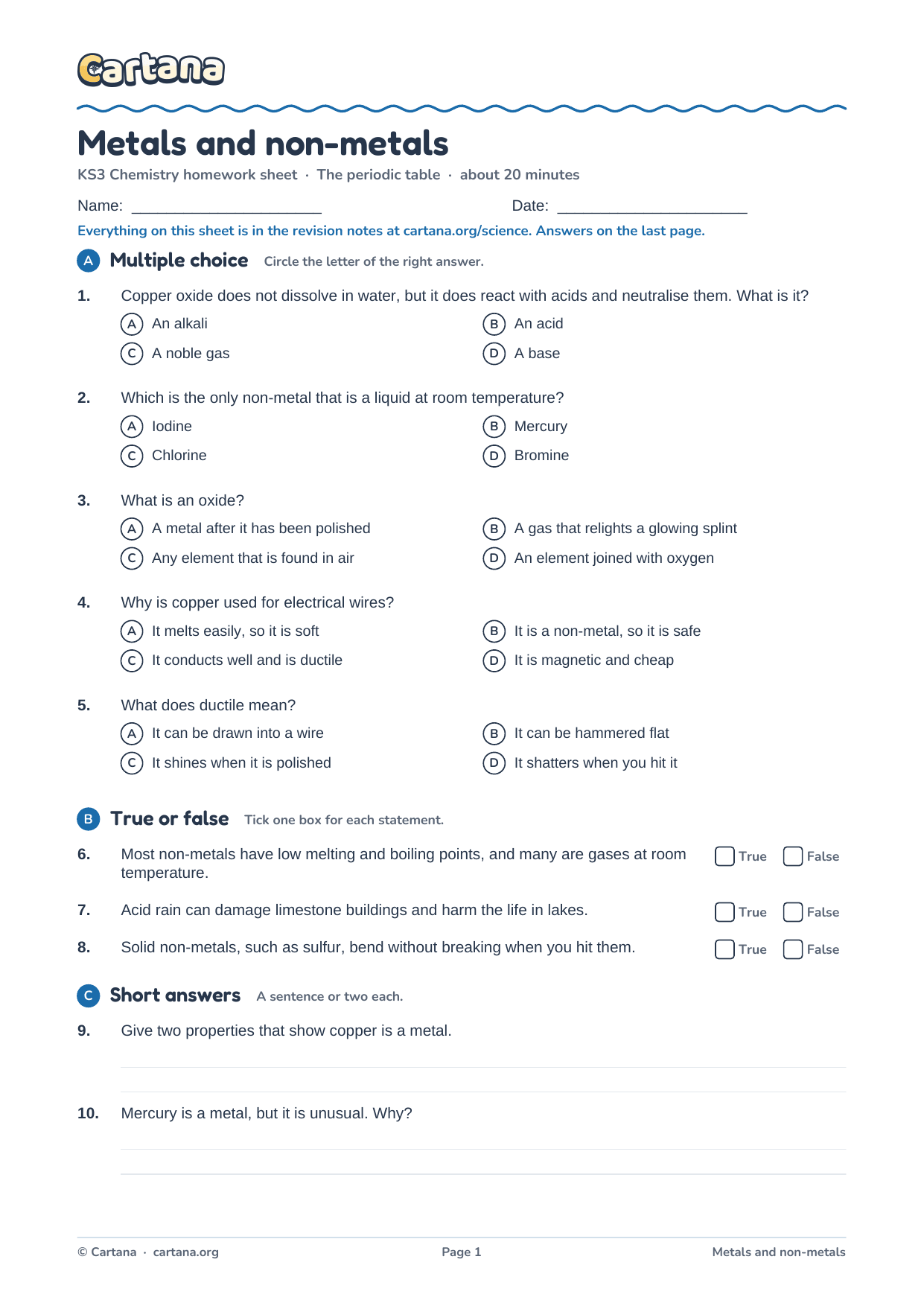
Free homework sheet
Metals and non-metals homework sheet
17 questions, about twenty minutes, with the answers on the last page: multiple choice, true or false, short answers, key words to define and one to explain in full.
KS3 The periodic table
Revised the whole unit?
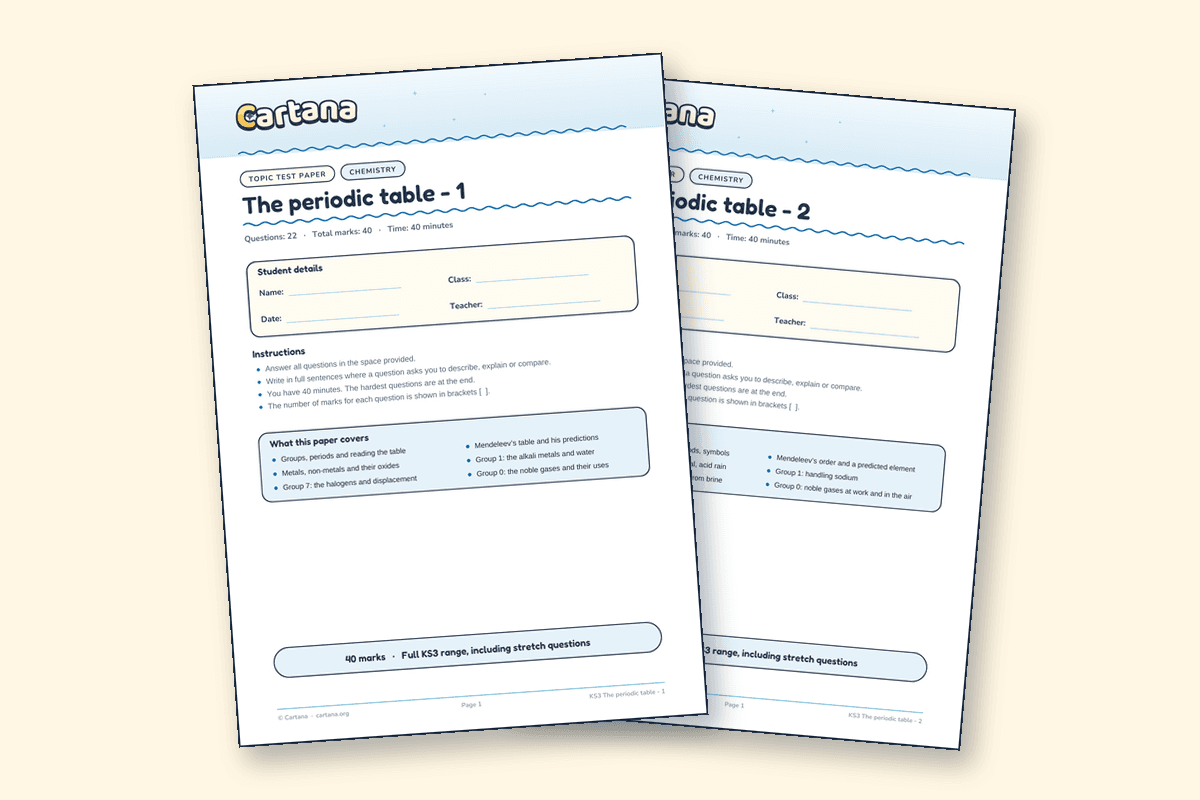
When every topic in the periodic table is done, two different papers test the whole unit, each with its own mark scheme.


 Watch the trailer · 1:06
New from Cartana · Beta test 1–31 December
Revision that feels like an adventure
Cartana is our KS3 learning adventure: sail between islands, answer quick-fire questions and battle bosses. It starts with science, with maths on the way, and launches in 2027. This December a small group of testers gets to play it first.
In the Cartana adventure, metals and non-metals is the Staircase, a district of the island Periodica.
- Play the game before its official release
- Help us build it with your feedback
- Earn exclusive in-game items in return
More in this unit