
KS3 Chemistry · The periodic table
Halogens
- The Group 7 elements: fluorine, chlorine, bromine and iodine, their colours and their states
- Using melting and boiling points to say whether a halogen is a solid, a liquid or a gas
- The trends down the group: darker, higher melting points and less reactive
- Displacement reactions, the uses of the halogens, and predicting astatine
- 3 min read
- 5 quick questions
- Free homework sheet
- Years 7 to 9
Revision notes
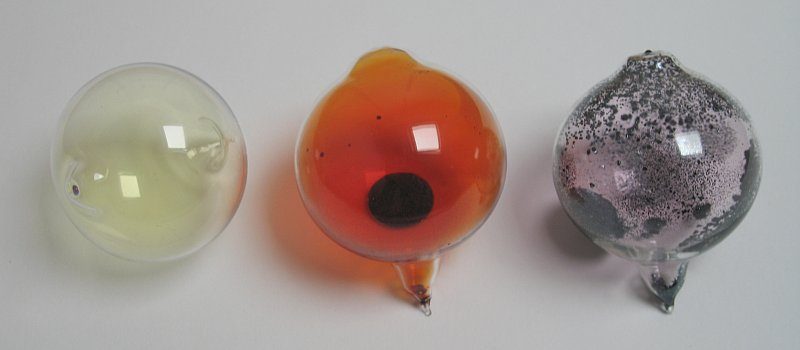
Group 7, the second column from the right, holds the halogens: fluorine, chlorine, bromine and iodine, then astatine. They are non-metals, they are coloured, and they are toxic, so experiments with them are done in a fume cupboard. “Halogen” means salt-former: with metals they make salts, for example sodium + chlorine → sodium chloride, which is table salt.
| Halogen | At room temperature | Melts at (°C) | Boils at (°C) |
|---|---|---|---|
| Fluorine | Pale yellow gas | −220 | −188 |
| Chlorine | Pale green gas | −101 | −34 |
| Bromine | Red-brown liquid | −7 | 59 |
| Iodine | Grey-black solid; gives a purple vapour when warmed | 114 | 184 |
Solid, liquid or gas? Compare the temperature with the melting and boiling points. Below the melting point it is a solid; between the two it is a liquid; above the boiling point it is a gas. At 20 °C bromine is a liquid, because 20 °C is between −7 °C and 59 °C.
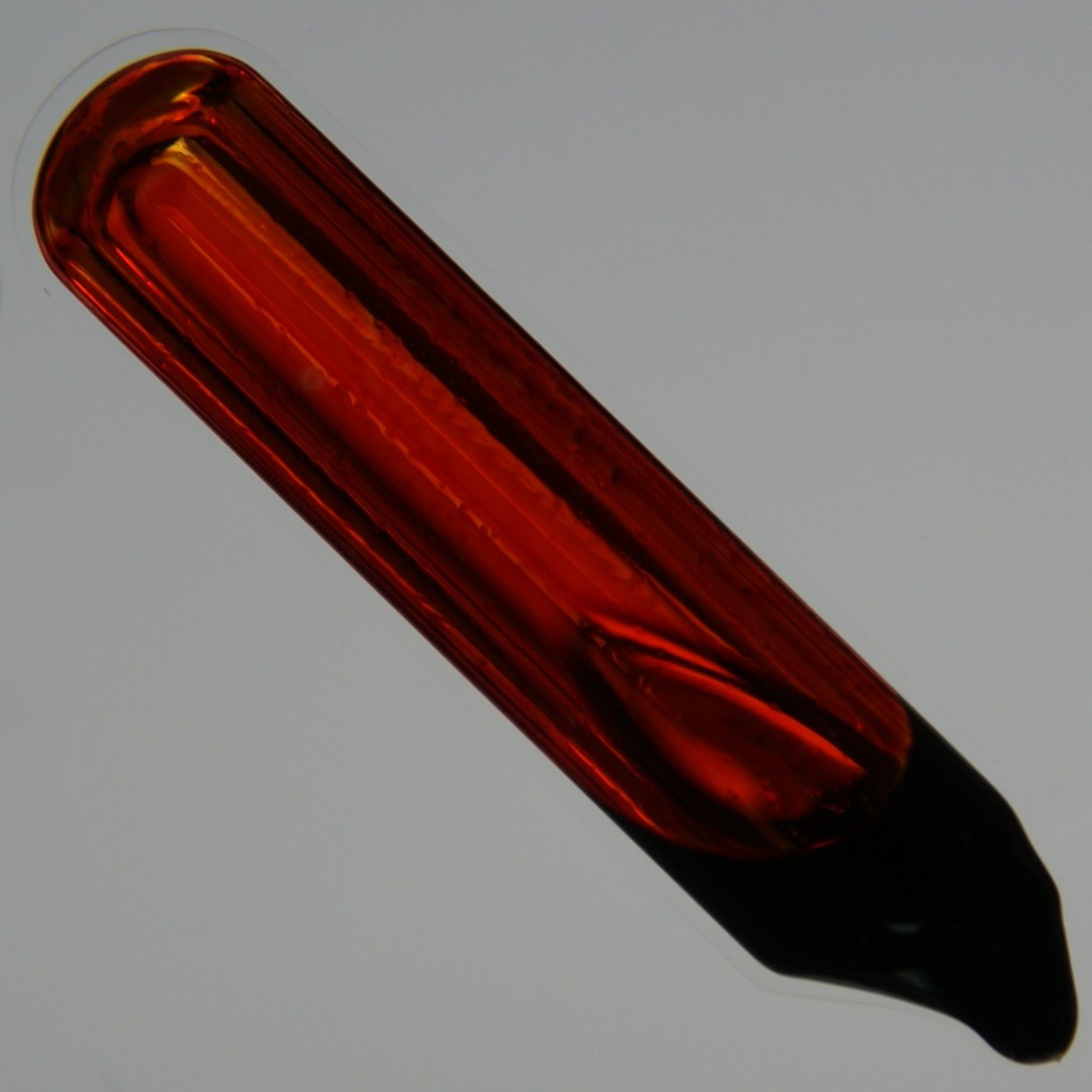
Trends down Group 7. Going down the group, the melting and boiling points increase (gas, gas, liquid, solid), the colour gets darker, and the reactivity decreases: fluorine is the most reactive and iodine the least. This is the opposite way to Group 1.
Displacement. A more reactive halogen pushes a less reactive one out of its compound. Chlorine water added to colourless potassium bromide solution turns it orange, as bromine is made: chlorine + potassium bromide → potassium chloride + bromine. Chlorine also displaces iodine (the solution turns brown), and bromine displaces iodine. Iodine displaces neither, because it is the least reactive of the three.
| Added to | potassium chloride | potassium bromide | potassium iodide |
|---|---|---|---|
| Chlorine water | (not tested) | bromine forms (orange) | iodine forms (brown) |
| Bromine water | no reaction | (not tested) | iodine forms (brown) |
| Iodine solution | no reaction | no reaction | (not tested) |
Uses. Chlorine kills germs in drinking water and swimming pools, and is used to make bleach and PVC. Fluoride, from fluorine, is added to toothpaste to help protect teeth. Iodine solution is an antiseptic for cuts.
Predicting astatine. Astatine is below iodine, so the pattern predicts that it is a dark solid, with higher melting and boiling points than iodine, and less reactive than iodine. Astatine is radioactive and breaks down within hours, so there is only a tiny amount on Earth at any time and its properties have hardly been measured.
Stretch Chlorine bleaches damp litmus paper: that is the test for chlorine. Hot iron wool glows brightly in chlorine, less in bromine and only slowly reacts with iodine, more evidence for the trend. Fluorine is far too reactive for a school laboratory. Iodine was found in 1811 by Bernard Courtois, in the ash of burnt seaweed.
Written to the KS3 national curriculum. Last changed 12 November 2026.
Key words
Say them, spell them, use them in an answer.
- halogens
- Group 7
- salt
- toxic
- displacement
- reactivity
- chlorine
- bromine
- iodine
Common misconception
Often said“Every group gets more reactive as you go down.”
In factGroup 1 does, but Group 7 goes the other way: fluorine is the most reactive halogen and iodine the least, which is why chlorine can push bromine and iodine out of their salts.
Did you know?
Courtois’s purple smoke
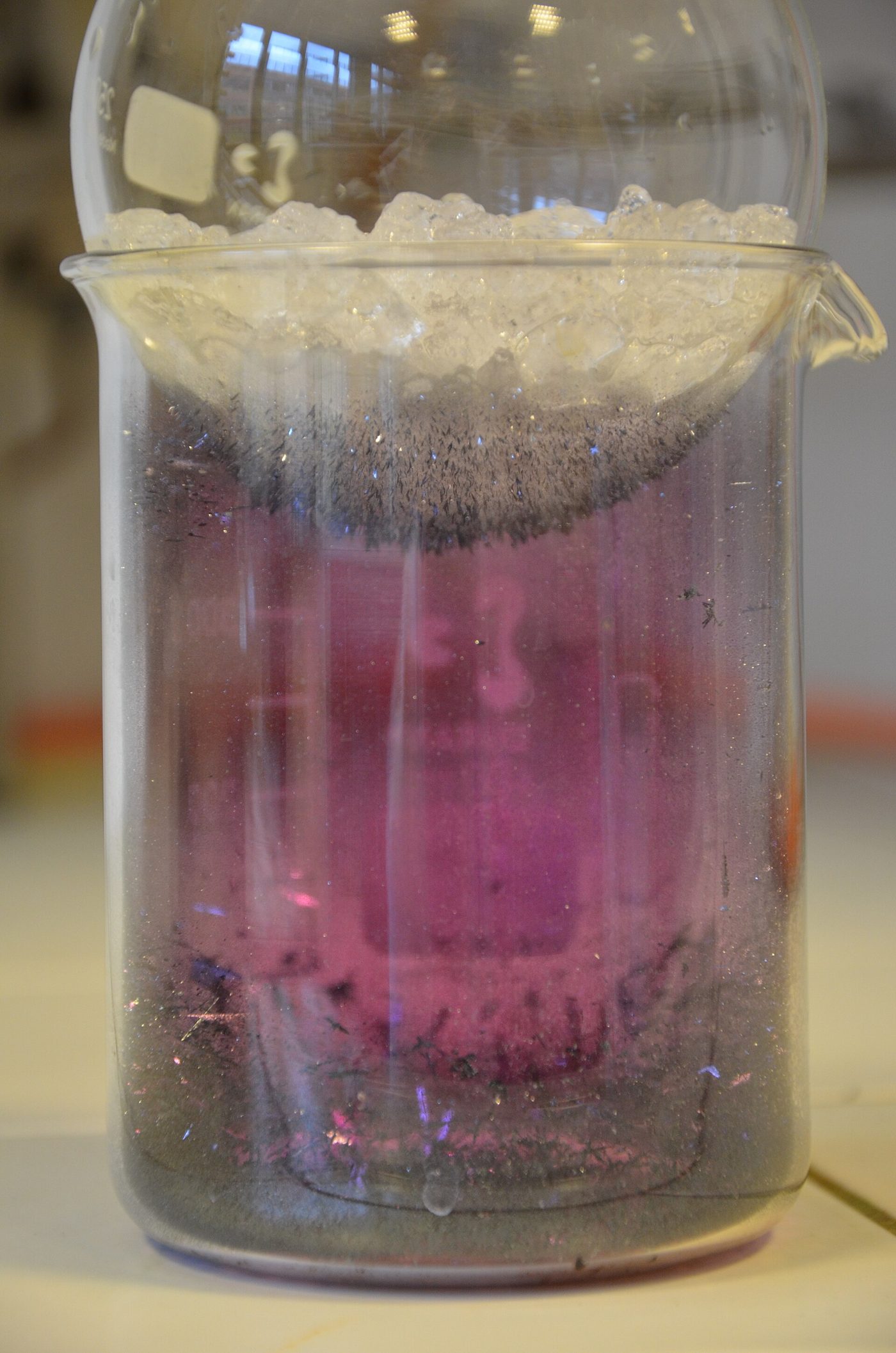
In 1811 Bernard Courtois was making saltpetre for gunpowder from seaweed ash in Paris. He added acid to the ash and a violet vapour rose, which settled as dark crystals on cold metal. It was a new element, iodine, named from the Greek for violet.
Try 5 questions
Quick questions on halogens, marked as you go. Each one explains the answer.
Question 1 of 5
Iodine crystals are warmed gently. What colour is the vapour that rises?
Choose an answer. Each question explains itself.
The homework sheet
About twenty minutes. Everything on it is in the notes above; the answers are on the last page.
Free homework sheet
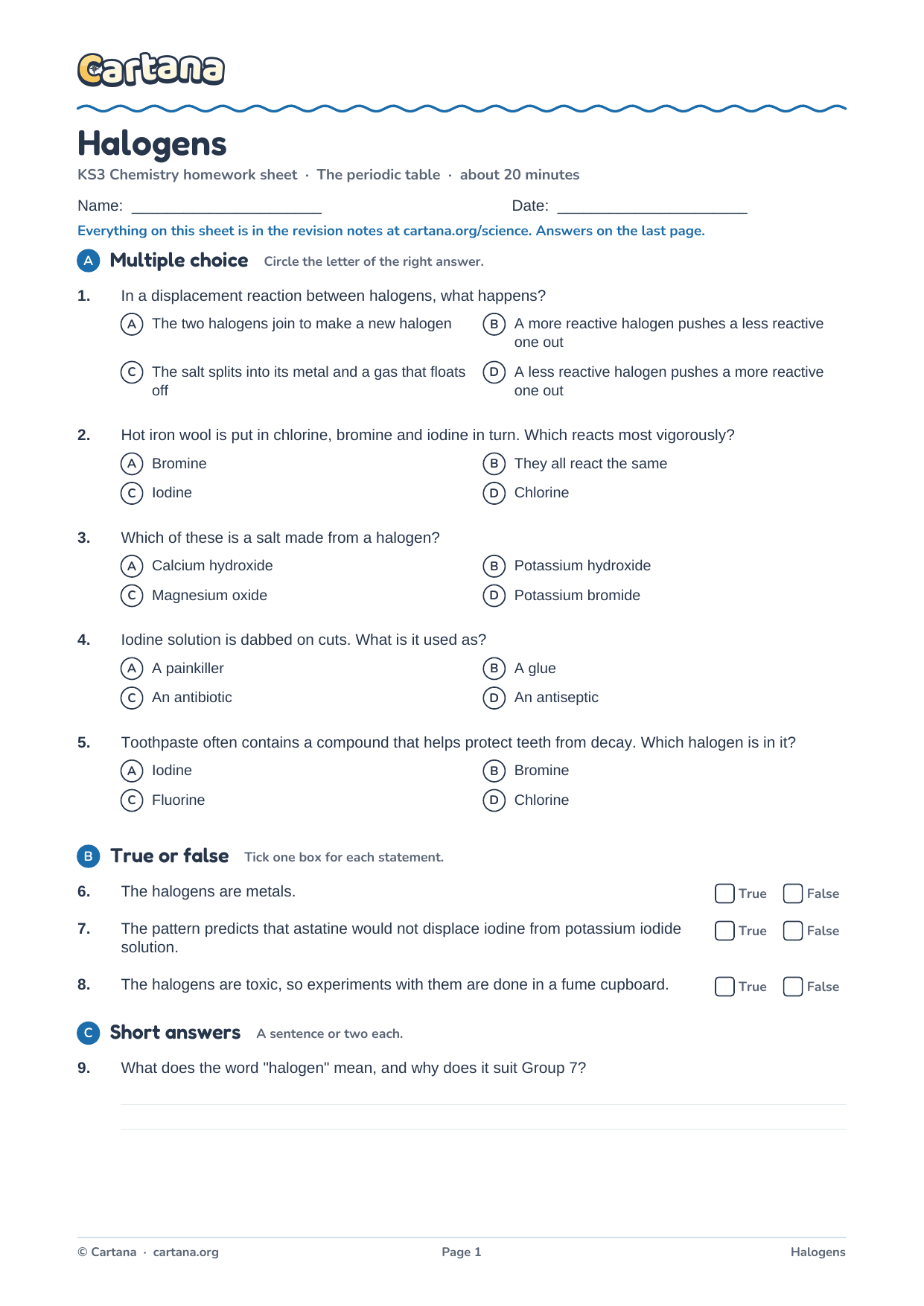
Halogens homework sheet
17 questions, about twenty minutes, with the answers on the last page: multiple choice, true or false, short answers, key words to define and one to explain in full.
KS3 The periodic table
Revised the whole unit?
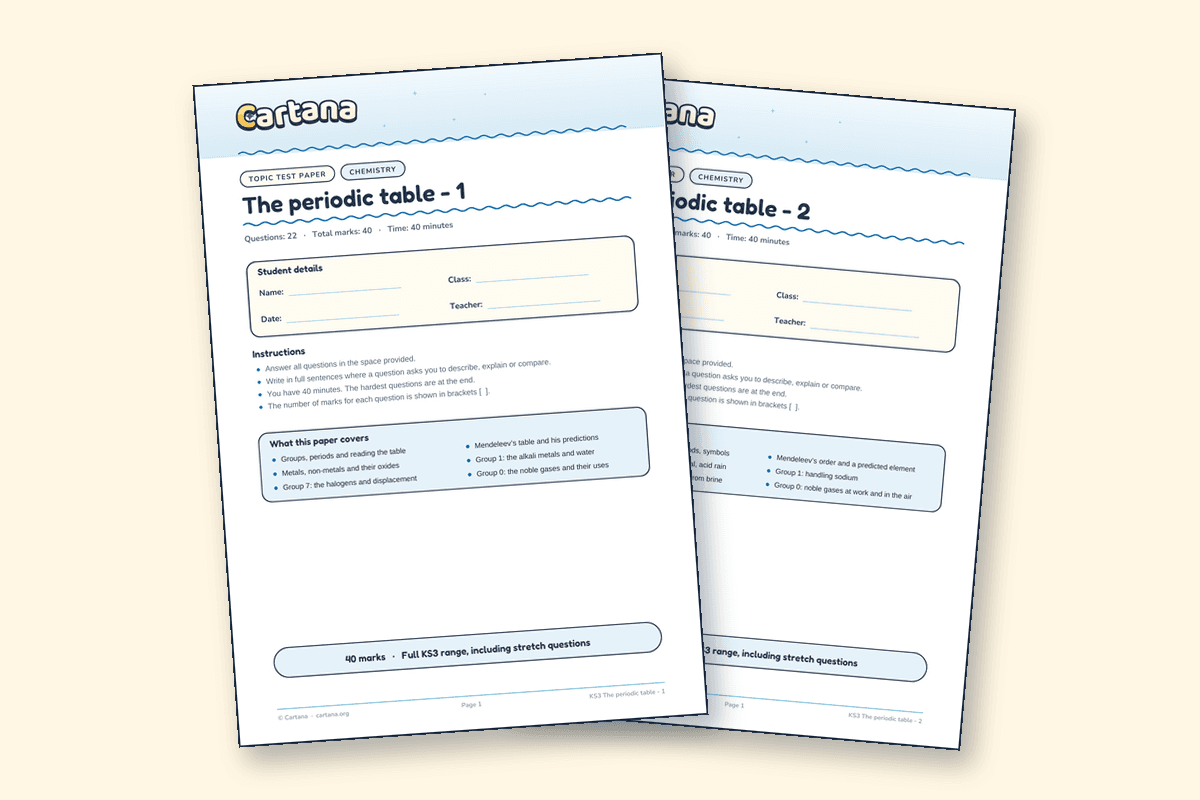
When every topic in the periodic table is done, two different papers test the whole unit, each with its own mark scheme.


 Watch the trailer · 1:06
New from Cartana · Beta test 1–31 December
Revision that feels like an adventure
Cartana is our KS3 learning adventure: sail between islands, answer quick-fire questions and battle bosses. It starts with science, with maths on the way, and launches in 2027. This December a small group of testers gets to play it first.
In the Cartana adventure, halogens is the Salt Yard, a district of the island Periodica.
- Play the game before its official release
- Help us build it with your feedback
- Earn exclusive in-game items in return
More in this unit