
KS3 Chemistry · Particles & states of matter
Gas pressure
- What causes gas pressure: particles colliding with the walls of their container
- Why heating a gas, squashing it or adding more of it raises its pressure
- Everyday examples: tyres, aerosol cans, balloons and footballs
- Atmospheric pressure in brief, and the collapsing can
- 4 min read
- 5 quick questions
- Free homework sheet
- Years 7 to 9
Revision notes
Gas pressure is the push of a gas on the walls of its container. It is caused by the gas particles hitting the walls: the more often and the harder they hit, the higher the pressure.
What causes gas pressure?
The particles of a gas move fast in all directions. Each time one hits a wall of its container it bounces off, and the collision gives the wall a tiny push, a force. Billions of collisions every second, on every part of the wall, add up to a steady push. The pressure is the force on each square metre of wall. It is measured in pascals (Pa): one pascal is a force of one newton on one square metre.
The particles move in every direction, so a gas pushes equally on every part of its container. That is why a balloon blows up round.
Why does heating a gas increase its pressure?
When a gas in a sealed, rigid container is heated, its particles move faster. They hit the walls more often, and harder, so the pressure goes up. Cooling the gas does the opposite.
- A car’s tyre pressure is higher after a long drive, because the air inside has warmed up.
- An aerosol can carries a warning not to heat it: the pressure inside could burst it.
- A football left out on a frosty night feels softer, because the air inside has cooled.
If the container can stretch, like a balloon, the higher pressure pushes it bigger instead: the gas expands.
Why does squashing a gas increase its pressure?
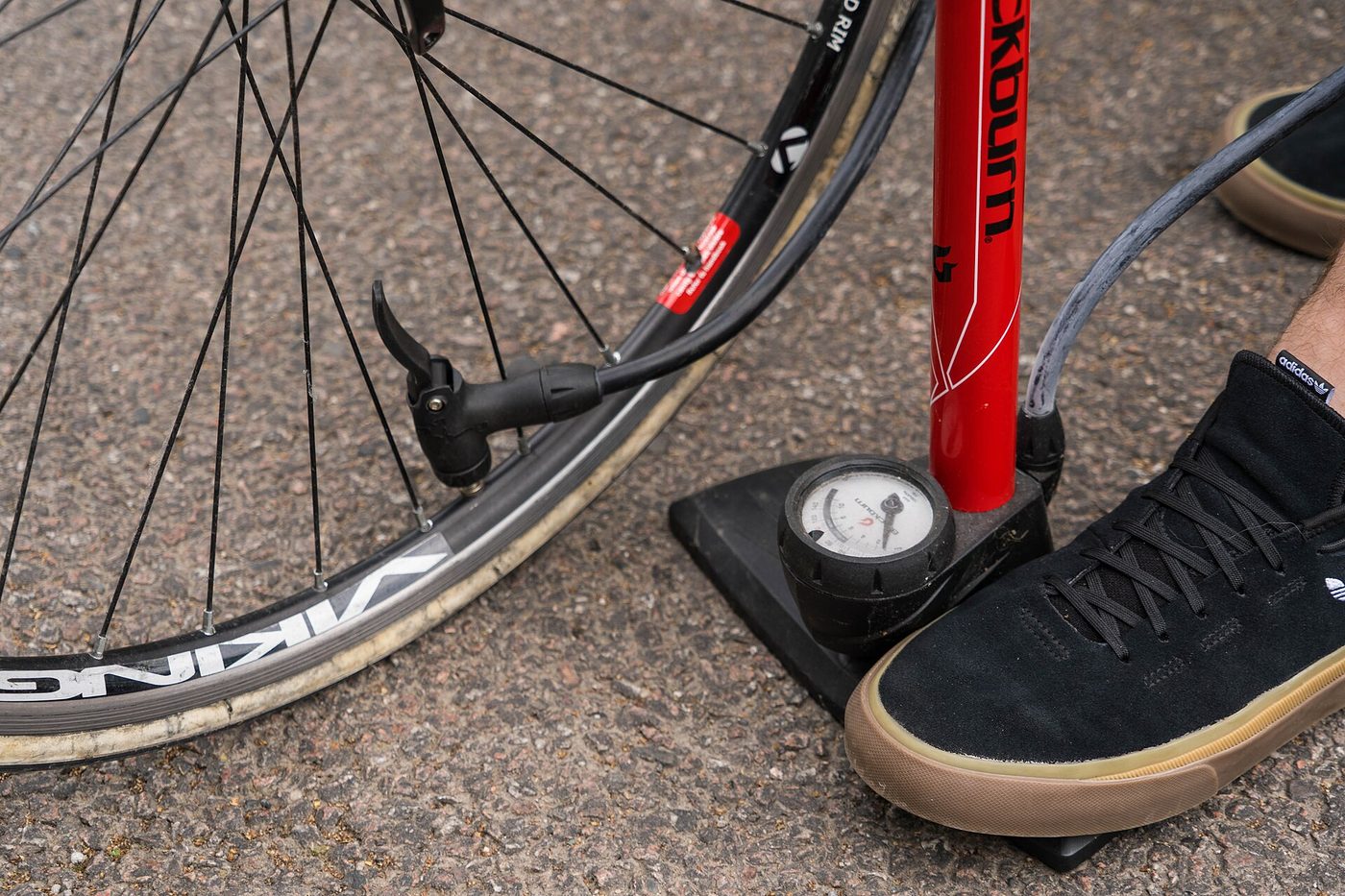
Push a gas into a smaller volume and the same particles have less room. They reach the walls more often, so there are more collisions each second and the pressure goes up. Put your finger over the end of a bicycle pump and push: it gets harder and harder.
Adding more gas also raises the pressure: pumping up a tyre puts more particles inside to hit the walls.
| Change | What happens |
|---|---|
| Heat it | The particles move faster and hit the walls harder and more often: the pressure goes up |
| Squash it | The particles have less room and hit the walls more often: the pressure goes up |
| Add gas | More particles hit the walls: the pressure goes up |
| Cool it | The particles move more slowly and hit the walls less hard and less often: the pressure goes down |
What is atmospheric pressure?
The air around us is a gas too, and its particles hit everything they touch. This atmospheric pressure is about 100,000 Pa at sea level, and less higher up, where there is less air above. We do not notice it because the air and fluids inside our bodies push back just as hard.
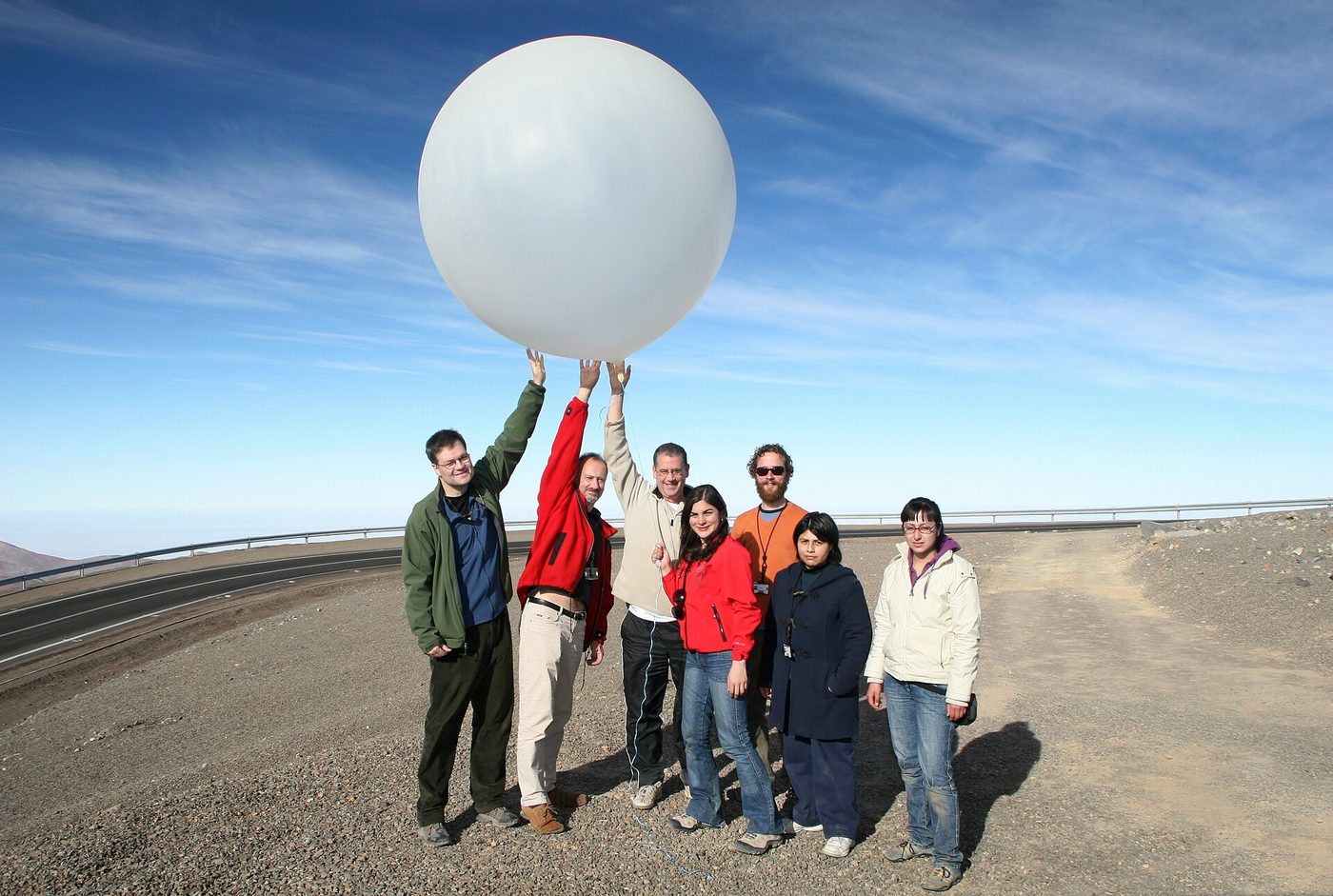
The collapsing can: a teacher boils a little water in an open drinks can, so steam pushes out most of the air, then quickly turns it upside down into cold water. The steam condenses, leaving very few particles inside to push back, so the air pressure outside crushes the can with a bang.
Stretch If the temperature stays the same, halving the volume of a gas doubles its pressure: pressure × volume stays the same (Boyle’s law, 1662). For example, a syringe holds 60 cm³ of air at 100 kPa (100 kilopascals, which is 100,000 Pa). Push the plunger in until the air takes up 30 cm³, and the pressure becomes 60 × 100 ÷ 30 = 200 kPa.
Written to the KS3 national curriculum. Last changed 13 November 2026.
Key words
Say them, spell them, use them in an answer.
- gas pressure
- collision
- pressure
- pascal
- volume
- temperature
- expand
- atmospheric pressure
Common misconception
Often said“When air pressure crushes a can, the vacuum inside sucks it in.”
In factNothing inside can pull. The air outside pushes on the can all the time, and normally the air inside pushes back just as hard. Take most of the particles away from inside, and the push from outside wins.
Did you know?
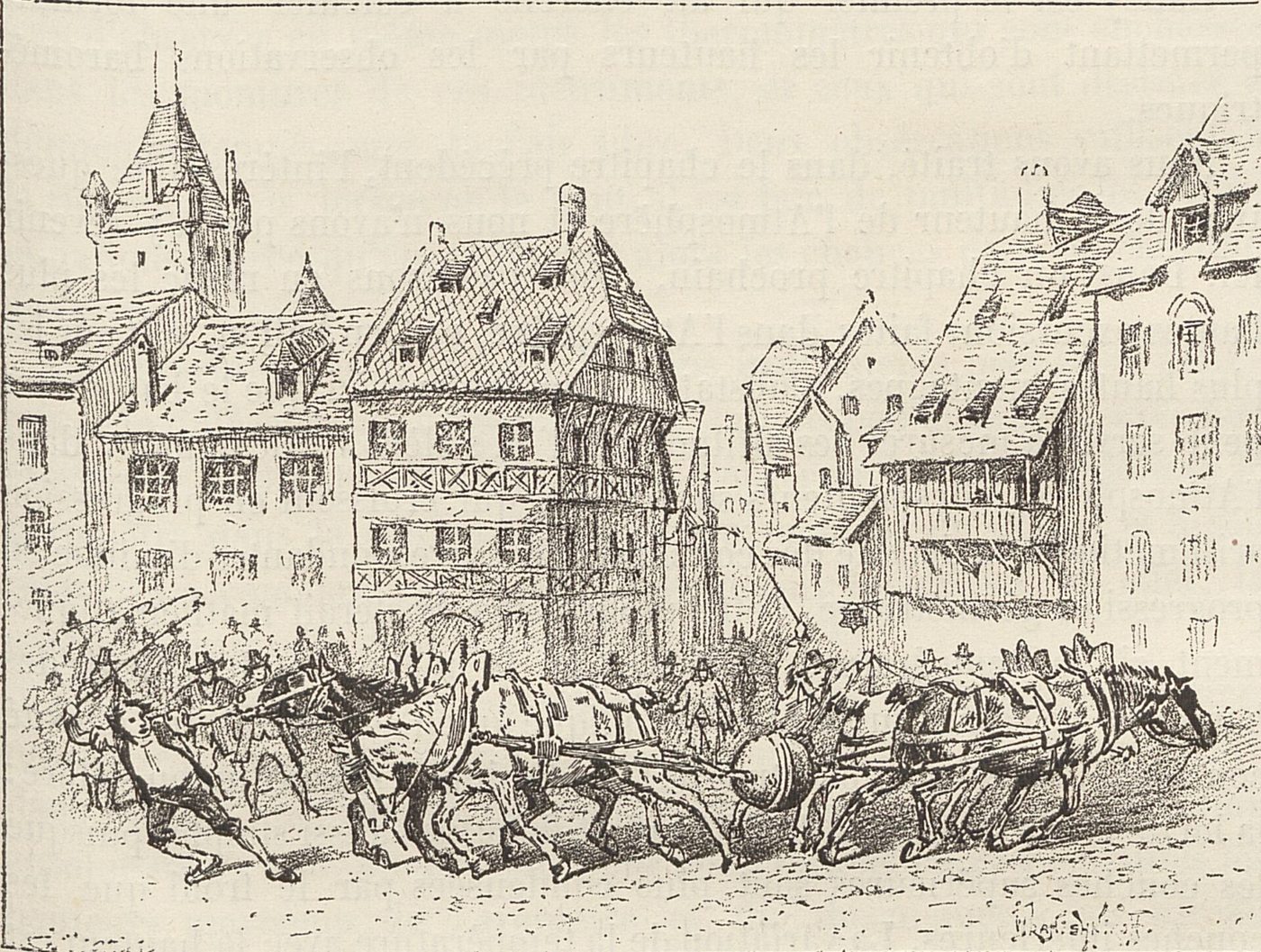
The Magdeburg hemispheres
In 1654 Otto von Guericke put two metal half-spheres together and pumped the air out from between them. Teams of horses pulling in opposite directions could not separate them: the air outside was pressing them together. When he let the air back in, they fell apart.
Photo: Ivan Pranishnikoff, Public domain, via Wikimedia Commons
Try 5 questions
Quick questions on gas pressure, marked as you go. Each one explains the answer.
Question 1 of 5
What is the unit of pressure?
Choose an answer. Each question explains itself.
The homework sheet
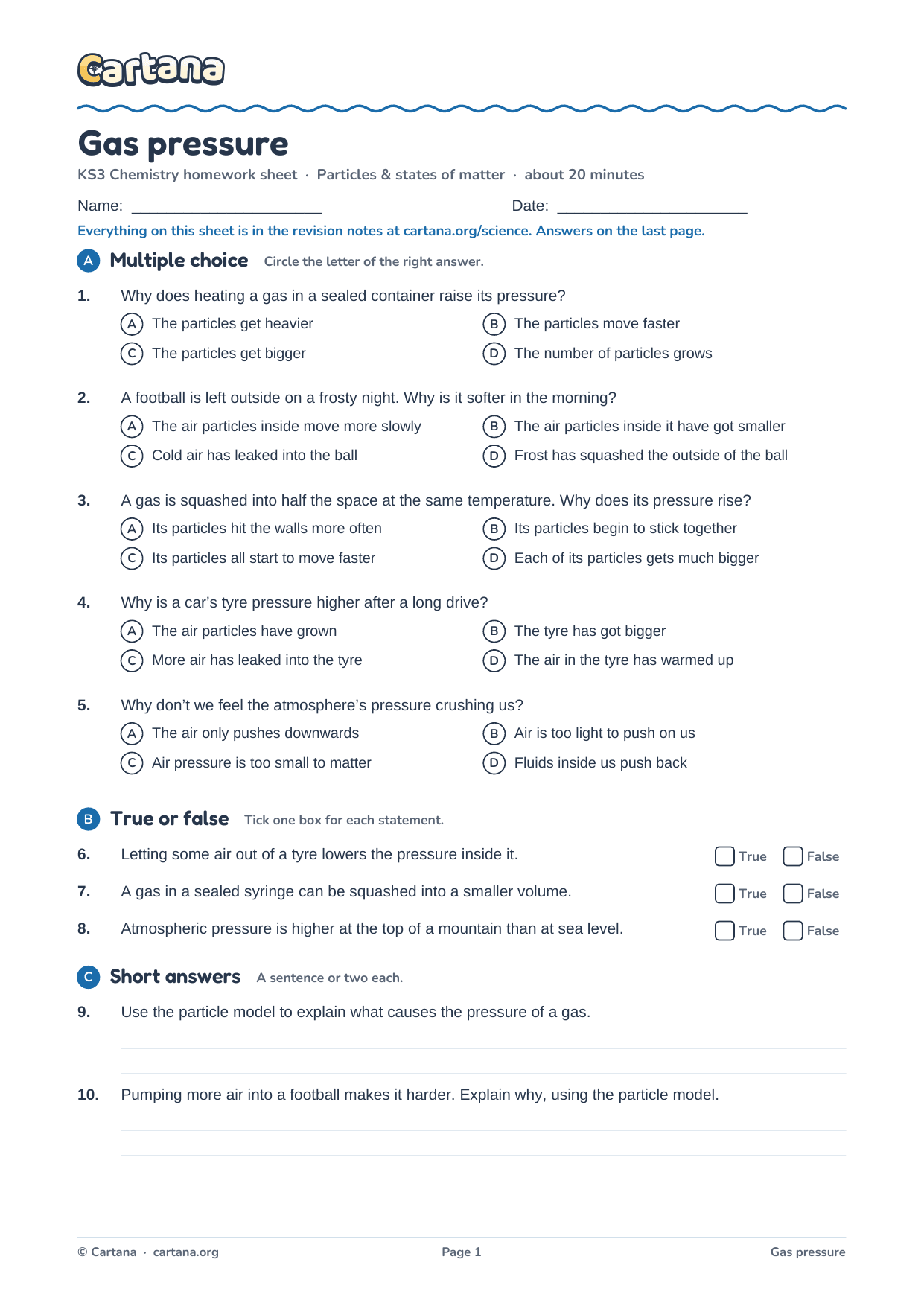
About twenty minutes. Everything on it is in the notes above; the answers are on the last page.
Free homework sheet
Gas pressure homework sheet
17 questions, about twenty minutes, with the answers on the last page: multiple choice, true or false, short answers, key words to define and one to explain in full.
KS3 Particles & states of matter
Revised the whole unit?
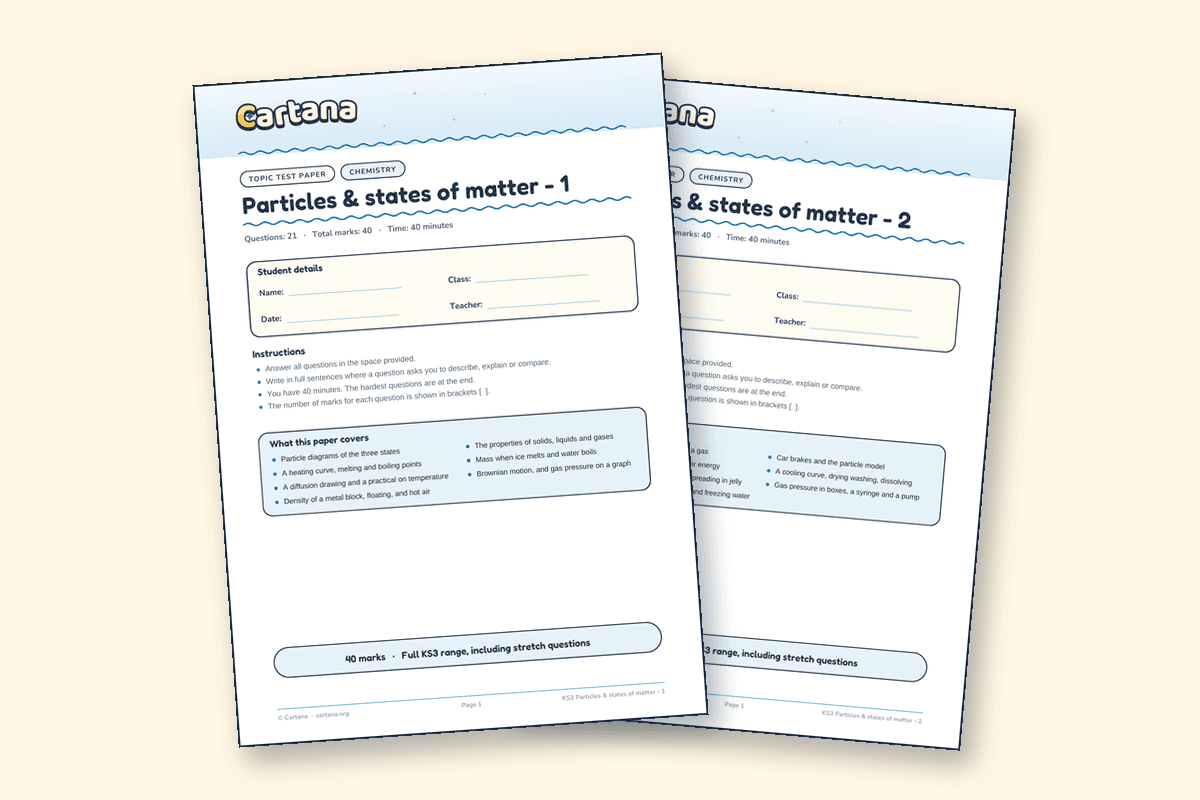
When every topic in particles & states of matter is done, two different papers test the whole unit, each with its own mark scheme.


 Watch the trailer · 1:06
New from Cartana · Beta test 1–31 December
Revision that feels like an adventure
Cartana is our KS3 learning adventure: sail between islands, answer quick-fire questions and battle bosses. It starts with science, with maths on the way, and launches in 2027. This December a small group of testers gets to play it first.
In the Cartana adventure, every science unit is an island to explore. The island for particles & states of matter is being built.
- Play the game before its official release
- Help us build it with your feedback
- Earn exclusive in-game items in return
More in this unit
Particles & states of matter
- 1Solids, liquids and gasesThe particle model and the three states of matter
- 2Changes of stateMelting, freezing, boiling, evaporating, condensing and sublimation
- 3Diffusion and Brownian motionDiffusion in liquids and gases, and Brownian motion
- 5DensityNextDensity, floating and sinking, and why ice floats