
KS3 Chemistry · Particles & states of matter
Solids, liquids and gases
- The particle model: everything is made of tiny particles, atoms or molecules, that attract each other and are always moving
- How the particles are arranged and move in a solid, a liquid and a gas, with the forces between them
- Why solids keep their shape, liquids flow and gases fill their container and can be squashed
- The sealed-syringe demonstration, and the limits of the model
- 4 min read
- 5 quick questions
- Free homework sheet
- Years 7 to 9
Revision notes
Solids, liquids and gases are the three states of matter. The particle model explains each one by how its particles are arranged, how they move and how strongly they hold together.
What is the particle model?
Everything is made of tiny particles, far too small to see even with a microscope. A particle can be a single atom, as in helium or a piece of iron. Or it can be a molecule: a group of atoms joined together, as in water (H2O) or oxygen (O2) (see atoms, elements and compounds). The model says:
- All the particles of one substance are the same. Ice, water and steam are all made of the same water molecules.
- Particles attract each other. The forces of attraction are strongest when the particles are close together.
- Particles are always moving. The hotter a substance is, the faster its particles move.
- There is nothing between the particles: the gaps are empty space, not air.
How are the particles arranged in a solid, a liquid and a gas?
| State | How they are arranged | How they move |
|---|---|---|
| Solid | Touching, in a regular pattern; strong forces between them | Vibrate on the spot |
| Liquid | Touching, no pattern (random); fairly strong forces | Move around each other |
| Gas | Far apart, no pattern (random); very weak forces | Move fast in all directions |
Why can liquids flow but solids can’t?
The arrangement explains how each state behaves.
- Solids keep their own shape and volume. Strong forces hold each particle in its place, so the particles can only vibrate. A solid cannot flow, and it cannot be squashed, because its particles are already touching.
- Liquids have a fixed volume but take the shape of their container. The particles stay touching, but they can slide past each other, so a liquid can flow and be poured. It can hardly be squashed.
- Gases have no fixed shape or volume: they spread out to fill any container. The particles are far apart and the forces between them are very weak, so a gas flows easily and can be compressed (squashed) into a smaller space.
Some materials are hard to sort by eye. Sand pours like a liquid, but each grain is a solid with its own shape; it pours because the grains are separate pieces.
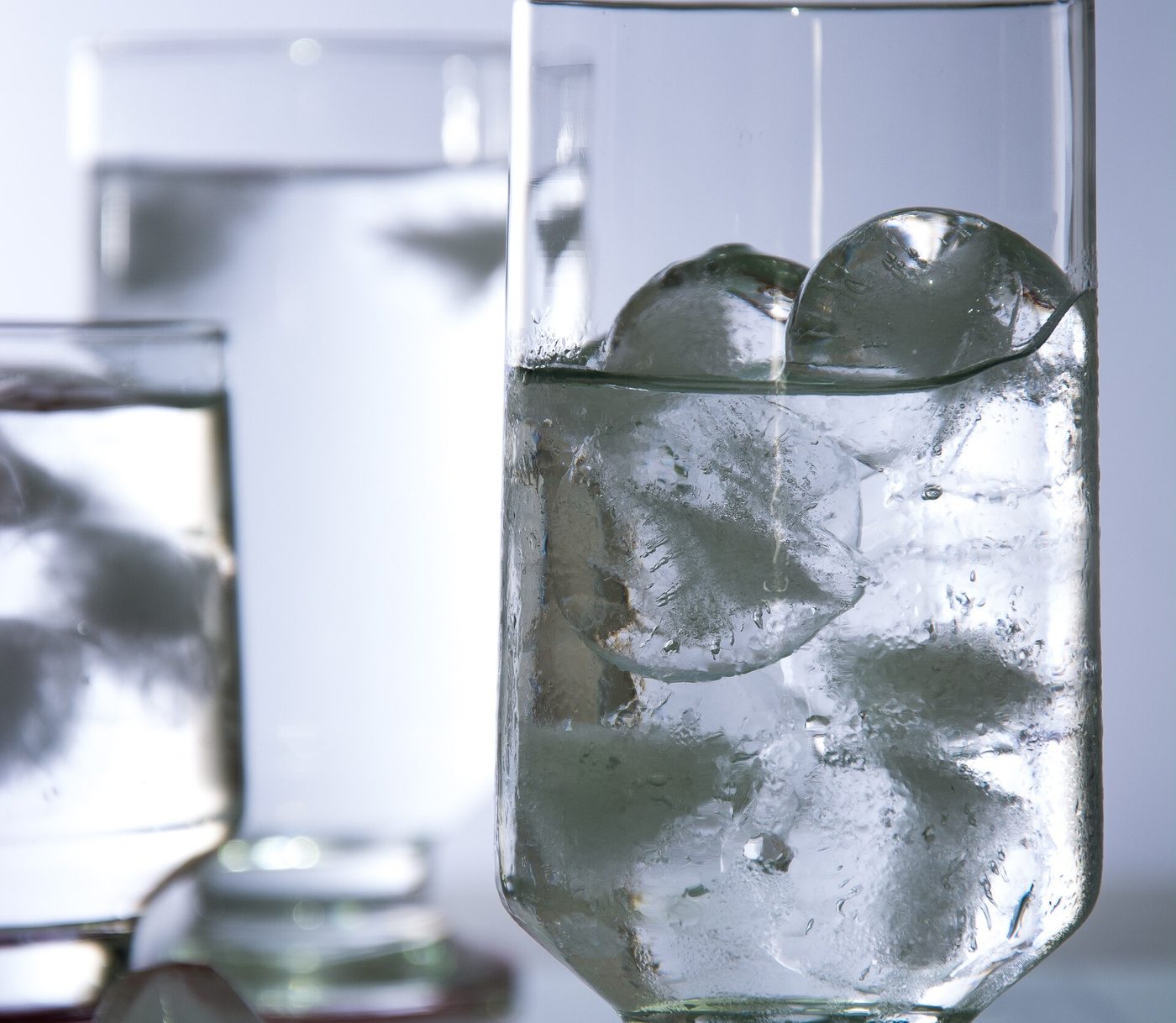
How can you show that a gas can be squashed?
What you do: fill one syringe with air and another with water. Seal the end of each, then push each plunger in.
What you see: the plunger of the air syringe goes a long way in, and springs back when you let go. The plunger of the water syringe hardly moves at all.
What it shows: there are big empty spaces between the particles of a gas, so they can be pushed closer together. The particles of a liquid are already touching.
Stretch The particle model is a model: it leaves things out. Real particles are not hard coloured balls, and diagrams are never to scale. In the air around you, the particles are on average about ten of their own widths apart, so the particles themselves take up only about a thousandth of the space. A gas diagram drawn to scale would be almost empty.
Written to the KS3 national curriculum. Last changed 13 November 2026.
Key words
Say them, spell them, use them in an answer.
- particle
- particle model
- states of matter
- solid
- liquid
- gas
- atom
- molecule
- forces of attraction
- vibrate
- compress
Common misconception
Often said“The particles in a solid don’t move at all.”
In factThey are always moving. In a solid they vibrate on the spot, held in place by strong forces. Heat a solid and they vibrate more; heat it enough and they break free, and it melts.
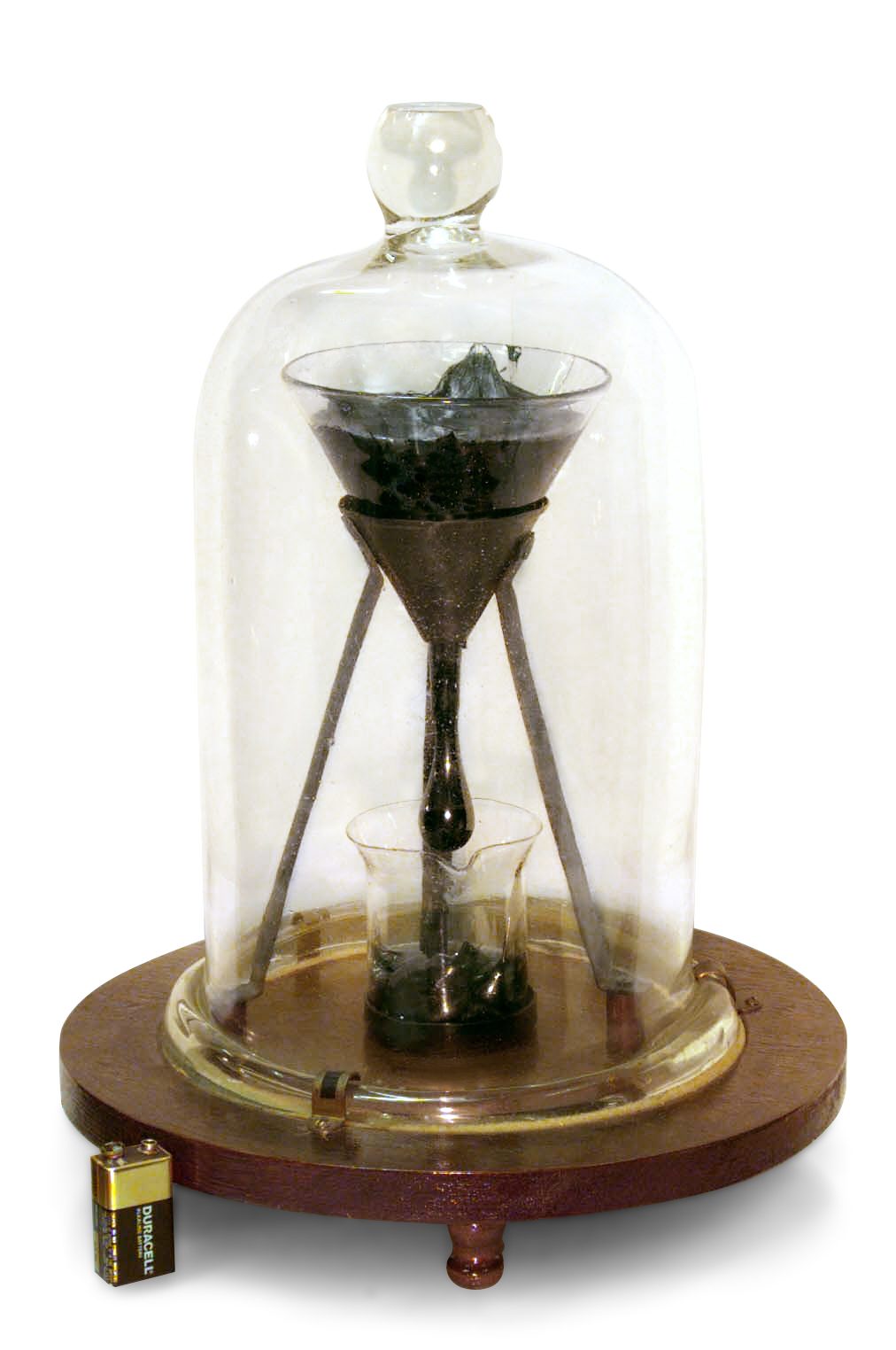
Did you know?
The pitch drop experiment
Pitch looks solid and shatters if you hit it with a hammer, but it is really a liquid, about 230 billion times thicker than water. Thomas Parnell put some in a funnel at the University of Queensland in 1927. Since the funnel was opened in 1930, only nine drops have fallen, the latest in 2014.
Photo: John Mainstone; derivative work: Amada44, CC BY-SA 3.0, via Wikimedia Commons
Try 5 questions
Quick questions on solids, liquids and gases, marked as you go. Each one explains the answer.
Question 1 of 5
Ice, water and steam are all made of the same water molecules. What is different about them?
Choose an answer. Each question explains itself.
The homework sheet
About twenty minutes. Everything on it is in the notes above; the answers are on the last page.
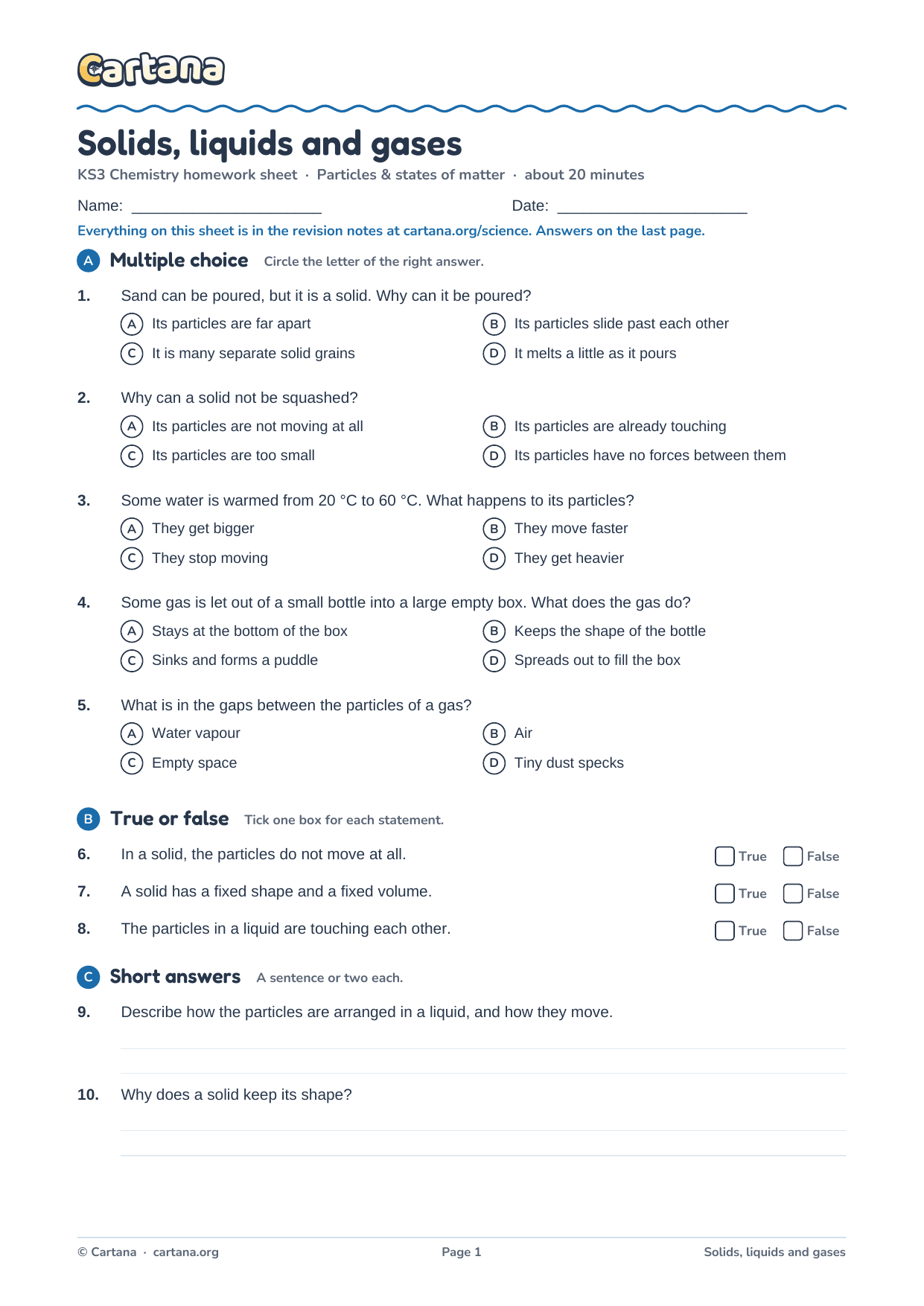
Free homework sheet
Solids, liquids and gases homework sheet
17 questions, about twenty minutes, with the answers on the last page: multiple choice, true or false, short answers, key words to define and one to explain in full.
KS3 Particles & states of matter
Revised the whole unit?
When every topic in particles & states of matter is done, two different papers test the whole unit, each with its own mark scheme.


 Watch the trailer · 1:06
New from Cartana · Beta test 1–31 December
Revision that feels like an adventure
Cartana is our KS3 learning adventure: sail between islands, answer quick-fire questions and battle bosses. It starts with science, with maths on the way, and launches in 2027. This December a small group of testers gets to play it first.
In the Cartana adventure, every science unit is an island to explore. The island for particles & states of matter is being built.
- Play the game before its official release
- Help us build it with your feedback
- Earn exclusive in-game items in return
More in this unit