
KS3 Chemistry · Separating mixtures
Chromatography
- What paper chromatography separates, and what it is used for
- The method: a pencil baseline, small spots, and the solvent below the line
- Why substances separate: dissolving in the solvent against sticking to the paper
- Reading a chromatogram to identify a substance and to tell a pure substance from a mixture
- 4 min read
- 5 quick questions
- Free homework sheet
- Years 7 to 9
Revision notes
Paper chromatography separates a mixture of soluble, coloured substances, such as the dyes in an ink. A solvent soaks up a strip of paper and carries each substance a different distance.
What is chromatography used for?
Chromatography shows what a mixture is made of. A black felt-tip ink, for example, is often a mixture of blue, red and yellow dyes. It is used to:
- find out whether a substance is pure or a mixture;
- identify an unknown substance by comparing it with known ones;
- check food colourings for dyes that are not allowed;
- match the ink on a forged document or a ransom note to a particular pen.
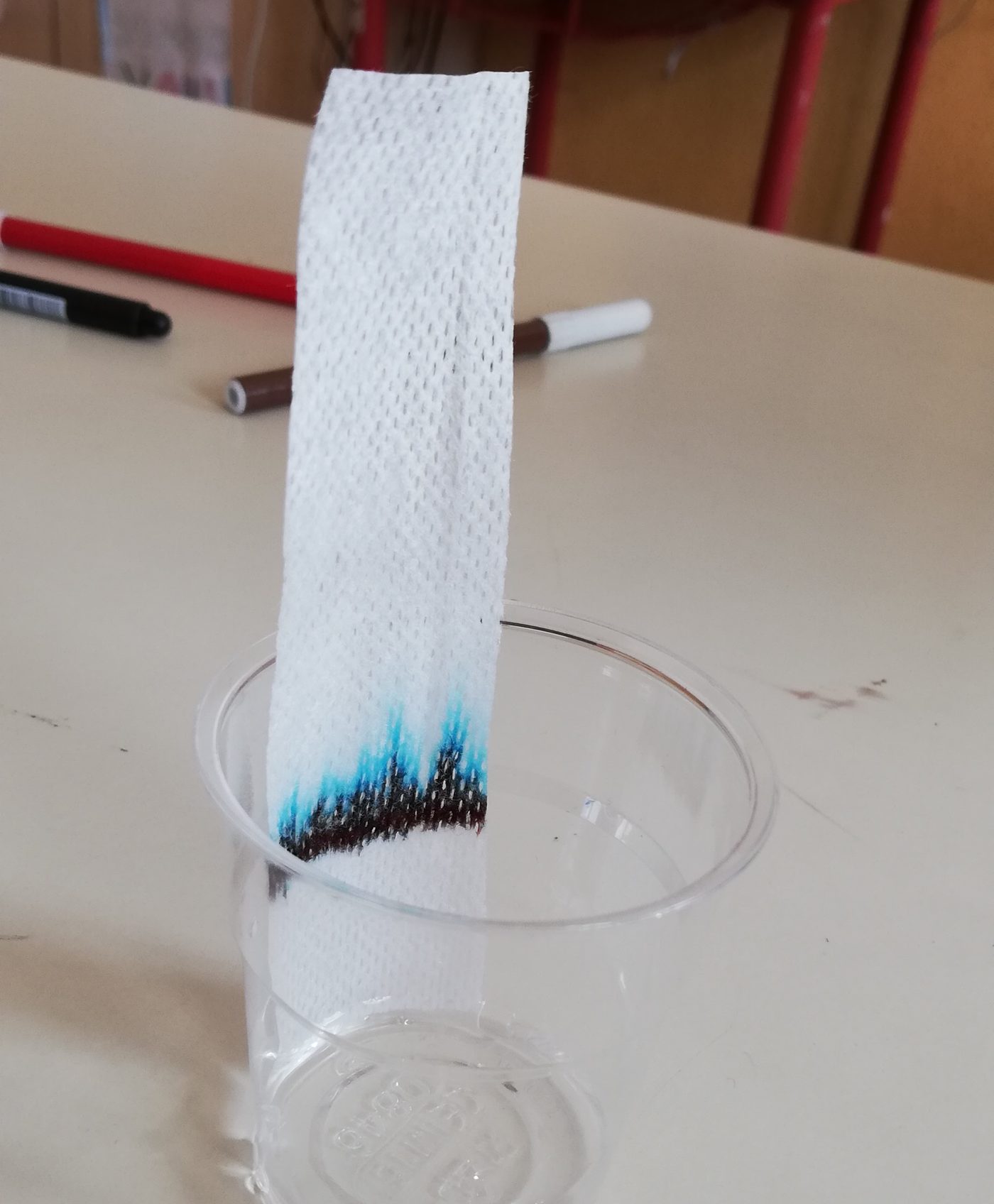
How do you do paper chromatography?
- Draw a straight line in pencil about 2 cm from the bottom of the chromatography paper: the baseline. Use pencil because graphite does not dissolve in the solvent; an ink line would run and add spots of its own.
- Put a small, concentrated spot of each sample on the line, well apart.
- Pour the solvent (often water, or ethanol) into a beaker to a depth of about 1 cm, so it is below the baseline. If the spots sat in the solvent, they would dissolve into it instead of travelling up the paper.
- Hang the paper so its bottom edge dips into the solvent without touching the sides of the beaker. A lid on the beaker stops the solvent evaporating.
- When the solvent has nearly reached the top, take the paper out, mark how far the solvent got (the solvent front) in pencil, and let it dry.
The finished paper is a chromatogram.
Why do the substances separate?
As the solvent soaks up the paper, it passes over the spots. Each substance dissolves in the solvent and is carried along with it, but each is also attracted to the paper, which holds it back. Different substances do these two things by different amounts.
| A substance that… | Travels |
|---|---|
| Dissolves well | Far up the paper, if it is only weakly held by the paper |
| Sticks to the paper | Only a short way, lagging behind |
| Is insoluble | Nowhere: it stays on the baseline |
So the dyes in a mixture end up as separate spots at different heights.
How do you read a chromatogram?
- A pure substance gives one spot.
- A mixture gives two or more spots.
- Two spots at the same height, run in the same solvent, are probably the same substance. So ink X contains dyes A and C, and not B or D.
One spot is good evidence of a pure substance, not proof: two substances might happen to travel the same distance. Running the sample again in a different solvent is a stronger test.
Chromatography is one of several ways to test purity; another is a sharp melting point (see pure and impure substances).
Stretch Each substance travels a fixed fraction of the solvent’s distance, in a given solvent. That fraction is its Rf value: Rf = distance moved by the substance ÷ distance moved by the solvent. A spot 3.0 cm from the baseline, with the solvent front 6.0 cm from it, has Rf = 3.0 ÷ 6.0 = 0.5. Rf is always less than 1, and it can be compared with values in a data book to identify the substance.
Written to the KS3 national curriculum. Last changed 13 November 2026.
Key words
Say them, spell them, use them in an answer.
- chromatography
- chromatogram
- baseline
- solvent
- solvent front
- dye
- soluble
- pure substance
- mixture
Common misconception
Often said“It is best to draw the baseline in pen, so it shows up clearly.”
In factInk dissolves in the solvent, so a pen line would run up the paper and add spots of its own, spoiling the chromatogram. Pencil is used because graphite does not dissolve.
Did you know?
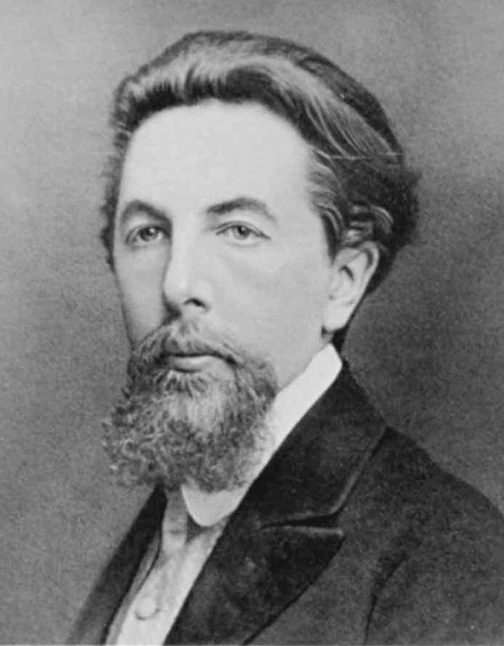
Mikhail Tsvet
Chromatography was invented in the early 1900s by the Russian botanist Mikhail Tsvet, who separated the coloured pigments of leaves by washing them down a glass tube packed with powdered chalk. He named it “colour writing”, and his own surname, Tsvet, is the Russian word for colour.
Photo: Unknown author, Public domain, via Wikimedia Commons
Try 5 questions
Quick questions on chromatography, marked as you go. Each one explains the answer.
Question 1 of 5
Ink X gives spots 2 cm and 5 cm up the paper. Dye P gives one spot at 2 cm, dye Q at 5 cm and dye R at 4 cm, all in the same solvent. Which dyes are in X?
Choose an answer. Each question explains itself.
The homework sheet
About twenty minutes. Everything on it is in the notes above; the answers are on the last page.
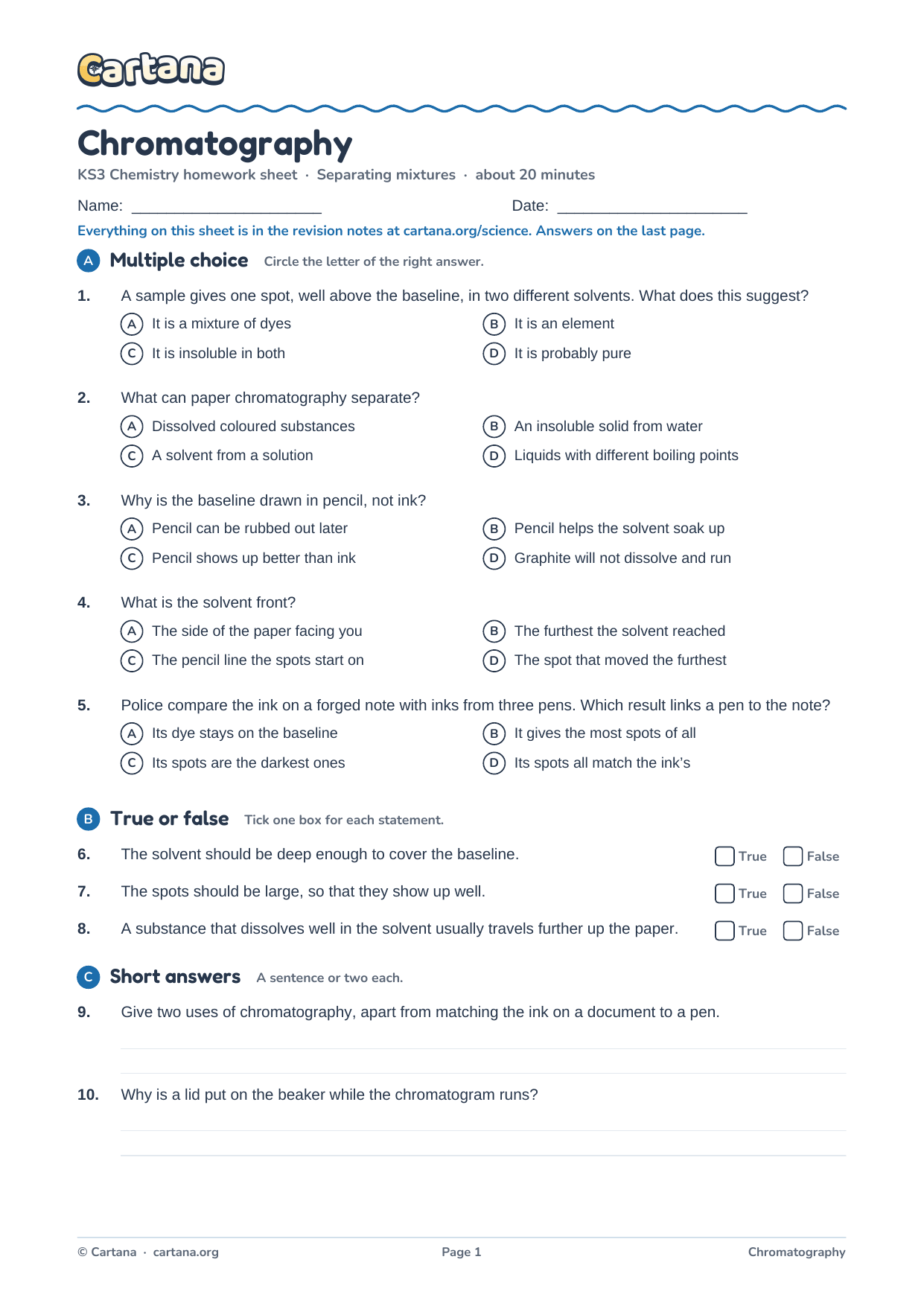
Free homework sheet
Chromatography homework sheet
17 questions, about twenty minutes, with the answers on the last page: multiple choice, true or false, short answers, key words to define and one to explain in full.
KS3 Separating mixtures
Revised the whole unit?
When every topic in separating mixtures is done, two different papers test the whole unit, each with its own mark scheme.


 Watch the trailer · 1:06
New from Cartana · Beta test 1–31 December
Revision that feels like an adventure
Cartana is our KS3 learning adventure: sail between islands, answer quick-fire questions and battle bosses. It starts with science, with maths on the way, and launches in 2027. This December a small group of testers gets to play it first.
In the Cartana adventure, every science unit is an island to explore. The island for separating mixtures is being built.
- Play the game before its official release
- Help us build it with your feedback
- Earn exclusive in-game items in return
More in this unit
Separating mixtures
- 1Pure and impure substancesWhat pure means in chemistry, mixtures, and testing purity by melting point
- 2Solutions and solubilitySolute, solvent and solution, dissolving, saturated solutions and solubility curves
- 3Filtration and crystallisationFiltering an insoluble solid, evaporating and crystallising a dissolved one, and the rock salt practical
- 4DistillationSimple distillation, the Liebig condenser, and fractional distillation