
KS3 Chemistry · Separating mixtures
Pure and impure substances
- What “pure” means to a chemist (one substance only) and how it differs from “pure” on a food label
- Mixtures: substances mixed but not chemically joined, with examples such as air, sea water and ink
- How impurities change melting and boiling points, and why salt melts ice on roads
- Testing purity by measuring a melting point, step by step
- 4 min read
- 5 quick questions
- Free homework sheet
- Years 7 to 9
Revision notes
In chemistry, a pure substance is made of one substance only, with nothing else mixed in. A mixture holds two or more substances that are not chemically joined, so they can be separated again.
What does pure mean in chemistry?
In everyday life, “pure” means natural, or with nothing added. A carton of “pure orange juice” has no added sugar or water, but a chemist would not call it pure: it is a mixture of water, sugars, acids, vitamins and many other substances.
To a chemist, a substance is pure only if every particle in it is the same. Pure water is water particles and nothing else. A pure substance can be an element (made of only one kind of atom), such as oxygen or gold, or a compound (two or more elements chemically joined), such as water or sodium chloride (salt).
What is a mixture?
In a mixture, the substances are mixed together but not joined by a chemical reaction. Each one keeps its own properties: sea water tastes salty because the salt in it is still salt.
- The amounts can vary: you can stir a little salt or a lot of salt into water.
- The substances can be separated again by physical methods: filtering, evaporating, distilling and chromatography.
- A mixture has no single melting point or boiling point of its own.
| Mixture | What is in it |
|---|---|
| Air | Nitrogen (about 78%), oxygen (about 21%), argon (about 1%), a little carbon dioxide and water vapour |
| Sea water | Water, with salt and other substances dissolved in it |
| Mineral water | Water, with small amounts of dissolved minerals such as calcium and magnesium compounds |
| Ink | A liquid with several coloured dyes dissolved in it |
| Crude oil | Hundreds of different compounds of carbon and hydrogen |
How can you tell if a substance is pure?
Every pure substance melts and boils at its own fixed temperatures. At normal air pressure, pure ice melts at exactly 0 °C and pure water boils at exactly 100 °C. A pure solid melts at one sharp temperature, its melting point, and a pure liquid boils at one sharp boiling point (see changes of state).
An impurity is a small amount of another substance mixed in. It changes both. An impure solid melts at a lower temperature, and gradually, over a range of temperatures. A dissolved solid, such as salt in water, makes a liquid boil at a higher temperature. Sea water freezes at about −2 °C and boils a little above 100 °C. That is why salt is spread on icy roads: salty water freezes below 0 °C, so the ice melts.
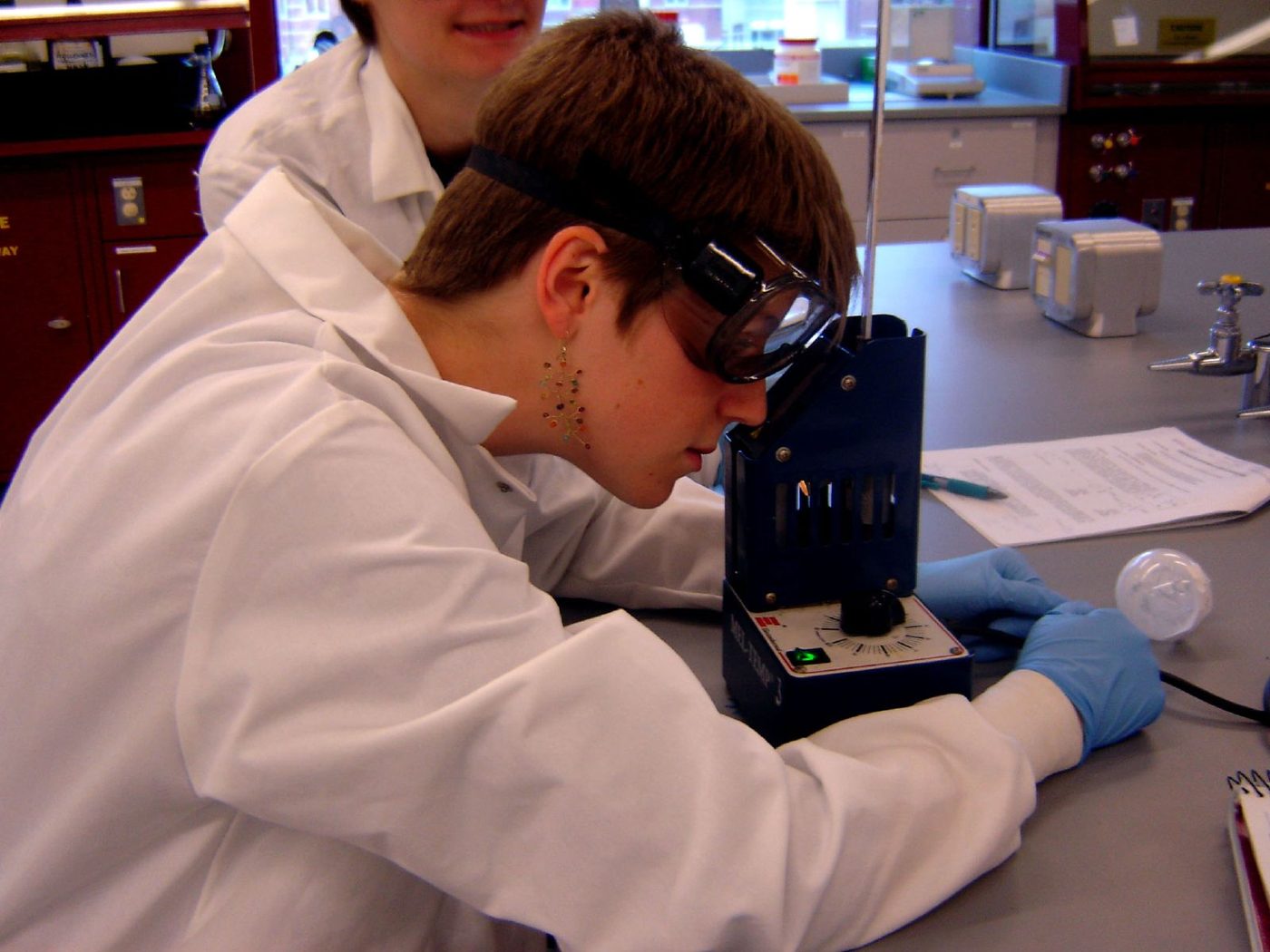
So to test a sample, measure its melting point and compare it with the value in a data book. Pure aspirin, for example, melts at 136 °C (too hot for a water bath, so it is measured in an electric melting-point apparatus). A sample that melts gradually from 128 °C to 133 °C is impure.
How do you measure a melting point?
- Pack a little of the powdered solid into the bottom of a thin glass capillary tube, closed at one end.
- Fix the tube to a thermometer with a rubber band, so the solid sits beside the bulb.
- Stand them in a beaker of water (a water bath) and heat it slowly, stirring, so all the water is at the same temperature.
- Watch the solid. Read the temperature when it starts to melt and again when it has all melted.
A pure solid melts within about a degree. A range of several degrees means the sample is impure. A water bath works only for solids that melt below 100 °C; laboratories use an electric melting-point apparatus for the rest. Wear eye protection and heat gently.
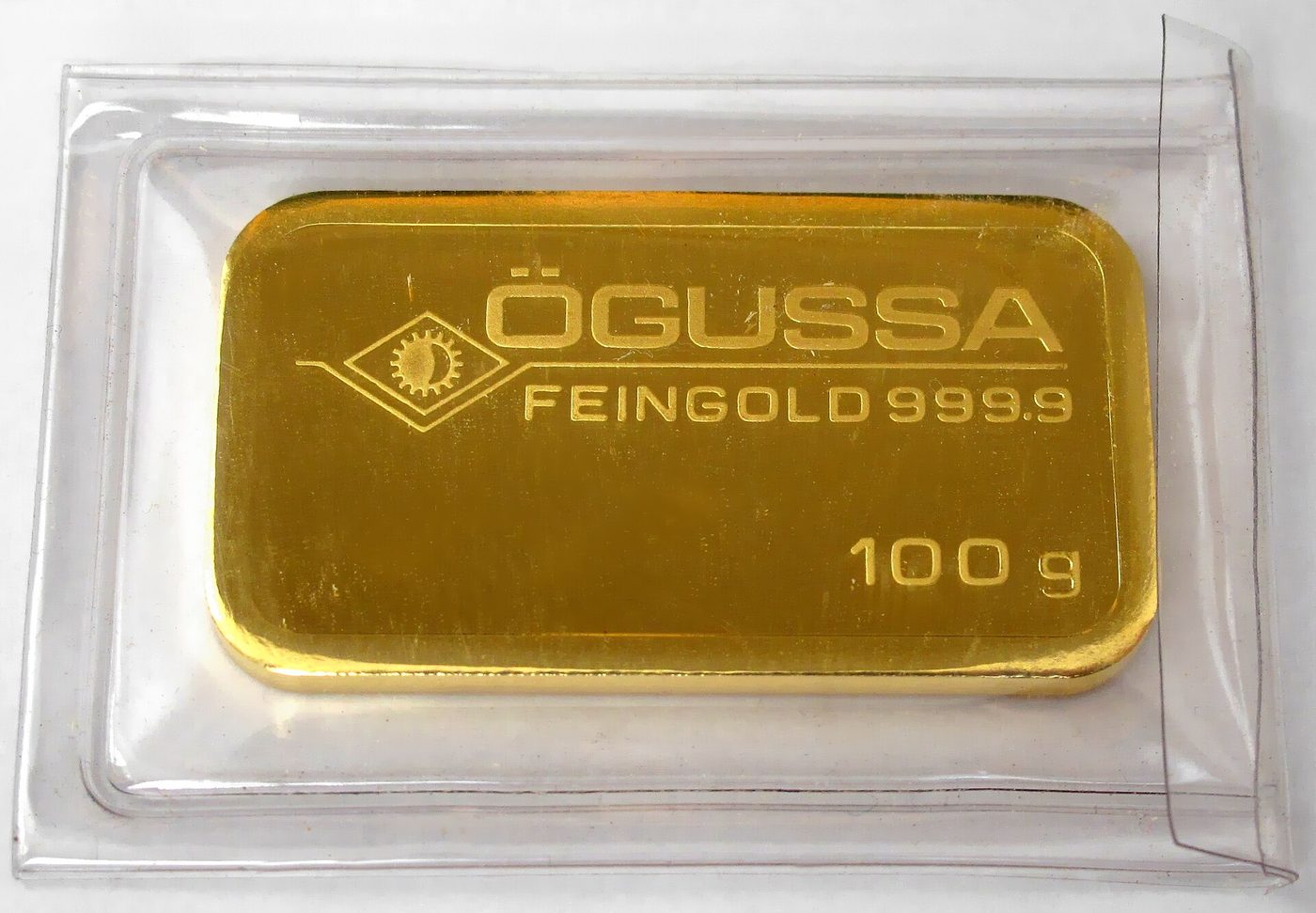
Stretch Chemists give purity as a percentage by mass. If 50 g of impure copper contains 49 g of copper, it is 49 ÷ 50 × 100 = 98% pure. Gold is measured in carats: 24-carat gold is pure gold, so 18-carat gold is 18 ÷ 24 = 75% gold, mixed with other metals to make it harder.
Written to the KS3 national curriculum. Last changed 13 November 2026.
Key words
Say them, spell them, use them in an answer.
- pure substance
- mixture
- impurity
- element
- compound
- melting point
- boiling point
- capillary tube
- water bath
Common misconception
Often said“Tap water looks perfectly clear, so it must be pure.”
In factTap water is a mixture. It has minerals such as calcium compounds dissolved in it, and a trace of chlorine to kill germs, none of which you can see. Looks cannot tell you whether a substance is pure: a sharp melting point or boiling point can.
Did you know?
Chip-grade silicon
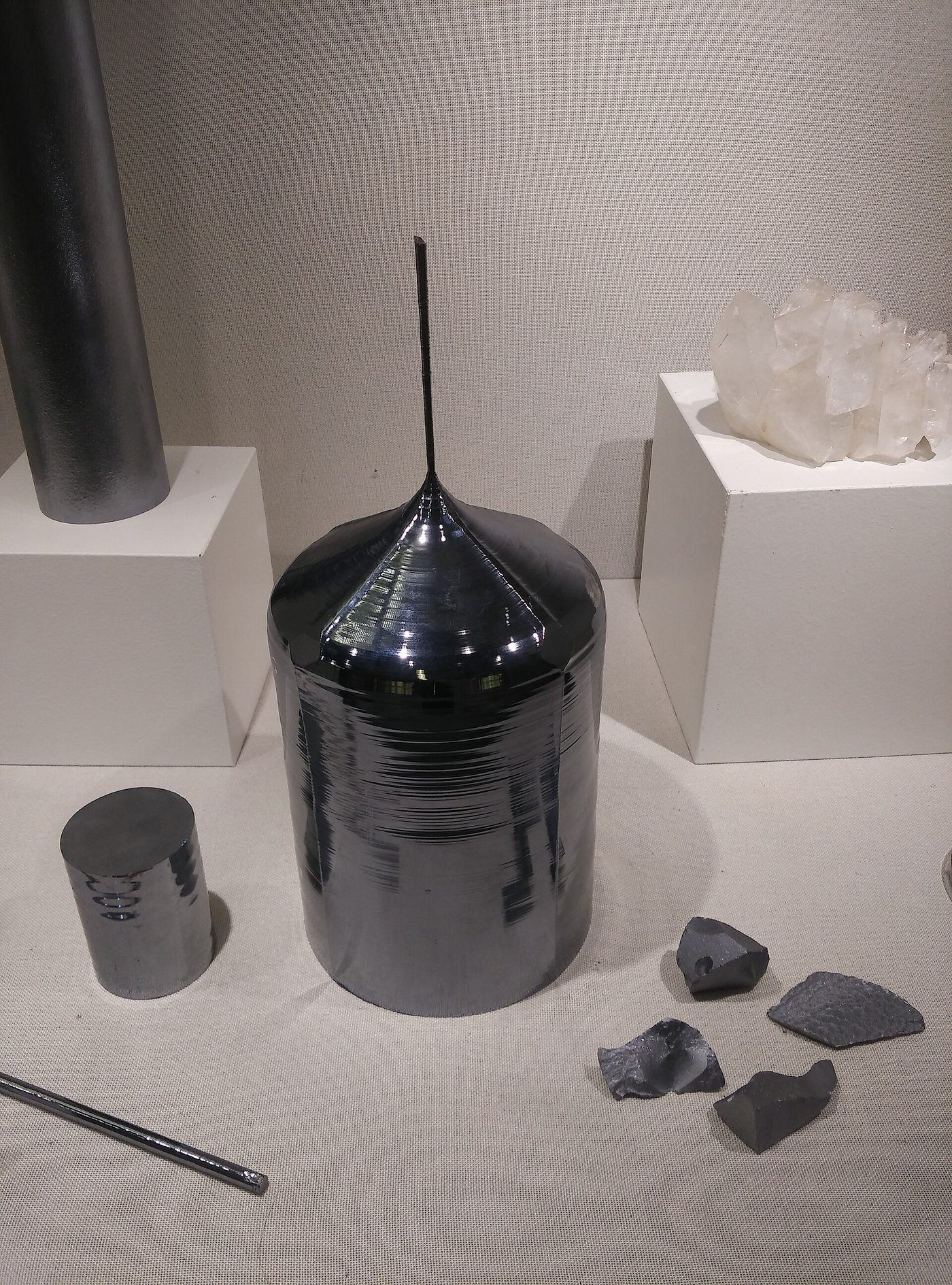
The silicon used to make computer chips is purified to about 99.9999999%: no more than one atom in every billion is something else. Even a tiny trace of an impurity would change how the chips carry electricity.
Photo: ArticCynda, CC0, via Wikimedia Commons
Try 5 questions
Quick questions on pure and impure substances, marked as you go. Each one explains the answer.
Question 1 of 5
How does an impurity change the way a solid melts?
Choose an answer. Each question explains itself.
The homework sheet
About twenty minutes. Everything on it is in the notes above; the answers are on the last page.
Free homework sheet
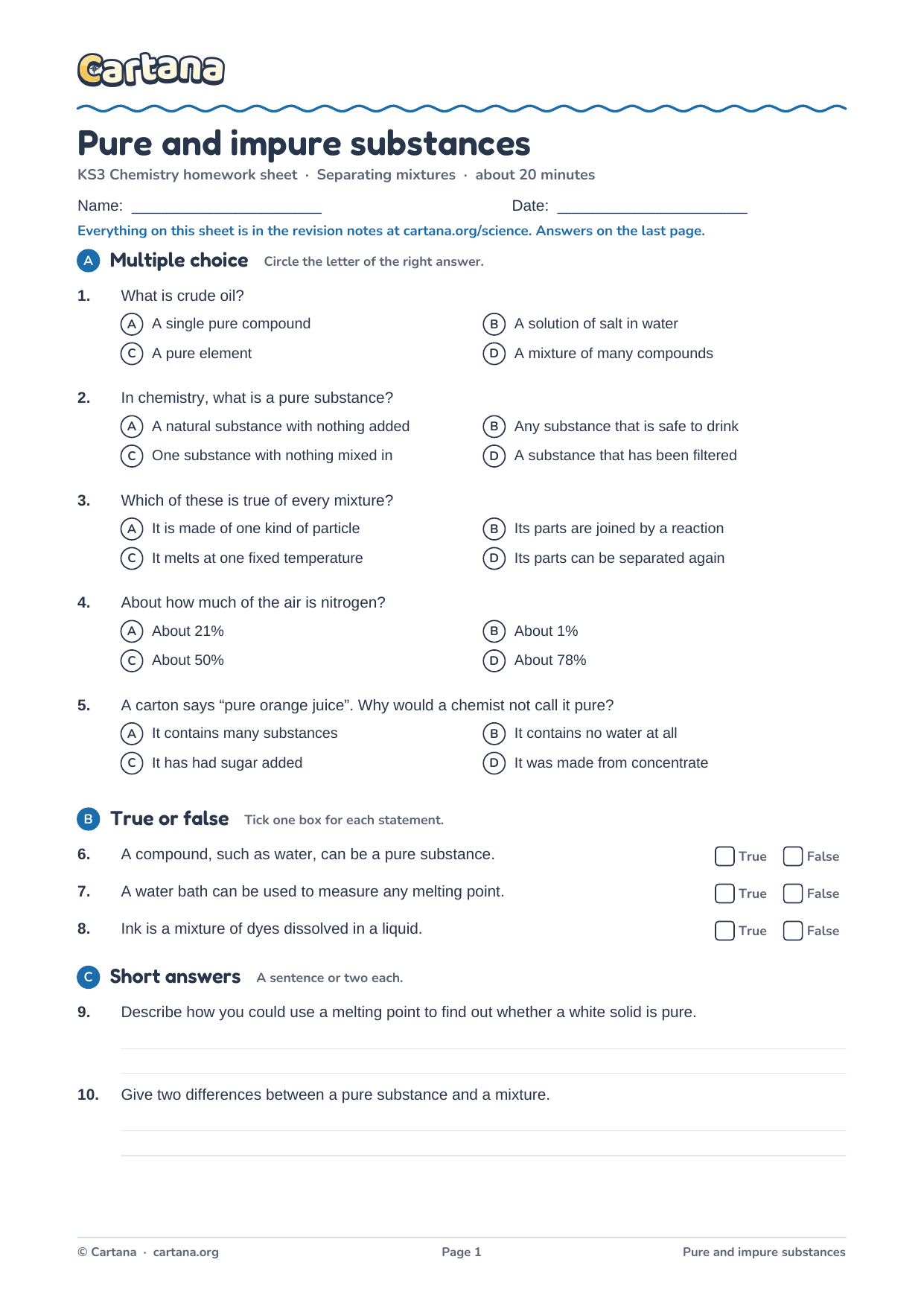
Pure and impure substances homework sheet
17 questions, about twenty minutes, with the answers on the last page: multiple choice, true or false, short answers, key words to define and one to explain in full.
KS3 Separating mixtures
Revised the whole unit?
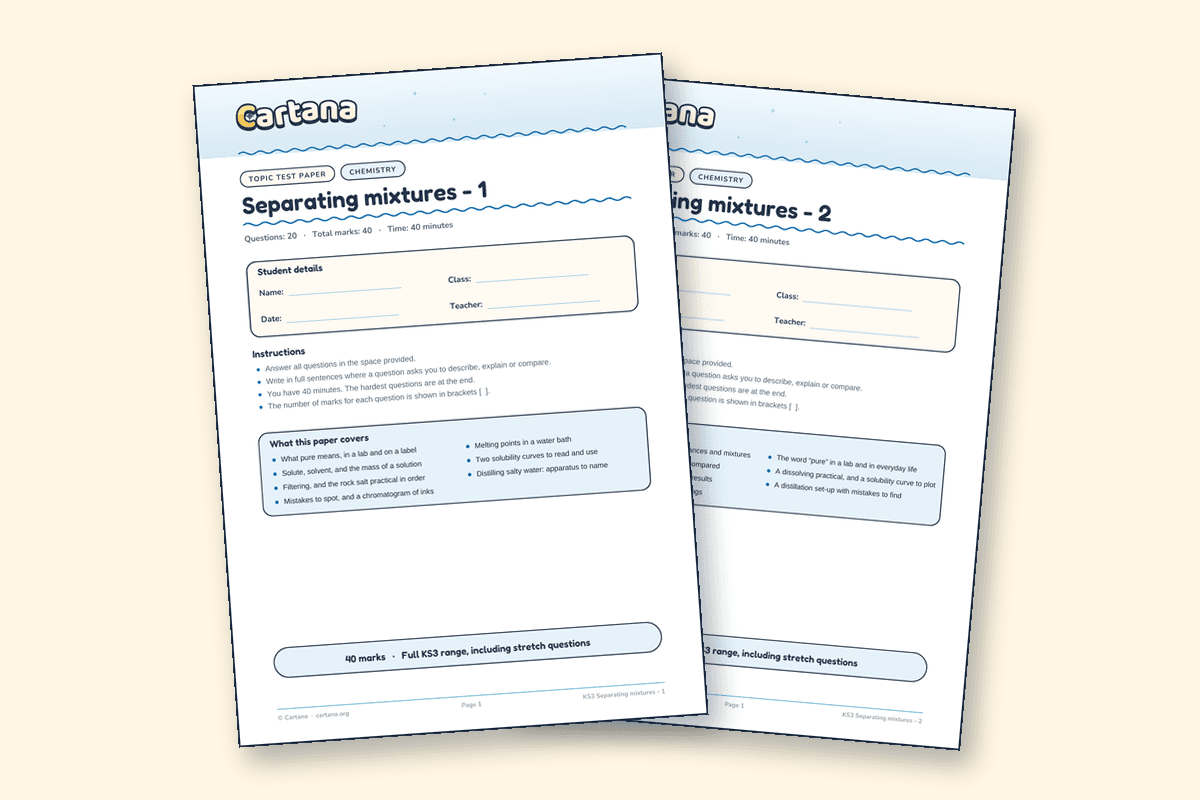
When every topic in separating mixtures is done, two different papers test the whole unit, each with its own mark scheme.


 Watch the trailer · 1:06
New from Cartana · Beta test 1–31 December
Revision that feels like an adventure
Cartana is our KS3 learning adventure: sail between islands, answer quick-fire questions and battle bosses. It starts with science, with maths on the way, and launches in 2027. This December a small group of testers gets to play it first.
In the Cartana adventure, every science unit is an island to explore. The island for separating mixtures is being built.
- Play the game before its official release
- Help us build it with your feedback
- Earn exclusive in-game items in return
More in this unit
Separating mixtures
- 2Solutions and solubilityNextSolute, solvent and solution, dissolving, saturated solutions and solubility curves
- 3Filtration and crystallisationFiltering an insoluble solid, evaporating and crystallising a dissolved one, and the rock salt practical
- 4DistillationSimple distillation, the Liebig condenser, and fractional distillation
- 5ChromatographyPaper chromatography: the method, why substances separate, and reading a chromatogram