
KS3 Physics · Sound & waves
Pitch and loudness
- Frequency in hertz, and how it sets the pitch of a note
- Amplitude, and why a bigger vibration sounds louder
- Reading oscilloscope traces: more waves, taller waves
- Measuring loudness in decibels
- 4 min read
- 5 quick questions
- Free homework sheet
- Years 7 to 9
Revision notes
Pitch is how high or low a sound is, and it depends on the frequency of the sound wave. Loudness, how loud or quiet a sound is, depends on the amplitude: bigger vibrations make louder sounds.
What decides the pitch of a sound?
The pitch depends on the frequency: the number of vibrations each second. Frequency is measured in hertz (Hz), and 1 Hz is one vibration a second. A string that vibrates 440 times a second makes a sound of 440 Hz: the note A that orchestras tune to. For high frequencies, 1 kilohertz (kHz) is 1,000 Hz.
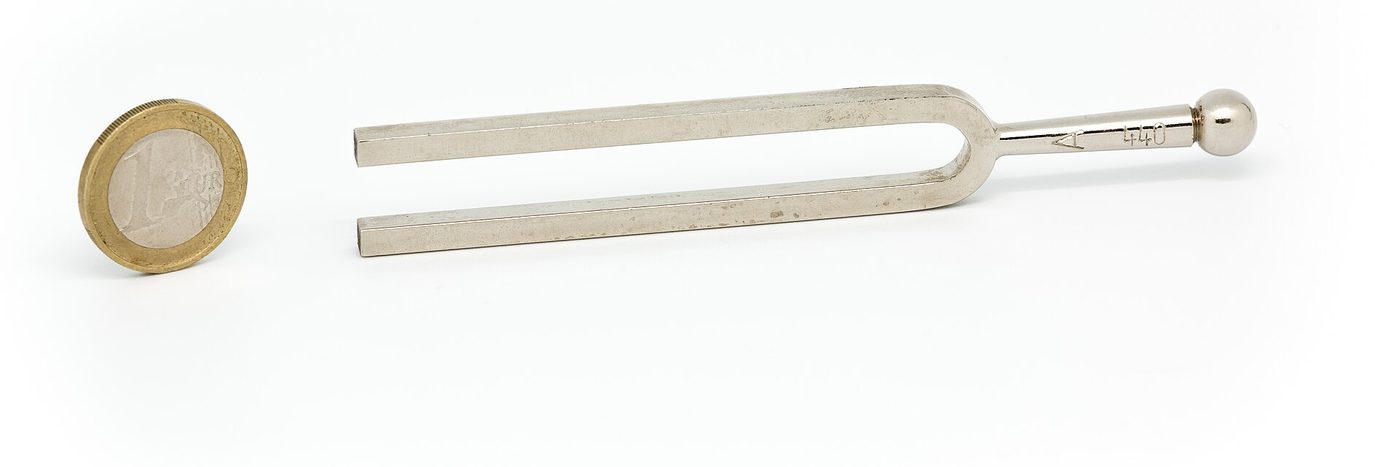
- A high frequency gives a high-pitched sound, like a whistle or a bird’s song.
- A low frequency gives a low-pitched sound, like a bass drum or a foghorn.
On a musical instrument, a shorter, tighter or thinner string vibrates faster and plays a higher note. A guitarist presses a string down to shorten the part that vibrates, and turns a peg to tighten it. In a recorder or a flute, a shorter column of air gives a higher note.
With the time in seconds (s), the frequency is in hertz (Hz).
The prongs of a tuning fork vibrate 1,280 times in 5 s. What is the frequency of its note?
frequency = number of vibrations ÷ time
frequency = 1,280 ÷ 5 s = 256 Hz
What makes a sound louder?
Loudness depends on the amplitude of the vibrations: how far the vibrating object moves either side of where it rests. Hit a drum harder and its skin moves further, each compression of the air is squashed harder, and the sound is louder. A louder sound carries more energy. Its pitch stays the same, because the drum still vibrates the same number of times a second.
How do you read an oscilloscope trace?
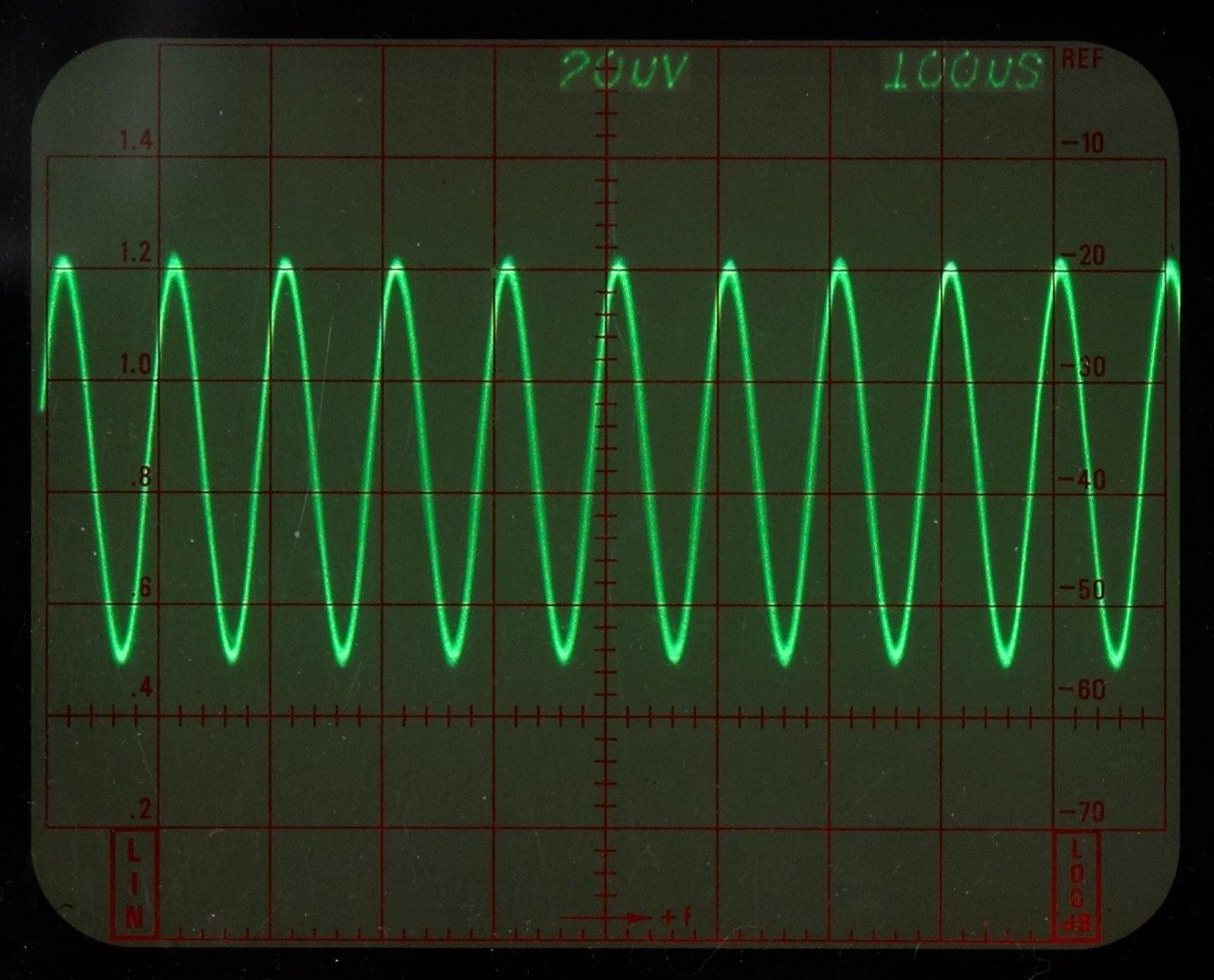
A microphone turns sound into an electrical signal, and an oscilloscope draws the signal on a screen as a wavy line called a trace. The trace is a graph: time runs across the screen, and the height shows how strongly the air is squashed or stretched. Sound itself is a longitudinal wave, not a wiggly line.
With the oscilloscope’s settings kept the same:
| On the screen | What you hear |
|---|---|
| More waves | A higher pitch (higher frequency) |
| Fewer waves | A lower pitch (lower frequency) |
| Taller waves | A louder sound (bigger amplitude) |
| Smaller waves | A quieter sound (smaller amplitude) |
In the traces at the top of this page, B has twice as many waves as A at the same height: a higher note, just as loud. C has as many waves as A but is taller: the same note, louder. D is both higher and quieter than A.
How is loudness measured?
A sound level meter is an instrument with a microphone that measures loudness, in decibels (dB). 0 dB is about the quietest sound a young person can hear. A whisper is about 30 dB, normal talking about 60 dB and a busy road about 80 dB. Hours of sound above about 85 dB can damage your hearing for good (see hearing and the ear).
Stretch The decibel scale does not go up in equal steps of energy. Every 10 dB more means ten times as much sound energy reaching your ear each second: a 70 dB vacuum cleaner delivers ten times the energy of 60 dB talking, and an 80 dB road a hundred times as much. Yet to your ear each 10 dB step sounds only about twice as loud.
Written to the KS3 national curriculum. Last changed 14 November 2026.
Key words
Say them, spell them, use them in an answer.
- pitch
- loudness
- frequency
- hertz
- kilohertz
- amplitude
- microphone
- oscilloscope
- trace
- decibel
Common misconception
Often said“High notes travel faster than low notes.”
In factAll sounds travel through the air at the same speed, about 340 m/s, whatever their pitch. If they did not, a band heard from the back of a big field would arrive jumbled, with the high notes ahead of the low ones.
Did you know?
The piano
A full-size piano has 88 keys. The lowest note vibrates about 27.5 times a second (27.5 Hz) and the highest about 4,186 times a second, so the top note’s frequency is over 150 times the bottom one’s.
Photo: Puikstekend, CC BY-SA 4.0, via Wikimedia Commons
Try 5 questions
Quick questions on pitch and loudness, marked as you go. Each one explains the answer.
Question 1 of 5
You hit a drum harder. What happens to the sound?
Choose an answer. Each question explains itself.
The homework sheet
About twenty minutes. Everything on it is in the notes above; the answers are on the last page.
Free homework sheet
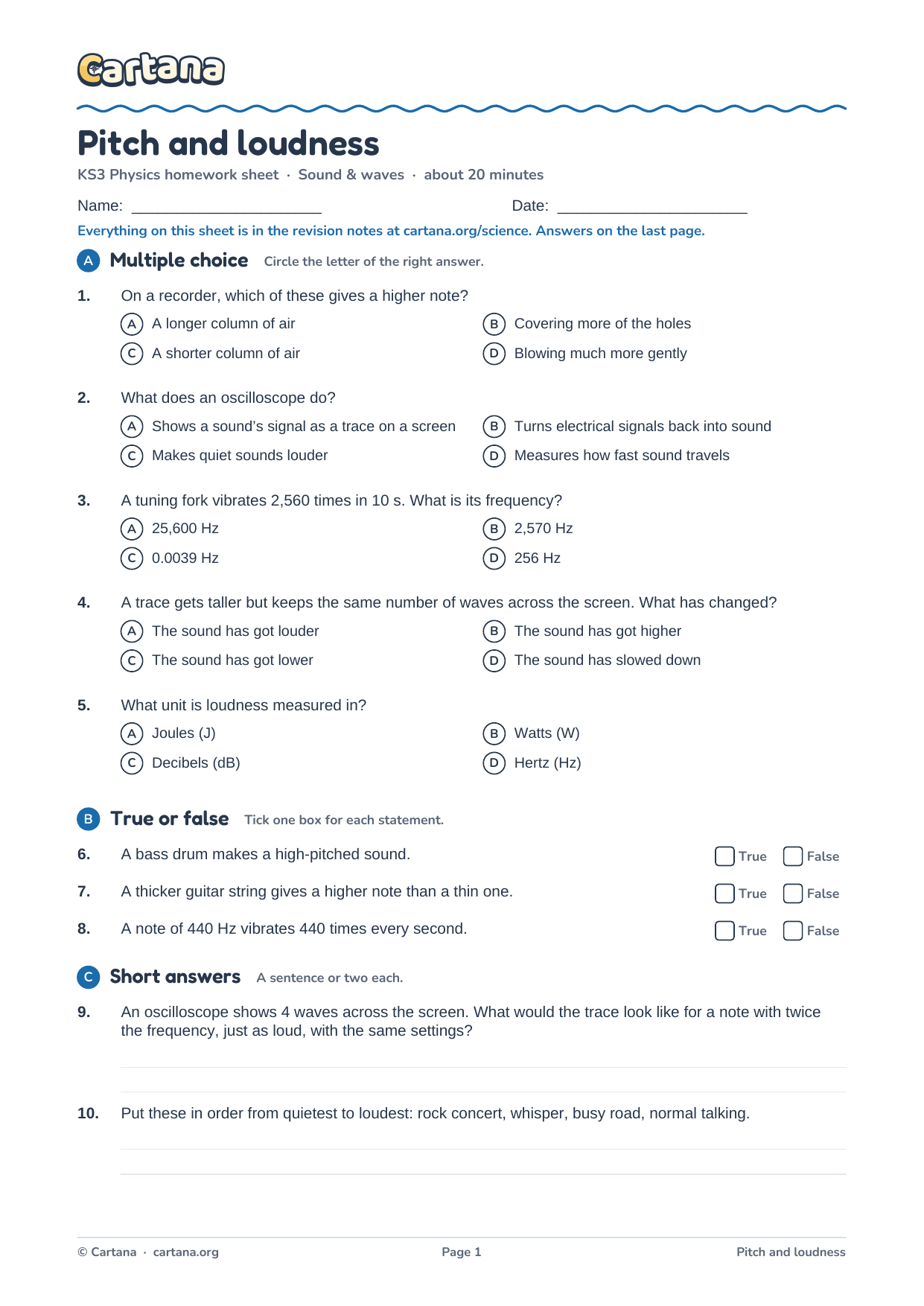
Pitch and loudness homework sheet
17 questions, about twenty minutes, with the answers on the last page: multiple choice, true or false, short answers, key words to define and one to explain in full.
KS3 Sound & waves
Revised the whole unit?
When every topic in sound & waves is done, two different papers test the whole unit, each with its own mark scheme.


 Watch the trailer · 1:06
New from Cartana · Beta test 1–31 December
Revision that feels like an adventure
Cartana is our KS3 learning adventure: sail between islands, answer quick-fire questions and battle bosses. It starts with science, with maths on the way, and launches in 2027. This December a small group of testers gets to play it first.
In the Cartana adventure, every science unit is an island to explore. The island for sound & waves is being built.
- Play the game before its official release
- Help us build it with your feedback
- Earn exclusive in-game items in return
More in this unit
Sound & waves
- 1WavesWaves carrying energy, transverse and longitudinal waves, amplitude, wavelength and frequency, and water waves reflecting and adding (superposition)
- 2Sound wavesSound made by vibrations, longitudinal sound waves, the need for a medium and the bell-jar experiment, the speed of sound in solids, liquids and gases, and sound against light
- 4HearingNextHow the ear works from pinna to auditory nerve, the hearing range of people and other animals, how hearing is damaged, and microphones and loudspeakers
- 5Echoes and ultrasoundReflection and absorption of sound, distance from an echo, ultrasound for scans, cleaning and physiotherapy, and echolocation and sonar