
KS3 Physics · Space
The Moon
- The Moon’s orbit, and why we always see the same face
- The eight phases of the Moon, drawn from above and as seen from the UK
- Solar and lunar eclipses: the order of the Sun, Earth and Moon
- Why eclipses are rare, and the Moon’s pull on the tides
- 5 min read
- 5 quick questions
- Free homework sheet
- Years 7 to 9
Revision notes
The Moon is the Earth’s only natural satellite: a ball of rock about a quarter as wide as the Earth, orbiting us about once every 27 days. It gives out no light of its own; we see it because it reflects sunlight.
How does the Moon orbit the Earth?
A natural satellite is a natural object that orbits a planet. The Moon is about 384,000 km from the Earth and goes round it once every 27.3 days. As it orbits, the Moon also spins on its own axis, exactly once per orbit. So the same side, the near side, always faces the Earth, and from here we never see the far side. The far side is not always dark: it gets just as much sunlight.
Why does the Moon have phases?
The Sun always lights up half of the Moon: the half facing the Sun. As the Moon travels round the Earth we see different amounts of that lit half, so its shape seems to change. These shapes are the phases of the Moon. Seen from the UK:
- New moon: the Moon is between the Earth and the Sun. Its lit half faces away from us, so we see almost nothing.
- Waxing crescent: a thin sliver, lit on the right.
- First quarter: the right half is lit. The Moon is a quarter of the way round its orbit.
- Waxing gibbous: most of the disc is lit.
- Full moon: the Moon is on the far side of the Earth from the Sun, and we see the whole lit half.
- Waning gibbous, last quarter (the left half lit) and waning crescent, back to new moon.
Waxing means the lit part we see is growing; waning means it is shrinking. A crescent is less than half lit; a gibbous moon is more than half lit. From one new moon to the next takes about 29½ days, a little longer than one orbit, because the Earth is moving round the Sun at the same time.
What is a solar eclipse?
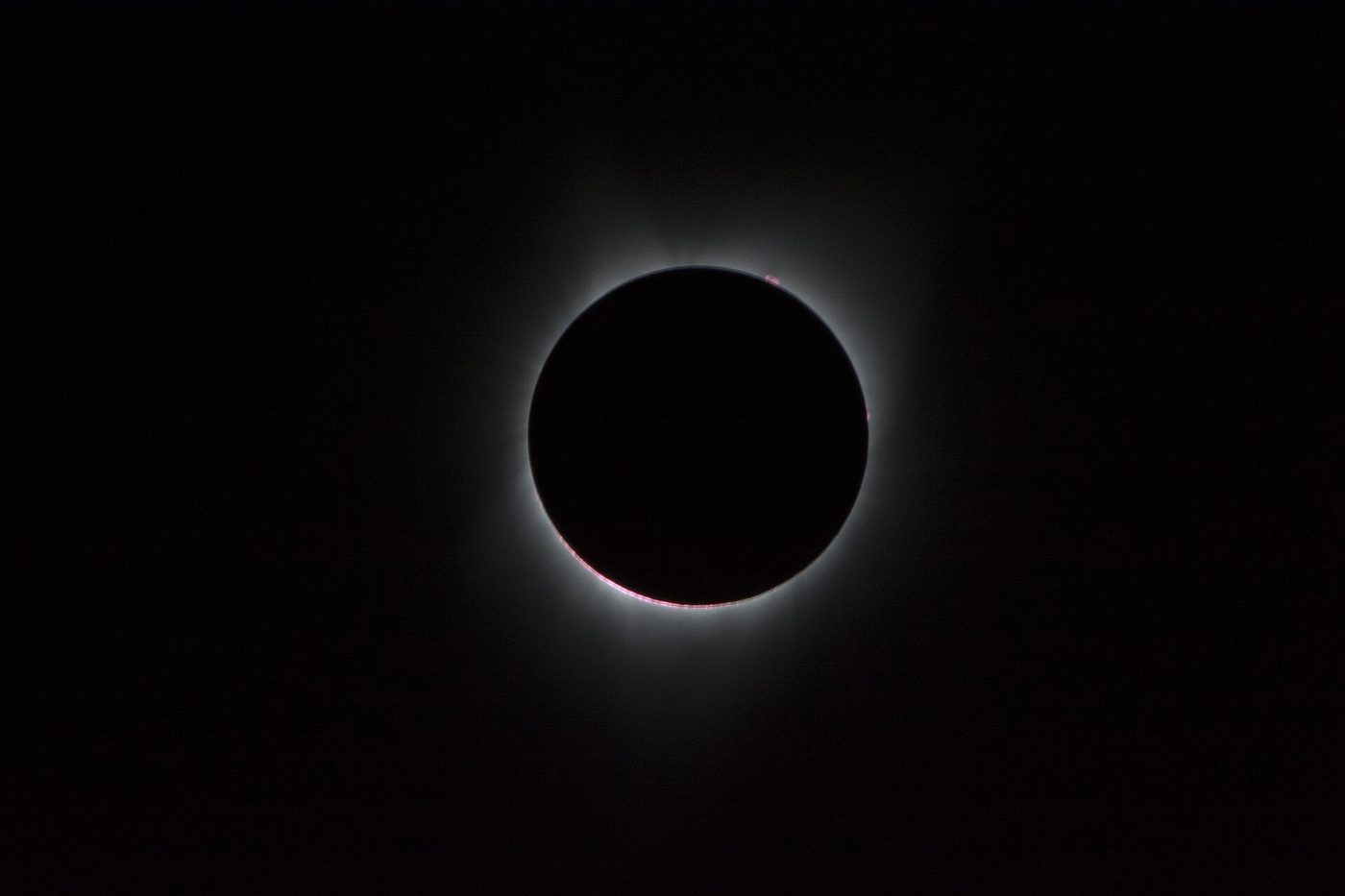
A solar eclipse happens when the Moon passes exactly between the Sun and the Earth, so the order is Sun, Moon, Earth. The Moon blocks the Sun’s light and its shadow falls on the Earth. It can only happen at new moon.
The Sun is about 400 times wider than the Moon but also about 400 times further away, so the two look almost the same size in our sky. Along the narrow path of the Moon’s darkest shadow the Sun is completely hidden for a few minutes: a total eclipse. Either side of it, only part of the Sun is covered: a partial eclipse. Never look straight at the Sun, even when most of it is covered: it can damage your eyes for good.
What is a lunar eclipse?
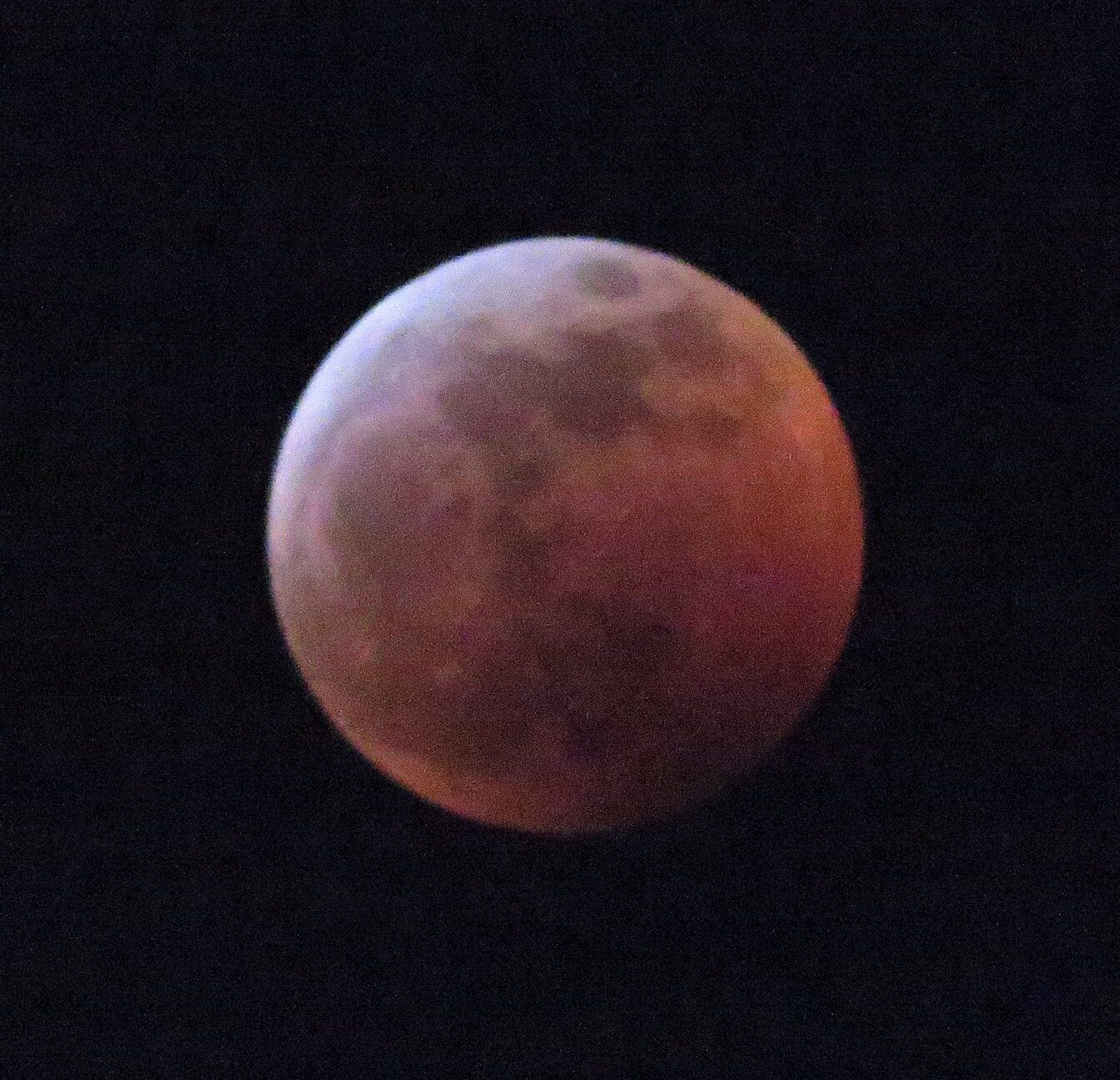
A lunar eclipse happens when the Earth passes exactly between the Sun and the Moon, so the order is Sun, Earth, Moon. The Moon moves into the Earth’s shadow. It can only happen at full moon. It does not vanish but usually turns a dull coppery red, because a little sunlight is bent through the Earth’s atmosphere into the shadow, and red light gets through best.
| Solar eclipse | Lunar eclipse | |
|---|---|---|
| Order | Sun, Moon, Earth | Sun, Earth, Moon |
| Phase | New moon | Full moon |
| Shadow | The Moon’s, on the Earth | The Earth’s, on the Moon |
| Seen from | A narrow path on the Earth | Everywhere on the night side |
| Safe to watch? | Never look at the Sun | Yes |
Eclipses do not happen every month, because the Sun, Moon and Earth only rarely line up exactly.
Tides, the regular rise and fall of the sea, are caused mainly by the Moon’s gravity pulling on the oceans: most coasts get two high tides a day (more in gravity in space).
Stretch Why no eclipse every month? The Moon’s orbit is tilted by about 5° to the Earth’s orbit round the Sun. At most new and full moons the Moon passes a little above or below the line from the Sun to the Earth, and misses. An eclipse needs a new or full moon just as the Moon passes through the flat plane of the Earth’s orbit.
Written to the KS3 national curriculum. Last changed 14 November 2026.
Key words
Say them, spell them, use them in an answer.
- Moon
- natural satellite
- phase
- new moon
- full moon
- waxing
- waning
- crescent
- gibbous
- solar eclipse
- lunar eclipse
- tides
Common misconception
Often said“The Moon has phases because the Earth’s shadow covers part of it.”
In factThe Earth’s shadow only reaches the Moon during a lunar eclipse, a few times a year at most. The phases happen because the Sun always lights half of the Moon, and as the Moon orbits we see different amounts of that lit half.
Did you know?
Mirrors on the Moon
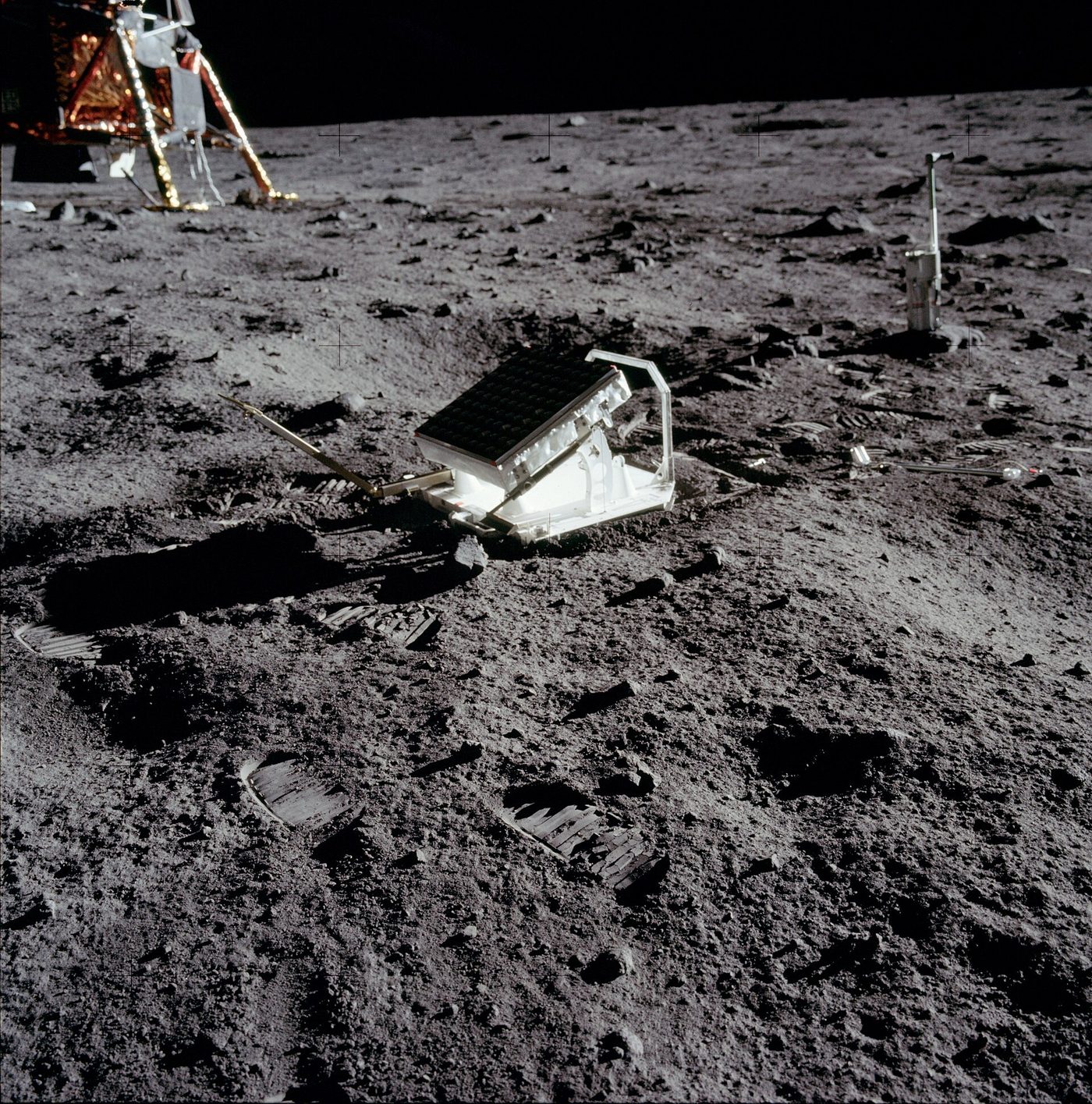
In 1969 the Apollo 11 astronauts left a panel of special mirrors on the Moon. Scientists still fire lasers at it from the Earth and time how long the light takes to come back, and they have found that the Moon is moving away from us by about 3.8 cm a year.
Photo: NASA, Public domain, via Wikimedia Commons
Try 5 questions
Quick questions on the Moon, marked as you go. Each one explains the answer.
Question 1 of 5
What does waxing mean, when we talk about the Moon?
Choose an answer. Each question explains itself.
The homework sheet
About twenty minutes. Everything on it is in the notes above; the answers are on the last page.
Free homework sheet
The Moon homework sheet
17 questions, about twenty minutes, with the answers on the last page: multiple choice, true or false, short answers, key words to define and one to explain in full.
KS3 Space
Revised the whole unit?
When every topic in space is done, two different papers test the whole unit, each with its own mark scheme.


 Watch the trailer · 1:06
New from Cartana · Beta test 1–31 December
Revision that feels like an adventure
Cartana is our KS3 learning adventure: sail between islands, answer quick-fire questions and battle bosses. It starts with science, with maths on the way, and launches in 2027. This December a small group of testers gets to play it first.
In the Cartana adventure, every science unit is an island to explore. The island for space is being built.
- Play the game before its official release
- Help us build it with your feedback
- Earn exclusive in-game items in return
More in this unit
Space
- 1The Solar SystemThe Sun, the eight planets in order, moons, dwarf planets, asteroids and comets, rocky planets and gas giants, orbits and the scale of the Solar System
- 2Day, night and the seasonsThe Earth’s spin and day and night, its orbit and the year, the tilt of the axis, why summer is warmer, the two hemispheres and day length
- 4Gravity in spaceNextGravity between any two masses, how gravity keeps moons and planets in orbit, the Earth and Moon and the Earth and Sun, g on other planets, and weight calculations
- 5Stars and galaxiesThe Sun as a star, other stars, the Milky Way and other galaxies, the light year as a distance, and why looking out is looking back in time