
KS3 Chemistry · Chemical reactions
Chemical and physical changes
- What a chemical reaction is: new substances made as atoms are rearranged into new combinations
- Reactants and products, and the signs that a reaction has happened
- Physical changes such as melting and dissolving, and how they differ from chemical ones
- The kinds of reaction in this unit: combustion, oxidation, thermal decomposition and displacement
- 3 min read
- 5 quick questions
- Free homework sheet
- Years 7 to 9
Revision notes
A chemical reaction makes one or more new substances: the atoms of the starting substances are rearranged into new combinations. A physical change, such as melting or dissolving, makes no new substance and is usually easy to reverse.
What is a chemical reaction?
In a chemical reaction the substances you start with are the reactants and the new substances made are the products. When the gas in a cooker burns, methane and oxygen are the reactants; carbon dioxide and water are the products.
No atoms are made or destroyed in a reaction. The joins between atoms break and new joins form, so the same atoms end up in new substances with new properties. That is why the total mass stays the same: see conservation of mass.
How can you tell a chemical reaction has happened?
You cannot see atoms, but a reaction usually gives itself away. Look for:
- a gas given off: fizzing or bubbles
- a colour change
- a solid appearing when two solutions are mixed (a precipitate)
- a temperature change: the mixture gets hotter or colder
- light or sound, as in a firework
- a new smell
Be careful: a sign is a clue, not proof. Boiling water bubbles, and ice melting in a drink makes the drink colder, yet both are physical changes. The real test is whether a new substance has been made.
What is a physical change?
In a physical change the particles are the same before and after; only their arrangement changes. Melting, freezing, boiling, condensing and dissolving are all physical changes (see changes of state). Most are easy to reverse: freeze water and you get ice back; evaporate salty water and you get the salt back.
| Chemical change | Physical change | |
|---|---|---|
| Result | A new substance | No new substance |
| Atoms | Rearranged into new substances | Same particles, moved about |
| Reversing | Usually hard | Usually easy |
| Mass | Conserved | Conserved |
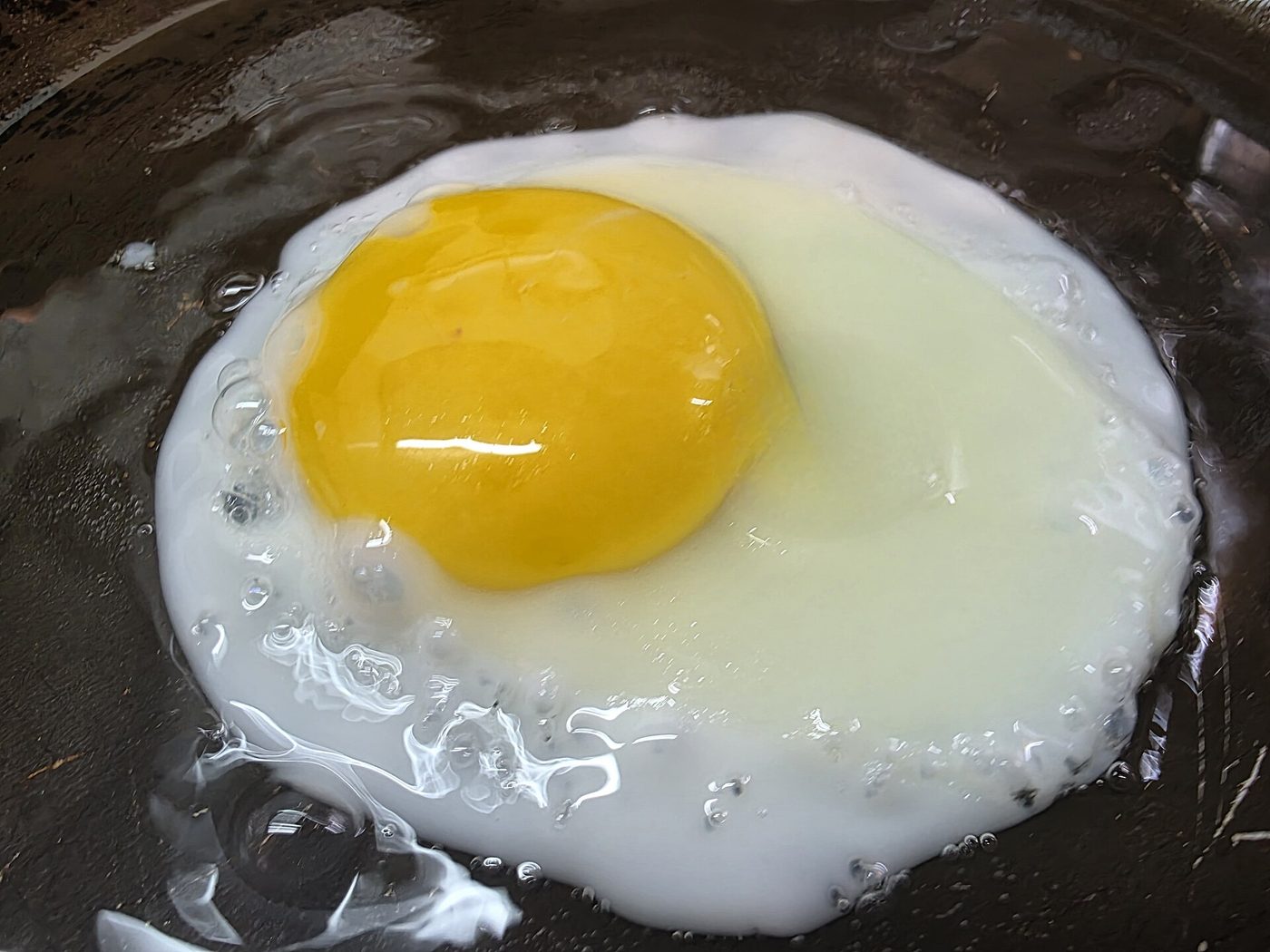
| Examples | Burning, rusting, cooking an egg | Melting, boiling, dissolving sugar |
A burning candle shows both. The wax melts near the wick (physical), then wax vapour burns in the flame (chemical), making carbon dioxide and water.
What kinds of reaction will you meet?
- Combustion: burning a fuel in oxygen (see combustion and oxidation).
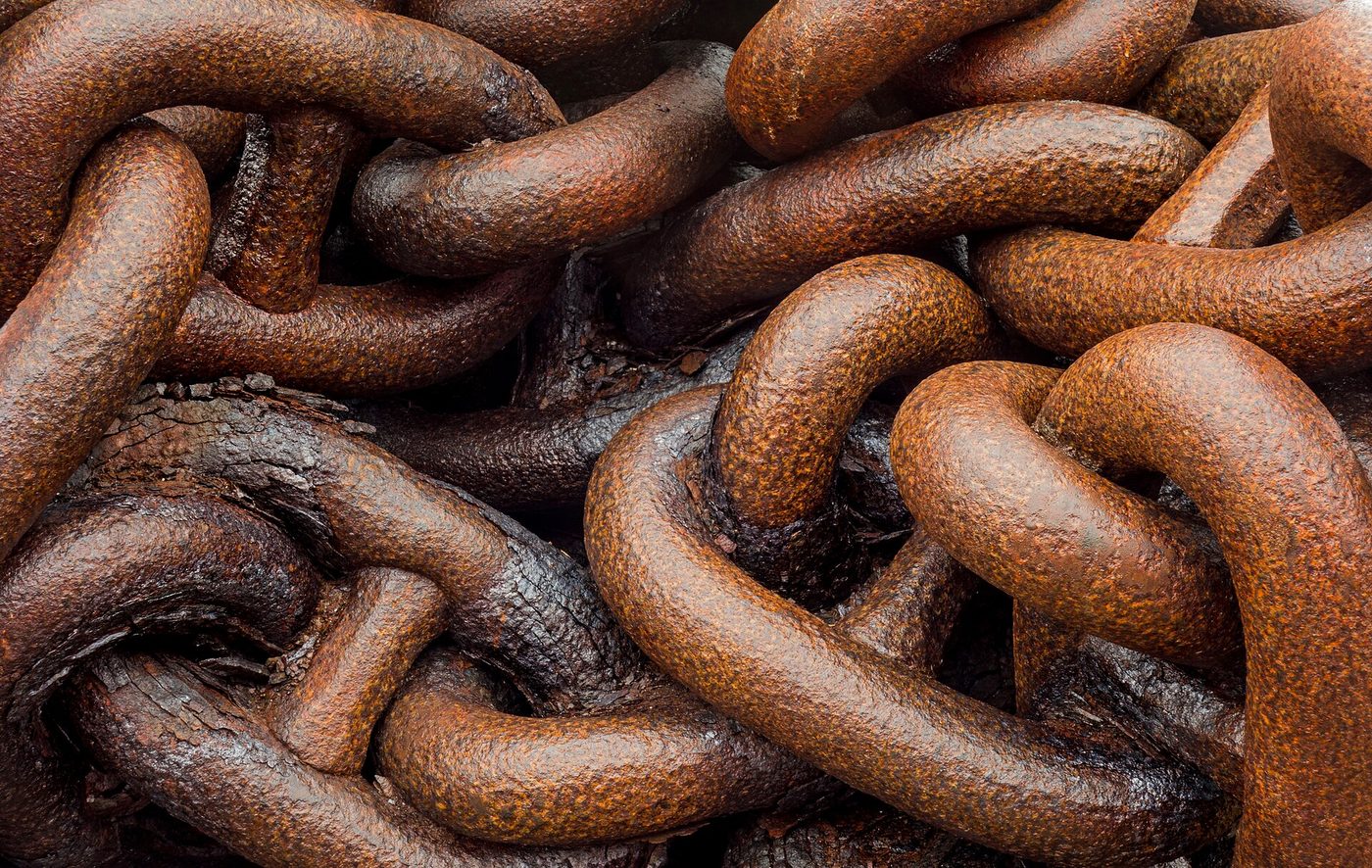
- Oxidation: a substance joining with oxygen, such as iron rusting.
- Thermal decomposition: one substance breaking down when heated (see thermal decomposition).
- Displacement: a more reactive metal pushes a less reactive one out of its compound, as when an iron nail in copper sulfate solution gets coated with copper.
Some reactions give out energy and some take it in: see energy changes.
Stretch "Hard to reverse" is not the same as "impossible". Heat blue copper sulfate crystals and they turn into a white powder as water is driven off. Add a few drops of water to the white powder and it turns blue again, and gets hot. This is a reversible reaction, shown in an equation with a double arrow, ⇌.
Written to the KS3 national curriculum. Last changed 14 November 2026.
Key words
Say them, spell them, use them in an answer.
- chemical reaction
- physical change
- reactant
- product
- new substance
- precipitate
- combustion
- oxidation
- thermal decomposition
- displacement
Common misconception
Often said“Dissolving sugar in water is a chemical reaction, because the sugar disappears.”
In factDissolving is a physical change. The sugar particles spread out between the water particles but are still sugar: the water tastes sweet, and if you evaporate the water the sugar is left behind. No new substance is made.
Did you know?
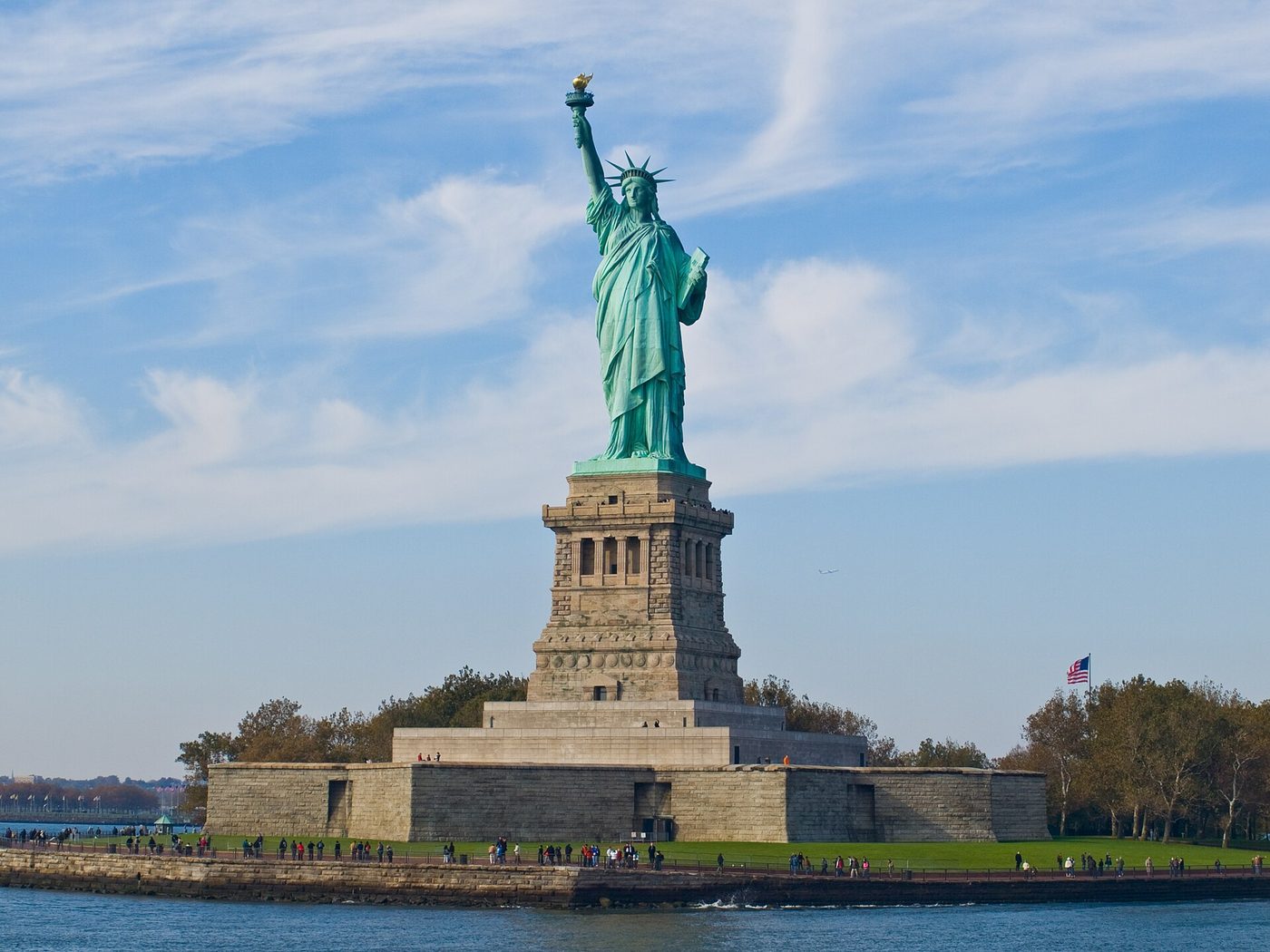
The Statue of Liberty
The Statue of Liberty was the reddish-brown of new copper when it was unveiled in New York in 1886. Its copper skin slowly reacted with the air and rain, and by 1906, twenty years later, it had turned the green it is today. The green coat protects the copper underneath.
Photo: William Warby, CC BY 2.0, via Wikimedia Commons
Try 5 questions
Quick questions on chemical and physical changes, marked as you go. Each one explains the answer.
Question 1 of 5
Which is the best evidence that a reaction has happened?
Choose an answer. Each question explains itself.
The homework sheet
About twenty minutes. Everything on it is in the notes above; the answers are on the last page.
Free homework sheet
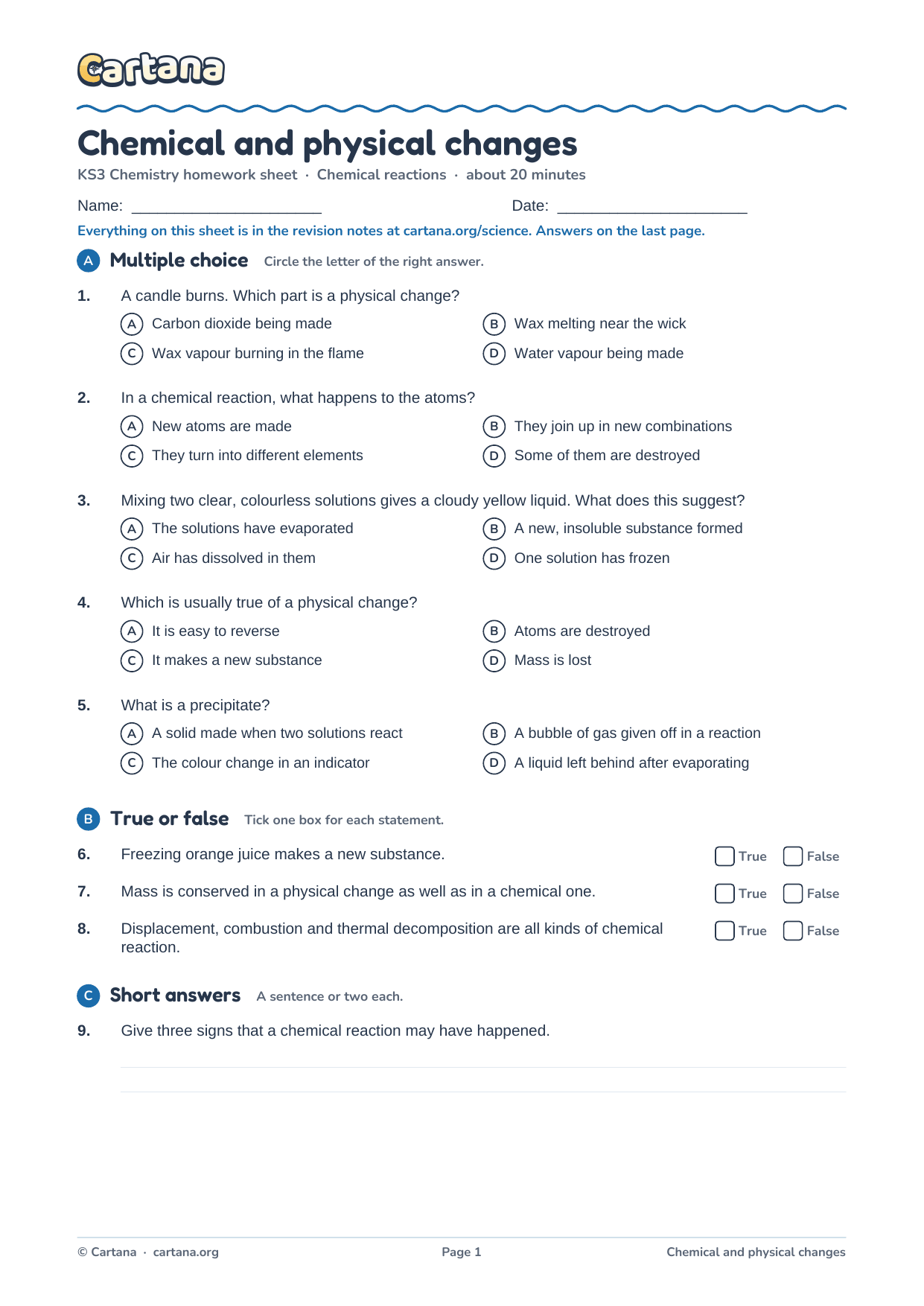
Chemical and physical changes homework sheet
17 questions, about twenty minutes, with the answers on the last page: multiple choice, true or false, short answers, key words to define and one to explain in full.
KS3 Chemical reactions
Revised the whole unit?
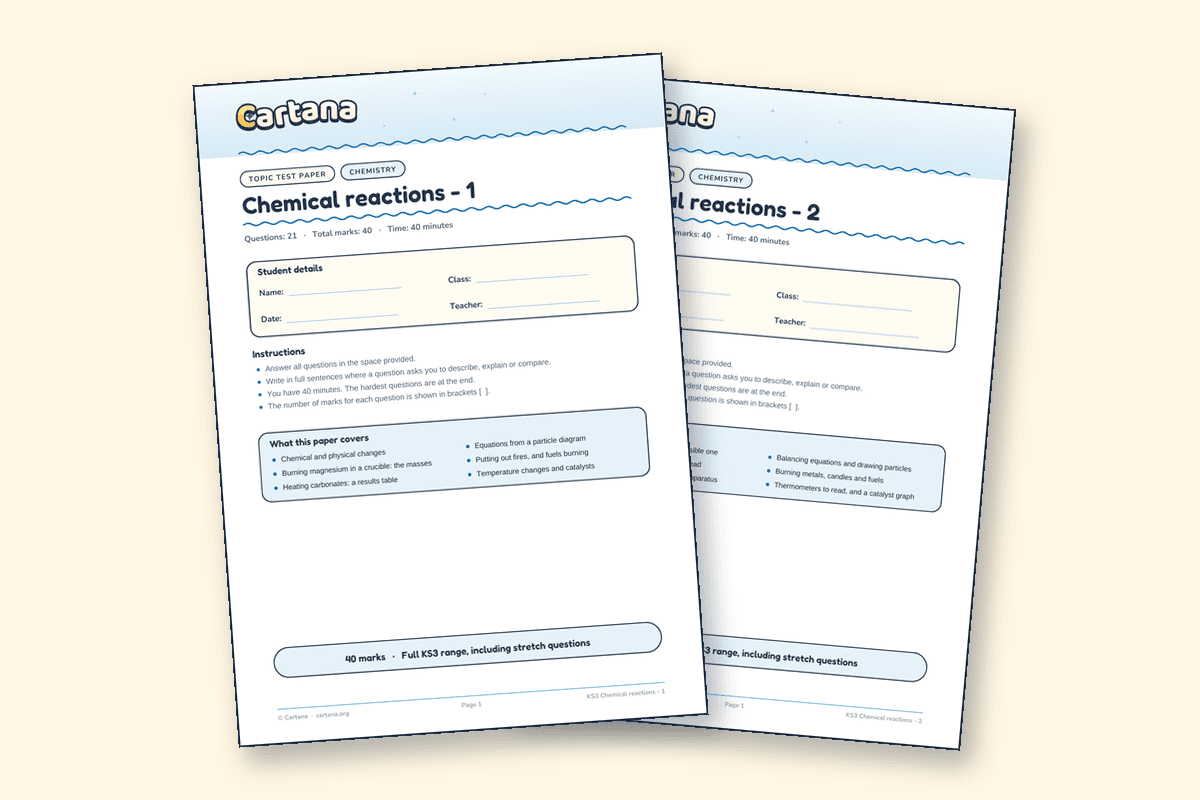
When every topic in chemical reactions is done, two different papers test the whole unit, each with its own mark scheme.


 Watch the trailer · 1:06
New from Cartana · Beta test 1–31 December
Revision that feels like an adventure
Cartana is our KS3 learning adventure: sail between islands, answer quick-fire questions and battle bosses. It starts with science, with maths on the way, and launches in 2027. This December a small group of testers gets to play it first.
In the Cartana adventure, every science unit is an island to explore. The island for chemical reactions is being built.
- Play the game before its official release
- Help us build it with your feedback
- Earn exclusive in-game items in return
More in this unit
Chemical reactions
- 2Word and symbol equationsNextWord equations, state symbols, symbol equations and balancing simple equations by counting atoms
- 3Conservation of massConservation of mass in reactions: no atoms made or lost, gases leaving or joining, and simple calculations
- 4Combustion and oxidationThe fire triangle, oxidation of metals and non-metals, burning hydrocarbons and testing for water and carbon dioxide
- 5Thermal decompositionOne substance breaking down on heating, metal carbonates, copper carbonate, the limewater test and comparing carbonates
- 6Energy changes and catalystsExothermic and endothermic reactions, measuring the temperature change, and what catalysts do