
KS3 Physics · Energy
Conservation of energy
- The law of conservation of energy: never made or destroyed
- Useful and wasted energy, and why wasted energy is dissipated
- Reading and drawing Sankey diagrams to scale
- Calculating efficiency as a percentage
- 5 min read
- 5 quick questions
- Free homework sheet
- Years 7 to 9
Revision notes
The conservation of energy is the law that energy is never made or destroyed, only transferred from one store to another. In any change, the total amount of energy is the same at the end as at the start.
What is the law of conservation of energy?
Energy cannot be created or destroyed. When something happens, energy moves between stores, but if you add up every store at the end you get the same total as at the start. A ball dropped from a height starts with 10 J in its gravitational store; as it falls, the 10 J moves into its kinetic store, and when it lands, into the thermal store of the ball, the floor and the air (see energy stores and transfers).
So energy is never "used up". A flat battery has not lost its energy into nothing: its chemical store has been transferred to other stores, mostly the thermal store of the surroundings.
What is wasted energy?
Every device transfers energy where you want it, and also where you don't. The energy that goes where you want it is useful energy; the rest is wasted energy. A lamp is for light, so the light is useful and the heating is wasted. Most wasted energy heats the surroundings, through friction, air resistance, electrical resistance and sound.
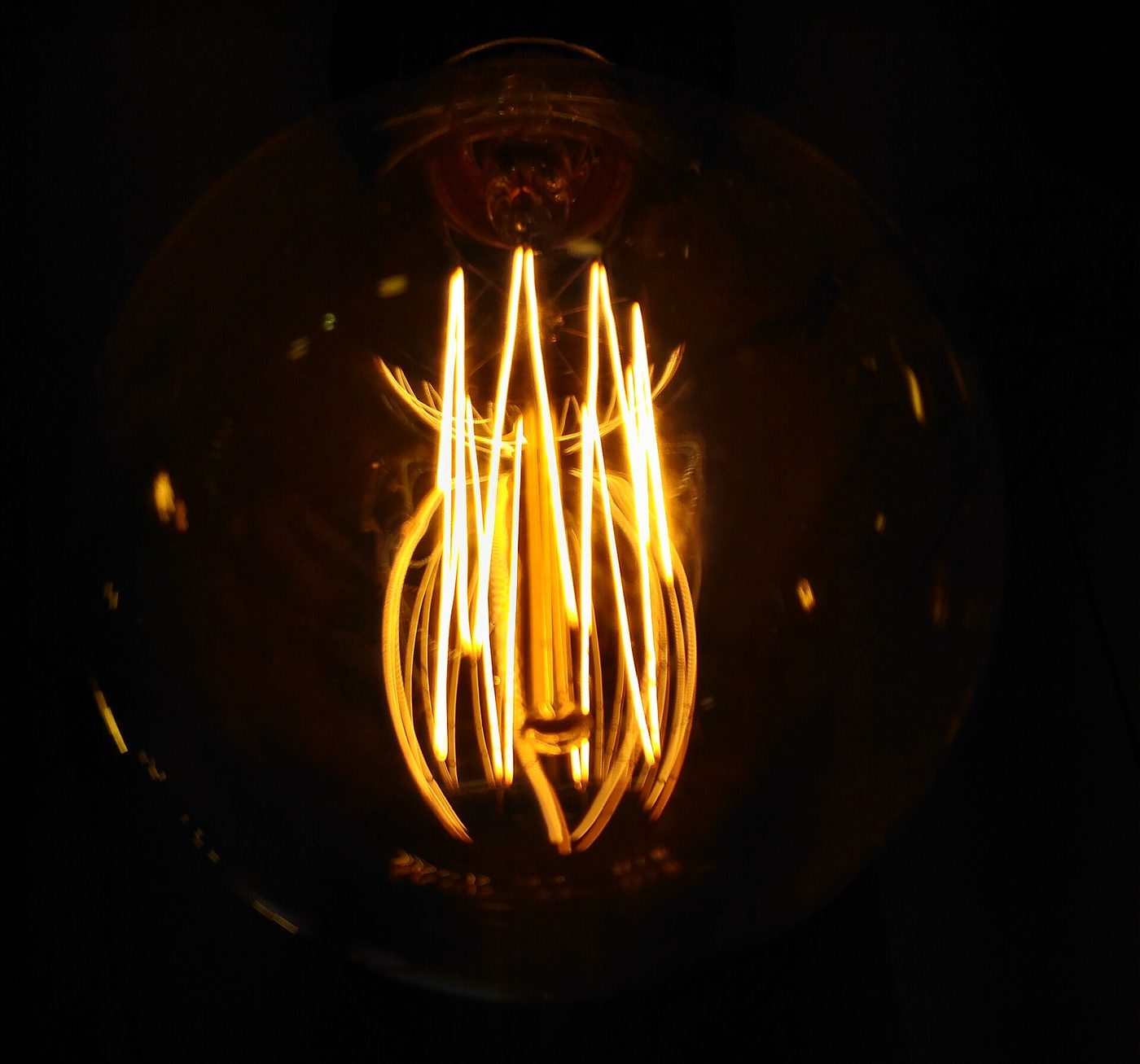
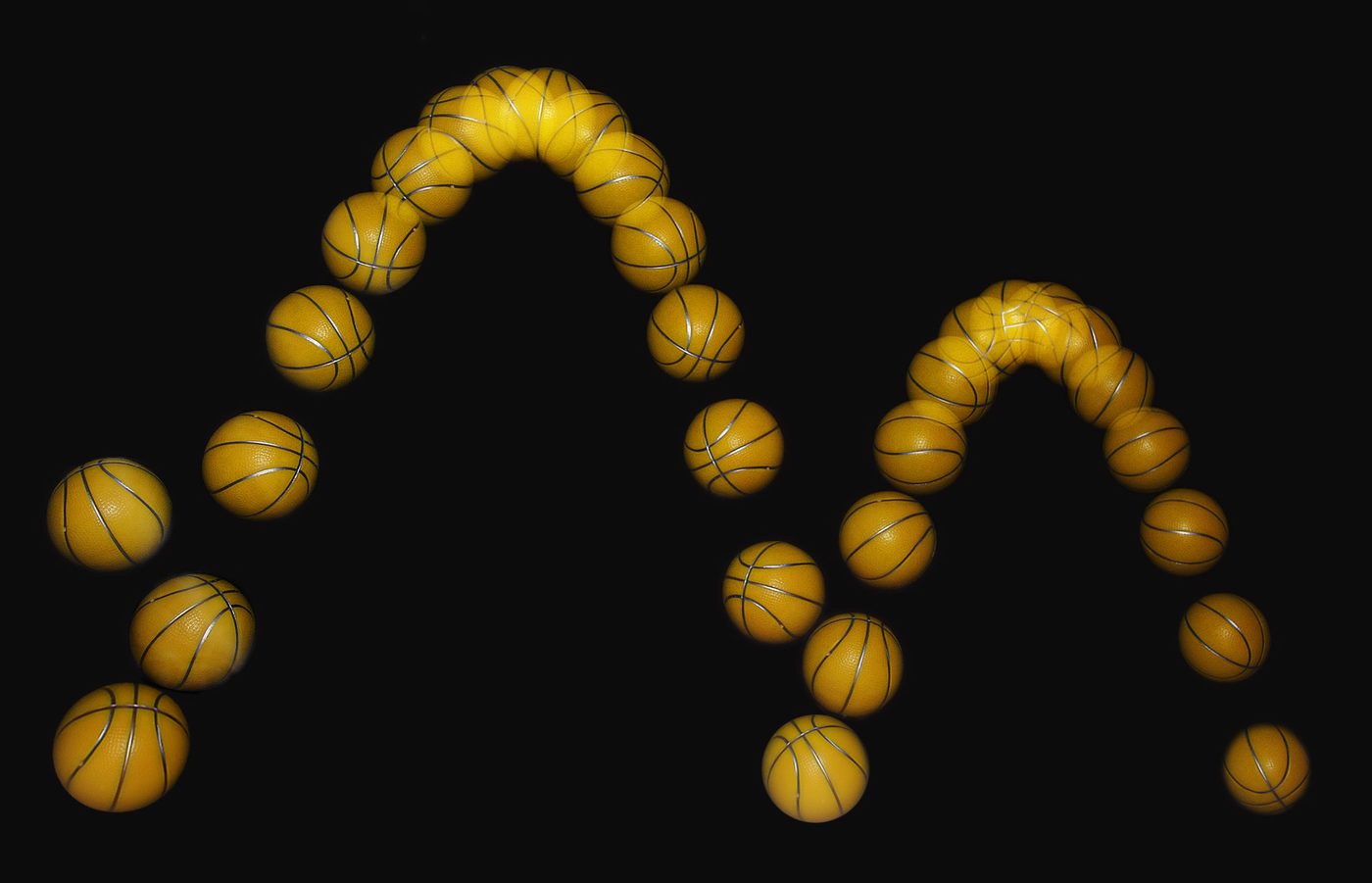
Wasted energy spreads out into the surroundings, warming them so slightly that it is very hard to use again. This spreading out is called dissipation. A bouncing ball shows it: each bounce is lower than the last, because each time some energy is dissipated.
What does a Sankey diagram show?
A Sankey diagram shows where the energy goes. The arrow starts as wide as the energy put in, then splits: the useful energy carries straight on and the wasted energy bends away. The widths are drawn to scale, and because energy is conserved, the widths of the arrows out add up to the width of the arrow in.
How do you calculate efficiency?
Efficiency says how much of the energy put in ends up as useful energy.
Both energies are in joules (J), and the efficiency is a percentage. It can never be more than 100%, because no device can give out more energy than it takes in. An electric heater comes close: its job is heating, so nearly all the energy it transfers is useful.
An electric motor is given 200 J. It lifts a load, giving 150 J to the load's gravitational store. What is its efficiency?
efficiency = useful energy out ÷ total energy in × 100%
efficiency = 150 J ÷ 200 J × 100% = 75%
The other 50 J (200 J − 150 J) is wasted, heating the motor and making sound.
A kettle is given 400 kJ. The water's thermal store gains 340 kJ. How much energy is wasted, and what is the kettle's efficiency?
wasted energy = 400 kJ − 340 kJ = 60 kJ
efficiency = 340 kJ ÷ 400 kJ × 100% = 85%
How can you waste less energy?
- Oil moving parts, to cut friction, the force between surfaces that rub.
- Give vehicles a streamlined shape, smooth and tapering so air flows past easily, to cut air resistance.
- Insulate hot things, so less energy heats the surroundings (see heating and cooling).
- Choose a better design: a 9 W LED bulb gives about as much light as a 60 W filament bulb.
Stretch In the 1840s James Joule let falling weights turn a paddle wheel in a can of water. The water warmed up, and the energy its thermal store gained matched the energy the weights lost from their gravitational store. It takes about 4,200 J to warm 1 kg of water by 1 °C. This was early evidence that energy is conserved, and the joule is named after him.
Written to the KS3 national curriculum. Last changed 15 November 2026.
Key words
Say them, spell them, use them in an answer.
- conservation of energy
- useful energy
- wasted energy
- dissipation
- Sankey diagram
- efficiency
- friction
- streamlined
Common misconception
Often said“When a battery goes flat, its energy has been used up and is gone.”
In factEnergy is never destroyed. The battery's chemical store has been transferred to other stores, mostly the thermal store of the surroundings. It has spread out so thinly that it is very hard to use again, but it is all still there.
Did you know?
Joule's honeymoon
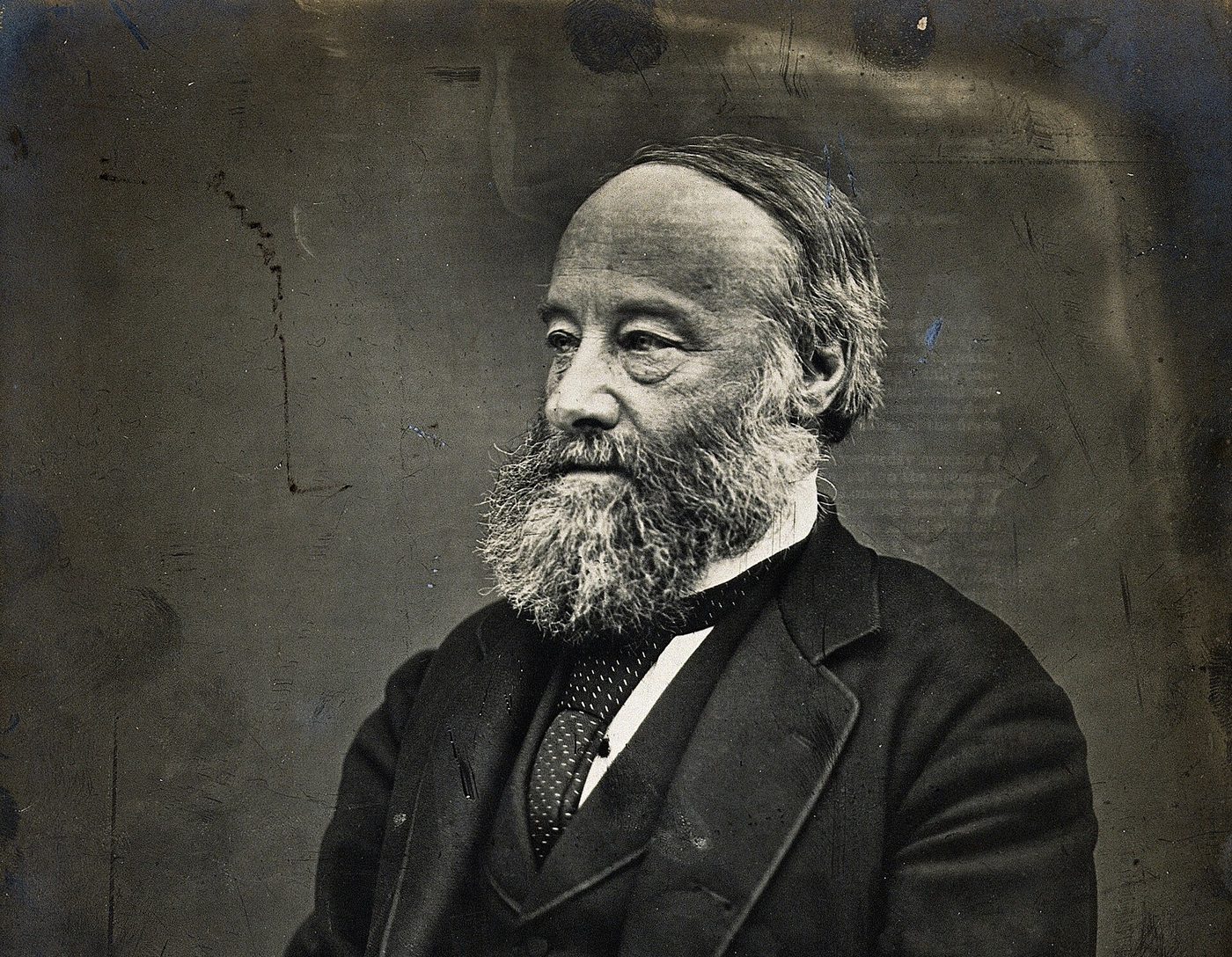
James Joule is said to have taken a thermometer on his honeymoon in the Alps in 1847, to test whether water at the bottom of a waterfall is warmer than at the top. It is, but only just: falling 100 m warms water by less than a quarter of a degree.
Photo: Wellcome Collection, CC BY 4.0, via Wikimedia Commons
Try 5 questions
Quick questions on conservation of energy, marked as you go. Each one explains the answer.
Question 1 of 5
A lamp is given 100 J and gives out 5 J as light. How much energy does it waste?
Choose an answer. Each question explains itself.
The homework sheet
About twenty minutes. Everything on it is in the notes above; the answers are on the last page.
Free homework sheet
Conservation of energy homework sheet
17 questions, about twenty minutes, with the answers on the last page: multiple choice, true or false, short answers, key words to define and one to explain in full.
KS3 Energy
Revised the whole unit?
When every topic in energy is done, two different papers test the whole unit, each with its own mark scheme.


 Watch the trailer · 1:06
New from Cartana · Beta test 1–31 December
Revision that feels like an adventure
Cartana is our KS3 learning adventure: sail between islands, answer quick-fire questions and battle bosses. It starts with science, with maths on the way, and launches in 2027. This December a small group of testers gets to play it first.
In the Cartana adventure, every science unit is an island to explore. The island for energy is being built.
- Play the game before its official release
- Help us build it with your feedback
- Earn exclusive in-game items in return
More in this unit
Energy
- 1Energy stores and transfersThe energy stores, the four ways energy is transferred, and describing a change by its start and end
- 3Heating and coolingNextTemperature and thermal energy, hot to cold until thermal equilibrium, conduction, convection, radiation and insulators
- 4Energy resourcesFossil fuels, nuclear fuel and renewables, how a power station works, the UK's electricity and comparing resources fairly
- 5Power and energy billsPower in watts and kilowatts, energy = power × time, the kilowatt-hour, working out a bill, and energy in food
- 6Work and machinesWork done = force × distance; levers, ramps and pulleys trade force for distance; no machine gives out more energy than goes in