
KS3 Physics · Energy
Energy resources
- Fossil fuels, nuclear fuel and the renewable resources
- How a power station turns a turbine and a generator
- Where the UK's electricity came from in 2025
- Comparing resources fairly: supply, carbon dioxide, cost and land
- 4 min read
- 5 quick questions
- Free homework sheet
- Years 7 to 9
Revision notes
An energy resource is a supply of energy we can use for electricity, heating or transport, such as a fossil fuel, nuclear fuel, the wind or sunlight. Renewable resources are replaced naturally as fast as we use them; non-renewable ones will run out.
What are the main energy resources?
| Resource | Where its energy comes from | Renewable? |
|---|---|---|
| Fossil fuels | Chemical store of coal, oil and gas, formed from plants and sea creatures that died millions of years ago | No |
| Nuclear fuel | Nuclear store of uranium atoms | No |
| Biomass | Chemical store of wood, crops and waste from plants grown recently | Yes |
| Wind | Kinetic store of moving air | Yes |
| Sunlight | Radiation from the Sun, used by solar cells and solar water heaters | Yes |
| Hydroelectric | Gravitational store of water held behind a dam | Yes |
| Tides and waves | Kinetic store of moving seawater | Yes |
| Geothermal | Thermal store of hot rocks underground | Yes |
Fossil fuels took millions of years to form, so once burned they are gone for good. Burning them also releases carbon dioxide, which is changing the Earth's climate (see combustion).
How does a power station make electricity?
- Fuel burns in a boiler, heating water: chemical store to thermal store.
- The water boils, and high-pressure steam spins a turbine, a shaft with rows of blades, like a fan: thermal store to kinetic store.
- The turbine turns a generator, which transfers the energy electrically to the National Grid, the network of cables that carries electricity across the country.
- The steam is cooled back into water in a condenser and used again.
Much of the energy is wasted heating the surroundings: a modern gas power station delivers only about half of its fuel's energy as electricity. Wind turbines and hydroelectric dams skip the boiler, because moving air or water turns the turbine directly. Solar cells have no turbine at all: they turn light straight into electricity.
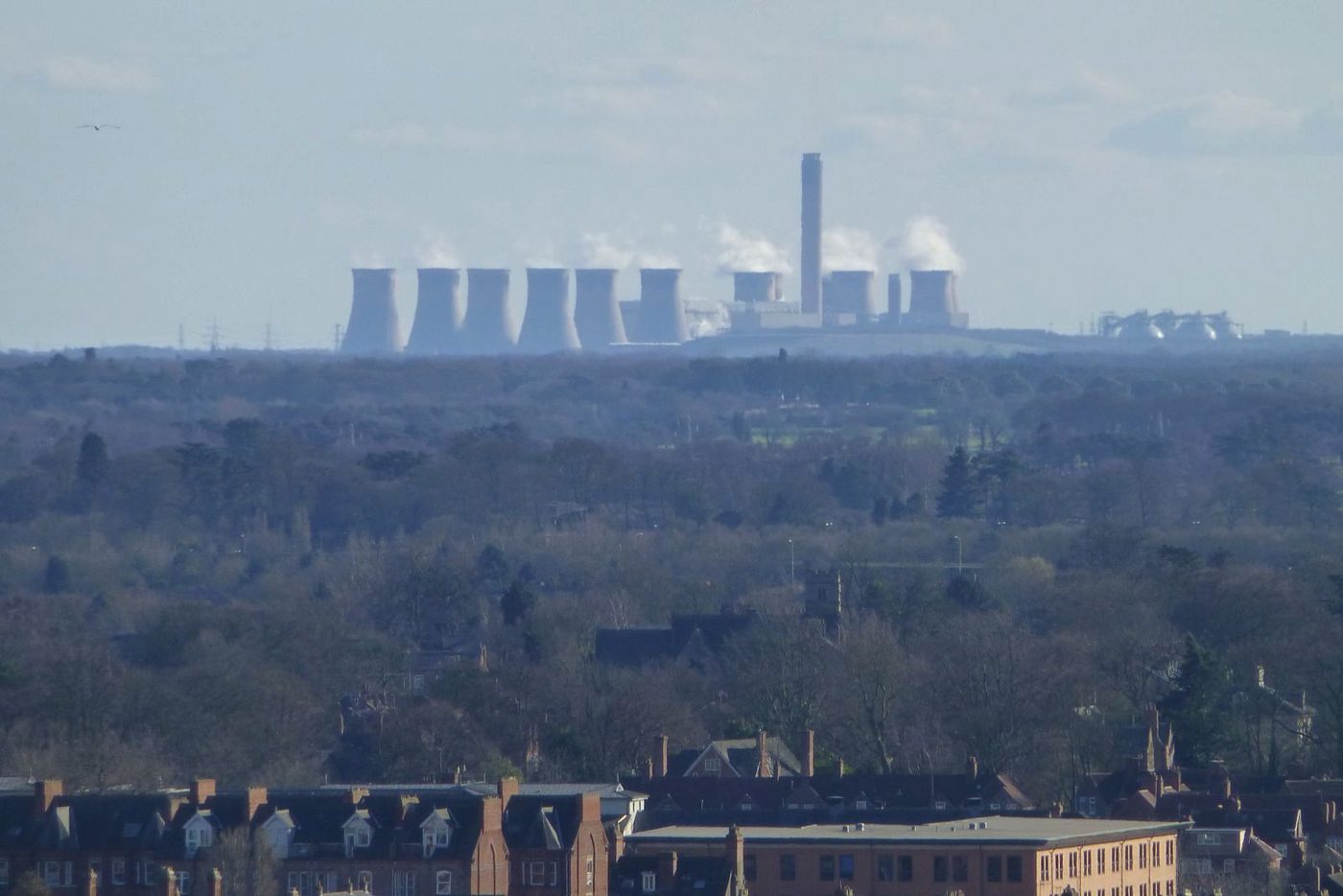
Where does the UK's electricity come from?
In 2025, renewable resources made 52.1% of the UK's electricity, more than half for the second year running. Wind was the biggest renewable (29.5%), but gas was still the biggest single source (31.8%). No electricity came from coal: the UK's last coal power station, Ratcliffe-on-Soar, closed in September 2024.
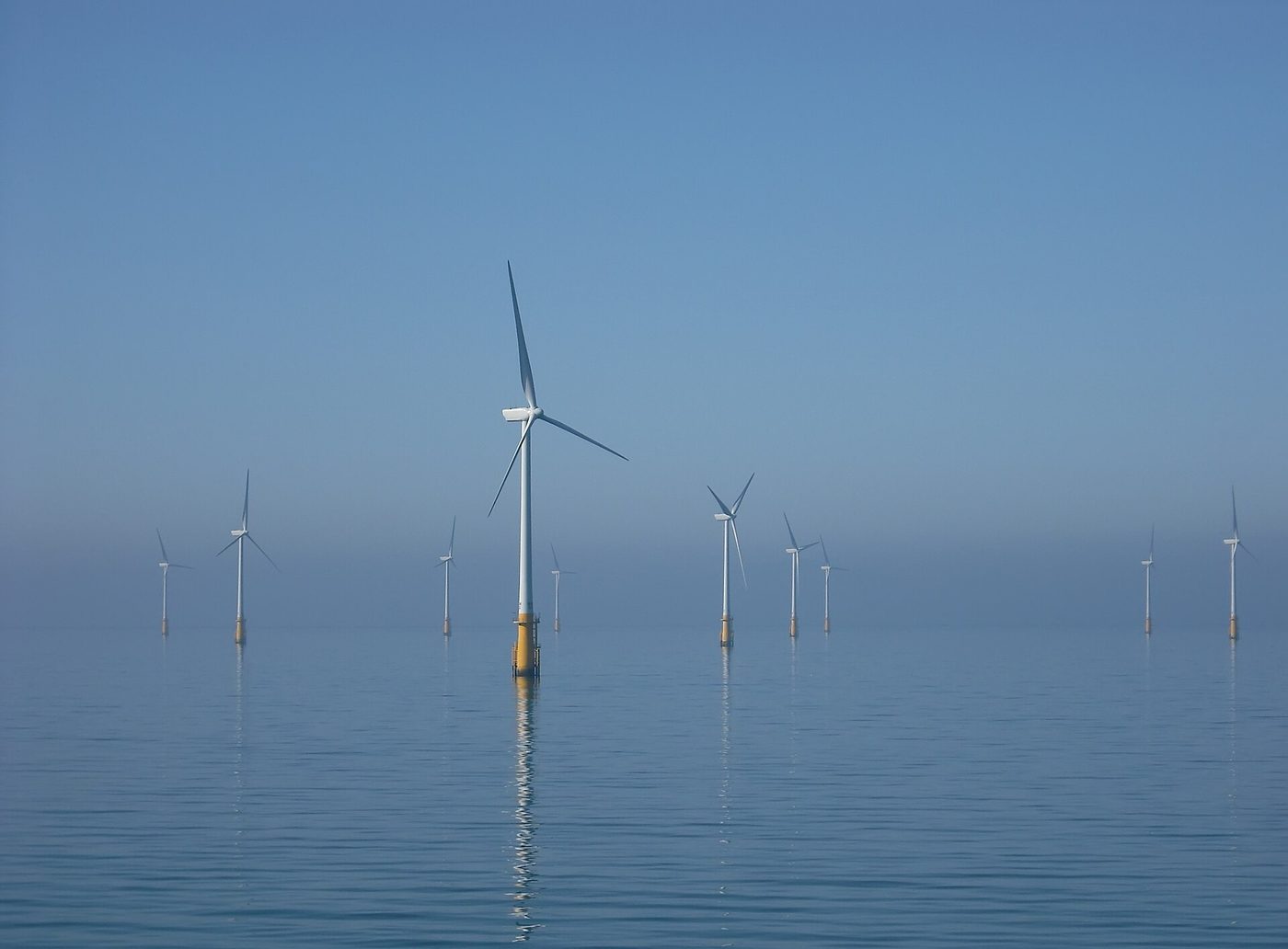
How do you compare energy resources fairly?
No resource is best at everything, so compare them on the same questions: Will it run out? Does it release carbon dioxide (CO2) while it runs? Can it make electricity on demand, whenever we need it? What does it cost, and what does it do to the land and wildlife?
| Resource | Runs out? | CO2? | On demand? |
|---|---|---|---|
| Gas | Yes | Yes | Yes, starts quickly |
| Nuclear | Yes | No | Steady, slow to change |
| Wind | No | No | Only when windy |
| Solar | No | No | Only in daylight |
Each has other costs: nuclear waste stays dangerous for thousands of years, wind farms take up space and change the view, and a hydroelectric dam floods a valley. That is why the UK uses a mix of resources.
Stretch Wind and sunlight come and go, so the grid needs a way to store energy. A pumped storage power station, such as Dinorwig in Wales, uses spare electricity to pump water up to a high lake, filling its gravitational store. When demand jumps, the water runs back down through turbines and makes electricity again within a minute or so, or in seconds when it is kept ready.
Written to the KS3 national curriculum. Last changed 15 November 2026.
Key words
Say them, spell them, use them in an answer.
- energy resource
- renewable
- non-renewable
- fossil fuel
- nuclear fuel
- biomass
- hydroelectric
- turbine
- generator
- National Grid
Common misconception
Often said“Electricity is an energy resource, like coal or the wind.”
In factElectricity is a way of transferring energy, not a resource. It has to be generated, in a power station, a wind turbine or a solar cell, from a resource such as gas, uranium, wind or sunlight.
Did you know?
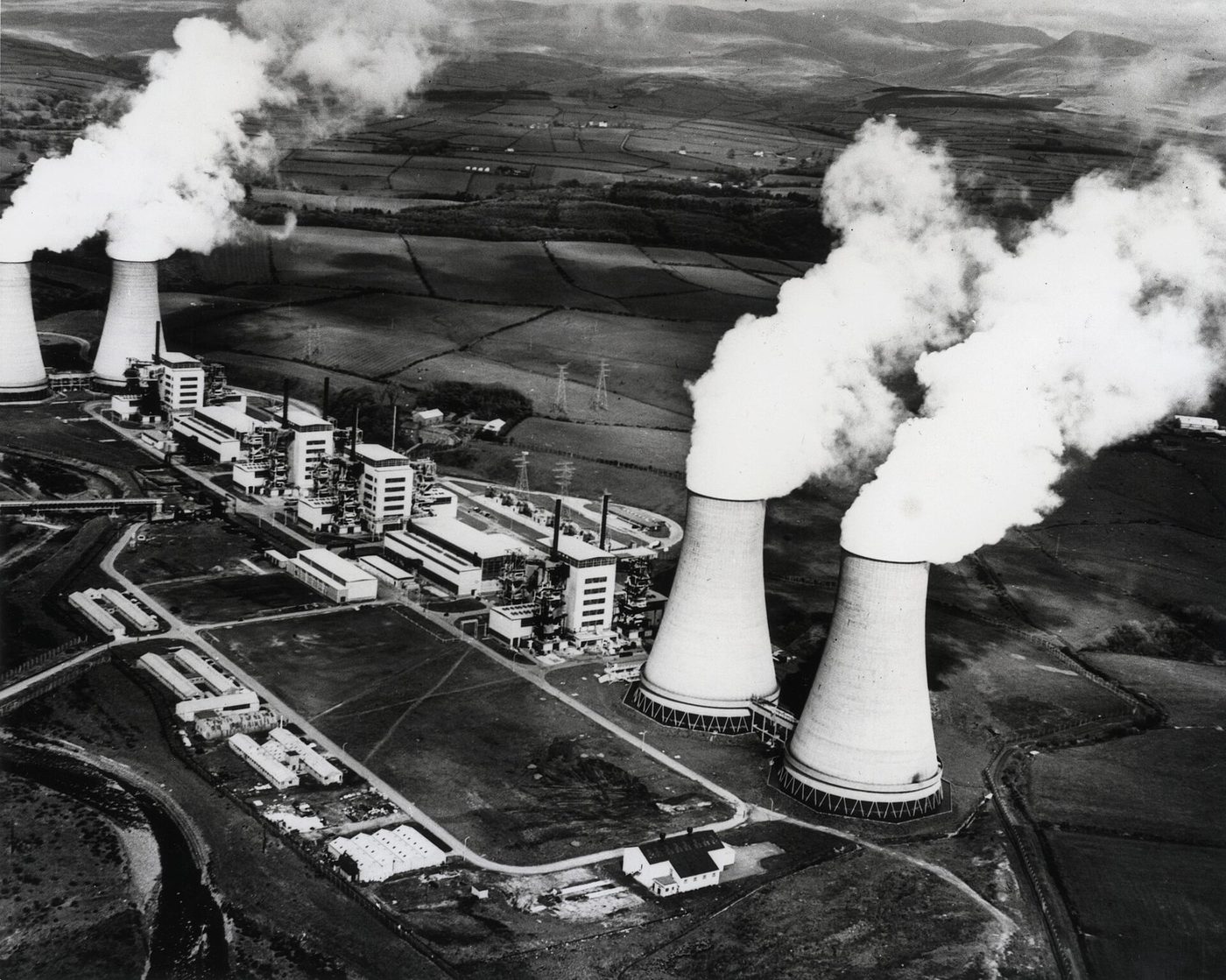
Calder Hall
Calder Hall in Cumbria, opened by Queen Elizabeth II on 17 October 1956, was the world's first full-scale nuclear power station. Its first reactor ran for almost 47 years before the station closed in 2003.
Photo: ENERGY.GOV, Public domain, via Wikimedia Commons
Try 5 questions
Quick questions on energy resources, marked as you go. Each one explains the answer.
Question 1 of 5
Why are fossil fuels non-renewable?
Choose an answer. Each question explains itself.
The homework sheet
About twenty minutes. Everything on it is in the notes above; the answers are on the last page.
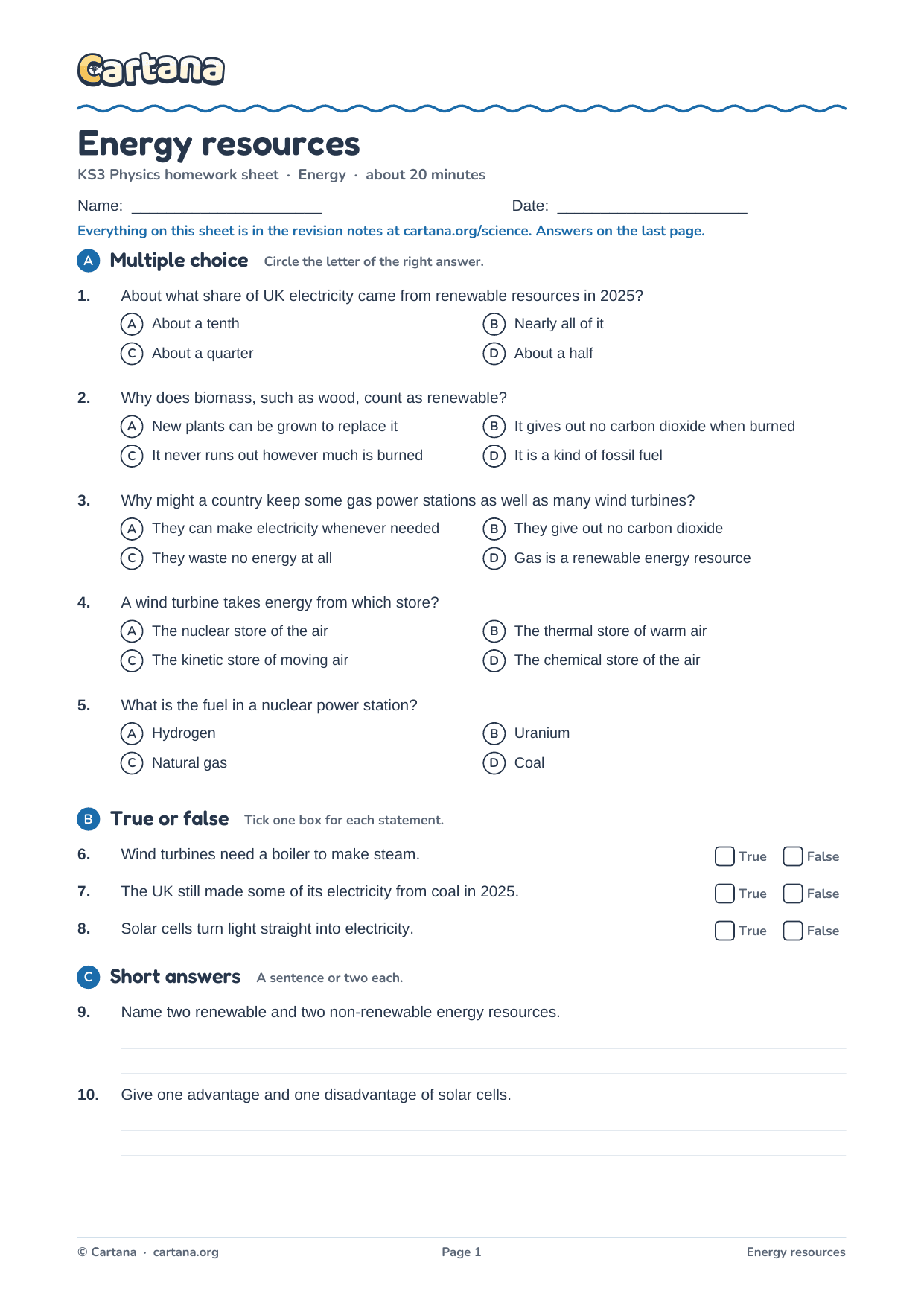
Free homework sheet
Energy resources homework sheet
17 questions, about twenty minutes, with the answers on the last page: multiple choice, true or false, short answers, key words to define and one to explain in full.
KS3 Energy
Revised the whole unit?
When every topic in energy is done, two different papers test the whole unit, each with its own mark scheme.


 Watch the trailer · 1:06
New from Cartana · Beta test 1–31 December
Revision that feels like an adventure
Cartana is our KS3 learning adventure: sail between islands, answer quick-fire questions and battle bosses. It starts with science, with maths on the way, and launches in 2027. This December a small group of testers gets to play it first.
In the Cartana adventure, every science unit is an island to explore. The island for energy is being built.
- Play the game before its official release
- Help us build it with your feedback
- Earn exclusive in-game items in return
More in this unit
Energy
- 1Energy stores and transfersThe energy stores, the four ways energy is transferred, and describing a change by its start and end
- 2Conservation of energyEnergy is never made or destroyed; useful and wasted energy, dissipation, Sankey diagrams and efficiency
- 3Heating and coolingTemperature and thermal energy, hot to cold until thermal equilibrium, conduction, convection, radiation and insulators
- 5Power and energy billsNextPower in watts and kilowatts, energy = power × time, the kilowatt-hour, working out a bill, and energy in food
- 6Work and machinesWork done = force × distance; levers, ramps and pulleys trade force for distance; no machine gives out more energy than goes in