
KS3 Working scientifically
Lab safety
- Hazard, risk and precaution, and how they fit into a risk assessment
- The lab rules, and the reason behind each one
- The Bunsen burner: the safety flame, the blue flame and how to light it
- The nine hazard symbols and what each one means
- 2 min read
- 5 quick questions
- Free homework sheet
- Years 7 to 9
Revision notes
Every practical starts with safety. A hazard is something that could cause harm, a risk is the chance that it does, and a precaution is what you do to make the risk smaller. Chemicals carry hazard symbols that warn what they can do.
Hazard, risk and precaution
- Hazard: something that could cause harm, such as a Bunsen flame, acid or broken glass.
- Risk: the chance that a hazard causes harm, and how bad the harm could be. In a risk assessment you write what could happen, for example “acid could splash into your eyes”.
- Precaution (or control measure): what you do to make the risk smaller, for example “wear eye protection”.
Lab rules
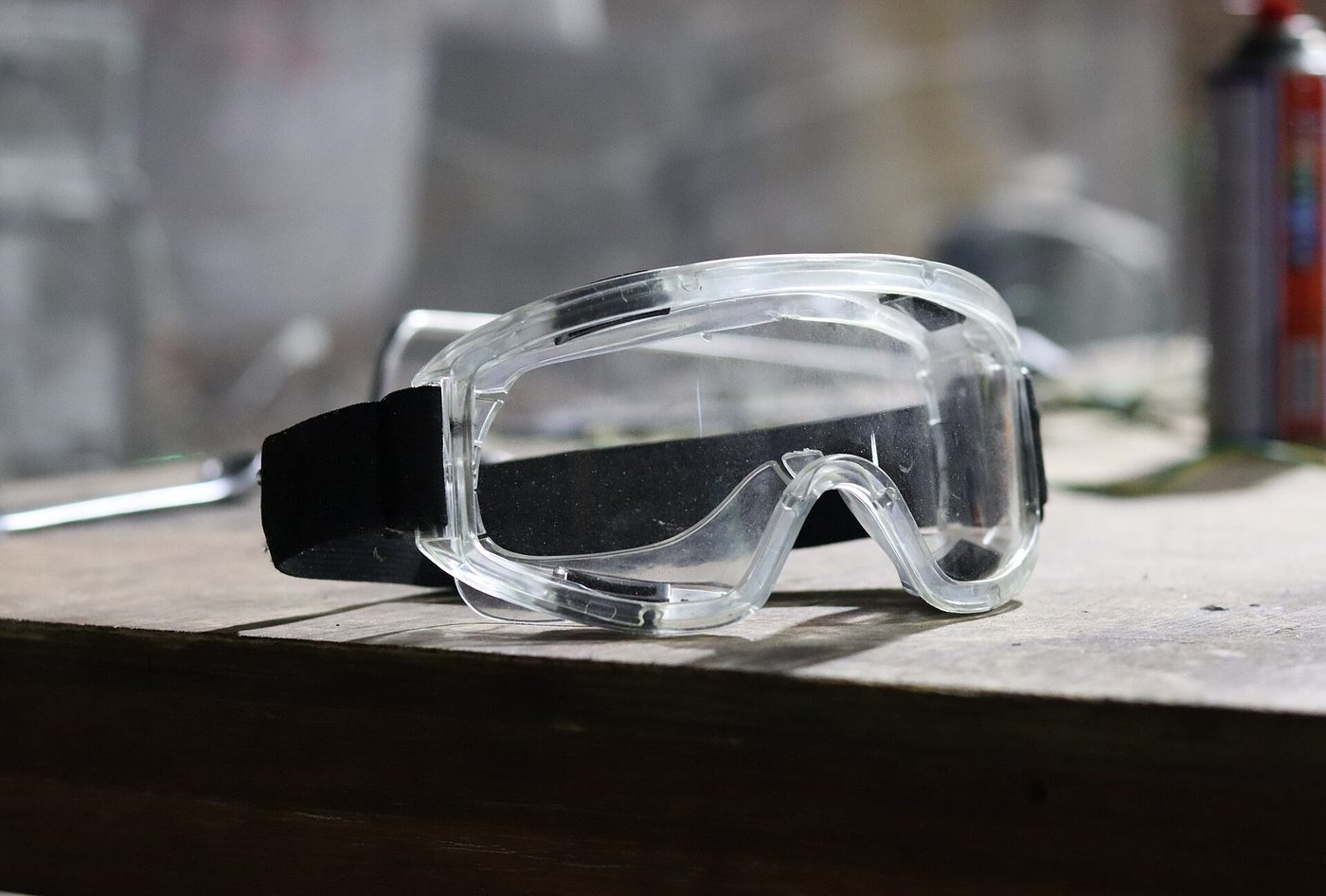
- Wear eye protection when heating or using chemicals.
- Tie long hair back. Tuck in ties and loose clothing.
- Bags and stools out of the walkways.
- Stand up when heating, so you can move away quickly.
- No eating or drinking, and never taste chemicals.
- Tell the teacher about breakages and spills straight away. Don’t pick up broken glass.
- Point test tubes away from people when heating them.
- Use a heatproof mat under a Bunsen burner. Wash your hands afterwards.
The Bunsen burner
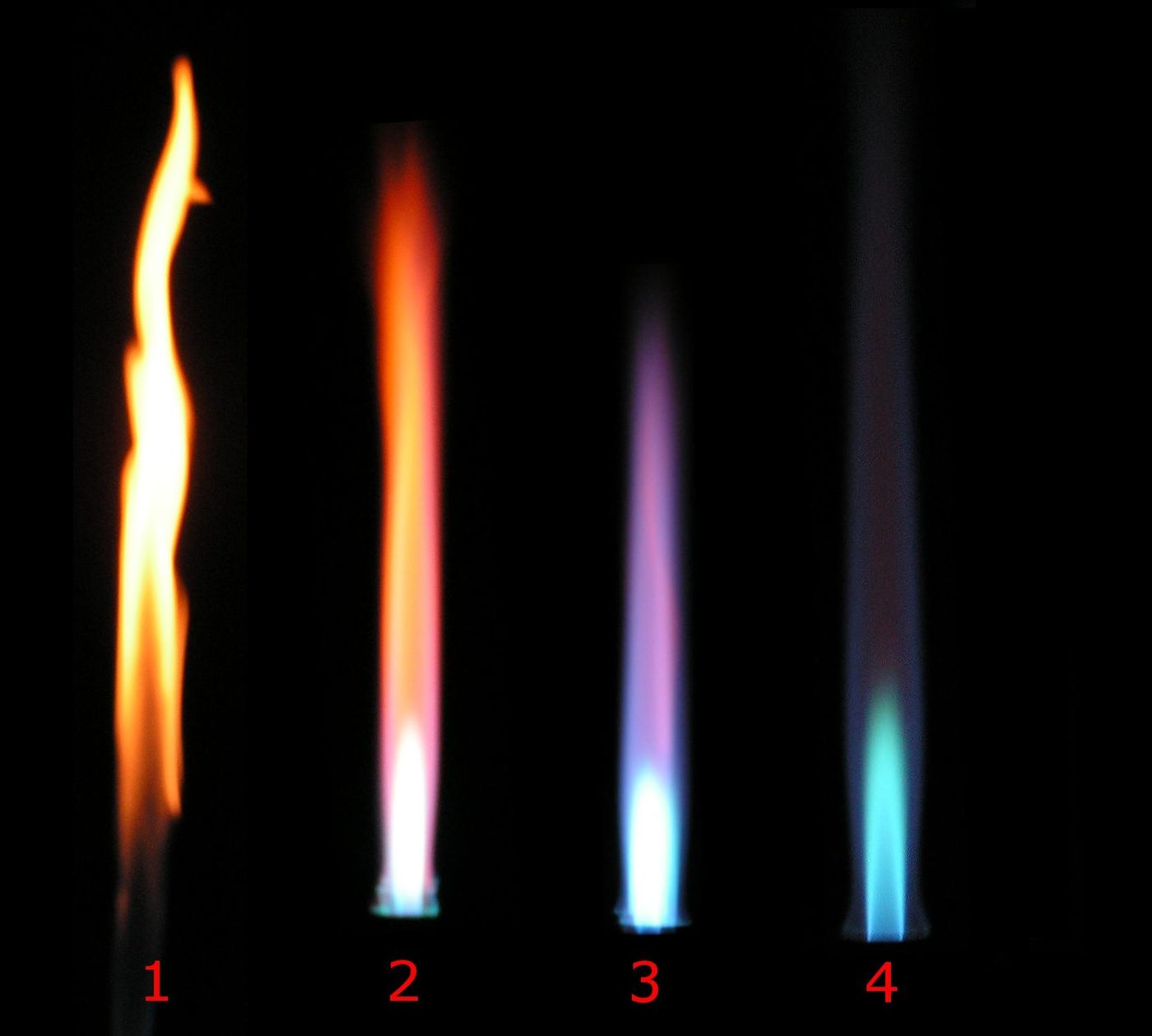
- Air hole closed: yellow safety flame. It is easy to see, so use it when the burner isn’t heating anything.
- Air hole open: blue flame, much hotter. Fully open gives the roaring blue flame, the hottest.
- To light it: close the air hole, light a splint, turn on the gas, then hold the flame at the top of the chimney.
Hazard symbols
Explosive
May explode, for example if it is heated, knocked or lit.
Flammable
Catches fire easily.
Oxidising
Gives off oxygen, which makes other things burn more fiercely.
Gas under pressure
A container of gas under pressure. It may explode if heated.
Corrosive
Attacks and destroys living tissue, such as skin and eyes.
Toxic
Can cause death if swallowed, breathed in or absorbed through the skin.
Harmful or irritant
Can cause irritation (redness, itching) or be harmful in small amounts.
Health hazard
Can cause serious long-term health problems, such as lung damage.
Hazardous to the environment
Harms living things in the environment, especially in water.
Written to the KS3 national curriculum. Last changed 8 November 2026.
Key words
Say them, spell them, use them in an answer.
- hazard
- risk
- precaution
- hazard symbols
- safety flame
Common misconception
Often said“The yellow Bunsen flame is the hottest flame.”
In factThe roaring blue flame (air hole fully open) is the hottest. The yellow one is the safety flame.
Try 5 questions
Quick questions on lab safety, marked as you go. Each one explains the answer.
Question 1 of 5
What is a hazard?
Choose an answer. Each question explains itself.
The homework sheet
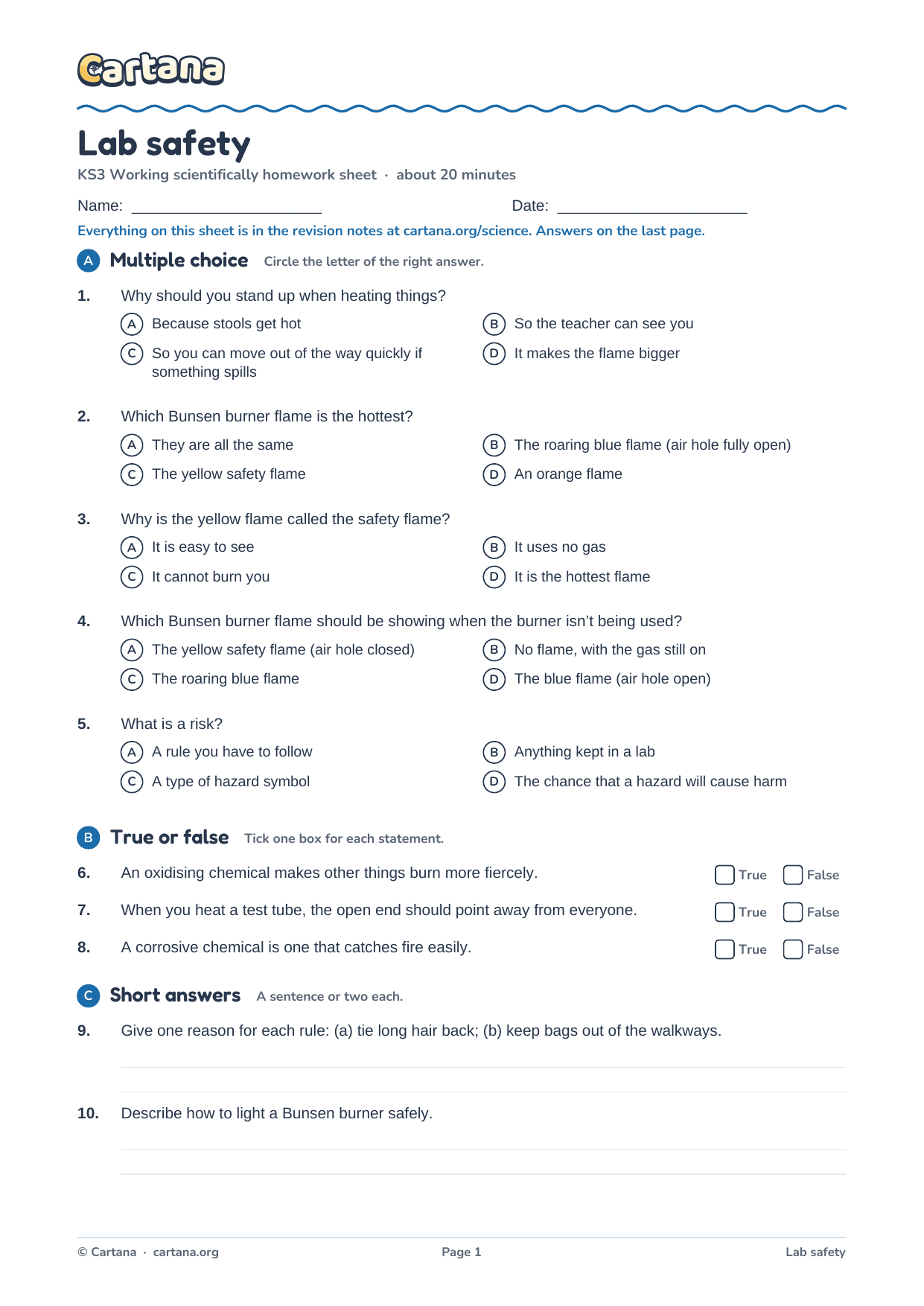
About twenty minutes. Everything on it is in the notes above; the answers are on the last page.
Free homework sheet
Lab safety homework sheet
17 questions, about twenty minutes, with the answers on the last page: multiple choice, true or false, short answers, key words to define and one to explain in full.
KS3 Working scientifically
Revised the whole unit?
When every topic in working scientifically is done, two different papers test the whole unit, each with its own mark scheme.


 Watch the trailer · 1:06
New from Cartana · Beta test 1–31 December
Revision that feels like an adventure
Cartana is our KS3 learning adventure: sail between islands, answer quick-fire questions and battle bosses. It starts with science, with maths on the way, and launches in 2027. This December a small group of testers gets to play it first.
In the Cartana adventure, lab safety is the School Lab, a district of the island Beakerford.
- Play the game before its official release
- Help us build it with your feedback
- Earn exclusive in-game items in return
More in this unit