
KS3 Working scientifically
Scientific questions
- Which questions science can answer, and which it cannot
- Writing a question that links what you change to what you measure
- Observation, question, hypothesis and prediction: how they differ
- Writing a prediction with a scientific reason
- 1 min read
- 5 quick questions
- Free homework sheet
- Years 7 to 9
Revision notes
Science starts with a question that can be tested. An observation leads to a scientific question, then a hypothesis that explains what you noticed and a prediction of what an experiment will show.
Questions science can answer
- A scientific question can be answered by collecting evidence (data).
- The best investigation questions link two variables: “How does the thing I change affect the thing I measure?”
- Questions about opinion or taste can’t be tested: “Is chocolate ice cream nicer than vanilla?”

From observation to prediction
- Observation: something you notice. “Sugar disappears faster in hot chocolate.”
- Question: what you want to find out. “How does temperature affect how quickly sugar dissolves?”
- Hypothesis: a testable idea that explains it, using science. “Sugar dissolves faster in hotter liquids because the particles move faster.”
- Prediction: what you think will happen in your experiment, and why.
Prediction frame: “As the ___ increases, the ___ will increase / decrease, because ___.”
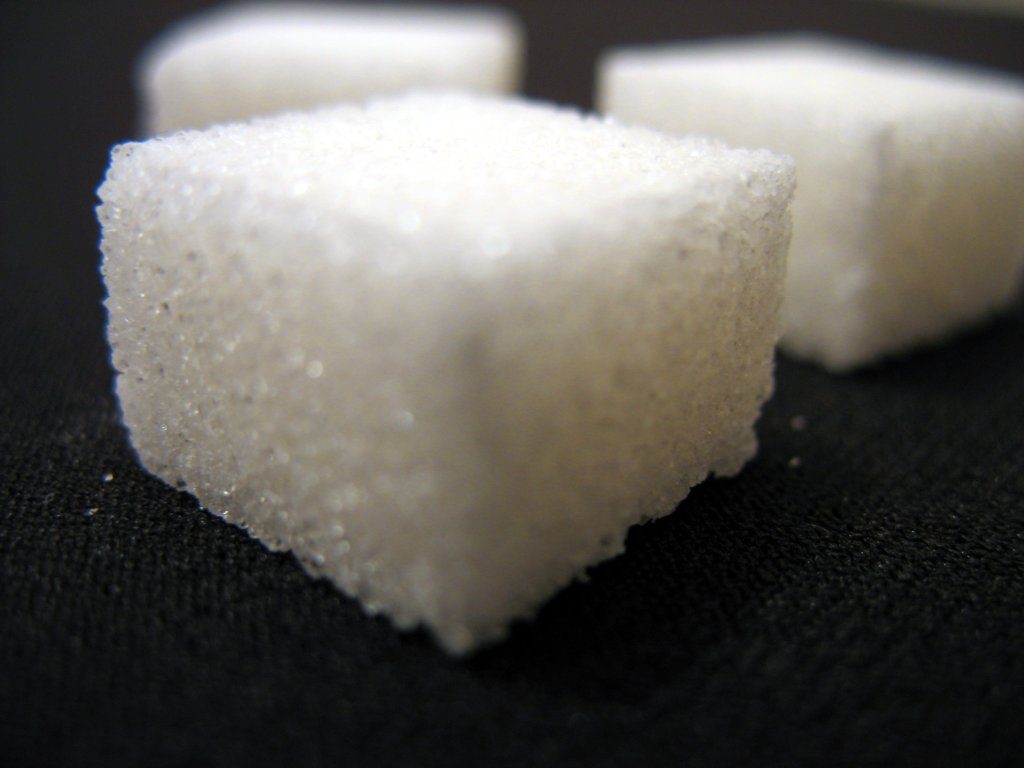
Watch out: dissolving is not melting. Sugar dissolves in water; it melts in a hot pan.
Written to the KS3 national curriculum. Last changed 8 November 2026.
Key words
Say them, spell them, use them in an answer.
- observation
- scientific question
- hypothesis
- prediction
- evidence
Common misconception
Often said“When sugar disappears in water, it has melted.”
In factIt has dissolved. Melting is a solid turning into a liquid on its own, by heating.
Try 5 questions
Quick questions on scientific questions, marked as you go. Each one explains the answer.
Question 1 of 5
Sam wants to investigate pancakes. Which question is best?
Choose an answer. Each question explains itself.
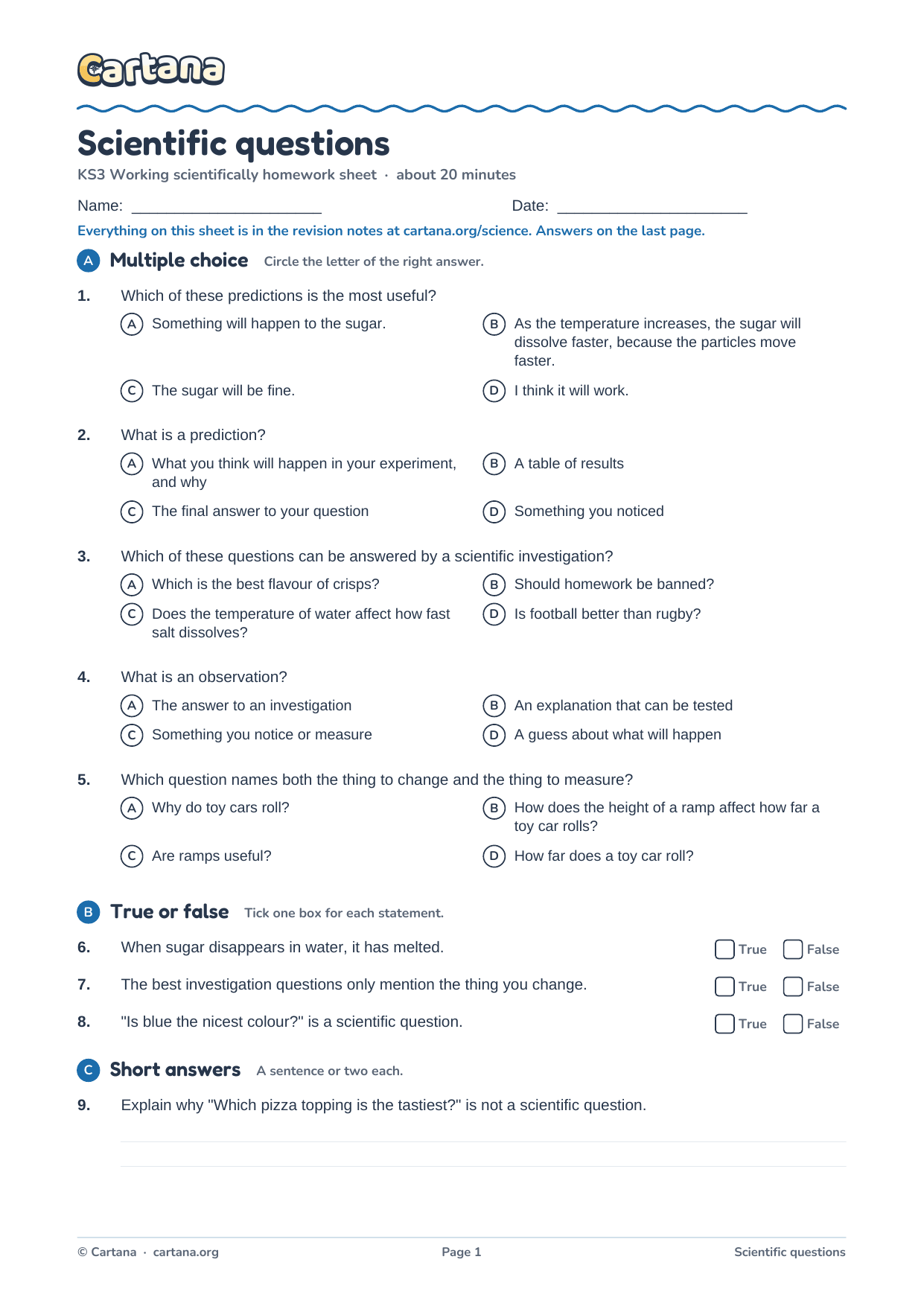
The homework sheet
About twenty minutes. Everything on it is in the notes above; the answers are on the last page.
Free homework sheet
Scientific questions homework sheet
17 questions, about twenty minutes, with the answers on the last page: multiple choice, true or false, short answers, key words to define and one to explain in full.
KS3 Working scientifically
Revised the whole unit?
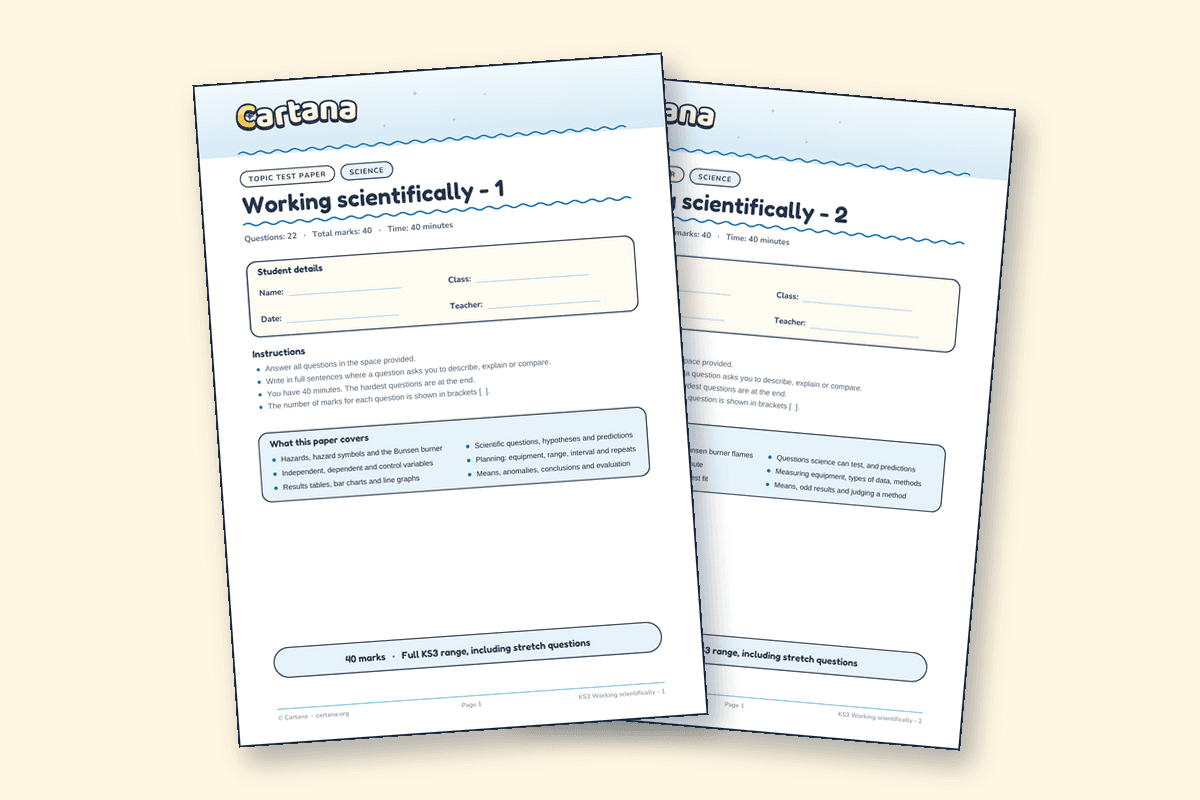
When every topic in working scientifically is done, two different papers test the whole unit, each with its own mark scheme.


 Watch the trailer · 1:06
New from Cartana · Beta test 1–31 December
Revision that feels like an adventure
Cartana is our KS3 learning adventure: sail between islands, answer quick-fire questions and battle bosses. It starts with science, with maths on the way, and launches in 2027. This December a small group of testers gets to play it first.
In the Cartana adventure, scientific questions is the Café, a district of the island Beakerford.
- Play the game before its official release
- Help us build it with your feedback
- Earn exclusive in-game items in return
More in this unit