
KS3 Chemistry · Earth & atmosphere
Climate change
- How the greenhouse effect works, and why we need it
- Human activities that add carbon dioxide and methane
- The evidence: measured carbon dioxide, air in ice and measured temperatures
- The effects of global warming, and what reduces emissions
- 5 min read
- 5 quick questions
- Free homework sheet
- Years 7 to 9
Revision notes
Climate change is a long-term shift in the Earth’s average temperature and weather patterns. Since the late 1800s the Earth has warmed by more than 1 °C, mainly because burning fossil fuels has added carbon dioxide to the air.
What is the greenhouse effect?
- Sunlight passes through the atmosphere and warms the ground and the sea.
- The warm surface gives out infrared radiation (heat).
- Some of it escapes to space. Some is absorbed by greenhouse gases in the air, such as carbon dioxide, methane and water vapour. They give it out again in all directions, including back down, so the surface and lower air stay warmer.
This greenhouse effect is natural, and we need it. Without it, the Earth’s average surface temperature would be about −18 °C instead of about 15 °C (NASA). The problem is that extra greenhouse gases hold back more heat, which makes the Earth warmer than it was: global warming.
Which human activities add greenhouse gases?
- Burning fossil fuels (coal, oil and natural gas) in power stations, vehicles, homes and factories: the biggest source of extra carbon dioxide.
- Deforestation: burning or clearing forests releases carbon dioxide, and fewer trees remain to take it in.
- Making cement gives off carbon dioxide, because it starts by heating limestone.
- Methane, a greenhouse gas and the main gas in natural gas, comes from cattle and sheep (made in their stomachs as they digest grass), rice fields, rotting waste in landfill sites and leaks from gas wells and pipes. Each methane molecule traps much more heat than a carbon dioxide molecule, but there is far less of it, and it lasts only about 12 years in the air on average.
What is the evidence for climate change?
- Carbon dioxide has been measured at Mauna Loa, Hawaii, since 1958. It was 316 ppm in 1959 and 427 ppm in 2025 (NOAA), and it has risen every year.
- Air trapped in ice: bubbles in old Antarctic ice show that before industry it was about 280 ppm. Today’s level is about 50% higher.
- Temperatures have been measured on land and at sea since the 1850s. The World Meteorological Organization (WMO) put 2024, the warmest year on record, at about 1.55 °C above the 1850 to 1900 average, and 2023 to 2025 together at about 1.5 °C above. The eleven years 2015 to 2025 were the eleven warmest on record.
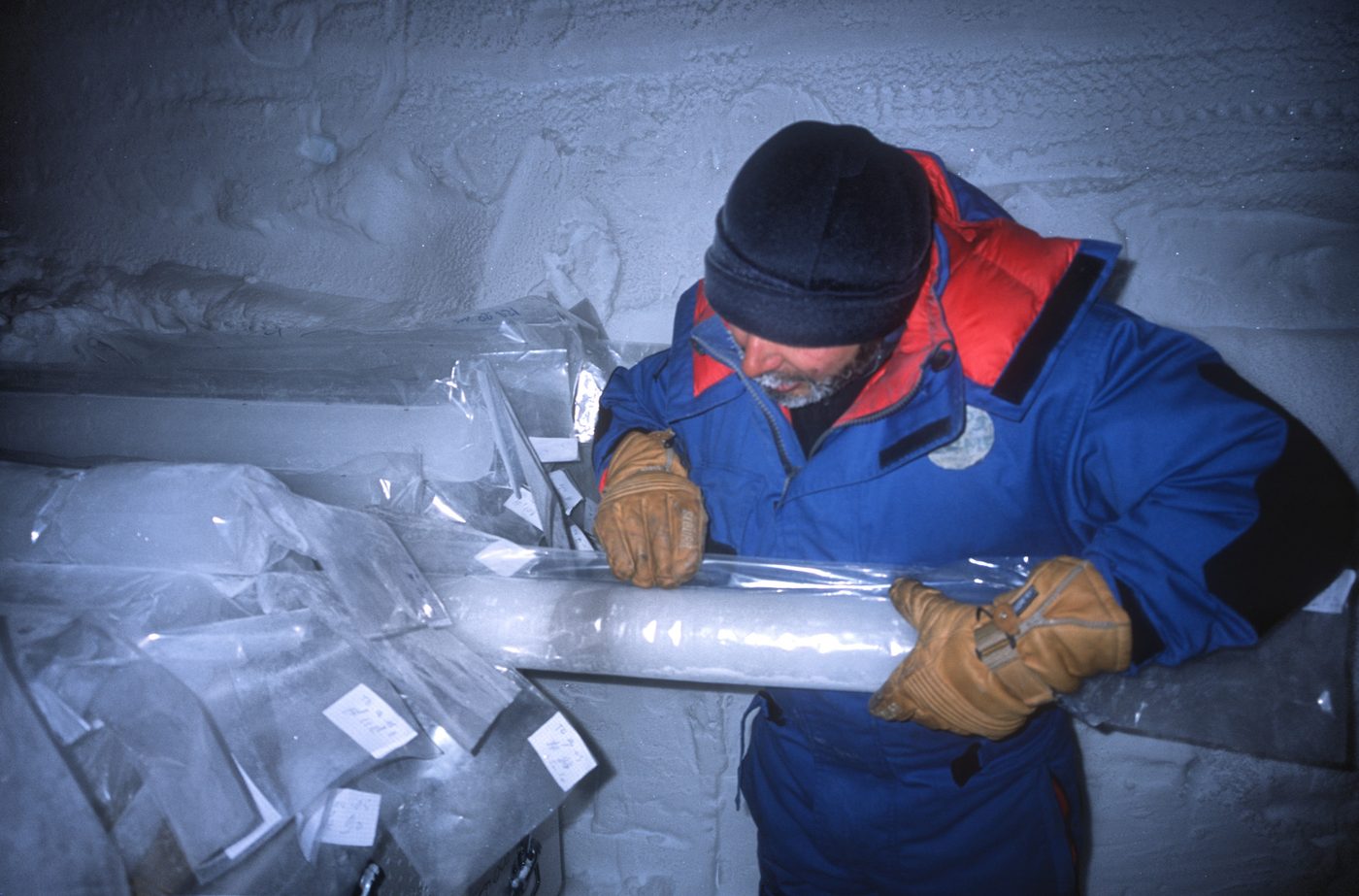
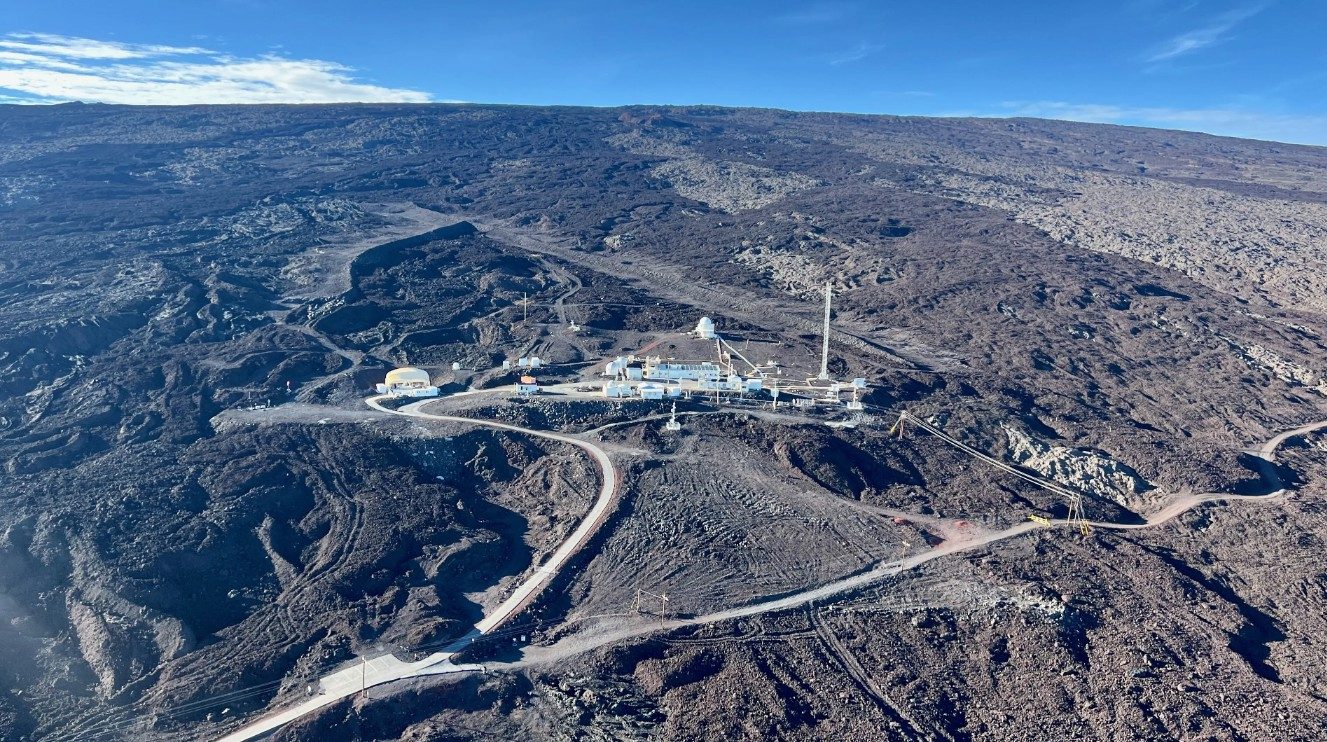
Carbon dioxide and temperature have risen together, and the physics of the greenhouse effect explains why. In 2021 the Intergovernmental Panel on Climate Change (IPCC), which reviews the work of thousands of scientists, reported that it is unequivocal (beyond doubt) that human activity has warmed the air, oceans and land.
What are the effects of global warming?
- Sea level rose by about 20 cm between 1901 and 2018 (IPCC), because warmer water expands and glaciers and ice sheets on land melt.
- Arctic sea ice is shrinking, and most glaciers are getting smaller.
- Heatwaves and very heavy rainfall are happening more often in many places.
- Plants and animals are moving to new areas, and the oceans, taking in more carbon dioxide, are becoming slightly less alkaline, which makes it harder for some creatures to build shells.
What reduces greenhouse gas emissions?
- Making electricity from wind, sunlight, flowing water and nuclear power instead of fossil fuels.
- Using less energy: insulating homes, using efficient appliances, walking, cycling or taking public transport.
- Electric vehicles, charged from low-carbon electricity.
- Protecting forests and planting trees, which take in carbon dioxide.
- Wasting less and recycling more (see resources and recycling), and capturing methane from landfill sites.
Stretch Why do carbon dioxide, methane and water vapour trap heat when nitrogen and oxygen, 99% of the air, do not? Molecules made of three or more atoms can bend and stretch in ways that absorb infrared. Molecules of two identical atoms, such as N2 and O2, cannot, so infrared passes straight through them.
Written to the KS3 national curriculum. Last changed 14 November 2026.
Key words
Say them, spell them, use them in an answer.
- climate change
- greenhouse effect
- greenhouse gases
- infrared radiation
- global warming
- methane
- fossil fuels
- deforestation
Common misconception
Often said“The greenhouse effect is pollution: it is a bad thing that people caused.”
In factThe greenhouse effect is natural, and we need it: without it the Earth’s average surface temperature would be about −18 °C instead of about 15 °C. What people have done is add extra greenhouse gases, which hold back more heat and make the Earth warmer than it was.
Did you know?
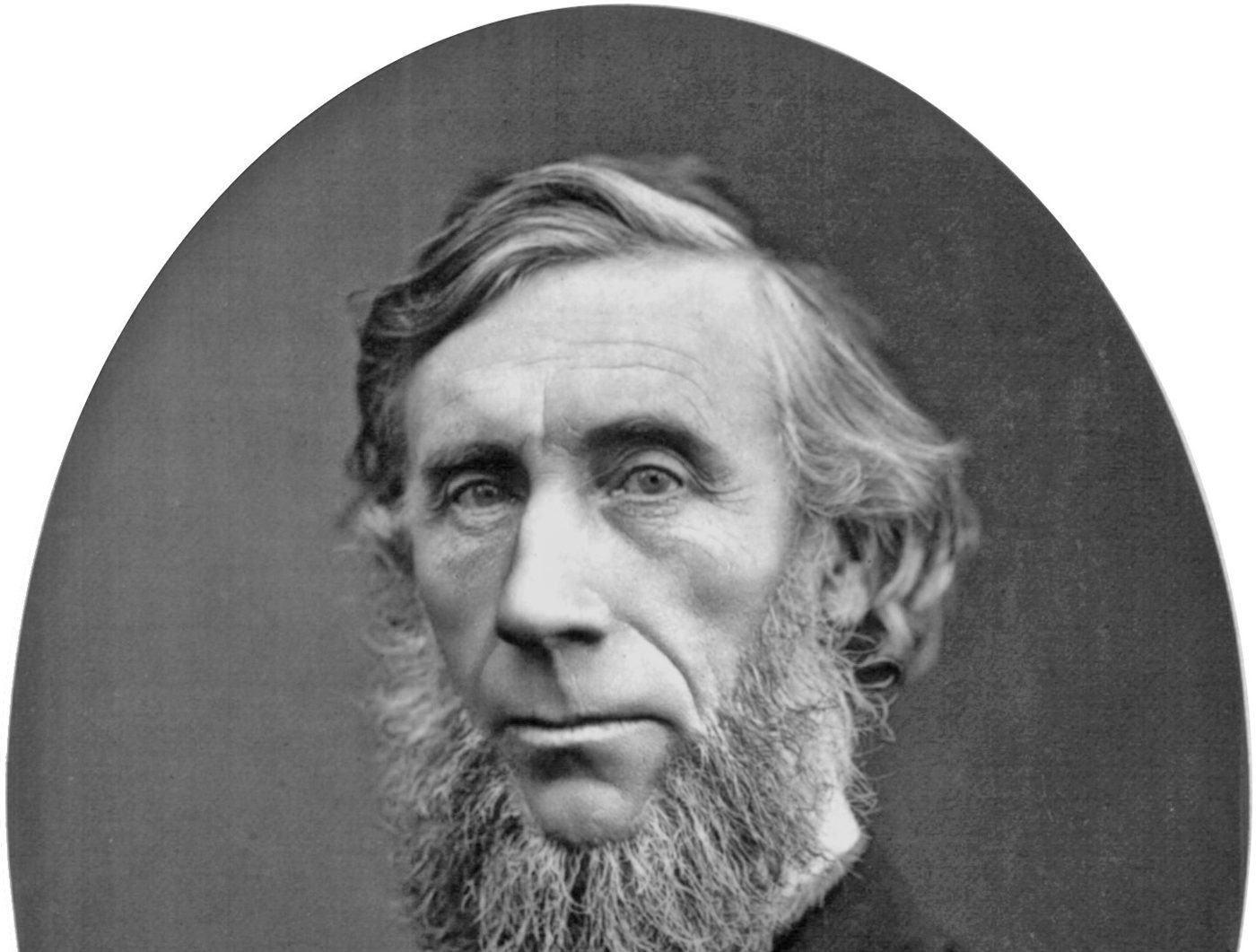
John Tyndall
In 1859, in his laboratory at the Royal Institution in London, John Tyndall measured how gases absorb heat radiation. He found that nitrogen and oxygen let it through, while water vapour and carbon dioxide absorb it: the greenhouse effect, measured over 160 years ago.
Photo: Unknown photographer, Public domain, via Wikimedia Commons
Try 5 questions
Quick questions on climate change, marked as you go. Each one explains the answer.
Question 1 of 5
Which of these gives off methane?
Choose an answer. Each question explains itself.
The homework sheet
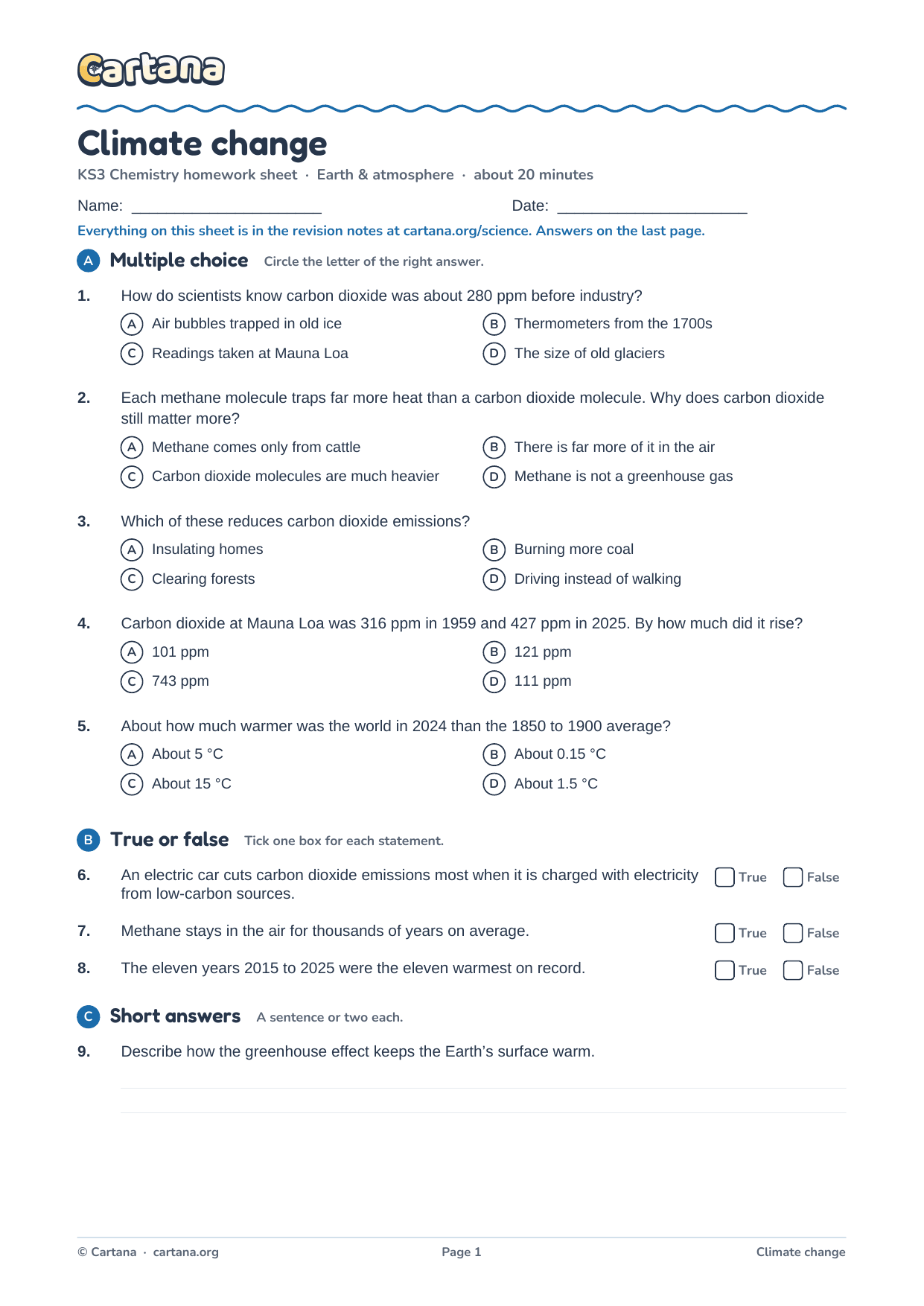
About twenty minutes. Everything on it is in the notes above; the answers are on the last page.
Free homework sheet
Climate change homework sheet
17 questions, about twenty minutes, with the answers on the last page: multiple choice, true or false, short answers, key words to define and one to explain in full.
KS3 Earth & atmosphere
Revised the whole unit?
When every topic in earth & atmosphere is done, two different papers test the whole unit, each with its own mark scheme.


 Watch the trailer · 1:06
New from Cartana · Beta test 1–31 December
Revision that feels like an adventure
Cartana is our KS3 learning adventure: sail between islands, answer quick-fire questions and battle bosses. It starts with science, with maths on the way, and launches in 2027. This December a small group of testers gets to play it first.
In the Cartana adventure, every science unit is an island to explore. The island for Earth & atmosphere is being built.
- Play the game before its official release
- Help us build it with your feedback
- Earn exclusive in-game items in return
More in this unit
Earth & atmosphere
- 1Structure of the EarthThe crust, mantle, outer core and inner core: what each is made of and like, and how earthquake waves show what is inside
- 2Types of rockHow igneous, sedimentary and metamorphic rocks form, what their grains, crystals, layers and fossils show, and how to tell them apart
- 3The rock cycleWeathering (physical, chemical and biological), erosion, transport, deposition, burial, uplift and melting, and following a rock round the cycle
- 4The atmosphereThe gases in dry air and their percentages, water vapour, where the oxygen came from, and the tests for gases
- 5The carbon cycleThe stores of carbon and how carbon moves between them: photosynthesis, respiration, feeding, decay, combustion, dissolving and fossil fuels forming
- 7Resources and recyclingNextWhy the Earth’s resources are limited, what getting them costs in energy and land, what recycling saves, and its limits