
KS3 Chemistry · Earth & atmosphere
Types of rock
- How igneous rocks form, and why cooling rate decides crystal size
- How sedimentary rocks form, with layers, grains and fossils
- How heat and pressure make metamorphic rocks
- How to tell the three types of rock apart
- 4 min read
- 5 quick questions
- Free homework sheet
- Years 7 to 9
Revision notes
Rocks come in three types, sorted by how they formed: igneous rock from molten rock that cooled, sedimentary rock from grains laid down in layers and cemented, and metamorphic rock from older rock changed by heat and pressure.
What is a rock made of?
A mineral is a solid found in nature with its own chemical make-up, such as quartz (silicon dioxide) or calcite (calcium carbonate). A rock is a solid made of grains of one or more minerals. The grains may be crystals, which grew and fit tightly together, or worn pieces stuck together. Looking at the grains, through a hand lens if you need one, tells you how a rock formed.
How do igneous rocks form?
Igneous rock forms when molten rock cools and turns solid. Molten rock underground is magma; when it pours out of a volcano it is called lava. As it cools, crystals grow, and they keep growing until the rock is solid, so the cooling rate decides their size:
- Magma that cools slowly, deep underground, has time to grow large crystals. Granite cools this way, over thousands of years or more.
- Lava that cools quickly at the surface forms small crystals, as in basalt. Lava that cools very fast can set as a glass with no crystals at all, called obsidian.
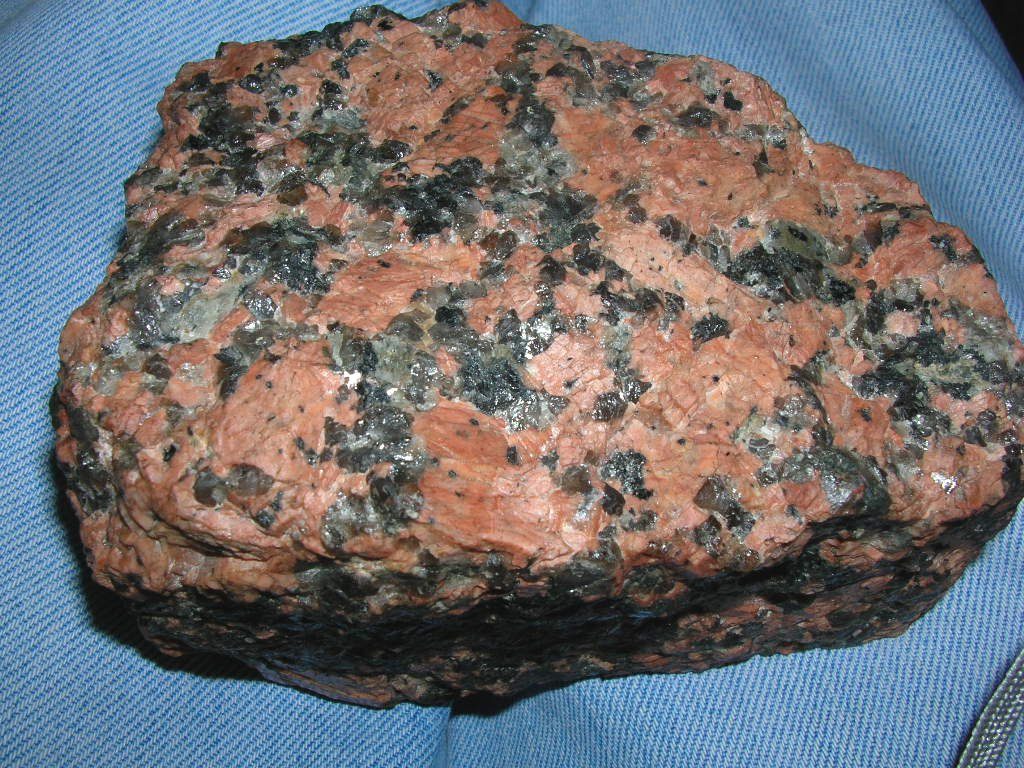
The crystals interlock with no gaps, so igneous rocks are hard and do not soak up water. They never contain fossils: anything living would have burned in the molten rock.
A classroom model shows the link between cooling and crystal size. Salol is a chemical that melts just above 40 °C.
- Melt some salol in a tube in a warm water bath. Wear eye protection.
- Put a few drops on a warm microscope slide and a few drops on a slide straight from the fridge.
- Watch both through a hand lens as they set.
What you see: on the cold slide many small crystals form in seconds; on the warm slide fewer, larger crystals grow more slowly. What it shows: the slower a liquid cools, the larger its crystals grow.
How do sedimentary rocks form?
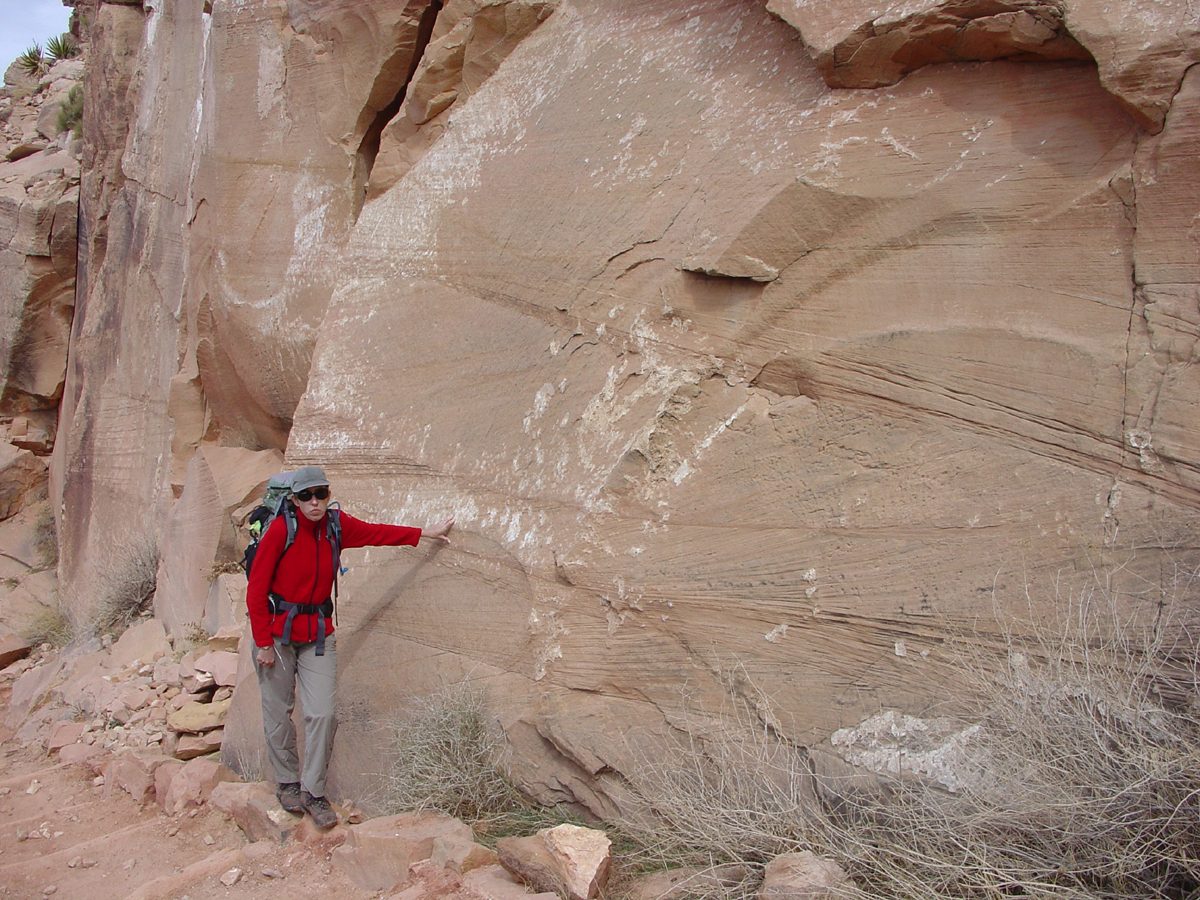
Sediments are bits of rock, sand, mud and the shells of sea creatures that settle in layers, mostly at the bottom of seas and lakes. New layers bury the older ones. The weight above squeezes out the water (compaction), and minerals left by the water glue the grains together (cementation). The result is sedimentary rock.
- Its grains are often rounded, with small gaps between them, so many sedimentary rocks are porous: they soak up water. Many crumble easily.
- It forms in layers, and it is the only type that often contains fossils, the remains or traces of living things.
- Examples: sandstone (sand), mudstone (mud), limestone and chalk (shells and skeletons, made of calcium carbonate). Limestone and chalk fizz with dilute acid, giving off carbon dioxide.
How do metamorphic rocks form?
Metamorphic rock is rock of any type that has been changed by heat and pressure, deep underground or near hot magma, without melting. Its minerals grow into new, interlocking crystals, often lined up in bands, so it is hard. Any fossils are squashed or destroyed.
| Starting rock | Metamorphic rock |
|---|---|
| Limestone or chalk | Marble |
| Mudstone or shale | Slate; with more heat and pressure, schist |
| Sandstone | Quartzite |
How can you tell the three types apart?
| Clue | Igneous | Sedimentary | Metamorphic |
|---|---|---|---|
| Grains | Interlocking crystals, in no pattern | Rounded grains, gaps between | Interlocking crystals, often in bands |
| Layers | No | Yes | Bands, not layers |
| Fossils | Never | Often | Rarely, squashed |
| Soaks up water | No | Often | No |
| Examples | Granite, basalt | Sandstone, limestone | Marble, slate |
A simple test: drip water on a dry rock. If the drop soaks in, the rock is porous, so it is probably sedimentary.
Stretch Magma that pushes between layers of rock underground but never reaches the surface cools at a middle rate, so its crystals are middle-sized. The Whin Sill in northern England is one such sheet of rock, called dolerite; part of Hadrian’s Wall is built along the top of its cliffs.
Written to the KS3 national curriculum. Last changed 14 November 2026.
Key words
Say them, spell them, use them in an answer.
- mineral
- rock
- crystals
- igneous rock
- magma
- lava
- sediments
- compaction
- cementation
- sedimentary rock
- porous
- metamorphic rock
Common misconception
Often said“Igneous rocks only come out of volcanoes.”
In factLava from volcanoes makes some igneous rocks, such as basalt. But many, such as granite, form from magma that cools deep underground and never reaches the surface. We see them only after the rock above has been worn away over millions of years.
Did you know?
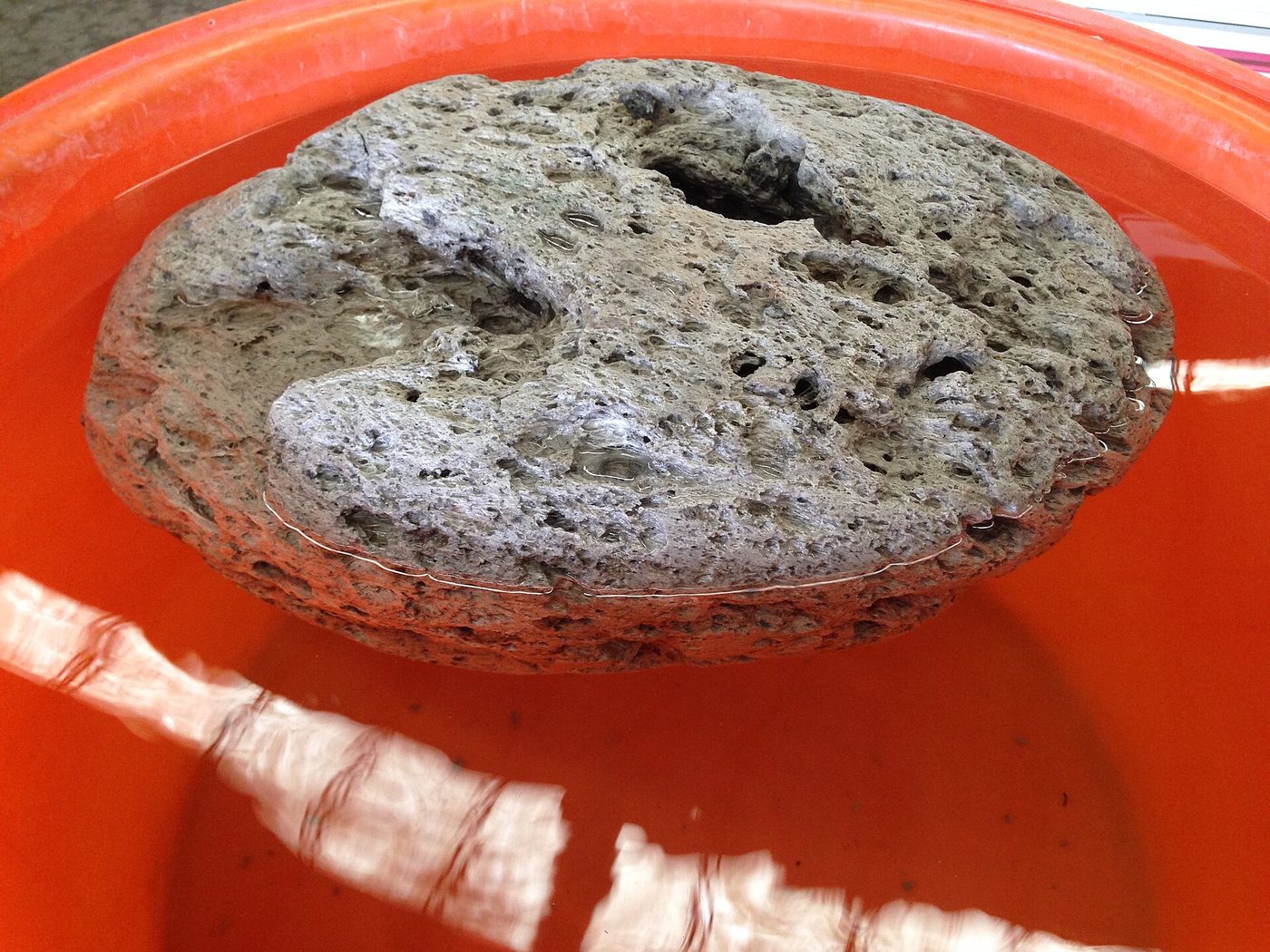
Pumice
Pumice is a volcanic rock made from frothy lava that cooled so quickly the gas bubbles were trapped inside. It is so full of holes that it floats on water, and rafts of floating pumice from undersea volcanoes can drift across oceans.
Photo: Outlookxp, CC BY-SA 4.0, via Wikimedia Commons
Try 5 questions
Quick questions on types of rock, marked as you go. Each one explains the answer.
Question 1 of 5
Which rock forms when mudstone or shale is changed by heat and pressure?
Choose an answer. Each question explains itself.
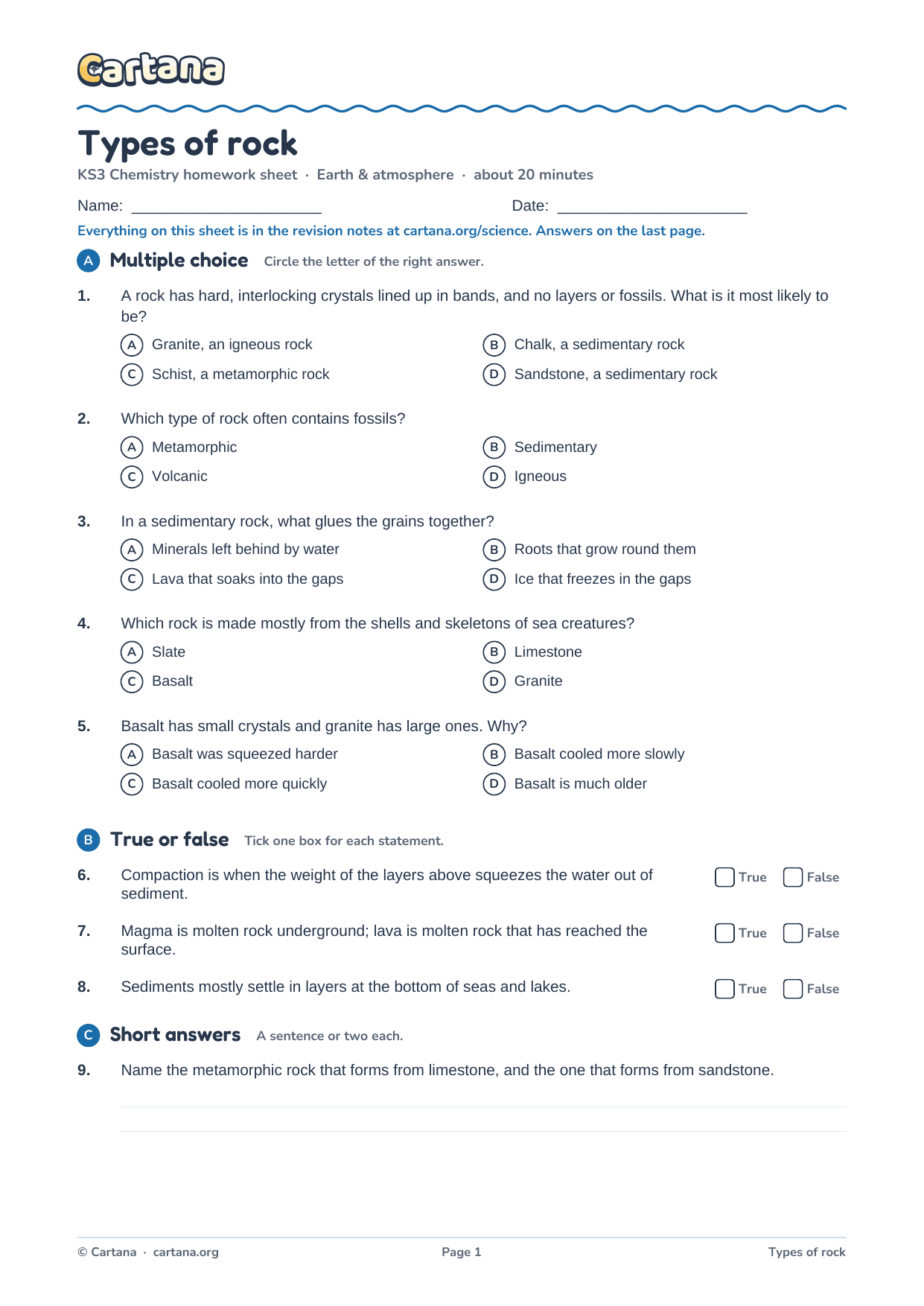
The homework sheet
About twenty minutes. Everything on it is in the notes above; the answers are on the last page.
Free homework sheet
Types of rock homework sheet
17 questions, about twenty minutes, with the answers on the last page: multiple choice, true or false, short answers, key words to define and one to explain in full.
KS3 Earth & atmosphere
Revised the whole unit?
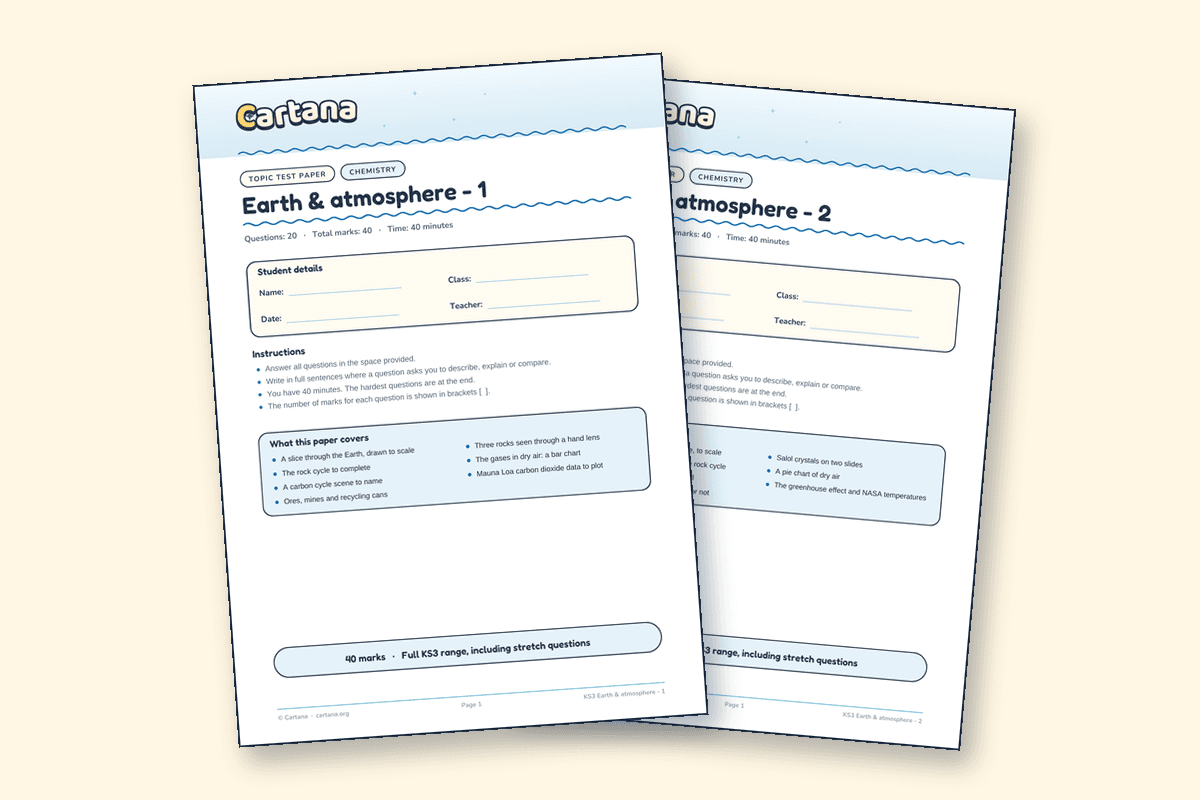
When every topic in earth & atmosphere is done, two different papers test the whole unit, each with its own mark scheme.


 Watch the trailer · 1:06
New from Cartana · Beta test 1–31 December
Revision that feels like an adventure
Cartana is our KS3 learning adventure: sail between islands, answer quick-fire questions and battle bosses. It starts with science, with maths on the way, and launches in 2027. This December a small group of testers gets to play it first.
In the Cartana adventure, every science unit is an island to explore. The island for Earth & atmosphere is being built.
- Play the game before its official release
- Help us build it with your feedback
- Earn exclusive in-game items in return
More in this unit
Earth & atmosphere
- 1Structure of the EarthThe crust, mantle, outer core and inner core: what each is made of and like, and how earthquake waves show what is inside
- 3The rock cycleNextWeathering (physical, chemical and biological), erosion, transport, deposition, burial, uplift and melting, and following a rock round the cycle
- 4The atmosphereThe gases in dry air and their percentages, water vapour, where the oxygen came from, and the tests for gases
- 5The carbon cycleThe stores of carbon and how carbon moves between them: photosynthesis, respiration, feeding, decay, combustion, dissolving and fossil fuels forming
- 6Climate changeThe greenhouse effect, carbon dioxide and methane from human activity, the measured evidence, the effects, and what reduces emissions
- 7Resources and recyclingWhy the Earth’s resources are limited, what getting them costs in energy and land, what recycling saves, and its limits