
KS3 Chemistry · Earth & atmosphere
The carbon cycle
- The stores of carbon: air, living things, dead remains, oceans, rocks and fossil fuels
- How photosynthesis, respiration, feeding, decay, combustion and dissolving move carbon
- What a balanced carbon cycle is, and how people have unbalanced it
- Seeing the carbon cycle in the air through the seasons
- 4 min read
- 5 quick questions
- Free homework sheet
- Years 7 to 9
Revision notes
The carbon cycle is the way carbon atoms move between the air, living things, the oceans, rocks and fossil fuels, carried by photosynthesis, respiration, feeding, decay, combustion and dissolving.
Where is carbon stored?
Carbon is never used up: the same atoms go round and round. A place where carbon is held for a time is called a carbon store.
- The air, as carbon dioxide gas.
- Living things, in the carbohydrates, fats and proteins they are built from.
- Dead remains and soil: fallen leaves, dead animals, waste.
- The oceans, as dissolved carbon dioxide and in the shells of sea creatures. The oceans hold about 50 times as much carbon as the air.
- Rocks such as limestone and chalk, made of calcium carbonate from ancient shells. They hold most of the Earth’s carbon.
- Fossil fuels: coal, oil and natural gas, formed over millions of years from the buried remains of living things.
How does carbon move between the stores?
| Process | What happens | Carbon moves |
|---|---|---|
| Photosynthesis | Plants and algae take in carbon dioxide and make glucose | From the air into living things |
| Feeding | Animals eat plants, or other animals | Along food chains |
| Respiration | All living things break down glucose for energy, giving out carbon dioxide | From living things into the air |
| Decay | Decomposers (bacteria and fungi) feed on dead remains and waste, and respire | From dead remains into the air |
| Combustion | Burning wood or fossil fuels makes carbon dioxide | From fuels into the air |
| Dissolving | Carbon dioxide dissolves in sea water; some comes back out | Between the air and the oceans |
| Fossil fuels forming | Remains buried before they decay are squeezed and heated for millions of years | From dead remains into fossil fuels |
Photosynthesis takes carbon dioxide out of the air (see photosynthesis):
Respiration and combustion put it back (see respiration and combustion):
Methane is the main gas in natural gas, a fossil fuel.
What is a balanced carbon cycle?
The carbon cycle is balanced when the carbon taken out of the air each year, by photosynthesis and by dissolving in the oceans, is about the same as the carbon put back, by respiration, decay and the oceans. For thousands of years before industry it was close to balanced, and carbon dioxide stayed at about 280 ppm.
Since about 1750 people have been burning fossil fuels, putting back in a few centuries carbon that took millions of years to lock away. Cutting down forests (deforestation) adds more, and leaves fewer trees to take it in. Now more carbon goes into the air than comes out. About half of the carbon dioxide people release is taken up by the oceans and by plants on land; the rest stays in the air, which is why the amount keeps rising.
Can you see the carbon cycle at work?
Yes, in measurements of the air. Most of the world’s land, and so most of its plants, is in the northern half. In the northern spring and summer, plants grow fast and photosynthesis takes in more carbon dioxide than respiration and decay give out, so the level falls. In autumn and winter, leaves fall and decay while photosynthesis slows, so it rises again.
Stretch There is also a slow part of the cycle. Rain, made slightly acidic by dissolved carbon dioxide, wears away rocks and carries the carbon to the sea, where creatures build it into shells that end up as limestone. Volcanoes return carbon from deep rocks to the air. Each trip round this slow cycle takes millions of years.
Written to the KS3 national curriculum. Last changed 14 November 2026.
Key words
Say them, spell them, use them in an answer.
- carbon cycle
- carbon store
- photosynthesis
- respiration
- combustion
- decay
- decomposers
- fossil fuels
- deforestation
- balanced
Common misconception
Often said“Only animals give out carbon dioxide. Plants just take it in.”
In factEvery living thing respires, day and night, and gives out carbon dioxide: plants, animals and decomposers. In daylight a growing plant takes in more carbon dioxide by photosynthesis than it gives out by respiration, so overall it takes carbon out of the air.
Did you know?
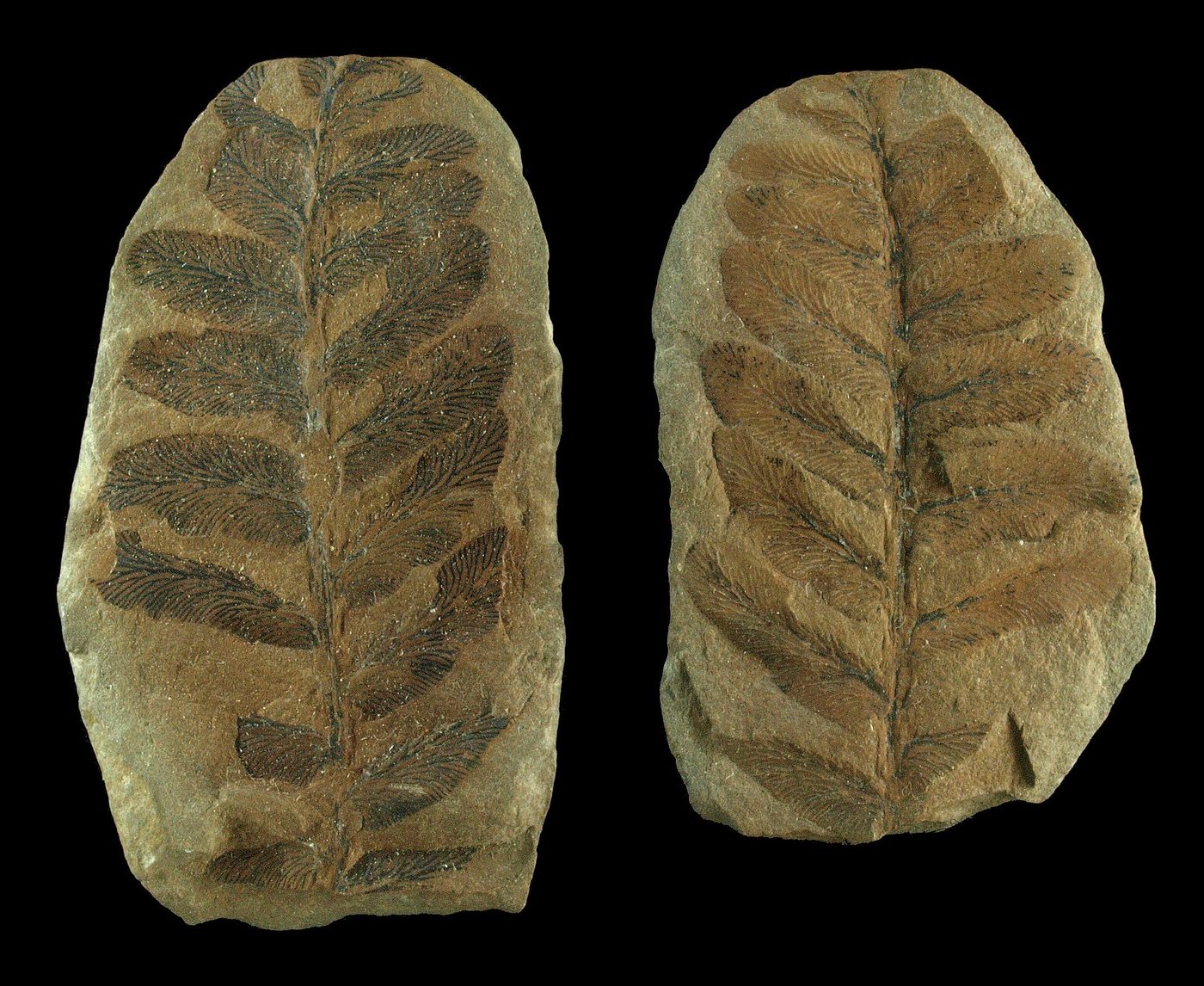
The Carboniferous
Much of Britain’s coal formed from swamp forests of giant tree ferns and club mosses about 300 million years ago. The time is called the Carboniferous period, meaning “coal-bearing”.
Photo: Amgueddfa Cymru – National Museum Wales, CC BY-SA 4.0, via Wikimedia Commons
Try 5 questions
Quick questions on the carbon cycle, marked as you go. Each one explains the answer.
Question 1 of 5
Combustion of fossil fuels adds carbon dioxide to the air.
Choose an answer. Each question explains itself.
The homework sheet
About twenty minutes. Everything on it is in the notes above; the answers are on the last page.
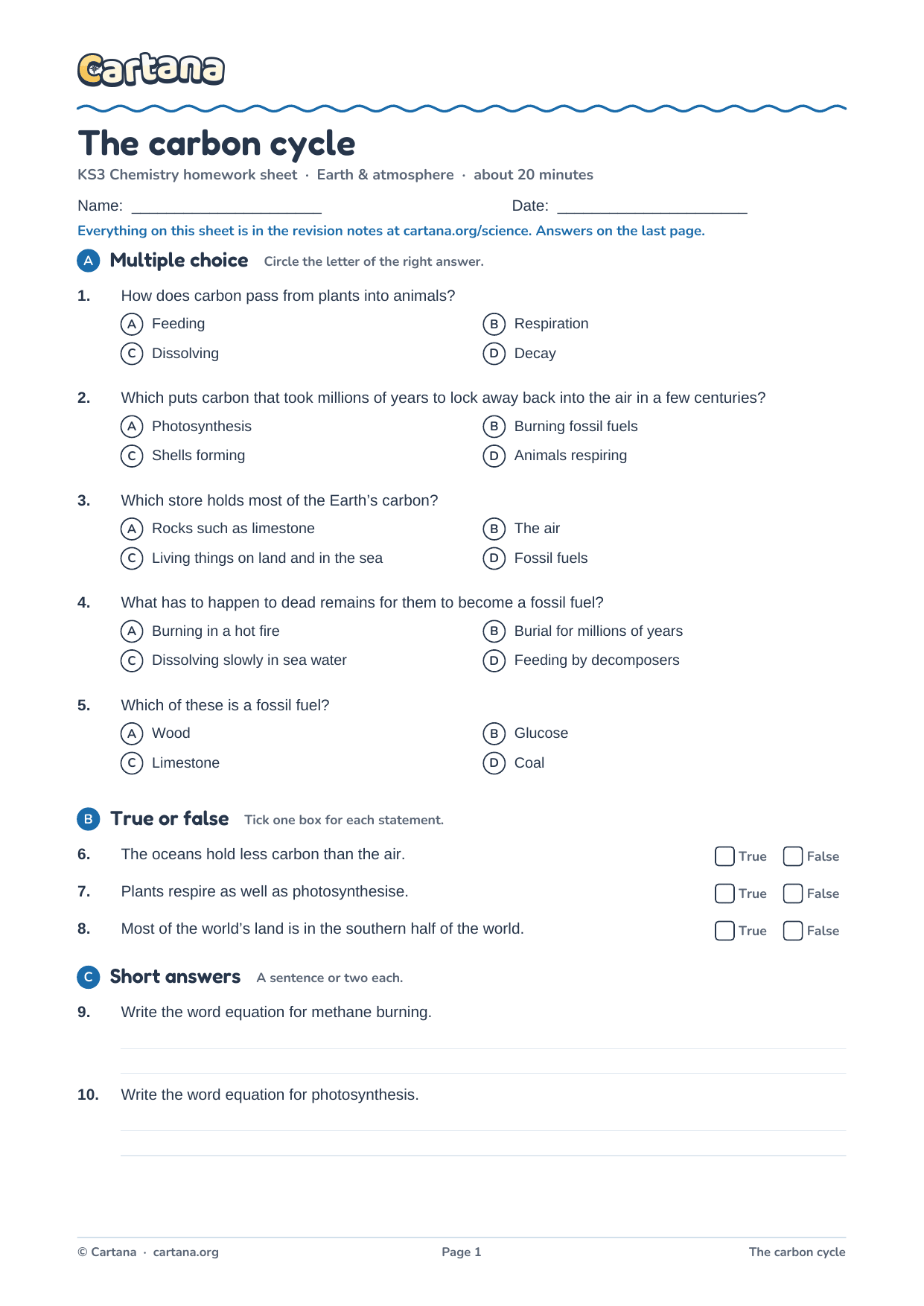
Free homework sheet
The carbon cycle homework sheet
17 questions, about twenty minutes, with the answers on the last page: multiple choice, true or false, short answers, key words to define and one to explain in full.
KS3 Earth & atmosphere
Revised the whole unit?
When every topic in earth & atmosphere is done, two different papers test the whole unit, each with its own mark scheme.


 Watch the trailer · 1:06
New from Cartana · Beta test 1–31 December
Revision that feels like an adventure
Cartana is our KS3 learning adventure: sail between islands, answer quick-fire questions and battle bosses. It starts with science, with maths on the way, and launches in 2027. This December a small group of testers gets to play it first.
In the Cartana adventure, every science unit is an island to explore. The island for Earth & atmosphere is being built.
- Play the game before its official release
- Help us build it with your feedback
- Earn exclusive in-game items in return
More in this unit
Earth & atmosphere
- 1Structure of the EarthThe crust, mantle, outer core and inner core: what each is made of and like, and how earthquake waves show what is inside
- 2Types of rockHow igneous, sedimentary and metamorphic rocks form, what their grains, crystals, layers and fossils show, and how to tell them apart
- 3The rock cycleWeathering (physical, chemical and biological), erosion, transport, deposition, burial, uplift and melting, and following a rock round the cycle
- 4The atmosphereThe gases in dry air and their percentages, water vapour, where the oxygen came from, and the tests for gases
- 6Climate changeNextThe greenhouse effect, carbon dioxide and methane from human activity, the measured evidence, the effects, and what reduces emissions
- 7Resources and recyclingWhy the Earth’s resources are limited, what getting them costs in energy and land, what recycling saves, and its limits