
KS3 Chemistry · Earth & atmosphere
Structure of the Earth
- The four layers: crust, mantle, outer core and inner core
- What each layer is made of, how deep it goes and how hot it is
- What the crust is made of, and why the whole Earth is about a third iron
- How earthquake waves show what is inside the Earth
- 5 min read
- 5 quick questions
- Free homework sheet
- Years 7 to 9
Revision notes
The structure of the Earth is its four layers: a thin rocky crust, a thick mantle of hot solid rock, a liquid outer core and a solid inner core, both cores mostly iron and nickel.
What are the layers of the Earth?
From the surface to the centre of the Earth is about 6,370 km. Going down, there are four layers. Depths below are measured from the surface; temperatures deep inside are estimates, worked out from experiments, because no one can measure them directly.
| Layer | Depth | What it is | Temperature |
|---|---|---|---|
| Crust | Top 5 to 70 km | Solid rock, rich in oxygen and silicon | Up to several hundred °C at its base |
| Mantle | To 2,900 km | Solid rock that flows very slowly, rich in magnesium, iron and silicon | Hotter with depth, about 4,000 °C at the bottom |
| Outer core | 2,900 to 5,150 km | Liquid iron and nickel | About 4,000 to 5,400 °C |
| Inner core | 5,150 km to the centre | Solid iron and nickel | About 5,400 °C |
- The crust is the thin outer layer of rock we live on. It is thinnest under the oceans, about 5 to 10 km, and thickest under the continents, about 30 km on average and up to about 70 km under high mountains. If the Earth were shrunk to the size of a football, the crust would be about as thick as a sheet of card.
- The mantle is the thickest layer. Its rock is solid, but it is so hot that over millions of years it creeps very slowly, a few centimetres a year, like extremely stiff putty.
- The outer core is liquid metal, mostly iron with some nickel. Its swirling is what makes the Earth’s magnetic field.
- The inner core is about as hot as the surface of the Sun, yet it is solid. The weight of everything above squeezes it so hard that the iron cannot melt.
What is the Earth made of?
The crust is made mostly of compounds of oxygen and silicon, with smaller amounts of other elements. By mass:
| Element | Share of the crust |
|---|---|
| Oxygen | About 46% |
| Silicon | About 28% |
| Aluminium | About 8% |
| Iron | About 5% |
| All the rest | About 13%: calcium, sodium, potassium, magnesium and others |
The oxygen in rocks is not a gas: it is chemically joined to other elements, as in silicon dioxide (the sand in sandstone) and calcium carbonate (limestone). The whole Earth is different again: it is about one third iron by mass, because the core is so big and so dense. The metals we use come from the thin crust, the only layer we can reach (see extracting metals).
How do we know what is inside the Earth?
No one has ever drilled through the crust: the deepest hole ever drilled is about 12 km deep. The evidence comes from other measurements:
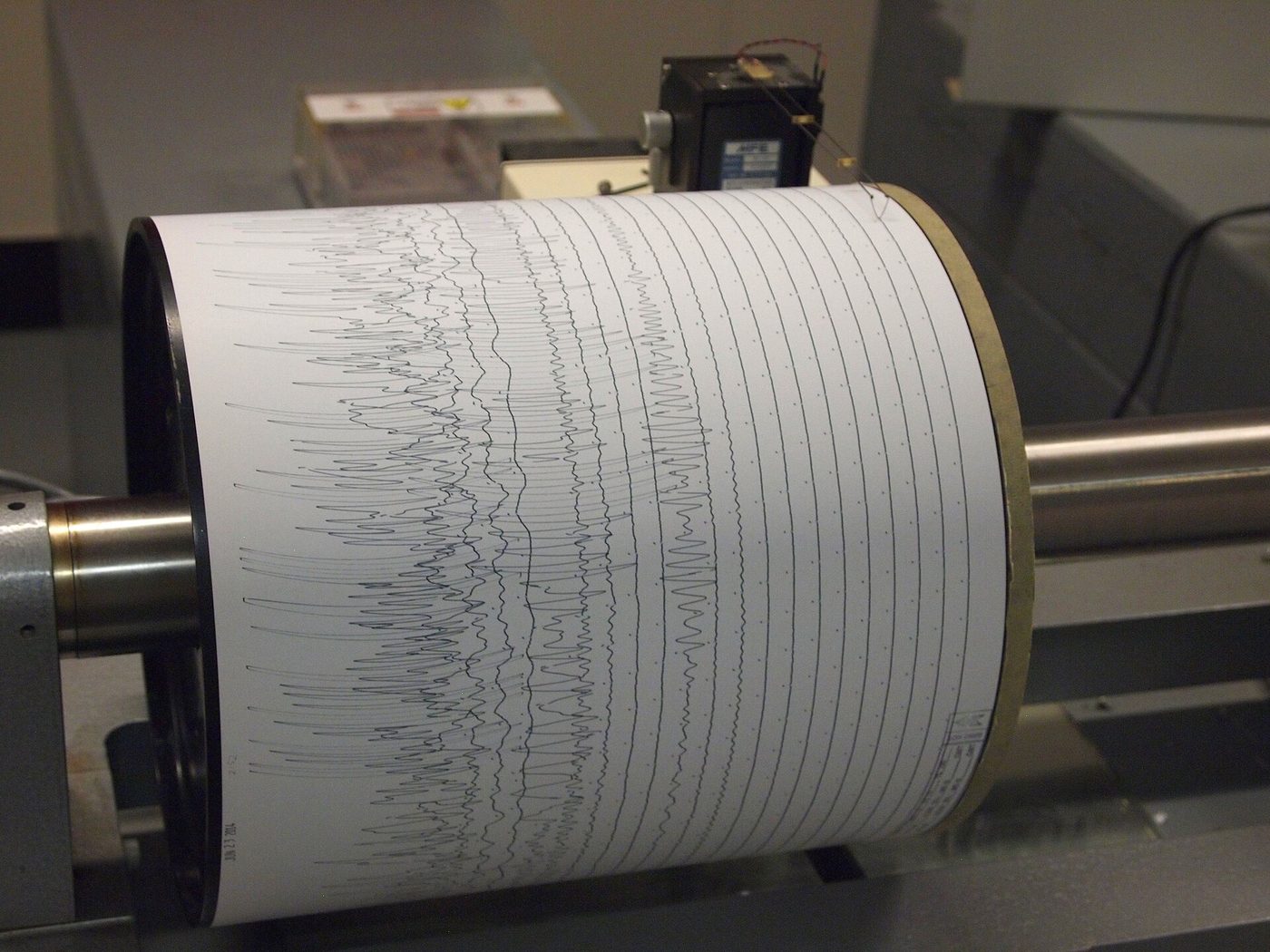
- Earthquake waves, also called seismic waves, travel right through the Earth. Instruments called seismometers all round the world record when each wave arrives. The waves change speed and bend where they cross from one layer into the next, which shows where the boundaries are.
- One kind of earthquake wave, the S wave, cannot travel through liquids. S waves never arrive on the far side of the Earth from an earthquake, so something deep inside must be liquid: the outer core.
- The Earth as a whole has a density of about 5.5 g/cm3, twice that of most crust rock (about 2.7 g/cm3). So the inside must be much denser than the crust, which fits a core of iron.
Stretch P waves can travel through liquids, but they bend as they enter and leave the core, leaving a band round the Earth where almost none arrive. In 1936 the Danish scientist Inge Lehmann noticed faint P waves arriving inside that band. She worked out that they had bounced off something solid in the middle of the core: that is how the inner core was discovered.

Written to the KS3 national curriculum. Last changed 14 November 2026.
Key words
Say them, spell them, use them in an answer.
- crust
- mantle
- outer core
- inner core
- earthquake waves
- seismic waves
- seismometer
- S wave
Common misconception
Often said“Under the crust there is a sea of molten rock: the mantle is liquid, like lava.”
In factThe mantle is solid rock. It is so hot that it creeps very slowly, a few centimetres a year, like extremely stiff putty, and magma forms only where small pockets of it melt. The only liquid layer is the outer core, which is metal, not rock.
Did you know?
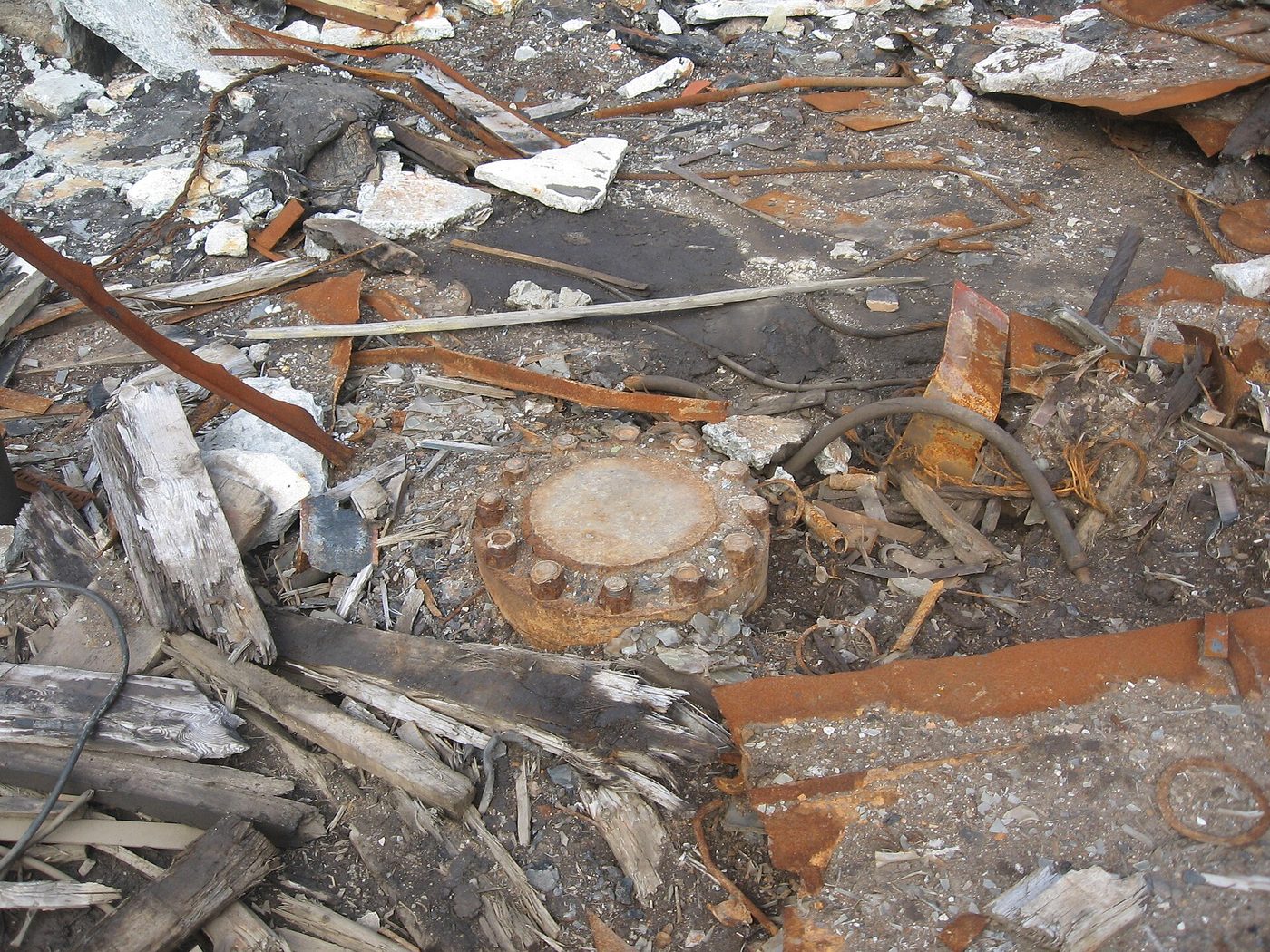
The deepest hole
The Kola Superdeep Borehole in north-west Russia, started in 1970, is the deepest hole ever drilled: 12,262 m, about 12 km. At the bottom the rock was about 180 °C, far hotter than expected, and drilling stopped. It never got even half way through the crust.
Photo: Rakot13, CC BY-SA 3.0, via Wikimedia Commons
Try 5 questions
Quick questions on structure of the Earth, marked as you go. Each one explains the answer.
Question 1 of 5
How do scientists know that part of the Earth’s core is liquid?
Choose an answer. Each question explains itself.
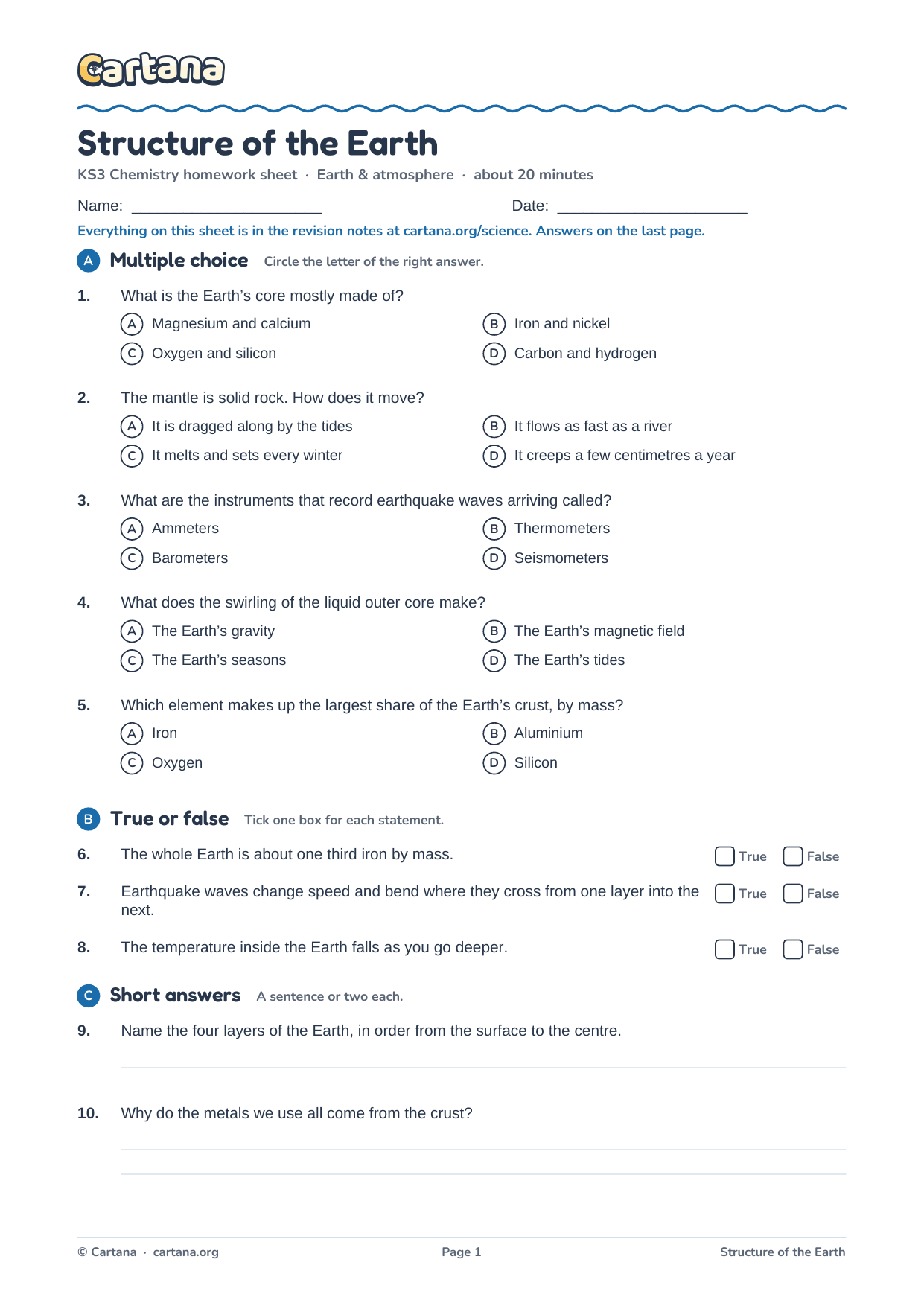
The homework sheet
About twenty minutes. Everything on it is in the notes above; the answers are on the last page.
Free homework sheet
Structure of the Earth homework sheet
17 questions, about twenty minutes, with the answers on the last page: multiple choice, true or false, short answers, key words to define and one to explain in full.
KS3 Earth & atmosphere
Revised the whole unit?
When every topic in earth & atmosphere is done, two different papers test the whole unit, each with its own mark scheme.


 Watch the trailer · 1:06
New from Cartana · Beta test 1–31 December
Revision that feels like an adventure
Cartana is our KS3 learning adventure: sail between islands, answer quick-fire questions and battle bosses. It starts with science, with maths on the way, and launches in 2027. This December a small group of testers gets to play it first.
In the Cartana adventure, every science unit is an island to explore. The island for Earth & atmosphere is being built.
- Play the game before its official release
- Help us build it with your feedback
- Earn exclusive in-game items in return
More in this unit
Earth & atmosphere
- 2Types of rockNextHow igneous, sedimentary and metamorphic rocks form, what their grains, crystals, layers and fossils show, and how to tell them apart
- 3The rock cycleWeathering (physical, chemical and biological), erosion, transport, deposition, burial, uplift and melting, and following a rock round the cycle
- 4The atmosphereThe gases in dry air and their percentages, water vapour, where the oxygen came from, and the tests for gases
- 5The carbon cycleThe stores of carbon and how carbon moves between them: photosynthesis, respiration, feeding, decay, combustion, dissolving and fossil fuels forming
- 6Climate changeThe greenhouse effect, carbon dioxide and methane from human activity, the measured evidence, the effects, and what reduces emissions
- 7Resources and recyclingWhy the Earth’s resources are limited, what getting them costs in energy and land, what recycling saves, and its limits