
KS3 Physics · Forces
Friction and drag
- What causes friction, and what makes it bigger
- When friction is useful and when it is a nuisance, and how to change it
- Air resistance, water resistance and streamlining
- The friction practical: method, variables and results
- 4 min read
- 5 quick questions
- Free homework sheet
- Years 7 to 9
Revision notes
Friction is a force between two surfaces that rub or try to slide over each other. It acts against the sliding. Drag is the same kind of force on an object moving through air or water.
What causes friction?
No surface is perfectly smooth. Under a microscope, even polished wood or metal is covered in tiny bumps. When one surface slides over another, the bumps catch on each other and hold it back. Friction is bigger when:
- the surfaces are rougher
- the surfaces are pressed together harder, for example when the object is heavier
Friction also heats the surfaces: rub your hands together and they get warm. Energy that went into the movement ends up warming the surroundings.
When is friction useful, and when is it a nuisance?
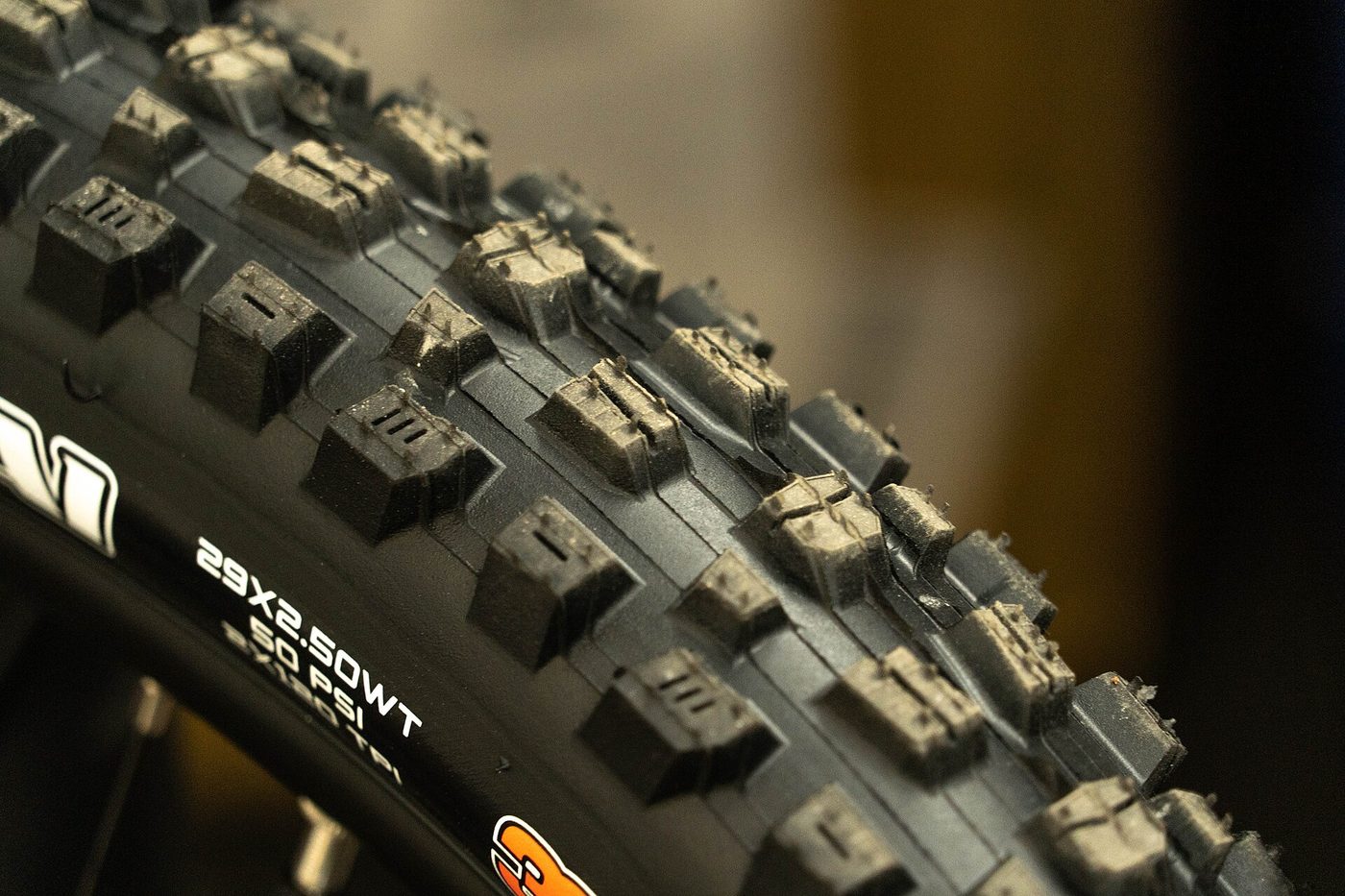
Shoes grip the ground so you can walk. Tyres grip the road, and brakes use friction to slow a bike or car. Without it you could not hold a pen or strike a match.
It wears out shoe soles, tyres and moving parts in machines, wastes energy as heat, and makes heavy things hard to push.
To reduce friction, use a lubricant such as oil or grease (it keeps the surfaces apart), make the surfaces smoother, or use wheels and ball bearings so that parts roll instead of sliding. To increase it, use rough or grippy surfaces: knobbly tyres on mud, grit on icy roads, chalk on a climber's hands.
What are air resistance and water resistance?
An object moving through air or water has to push it out of the way, and the air or water pushes back. This air resistance or water resistance (together called drag) acts against the movement. It gets bigger when:
- the object moves faster
- the object has a bigger area facing the way it moves
- the object moves through water rather than air (water is much denser)
A streamlined shape, smooth with a rounded front and a tapering back, lets air or water flow past easily, so it has less drag. Fish, dolphins, racing cyclists and high-speed trains are streamlined. A parachute does the opposite: its large area makes a large drag on purpose.

How do you investigate friction?
Pull a wooden block across different surfaces with a newton meter, held level. Read the force needed to keep the block sliding slowly at a steady speed: at a steady speed the pull equals the friction. Plan it as a fair test, with each of the variables in its place:
- Change one thing (the independent variable): the surface (wood, carpet, sandpaper, plastic).
- Measure (the dependent variable): the force on the newton meter.
- Keep the same (the control variables): the block, any masses on it, and the way you pull.
- Repeat each surface three times and take the mean.
| Surface | Force to keep the block sliding (N), mean of three |
|---|---|
| Plastic sheet | 1.5 |
| Wood | 2.0 |
| Carpet | 3.5 |
| Sandpaper | 5.0 |
The rougher the surface, the bigger the friction.
Stretch Surprisingly, turning the block onto a narrower side, so less of it touches the surface, hardly changes the friction. What matters is how hard the surfaces are pressed together: double the weight pressing down, for example by stacking a second identical block on a bare block, and the friction roughly doubles.
Written to the KS3 national curriculum. Last changed 13 November 2026.
Key words
Say them, spell them, use them in an answer.
- friction
- drag
- air resistance
- water resistance
- lubricant
- streamlined
- ball bearings
- newton meter
Common misconception
Often said“Really smooth surfaces have no friction at all.”
In factEvery surface has some friction. Even polished glass or metal is covered in tiny bumps that catch on another surface. Smoother surfaces have less friction, and a lubricant such as oil cuts it further, but it never drops to zero.
Did you know?
The hammer and the feather
On 2 August 1971, the astronaut David Scott dropped a hammer and a falcon feather together on the Moon. There is no air there, so there was no air resistance, and they hit the ground at the same moment.
Try 5 questions
Quick questions on friction and drag, marked as you go. Each one explains the answer.
Question 1 of 5
A streamlined shape has a flat front and a rounded back.
Choose an answer. Each question explains itself.
The homework sheet
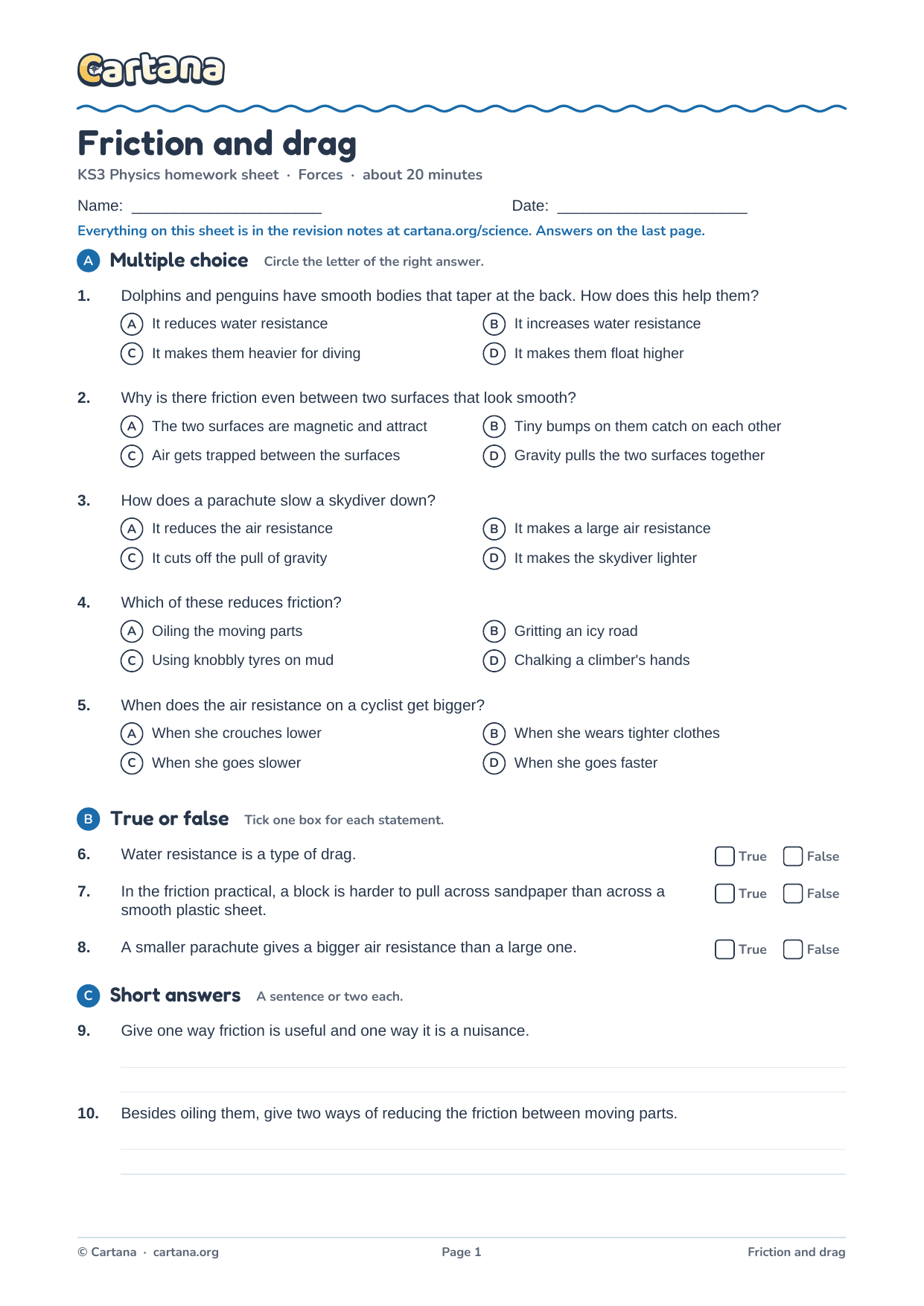
About twenty minutes. Everything on it is in the notes above; the answers are on the last page.
Free homework sheet
Friction and drag homework sheet
17 questions, about twenty minutes, with the answers on the last page: multiple choice, true or false, short answers, key words to define and one to explain in full.
KS3 Forces
Revised the whole unit?
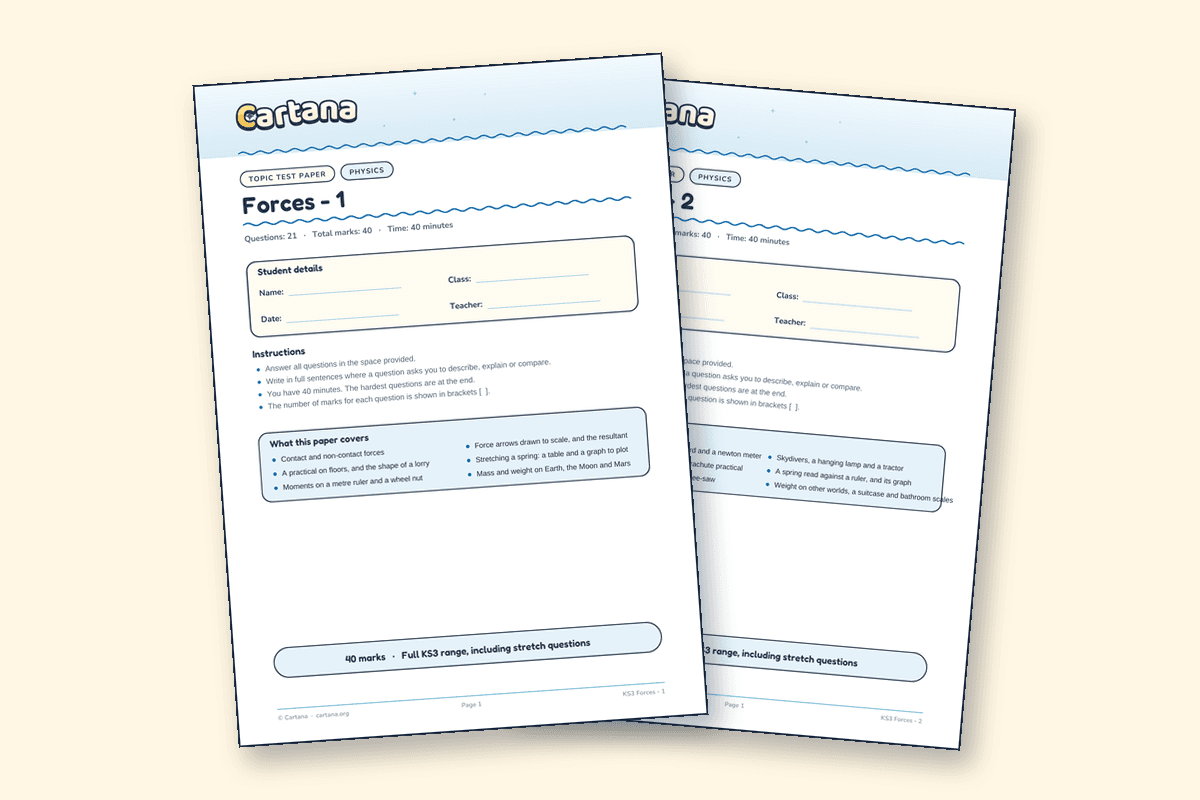
When every topic in forces is done, two different papers test the whole unit, each with its own mark scheme.


 Watch the trailer · 1:06
New from Cartana · Beta test 1–31 December
Revision that feels like an adventure
Cartana is our KS3 learning adventure: sail between islands, answer quick-fire questions and battle bosses. It starts with science, with maths on the way, and launches in 2027. This December a small group of testers gets to play it first.
In the Cartana adventure, every science unit is an island to explore. The island for forces is being built.
- Play the game before its official release
- Help us build it with your feedback
- Earn exclusive in-game items in return
More in this unit
Forces
- 1Introduction to forcesPushes and pulls, contact and non-contact forces, newtons, force arrows and interaction pairs
- 2Balanced and unbalanced forcesAdding forces along a line, the resultant force, and what balanced and unbalanced forces do
- 4Stretching and squashingNextDeforming objects, extension, the spring practical, Hooke's law and the energy stored in a spring
- 5MomentsTurning forces, moment = force × distance, the principle of moments and levers
- 6Gravity, mass and weightMass and weight, weight = mass × g, weight on the Moon, gravity and the three non-contact forces